For a long time, people familiar with lithium batteries can't help thinking of battery supplier LG New Energy when they see a fire in an energy storage project.
Yes, this time it also has something to do with LG new energy.
According to media reports, on the evening of February 13, 2022, an accident occurred at the Moss Landing energy storage power plant project in California, USA, in which about 10 battery shelves were melted.
This is the second accident in less than half a year after the battery overheating accident occurred in the project on September 4, 2021.
When it was built, it was the largest battery energy storage system in the world.
It is understood that the Moss Landing energy storage power station, which has had two accidents, was originally a natural gas power plant, but was later replaced by an energy storage battery power station.
The main purpose of the Moss Landing storage plant is to "trim peaks and fill valleys", that is, to help California reduce power shortages during peak hours at night, replenish the state's cheap and abundant solar photovoltaic power during the day and release it when Electroweb needs it most.
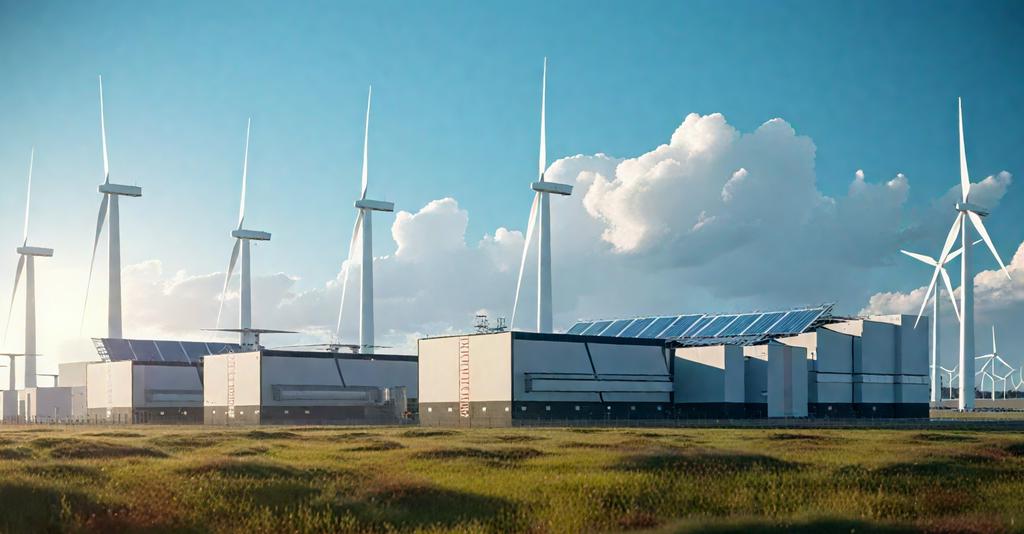
The energy storage plant began operation on December 11, 2020 and was completed as the world's largest battery energy storage system, (BESS), which contains 300MW/1200MWh lithium-ion batteries. When the energy storage power station is running at full load, it can supply power to 225000 households for 4 hours.
The battery supplier is LG New Energy.
The data show that the owner and operator of, Moss Landing energy storage power station is Vistra Energy, battery equipment provider. LG New Energy, a Korean battery giant, just listed on January 27th. Fluence is a system integrator and engineering contractor.
Reports from New Energy and Energy Storage indicate that more than 4500 battery racks have been installed in the, Moss Landing energy storage plant, based on the latest LG new energy model, TR1300.
It is reported that the TR1300 battery rack is pre-assembled in the factory before transportation, which reduces construction time and installation costs. Tests are also carried out before shipment to minimize the time required for on-site testing and commissioning.
According to the report, LG New Energy has said, "TR1300 has been tested in accordance with the UL 9540A thermal runaway fire spread standard, and the rack is designed to meet the requirements of the California building code, which believes that it is still safe to operate when the surrounding area is threatened by Earthquake activities."
Two accidents
The operator of the, Moss Landing storage plant in June 2021 said, "if market and economic conditions permit, the size and capacity of the, Moss Landing storage plant may then be expanded to accommodate up to 1500MW/6000MWh storage."
On September 4, 2021, the first phase of the, Moss Landing project caused losses of about 7% of the battery modules and other system equipment due to the start-up of the water cooling system of the battery. The accident did not cause casualties or affect the surrounding communities.
Specifically, at about 18:41 that day, the VESDA device detected smoke near containers 64, 57, 47 and 41, resulting in the release of water in pre-use area 24. When the accident occurred, a small number of joints on the hoses and pipes that were part of the battery cooling system failed, causing water to be sprayed on the battery rack. This in turn leads to short circuit and arc, which leads to battery damage and more smoke.
Now the fire broke out again at the), Moss Landing energy storage power station on February 13th. Vistra Energy subsequently issued a statement saying: "out of high caution, we have contacted the off-site emergency response department, and there were no casualties at the scene." An investigation is currently under way to determine why the security system has been activated, and we will share more information as we learn more about the situation. "
Security issues should not be underestimated
Vike Lithium noted that it was reported in October 2021 that statistics disclosed by the South Korean National Assembly showed that soft-pack batteries accounted for about 70 per cent of lithium battery fires involving electric vehicles and energy storage device (ESS) in South Korea in the past five years.
Specifically, according to the statistics provided to the Korean National Assembly by the Ministry of Industry, Trade and Resources and the Ministry of Land and Transport, among all 47 lithium battery fires in South Korea since 2017 (that is, to October 2021), 33 accidents occurred in soft package battery packs, 12 in square batteries and 2 in cylindrical batteries.
The proportion of accidents in soft-package battery packs reached 70.21%.
According to the statistics, there were 32 accidents of LG new energy products, 11 accidents of Samsung SDI products, 1 accident of SK innovation and 3 accidents of other manufacturers.
The main product of LG new energy is the soft package cell.
Summary
A gratifying change in the developing energy storage battery market is that more products with different technological routes are emerging, such as sodium ion battery, all-vanadium flow battery, iron-chromium flow battery and so on.
A common feature of these products is that they are safer.
![[Analyse SMM] Bilan du marché du stockage d'énergie pendant la fête nationale : la demande reste forte, les livraisons entrent dans une phase d'accélération](https://imgqn.smm.cn/usercenter/JKfXw20251217171731.jpg)
![[SMM Revue hebdomadaire du marché des cellules de batterie de stockage d'énergie 9.3] Les prix des cellules de batterie de stockage d'énergie reculent légèrement, et la croissance du calendrier de production rebondira nettement au T4.](https://imgqn.smm.cn/usercenter/PBUeR20251217171730.jpg)