Lithium iron phosphate battery has achieved a full-scale counterattack in 2021 after three years of significant advantage in the market share of ternary lithium battery over lithium iron phosphate battery. For the whole year, the ternary lithium battery is not only in terms of expanding the production scale of upstream cathode materials (it is expected that China's ternary material production capacity will expand to 1.938 million tons in 2025, while the planned capacity of lithium iron phosphate material has exceeded 3 million tons). The output, sales and installed capacity of power batteries in the middle reaches are all surpassed by lithium iron phosphate batteries in 2021. Lithium iron phosphate batteries account for 57.1%, 57.2% and 57.1% of the output, sales and installed capacity, respectively, and the growth rate is about twice as high.
There is also an obvious tendency to match lithium iron phosphate batteries in the selection of downstream terminals. Popular models with top sales in China, such as Hongguang mini, Tesla Model 3, Tesla Model Y, BYD Han, Mercedes-Benz, Chery eQ1, and Xiaopeng P7, all have supporting lithium iron phosphate batteries. The proportion of models with lithium iron phosphate batteries at the end of the recommended model catalogue for the promotion and application of new energy vehicles from January to December 2021 is also similar to that of ternary lithium batteries, even more than 50%. Therefore, the full-line anti-overshoot of lithium iron phosphate battery is not an empty slogan, but is slowly turning into reality, worthy of in-depth study.
1. The historical stage of the development of lithium iron phosphate battery.
According to the research on Wall Street, the summary of the three stages of the development of lithium iron phosphate batteries basically reflects the three stages of the development of the whole new energy vehicle industry in China, which is worthy of in-depth analysis and study.
(1) initial stage
In 2009, China officially launched the "Ten cities 1000 Energy Saving and New Energy vehicle demonstration and Application Project", which promoted the policy of 10 cities and 1000 new energy vehicles every year in the form of subsidies, which also opened the first year of the development of new energy vehicles.
Since the subsidies of new energy vehicles at the initial stage are more inclined to commercial vehicles, lithium iron phosphate batteries have the advantages of low cost, high safety and long cycle life compared with ternary batteries during the period from 2009 to 2016. Therefore, the output and loading volume account for more than 55%. It can be said that lithium iron phosphate batteries are the first choice for power batteries for new energy vehicles in China. This is also a brilliant 7 years for lithium iron phosphate battery.
(2) subsidy stage
With the gradual development of new energy vehicles, the focus of the national subsidy policy has shifted from commercial vehicles to passenger vehicles. Since 2017, subsidies for new energy vehicles have been differentiated according to energy density, which is 1.1 times higher than that of 120wh/kg, so battery life has become the main consideration.
In 2017, the state's subsidy policy requires cars equipped with high energy-density power batteries to receive higher subsidies, which has led major power battery manufacturers to turn to ternary lithium batteries, which have a great advantage in energy density, although their safety performance is slightly poor. as a result, the market share of lithium iron phosphate batteries once fell below 30%. Especially in 2019, the installed growth of lithium iron phosphate batteries even turned negative (- 10%) in the last year before the subsidy went downhill. The four years from 2017 to 2020 is the stage when ternary lithium batteries surpass lithium iron phosphate batteries in all directions. In addition to BYD, major battery manufacturers are basically making great efforts to develop ternary lithium batteries.
(3) Market stage
Since 2020, due to the substantial decline in national subsidies for new energy vehicles, and will achieve a full withdrawal after the end of 2022, which makes car companies are no longer limited by subsidies, but completely turned to market-oriented competition, to be able to think about the choice of power batteries in a more comprehensive way. Compared with ternary lithium batteries, lithium iron phosphate batteries have many advantages in cost, especially after the subsidies for new energy vehicles have completely declined, and there is no difference between the two in the use of lithium resources. however, ternary lithium batteries use expensive nickel and cobalt, while lithium iron phosphate batteries use lower-priced phosphorus. From mid to late 2020, terminal demand gradually increased. The price of nickel, cobalt and lithium has also risen, with the exception of lithium, and the price difference between nickel, cobalt and phosphorus is becoming more and more obvious, making car companies and battery manufacturers gradually turn their attention to lithium iron phosphate batteries.
After 2020, not only phenomenal products such as Hongguang Mini EV appeared, but also lithium iron phosphate batteries were used in Tesla's Model Y standard endurance version, Xiaopeng P7 rear drive standard endurance model and G3i model, which mainly used ternary lithium battery in July. Battery manufacturers, power battery giant LG New Energy, South Korea's SKI subsidiary SK On, are considering entering the lithium iron phosphate battery business, whether LG new energy or SK On is mainly manufacturing ternary, quaternary lithium batteries and other products, did not study lithium iron phosphate batteries, the two companies' overall market share in the global ranking is TOP5, Korea market ranking TOP3. So far, among the top five power battery companies in the world (Ningde era, LG New Energy, Panasonic, BYD, SKI), only Panasonic has not announced to enter the lithium iron phosphate battery.
2. Three upgrade modes of lithium iron phosphate battery
Lithium iron phosphate batteries do not have the same development process overseas as in China. Whether they are power batteries for electric vehicles or energy storage batteries in the field of energy storage, ternary lithium batteries continue to occupy a dominant position. Wall Street insights that this tendency also makes the development of overseas lithium iron phosphate batteries inferior to China in terms of capacity scale and technical level. This is not only reflected in the large-scale capacity expansion of lithium iron phosphate batteries by overseas battery manufacturers such as LG New Energy since the end of 2021, but also by the three upgrading modes of lithium iron phosphate batteries in China:
(1) process improvement
After years of research by Chinese battery manufacturers, lithium iron phosphate battery itself has basically achieved the extreme in terms of energy density and other performances. the room for technological improvement is really extremely limited. Wall Street research believes that for the traditional lithium iron phosphate battery itself, the most effective and mature way to upgrade is to upgrade the process. This approach has been tried and achieved in both the Ningde era and BYD.
The two generations of CTP (Cell to Pack), CTC (Cell to Chassis) technology and BYD blade batteries in the Ningde era are all improving the core or Pack structure of the lithium iron phosphate battery itself in order to make progress in energy density, low temperature resistance, and so on, but this is only an innovation in the process to make rational use of the internal space, such as removing modules and excess structures, or integrating the battery directly into the chassis. As a result, it becomes part of the frame, so that the space in the battery is freed to add more active material, and the end result is that the single energy density of the battery does not change much, but the overall energy density of the system has increased.
(2) Lithium ferromanganese phosphate battery
It is mentioned in the previous article that the traditional lithium iron phosphate battery can only be improved through the process, and although the process improvement does improve the traditional lithium iron phosphate battery, the real technological breakthrough of the traditional lithium iron phosphate battery should be the lithium manganese phosphate battery. Lithium ferromanganese phosphate and lithium iron phosphate have the same structure and have ordered olivine structure, so they are comparable to lithium iron phosphate in terms of safety and stability, but in the important performance of energy density, lithium iron phosphatase battery has higher performance.
The energy density of the battery is determined by the gram capacity, the compaction density and the voltage platform of the cathode material. At present, lithium iron phosphate has reached the limit in the first two aspects (the gram capacity has reached 170mAh/), so the improvement of the voltage platform will be a powerful factor to increase the energy density of lithium iron phosphate. Since the voltage of lithium manganese phosphate can reach 4.1 V, which is higher than 3.4 V of lithium iron phosphate, its energy density is 10-20% higher than that of lithium iron phosphate, which is close to that of ordinary ternary 5-series batteries, but much lower than high nickel ternary capacity.
And the lithium ferromanganese phosphate battery is, after all, improved from the lithium iron phosphate battery system, with little change in materials and equipment. The materials do not increase resources such as expensive nickel and cobalt, but use manganese, which is relatively low in price and rich in stock, so the material cost is only 5-6% higher than that of lithium iron phosphate. On the other hand, the calcination process, grinding and grinding, and the preparation of precursors have not changed much in terms of equipment, so the equipment has not been updated.
However, it is worth mentioning that due to the addition of manganese, the number of rings of lithium ferromanganese phosphate is much lower than that of lithium iron phosphate battery. at present, the number of monomer cycles is only 2000 weeks, so it is not suitable to be used in energy storage areas that do not require high energy density. but sensitive to cost and cycle life.
(3) Battery mash-up technology
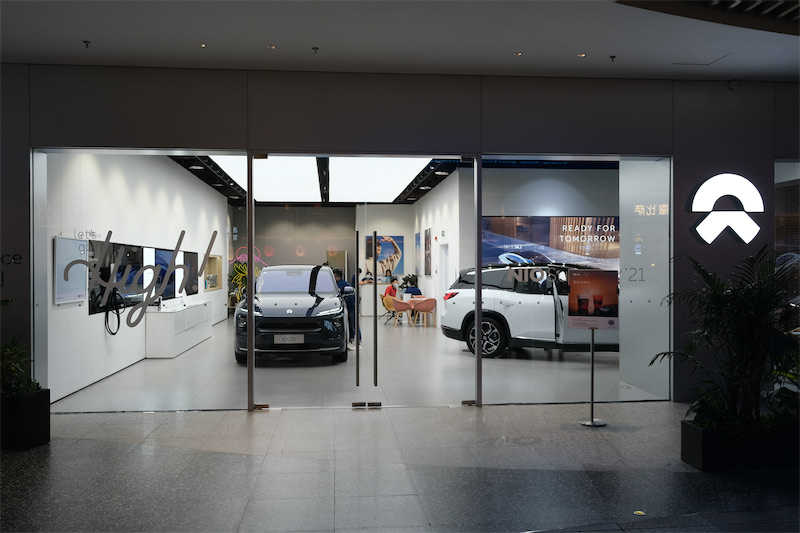
Finally, Wall Street Wisdom Research believes that lithium iron phosphate batteries and ternary lithium batteries should not be seen alone. At present, battery mash-up technology may also be one of the ways to upgrade lithium iron phosphate batteries, and it will have a gain effect on both ternary lithium batteries and lithium iron phosphate batteries. For example, the ternary lithium iron battery proposed by Weilai is to mix the ternary lithium battery and lithium iron phosphate battery, and put the ternary lithium battery around the lithium iron phosphate battery according to the reasonable collocation as the role of overall heat preservation and SoC algorithm calibration.
Its ternary lithium iron standard battery pack can reduce the low temperature battery loss by 25% and improve the low temperature performance of the whole package. At the same time, compared with the original ternary lithium 70kWh battery pack, the ternary iron lithium standard battery pack (75kWh) has increased the energy density of the same system by 14%, which also increases the range of various cars such as ES6,ES8 by 30-35KM. Of course, there are some disadvantages. This kind of hybrid battery pack has an increase in weight compared with the previous uniform battery pack.