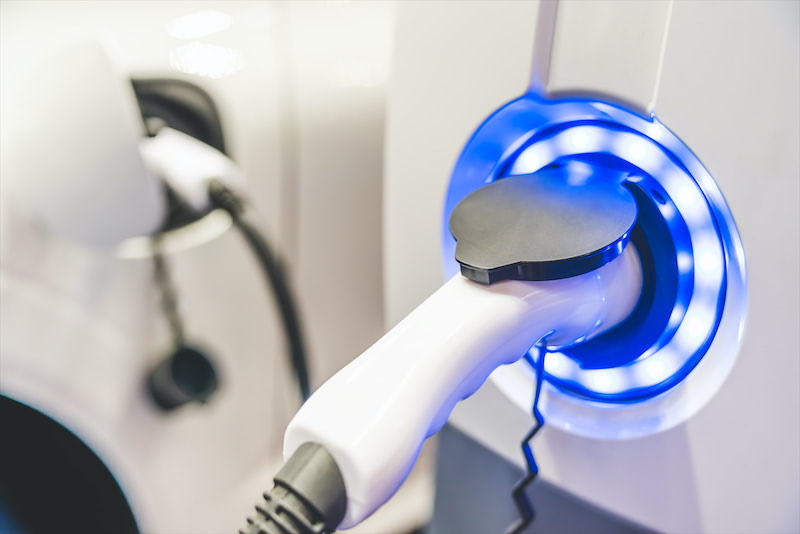
Driven by the "double carbon" strategy and policy, new energy has become a hot track concerned by the market and capital. At the same time, Internet companies are pouring in to accelerate the development of new energy industry.
Looking back at 2021, according to the statistical analysis of the China Automobile Association, new energy vehicles have become the biggest bright spot in the automotive industry, ranking first in the world for seven consecutive years. Its market development has shifted from policy-driven to market-driven new development stage, showing a good development situation of double improvement of market scale and development quality.
Looking forward to 2022, the reporter of Science and Technology Innovation Board Daily explored the change, focus and opportunities of the new energy track through a dialogue with a number of investors in the industry.
What changes do you think have taken place in the field of new energy investment in recent years? What are the new features?
Li Yu, co-founding partner of Yunhui Capital: domestic new energy investment has seen its first peak since 2016-2017, and the second peak in the last two years, characterized by an intensive influx of capital and a higher volume than the last peak. The primary and secondary markets are in the business cycle, and some of the circuit valuations show some Bubble. The characteristic of this round of investment peak is that the general direction of new energy development has been recognized by the market. From the first investment peak, funds are relatively concentrated in the field of three power systems, and gradually extend to the upstream and downstream of the new energy industry chain. The investment theme is gradually expanding from electrification to the direction of intelligence and networking, and investment institutions in the field of new energy are gradually moving towards specialization. The depth of investment in each subdivision track is also deepening.
Zhu Jia, a partner in China at the speed of light: first of all, the impact of global warming on the general environment, especially the direct impact on human production and life, makes everyone's sense of urgency and sense of mission stronger no matter in the field of scientific and technological innovation or investment. the need for change is strengthening; second, ten years ago, we relied more on the external forces of the government, including subsidies and policies, to promote the development and substitution of new energy. Today, we will see that the development of new energy can gradually get rid of this subsidy model to obtain good market returns, the cost is decreasing, the willingness to consume is increasing, and the whole industry is gradually entering a good market economy model; third, we should also see that the buyer's market is also gradually expanding from the government to enterprises and households, which will also be the market-oriented basis for the further development of new energy.
Zhang Meng, Executive Director of China Science and Technology Chuangxing: in recent years, new energy investment has shifted from focusing on asset production capacity to focusing on equity investment in both assets and advanced technology materials.
The whole new energy industry chain is very long, covering a lot of contents in the upper, middle and lower reaches. At present, which subdivisions are capital relatively concentrated in?
Li Yu, co-founding partner of Yunhui Capital: as mentioned before, the whole new energy track investment is in the business cycle, and various types of capital are invested and covered in the upstream, middle and lower reaches. Relatively speaking, the upstream of the new energy industry chain usually involves a larger capital investment and recovery cycle, so industrial investors and large capital investment are relatively large, and the investment in the middle and lower reaches is in full bloom.
Zhu Jia, partner of LightSpeed China: the new energy industry chain will see a lot of opportunities in subdivided areas, including photovoltaic, energy storage, lithium battery, hydrogen energy and terminal applications. For capital, it is important to find the core link to do the layout.
Zhang Meng, executive director of China Science and Technology Chuangxing: the source network of new energy, Lotus Storage, is in the layout of several links of capital.
In your opinion, does the capital flow of the new energy track coincide with that of Kechuangli? If it does not coincide, what is the reason?
Li Yu, co-founding partner of Yunhui Capital: basically, the two overlap. The new energy track is a national strategic track and a major strategic deployment for overtaking in the curve of China's automobile industry, especially in the middle and lower reaches of the new energy industry. all require relatively high technological innovation capabilities, in line with the requirements of high-level scientific and technological innovation.
Zhu Jia, a partner in China at the speed of light: I think the two must be highly overlapped. Take the lithium battery industry chain as an example, the upstream materials of lithium battery, including its positive electrode, negative electrode, diaphragm and electrolyte, involve a lot of technological innovation, and the ultimate goal of innovation is to continuously improve the energy density of lithium battery. Improve safety, extend the number of cycles, so this is a very technology-intensive field. The lithium battery we see now is not the ultimate form of the future, there is a lot of room for improvement, and even the research and development will be extended to other battery technologies such as sodium battery. Let's take a look at hydrogen energy, which also involves a large number of technological innovations, such as electrochemistry, mechanical engineering and so on. One of the companies we invest in is Platubo, which provides 100000 rpm oil-free air compressors for hydrogen fuel cell systems, a technology previously used in aerospace. The membrane electrode, the core component of hydrogen fuel cell, also involves the research and development of a large number of catalysts, proton membranes, gas diffusion layers and other materials, which require a lot of scientific and technological innovation. So on the whole, the capital flow of the new energy track is highly coincident with Kechuangli, and it is not a simple capital transaction.
Which subdivision links do you prefer in the new energy industry chain? What's the reason?
Li Yu, co-founding partner of Yunhui Capital: first, the core technical capabilities in the whole industry chain, such as next-generation battery technology, core sensors, key electronic components and chips, and some core algorithm capabilities are also very scarce in the domestic new energy investment track. Second, the investment target of intelligence and networking in the field of new energy, with the penetration of new energy in the whole energy pattern getting higher and higher, the related intelligence, new technologies, new applications and new models in the direction of network connection have the opportunity to become the target of high-speed growth in the next stage. The third is the investment opportunities in the field of new energy circular economy, such as the recovery and reuse of energy storage and batteries, which is also the key link of the industrial chain in order to truly realize the closed loop of environmental protection under the premise of increasing permeability of new energy. at present, there is no relatively formed business model in this field, and there is also a lack of leading enterprises, and there will be major investment opportunities in this field in the future.
Zhu Jia, partner of Lithium Speed China: lithium battery industry chain, including lithium battery itself and its upstream materials, as well as core components related to lithium battery, BMS battery management system is one of the core, which is also the reason for our investment in Xie Neng. From the beginning of its establishment, Xie Neng has laid out the cascade utilization chain of lithium-ion power battery, developed and mastered a large number of cascade utilization technology, which has greatly extended the service life of battery and reduced the life cycle cost of power lithium battery. It has a great advantage in this field. The other is photovoltaic industry chain and hydrogen energy. In new energy power generation and terminal applications, I think there is a lot of room for development in technical barriers and value chain.
Zhang Meng, executive director of China Science and Technology Chuangxing: all look good, none of them are indispensable.
In the face of the new energy track, how do you consider and evaluate the project selection and valuation? What characteristics do you think a good enterprise needs to have?
Li Yu, co-founding partner of Yunhui Capital: usually we will consider the enterprises with core technological advantage threshold and commercial landing feasibility in the aforementioned key subdivision track. The investment target of the new energy track is usually TO B enterprises. Technological advantage is the basis for the development of technology enterprises in the new energy track, but on the other hand, we should also see. The revenue growth rate of TO B projects is usually not as fast as that of some TO C consumer enterprises, so valuation needs to consider avoiding some bubble segments in the short term. We believe that the characteristics that a good enterprise should usually have include: 1, technical advantages; 2, the possibility and scale of business landing; 3, founders with large pattern and business vision; 4, honest and close cooperation, stable management team; 5, respect for corporate governance structure, have modern management consciousness.
Zhu Jia, a partner in China at the speed of light: first of all, look at the direction, there are many sub-areas of the new energy track, we will choose the future development direction, such as the supply form of new energy, including lithium battery and hydrogen energy and so on. Secondly, we will start from the downstream end products in this industry chain, and continue to do research and layout upstream. The development of the industry generally develops from the application-oriented downstream products, which gathers the value of all links of the upstream industrial chain, so the market scale is also the largest. With the development of the industry, from downstream to upstream, from the dimensions of market value and technical barriers, we will look for the most core links for layout. Although in the initial stage of the industry, the market scale of these links is not much, but with the development and growth of the whole industry, the market scale of these upstream links will continue to expand, resulting in valuable leading enterprises.
Zhang Meng, Executive Director of China Science and Technology Chuangxing: the source of the underlying technology, the size of the market potential, and the team's continuous technology research and development capability.
From a short-term, medium-and long-term perspective, what do you think of the new energy track?
Li Yu, co-founding partner of Yunhui Capital: long-term optimistic about the new energy industry, which is a major energy revolution in human history, and now the penetration of new energy in the entire energy system is not high. We need to look at the status of the new energy industry in the history of development from the perspective of a new energy revolution, but in the short term, some of the subdivision tracks have appeared relatively serious Bubble, which requires the attention of investors.
Zhang Meng, executive director of China Science and Technology Chuangxing: energy is the necessary material basis for the development of human civilization, human society also has a constant pursuit of higher energy form, energy is always sustainable "investment track".
![[Lithium Battery: Wanrun New Energy Adjusts Repurchase Plan For 100,000-Ton Cathode Material Project]](https://imgqn.smm.cn/usercenter/JSjkr20251217171728.jpg)