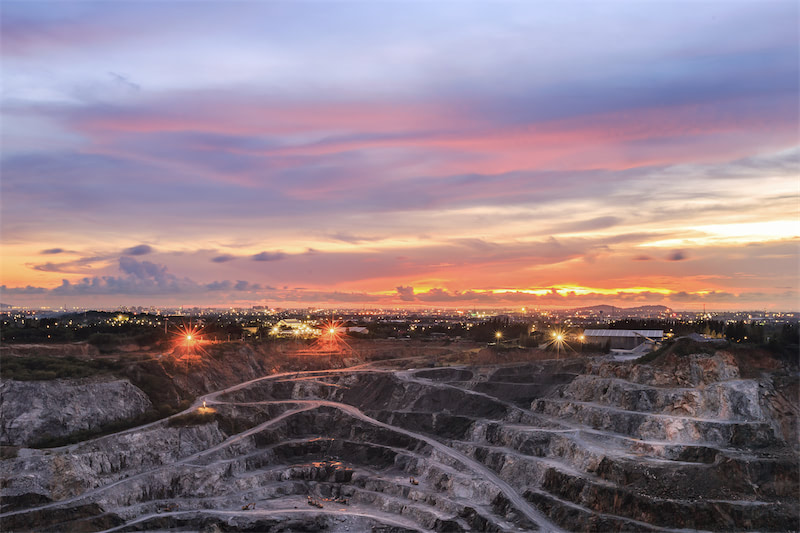
Chile's copper production in September was the worst monthly record since February, affected by frequent strikes by workers and falling ore grades.
Chile's copper production in September was 451128 tonnes, down 6.9 per cent from a year earlier and 3.4 per cent from August, according to data released on Friday by Chile's National Bureau of Statistics ((INE)).
Copper prices have soared to record highs this year because of strong demand, allowing Chilean unions to exert more influence and heightening tensions in labour negotiations, such as a nearly month-long strike at the Andina mine of (Codelco), the Chilean state copper company. On the other hand, the aging of mines in Chile has led to a continuous decline in ore quality.
According to the latest data released, Chile's copper production fell by 4.2 million tons by the end of September, down 1.9 per cent from total national production in 2020.
The decline in Chilean copper production, the world's largest copper producer, is likely to further exacerbate supply constraints in the market.
Earlier this month, (LME) copper inventories on the London Metal Exchange fell to their lowest level since 1974, and freely available stocks in warehouses monitored by LME have fallen by more than 90 per cent in the past two months because of a surge in orders.
CRU Group, a commodities consultancy, estimates that the copper industry will need to spend more than $100 billion by 2030 to make up for an annual supply shortfall of 4.7 million tonnes.
Copper is a key metal driving the development of renewable energy and electric vehicles, with a wide range of uses, from building materials to batteries and engines. If the major copper-producing countries, represented by Chile, fail to solve the capacity problem, copper prices will continue to rise, which is not conducive to the global energy transformation to deal with the climate crisis.

![Visite du parc à ferraille de cuivre de Ningbo Zhenhai – Pénurie de cuivre de haute qualité, prédominance des semi-finis de cuivre #2 [Analyse SMM]](https://imgqn.smm.cn/usercenter/mPNrH20251217171709.jpg)