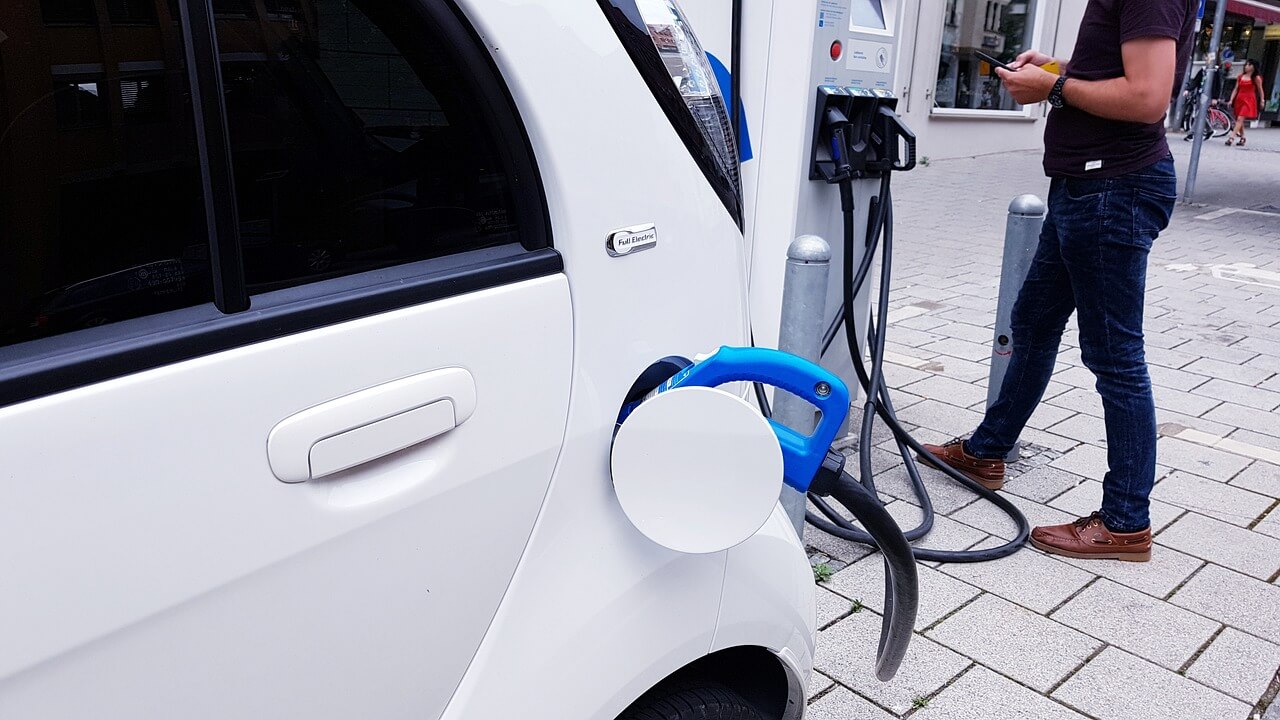
Since the third quarter, domestic sales of new energy vehicles are still hot, and the delivery time of a number of new energy brands has been extended. at the same time, the prices of the lithium industry chain have also continued to rise, and some downstream car companies have "increased income without increasing profits".
The rapid development of new energy vehicles has also led to the middle and upper reaches industry represented by lithium batteries. According to statistics from the China Automotive Power Battery Industry Innovation Alliance, in September 2021, the installed capacity of power batteries in China was 15.7 GWH, up 138.6 percent from the same period last year and 25.0 percent from the previous year. Among them, the total loading of ternary batteries was 6.1 GWH, up 45.6% from the same period last year and 15.0% from the previous year; and lithium iron phosphate batteries totaled 9.5 GWH, up 309.3% from the same period last year and 32.3% from the previous year.
At the same time, the prices of lithium materials have risen. This week, the prices of lithium carbonate, lithium hydroxide, electrolytic cobalt, ternary materials, negative materials, diaphragms and other products are still rising, and the prices of some products have reached record highs. The price of battery-grade lithium carbonate is 19. 1-196000 yuan per ton this week, according to SMM. The supply of negative materials continues to be tight and the market inventory is low. Specifically, look at the price trend of the following products.
Lithium hydroxide
This week, the price of SMM industrial-grade lithium hydroxide is 17.7-180000 yuan / ton, up 3000 yuan / ton from last week.
Lithium carbonate
This week, the price of SMM industrial-grade lithium carbonate is 18.25-187500 yuan / ton, up 2000 yuan / ton from last week.
Electrolyte solution
The price of SMM electrolyte (ternary power) is 10.9-119000 yuan / ton this week, the average price is 2000 yuan / ton higher than last week, and the price of SMM electrolyte (lithium iron phosphate) is 10.2-108000 yuan / ton, up 2000 yuan / ton compared with last week.
According to the third spodumene concentrate auction held by Australian lithium mining company Pilbara Minerals on BMX electronic platform on October 26th, the final auction price was 2350USDXT, up 4.91% from the second auction price of 2240USDXT. Market analysis shows that from November to December, due to the substantial increase in Ternary and Iron Lithium, the demand increases obviously, while the supply side is affected by the cooling and production reduction in Qinghai, and the monthly output decreases compared with the previous month, which may lead to the obvious de-stocking of the market, and the price may still have a upward trend.
The profits of downstream car companies are under pressure, or there may be the phenomenon of "increasing income without increasing profits".
Recently, a contact letter of BYD's "Battery Price increase" has been widely circulated on the Internet. The notice mentioned that due to market changes, superimposed power restrictions and production restrictions, raw materials for lithium batteries continue to rise compared with December last year, and the supply of negative materials continues to be tight, resulting in a substantial increase in comprehensive costs. According to the actual situation of rising prices of raw materials, the study decided to increase the unit price of C08M and other battery products by no less than 20%.
On October 28th, BYD shares released three-quarter reports that third-quarter revenue was 54.3 billion yuan, up 21.98% from a year earlier, while third-quarter net profit was 1.27 billion yuan, down 27.5% from a year earlier, up 35% from a month earlier. BYD revealed that this is mainly due to the increase in power battery business. Beset by the rising price of raw materials, BYD is seeking to raise the price of power batteries.
According to the data, the net loss of ideal car in the second quarter of this year was 235 million yuan, that of Xilai Automobile was 587 million yuan, and that of Xiaopeng Motor was 1.19 billion yuan.
On the issue of cost, at the 2021 World New Energy vehicle Congress, Xin Guobin, vice minister of the Ministry of Industry and Information Technology, said that at present, the cost of new energy in China is still on the high side. Power batteries, key components of electric vehicles, are facing the pressure of lithium, cobalt, nickel and other mineral resources and rising prices. The Ministry of Industry and Information Technology will work with relevant departments to speed up the overall planning and improve the guarantee capacity.
Car companies and battery manufacturers are "sweeping" around the world.
Against this background, Ningde Times recently acquired a 100% stake in Canadian lithium mining company and repaid a $10 million termination fee to Ganfeng Lithium on its behalf. Tesla CEO Musk also said that in order to ensure that there are enough batteries, the company will enter the mining industry. A global battle for "mine sweeping" has quietly begun.
Ganfeng Lithium announced on October 20 that it plans to acquire its 8.58 per cent stake in Litio from International Lithium through Sun's Holland Ganfeng, with a total transaction value of US $13.178 million. The deal has been completed recently, and the company indirectly owns 100 per cent of Litio and its Mariana Lithium Salt Lake project.
![[Rumeur sur la batterie à semi-conducteurs réfutée : Wang Fang du CATARC déclare qu'aucune détermination de conformité n'a été faite pour les entreprises de batteries à semi-conducteurs]](https://imgqn.smm.cn/usercenter/JSjkr20251217171728.jpg)
![[Batterie au lithium : Foshan Plastics prévoit plus de 7 milliards de RMB pour une capacité de séparateurs haut de gamme]](https://imgqn.smm.cn/usercenter/aXRJI20251217171728.jpg)
![[État solide : ProLogium démarre la production en série de cellules tout-solide Gen 3.5 à 381 Wh/kg]](https://imgqn.smm.cn/usercenter/mpqgn20251217171727.jpg)