SMM Morning Comments (Oct 20): Base Metals Closed Mostly Closed with Losses as the China Government Is Determined to Regulate Coal Prices

Publié: Oct 20, 2021 10:00
Shanghai and LME non-ferrous metals mostly closed with losses as the China government is determined to regulate the coal prices, and the US economy has been slowing evidenced by the recent economic readings.

SHANGHAI, Oct 20 (SMM) – Shanghai and LME non-ferrous metals mostly closed with losses as the China government is determined to regulate the coal prices, and the US economy has been slowing evidenced by the recent economic readings.

LME copper fell 0.85%, aluminium decreased 2.11%, lead dropped 0.51%, and zinc plunged 3.68%.

SHFE copper decreased 2.57%, aluminium lost 2.86%, lead edged down 0.76%, zinc lost 5.5%, nickel slid 0.84%.

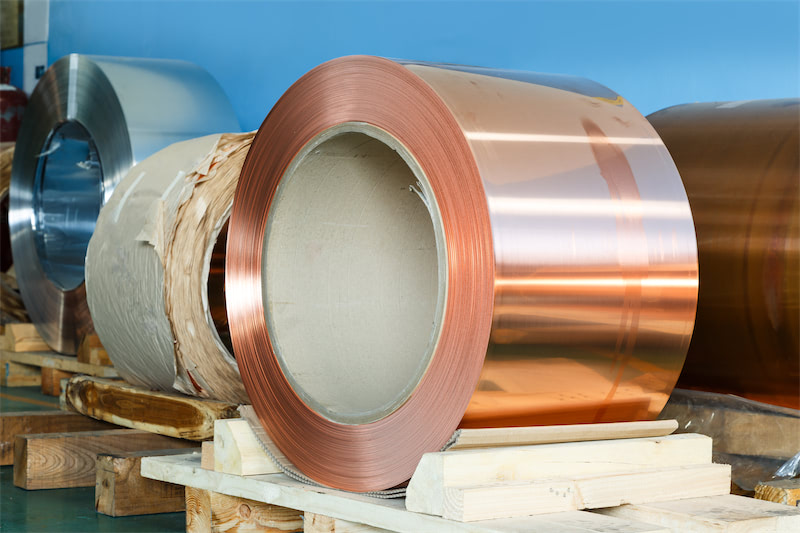
Copper: Three-month LME copper opened at $10335/mt, and then touched a low of $10070/mt before closing at $10119/mt, down 0.85% from the last trading day. The trading volume reached 17,000 lots, with open interests at 272,000 lots. The LME copper is expected to move between $9960-10060/mt today.

The SHFE 2111 copper opened at 75490 yuan/mt, and then trended down to below the daily moving at range. The contract closed the session at 73860 yuan/mt, down 2.57%. The trading volume was 89,000 lots, with the open interests at 140,000 lots.

SHFE copper is expected to trade between 72900-73500 yuan/mt today, with spot prices between a premium of 230-350 yuan/mt.

On the macro front, the US new housing starts reading also fell short of expectations, evidencing the slower economy growth in Q3. The National Development and Reform Commission worked on the measures to regulate the coal prices, leading to a limit down of all coal futures.

On the fundamentals, the LME copper 0 – 3 spread has surged to above $11,00/mt, the highest in the past 27 years. And the short supply will support copper prices. In terms of spots, the prices fell slightly in the last trading day, and inquires picked up. But the overall transactions were still thin.

Aluminium: Three-month LME aluminium closed at $3103/mt, down 2.11% or $67/mt.

The most-traded SHFE 2111 aluminium contract closed at 23,645 yuan/mt, down 695 yuan/mt, or 2.86%.

The operating aluminium capacity is likely to fall again amid a new wave of production reductions in places like Xinjiang. And the overseas short supply of energy resources have also triggered market concerns. While on the demand side, the power rationing policy has constrained the downstream consumption as a whole. The intraweek aluminium inventory added from the previous session.

The market shall watch if the sluggish demand will suppress the prices. The SHFE aluminium is likely to trend down today amid the estimate that the costs will drop due to falling coal prices.

Lead: Three-month LME lead opened at $2,375/mt, and then touched a high of $2,403/mt. The contract closed at $2,364/mt, down 0.51% or $12/mt.

The most-liquid SHFE 2111 lead contract opened at 16,790 yuan/mt, and then touched the intraday high of 15,990 yuan/mt. It finally closed the overnight trading at 15,720 yuan/mt, down 120 yuan/mt or 0.76%.

In the spot market, the primary lead smelters were active in making shipments amid rising lead prices, and the quotations with premiums could hardly be found. However the downstream sector was cautious in purchasing. The quotations in mainstream markets of Zhejiang and Jiangsu were offered with discounts of 40-30 yuan/mt over SHFE 2111. The overall transactions were thin. In terms of secondary lead, the quotes from smelters were firm, with premiums of 50-100 yuan/mt over SMM 1# lead. The spread between refined lead and lead scrap continued to narrow.

Zinc: Three-month LME zinc lost 3.68% or $135.5/mt to settle at $3550.5/mt last night, with open interest down 3953 lots to 269,000 lots. LME zinc prices are expected to stand at $3480-3530/mt today. The overnight LME inventory surged 14800 mt to 201700 mt, up 7.92% from the last trading day.

The most-traded SHFE 2111 zinc contract fell 1495 yuan/mt or 5.5% to 25675 yuan/mt, with open interest down 7676 lots to 69863 lots. The contract is likely to trade between 25200-25700 yuan/mt today.

For zinc demand, some galvanising companies in Shandong were restricted from production amid the power rationing, and the production costs also rose on the back of rising raw materials prices. The terminal demand weakened and the operating rates fell. While the social inventory has also been on the rise. The longs paid off and left the market.

Nickel: SHFE 2111 nickel closed at 149,060 yuan/mt, down 1260 yuan/mt or 0.84%. The open interest fell 1938 lots to 86615 lots, with a trading volume of 392,000 lots. It is expected to meet resistance at 150000 yuan/mt.

Currently the open interest of SHFE 2112 nickel has reached 63612 lots, thus becoming the most-trade SHFE contract.

Tin: The overnight SHFE tin closed below 285000 yuan/mt, and is expected to meet resistance and support at 290000 yuan/mt and 282000 yuan/mt, respectively.

On the fundamentals, the social inventory has been at a low level, but the short supply eased slightly in the last trading day. The conversion margins rose, which is likely to prompt the upstream smelters to increase the supply. On the other side, the macro policies of regulating coal prices and power rationing have brought great uncertainties, which indirectly influenced the demand estimate.
Déclaration sur la source des données : À l'exception des informations publiques, toutes les autres données sont traitées par SMM sur la base d'informations publiques, d'échanges avec le marché et en s'appuyant sur le modèle de base de données interne de SMM. Ils sont fournis à titre indicatif uniquement et ne constituent pas des recommandations décisionnelles.

Pour toute demande d'information ou pour en savoir plus, veuillez contacter : lemonzhao@smm.cn
Pour plus d'informations sur l'accès à nos rapports de recherche, veuillez contacter :service.en@smm.cn
Actualités Connexes
Les géants de l’IA portent leurs capex 2026 à 750 milliards de dollars, augmentant la puissance de calcul dans un contexte de volatilité des marchés.
il y a 2 heures
Les géants de l’IA portent leurs capex 2026 à 750 milliards de dollars, augmentant la puissance de calcul dans un contexte de volatilité des marchés.
Lire la suite
Les géants de l’IA portent leurs capex 2026 à 750 milliards de dollars, augmentant la puissance de calcul dans un contexte de volatilité des marchés.
Malgré les récentes fluctuations sauvages du marché, qui ont suscité une certaine anxiété chez les investisseurs, les acteurs de premier plan n'ont pas ralenti leur expansion dans les infrastructures de puissance de calcul. Alors que les géants de l'IA cotés aux États-Unis publient leurs résultats semestriels, Meta, Alphabet et Amazon ont à nouveau relevé leurs prévisions de dépenses d'investissement pour 2026. Le plafond total des dépenses d'investissement annuelles combinées des quatre géants devrait désormais approcher 750 milliards de dollars, dépassant de loin le total de 455,8 milliards de dollars de l'an dernier.
il y a 2 heures
La Chine dévoile un plan à 15 ans pour le développement industriel vert, stimulant les véhicules à énergies nouvelles et les technologies d’énergie renouvelable.
il y a 2 heures
La Chine dévoile un plan à 15 ans pour le développement industriel vert, stimulant les véhicules à énergies nouvelles et les technologies d’énergie renouvelable.
Lire la suite
La Chine dévoile un plan à 15 ans pour le développement industriel vert, stimulant les véhicules à énergies nouvelles et les technologies d’énergie renouvelable.
Le ministère de l'Industrie et des Technologies de l'information a publié le « 15e Plan quinquennal pour le développement vert et bas carbone de l'industrie », qui met l'accent sur la consolidation et la montée en gamme des industries à avantage vert. Il appelle à accélérer l'itération technologique et l'expansion des scénarios dans des secteurs clés tels que les véhicules à énergie nouvelle (NEV), les équipements d'énergie nouvelle et le stockage d'énergie de nouvelle génération. Le plan promeut les applications innovantes des batteries de puissance de nouvelle génération, des puces de qualité automobile et des systèmes d'exploitation embarqués, ainsi que le déploiement de camions lourds à énergie nouvelle pour le transport longue distance, le transport courte et moyenne distance, la logistique de construction urbaine, et les scénarios miniers et portuaires. Il augmente également de manière significative la part d'électricité verte utilisée dans la production de polysilicium, fait progresser la conception et la fabrication d'éoliennes à haute fiabilité pour les scénarios de désert-Gobi-friche, de haute altitude et de mer profonde, et promeut l'application d'équipements intégrés éolien-solaire-stockage en fonction des conditions locales.
il y a 2 heures
Les fabricants chinois de fils et câbles ralentissent leur production et réduisent leurs stocks face à une demande hors saison atone.
il y a 2 heures
Les fabricants chinois de fils et câbles ralentissent leur production et réduisent leurs stocks face à une demande hors saison atone.
Lire la suite
Les fabricants chinois de fils et câbles ralentissent leur production et réduisent leurs stocks face à une demande hors saison atone.
Cette semaine, concernant les stocks des entreprises chinoises de fils et câbles, les achats de matières premières sont restés prudents, les réapprovisionnements n’étant effectués qu’en cas de légères corrections de prix pour les besoins essentiels. Les stocks de matières premières ont baissé de 0,47 % en glissement hebdomadaire. Face à une faible demande en basse saison, les entreprises de fils et câbles ont ralenti leur cadence de production, privilégiant l’écoulement des stocks de produits finis existants. Les stocks de produits finis ont diminué de 1,48 % en glissement hebdomadaire.
il y a 2 heures