In order to promote the development of the copper industry, Ye Jianhua, director of SMM Information & Technology Co., Ltd., long Huachen, senior analyst, and Ma Yao, senior manager of the marketing department, visited Chifeng Jintong Copper Co., Ltd. on July 22nd, it was warmly received by the person in charge of the company. The two sides focused on the development of the copper industry, and SMM benefited a lot from this visit. Through on-the-spot investigation and face-to-face communication, they gained a deeper understanding of each other's business philosophy and corporate culture, and further promoted the cooperative relationship between Chifeng Jintong Copper Co., Ltd. and SMM.

Chifeng Jintong Copper Co., Ltd.

I. the basic situation of the enterprise
Chifeng Jintong Copper Co., Ltd. was founded in 1990. It is a comprehensive social welfare enterprise with copper smelting as its main business. In August 2008, Jintong Copper Co., Ltd. completed the asset restructuring with Anhui Tongling Nonferrous Metals Group holding Co., Ltd. to become a state-owned holding enterprise. The company has 1947 employees, including 692 disabled employees.
In August 2014, according to the overall urban planning of Chifeng City and the overall deployment of industrial enterprises in the central urban area, the copper smelting process upgrading and relocation project was officially launched. The project is located in Dongshan Industrial Park, High-tech Industrial Development Zone, Chifeng City. The construction ceremony was held on April 18, 2018, and construction was officially started on August 16, 2018. The project covers an area of 1037 mu (975mu at the time of the project record; 62 mu is sold in the later stage). The total planned investment budget is about 5.2 billion yuan, and the construction is divided into two phases by adopting the method of "overall planning and step-by-step implementation". The total investment in the first phase is 3.9 billion yuan (2.4 billion yuan in fixed assets and 1.5 billion yuan in working capital), and 1.3 billion yuan in the second phase (600 million yuan in fixed assets and 700 million yuan in working capital investment). The project adopts the new process of "side blowing furnace + intelligent CNC converter + rotary anode furnace + two conversion and two absorption acid production + PC electrolysis". After the project reaches the production standard, the annual output of cathode copper and sulfuric acid is 400000 tons and 1.35 million tons respectively. According to the current price, the annual sales income is 21.8 billion yuan, and the profit and tax is 650 million yuan. The copper smelting process upgrading, relocation and transformation project of the company meets the national industrial policy and industry standard conditions, and the pollution discharge meets the latest national standards, with excellent economies of scale, social benefits and environmental protection benefits. it is a key project for Chifeng to build an eastern industrial corridor, promote enterprises to withdraw from the city and enter the park, and realize industrial transformation and upgrading.
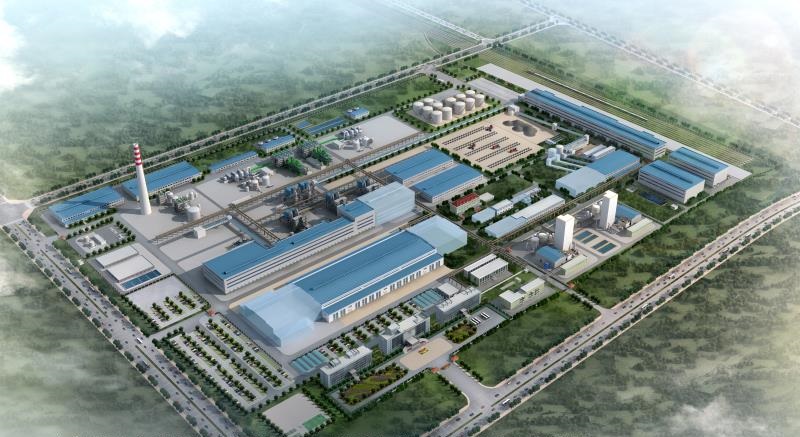
II. Enterprise layout
Jintong Copper Factory is located in Chifeng Economic Development Zone (Copper Industrial Park), that is, the east of Yuanbaoshan Park, with a land area of about 650000 square meters, including 31500 square meters in front of the factory. The main functions are clearly divided, and the general layout is compact and reasonable, which is in line with the overall land use planning, urban planning, main functional area planning and industrial development planning of Inner Mongolia Autonomous region. The company through environmental impact assessment and acceptance, safety assessment and acceptance and other policy requirements, in line with the industry development plan.
Description of the existing production scale and external conditions of the enterprise
The existing production scale of Jintong Copper Industry is the first phase of the project to achieve an annual smelting capacity of 260000 tons of copper (200000 tons of cathode copper, 60 thousand tons of anode copper, including 220000 tons of mineral copper / year), and the slag treatment capacity is 613548 tons / year (2000 tons / day).
Jintong Copper is conveniently located. Among them: 1, the external water supply is drawn from the recycled water supply network of the industrial park, the consumption of new water in the first stage of production is 12822m ³/ d, the average water consumption is 529m ³/ h, and the corresponding reclaimed water consumption is 16297m ³/ d; the second stage consumption is 19113m ³/ d, the average water consumption is 799m ³/ h, and the corresponding reclaimed water consumption is 23539m ³/ d. Domestic water is drawn from the municipal domestic water supply network of the industrial park, the first stage water consumption is 1020m ³/ d, the maximum water consumption is 76.5m ³/ h, the second stage water consumption is 1636m ³/ d, the maximum water consumption is 122.7m ³/ h. The existing external production and domestic water supply capacity all meet the new water consumption, water quality and water pressure requirements of the project. 2. External power supply: a 66kV substation will be built internally, 3 main transformers with 50MVA capacity will be installed, the double-circuit 66kV overhead line will be adopted, and the 66kV substation will be designed by the local professional electric power design institute. In the first stage, the station can provide 16-circuit 10kV power to 7 10kV distribution stations in the plant area and one low-voltage substation directly supplied by 66kV substations. The second phase of the project can provide 6 to two new 10kV distribution stations. 3. Oxygen supply: the oxygen required is purchased and supplied by pipeline, the oxygen consumption of the first stage is 21416 × 104Nm3A, and the oxygen consumption of the second stage is 31595 × 104Nm3/a. 4. Natural gas supply: the natural gas used in this project is supplied by the natural gas supervisor of sub-high pressure An in the park and used after pressure regulation and metering. The dosage in the first stage is about 7194787Nm 3 gamma, and the dosage in the second stage is 82995807Nm3/a. 5. External transport: the out-of-plant transport volume is 124t Unia and the output volume is 789345t/a. Off-plant transport is mainly carried by car and train, mainly by external cooperation.
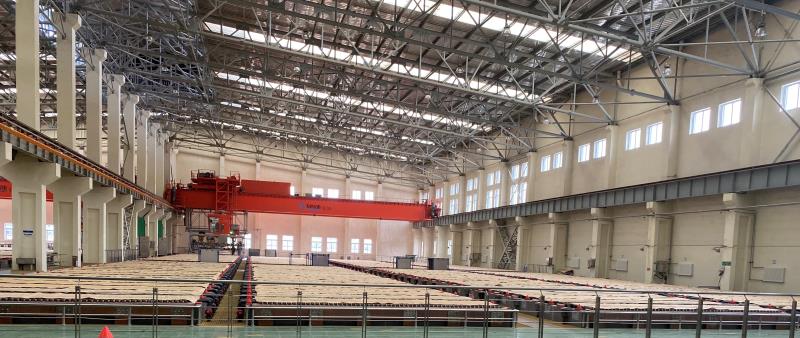
IV. Intelligent manufacturing
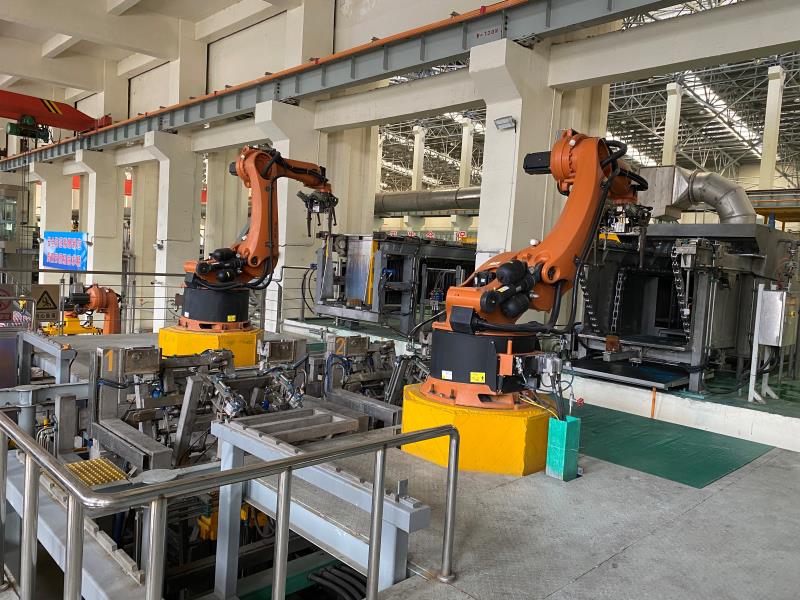
From the goal of long-term strategic development, Jintong Copper strives to build our company into a modern, intelligent and automated world model factory with high standards and high specifications at the initial stage of construction.
The company has a number of software systems in use and cooperation with external units, such as: production process system PLC\ DCS, office OA system, safe production risk management system, data acquisition system, analysis and testing LIMS system, TIMS system, quality measurement system, energy management system, energy efficiency evaluation system and ERP system.
At present, Jintong Copper Industry, combined with the development of the industry, is promoting the construction of intelligent chemical plants and implementing intelligent projects such as intelligent warehousing, intelligent transportation, intelligent workshops and so on.
V. Energy management
Our company's new copper smelting process upgrading project process upgrading, capacity expansion, to build into a more advanced, safe, energy-saving, efficient and environmentally friendly copper smelting plant, the selection of key equipment is more advanced and mature, to build an annual copper smelting capacity of 400000 tons and supporting facilities. At present, the first phase has a production capacity of 200000 tons of cathode copper and 60, 000 tons of anode copper, which has been completed and put into production on October 5, 2020.
Our company attaches great importance to energy management, strengthening the implementation of energy-saving management and energy-saving technological transformation, and increasing energy utilization efficiency. Reduce operating costs, improve product quality, improve management level, strengthen scientific and technological innovation in an important position.
The following energy-saving principles are fully considered in the first phase of the project:
1. Select the advanced copper smelting process to make full use of the reaction heat of copper concentrate smelting with no or less fuel.
2. Make full use of the waste heat of high temperature flue gas of copper smelting furnace and blowing furnace and the waste heat of sulphuric acid system, set up waste heat boiler to recover steam, and generate electricity or industrial application.
3. Large-scale and large-series production devices are adopted to reduce the energy consumption per unit product.
4. Select energy-saving, power-saving equipment and automatic control system to improve energy efficiency.
5. Heat preservation measures should be taken for steam pipes.
6. Reuse the circulating water that can be used in the production process to improve the utilization rate of water circulation.
Related business exchanges and cooperation are welcome to contact
SMM
Ma Yao
18321395342
021-51666753