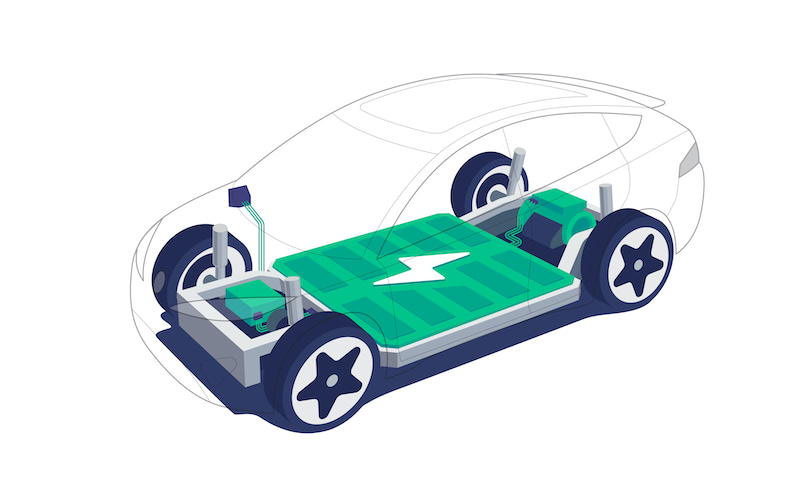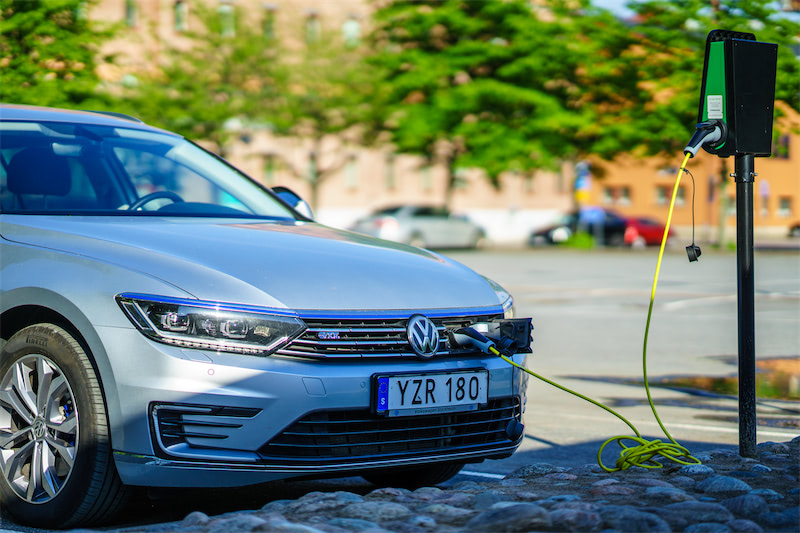
Scientists at Sienza Energy, a California Institute of Technology spin-off, are developing two trendsetting batteries for electric vehicles and consumer electronics. Battery research plans include improving the overall capacity of the battery, shortening the charging time and costing much less than the existing batteries on the market.
Researchers say the most important thing is that they consider the need to use green energy to make batteries. Although the original battery generally contains 33% cobalt (a toxic chemical element), many existing batteries still contain 20% to 15% cobalt. However, Sienza Energy's first-generation batteries will contain less than 5% cobalt, and second-generation batteries will be completely cobalt-free. If all goes according to plan, the team hopes that the first-generation battery will be on the market within a year and a half, and the second-generation battery will be available six months after the first-generation battery goes on sale.
Dr. Mory Gharib is the founder of the technology, Dr., Azin Fahimi and Dr. Isabelle Darolles are co-inventors, and, Matthew Tasooji is the CEO of Sienza. The company's scientists work in the Sienza Lab (with few people), the California Institute of Technology, the University of California, Los Angeles, and the University of California, Riverside. So far, the project has cost about $3.5 million.
The research team is proud to have developed a dry manufacturing process, which is safer and more environmentally friendly. "We use a completely dry manufacturing process, so we don't use any harmful substances," said Fahimi, the team's chief scientific officer. In this industry, many people use a lot of toxic solvents. "
Recycling is also one of the team's goals, and some battery materials may be reused, the team said. "We can recycle 10% to 15% of battery materials, so it's a win-win situation." The team's goal is to build batteries that charge faster, have less battery life and have a longer life. Dr Tasooji said: "if an ordinary battery can be used for five years, our battery can be used for seven or eight years under the same conditions, which in itself is good for the environment."
Dr Tasooji also says 30 per cent of the cost of an electric car is in the battery. As a result, they hope to eventually make electric cars cheaper and increase the popularity of electric vehicles.
Dr. Brian Tarroja, a research professor in the Department of Civil and Environmental Engineering at the University of California, Irvine, and director of the Energy Systems Integration Group of the Advanced Power and Energy Project, pointed out that Sienza is not the only company looking to build longer-running, lower-cost, greener batteries. The battery in Tesla's upgraded Model 3 also uses lithium iron phosphate (LFP). "in terms of environmental impact alone, removing cobalt from the battery is also beneficial. In addition, there are benefits in terms of environmental justice, as cobalt mining also involves many labour-related issues. "
![Cotations des produits de cobalt en berne ; le cobalt raffiné a chuté de plus de 20 000 yuans en une semaine ; les cotations du sulfate de cobalt ont baissé pendant cinq jours consécutifs ! [Revue hebdomadaire]](https://imgqn.smm.cn/usercenter/Jgxij20251217171726.jpg)