SMM3 on March 13, at the end of 2020, the imbalance between supply and demand in the lithium industry chain gradually appeared. The prices of cobalt sulfate and cathode materials upstream of lithium electricity have risen sharply, and the price of lithium carbonate has more than doubled in 4 months, while other materials such as electrolytes are also out of stock to varying degrees. In this case, the demand for new energy vehicles downstream of lithium battery continued to rise, with sales setting a new record for the month for seven months in a row. At the same time, with the release of new technologies such as superimposed solid-state batteries, the continued impact of the novel coronavirus epidemic around the world, the decline of new energy subsidies, the coming peak of recycling and echelon utilization of power batteries, and many other factors, where will the lithium industry go in the future? In order to understand the answers to these questions, SMM decided to launch a nationwide tour of lithium power enterprises to communicate closely with industry leaders on the front line to investigate the production, operation and future layout of China's lithium power enterprises.
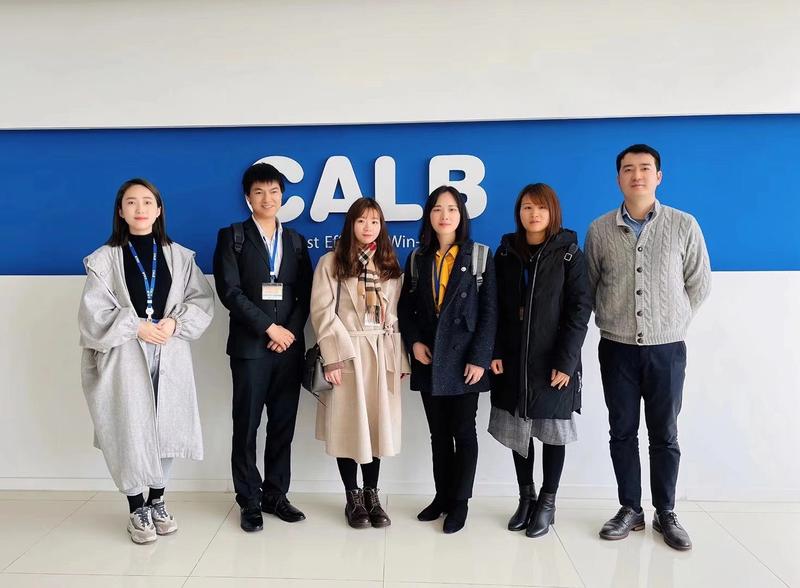
On March 10th, SMM New Energy Director Yi Yanting, New Energy Marketing Director Wang Tian, New Energy Senior analyst Mei Wangqin, New Energy analyst Yuan Ye came to AVIC Lithium Technology Co., Ltd., located in Changzhou, Jiangsu Province, and Wu Xi, General Manager of AVIC Lithium Marketing Department, expressed a warm welcome and received them.

Established in 2007, AVIC Lithium Technology Co., Ltd. is a high-tech enterprise specializing in the research, production, sales and market application development of lithium-ion power batteries, battery management systems, energy storage batteries and related integrated products and lithium battery materials. committed to providing global customers with complete product solutions and comprehensive life cycle services. At present, its products cover ternary and lithium iron phosphate two major systems, have passed IATF16949 and other authoritative quality system certification, and obtained CE, UL, TUV, RoHS and other international certification.
In recent years, AVIC lithium power has developed rapidly. Even in 2020, when the lithium industry suffered from the epidemic and new energy subsidies, and the installed capacity of several traditional lithium enterprises in China declined to varying degrees, its battery installation still increased by 124% year-on-year, reaching 3.3 GWH for the whole year, ranking among the top four battery installations in China. The company has set up three major industrial bases in Changzhou, Luoyang and Xiamen; at the same time, the company has set up independent professional R & D institutions to devote itself to the research and application of key technologies of power batteries, and to create a lithium-ion science and technology innovation platform with global influence. At present, the company plans to have a production capacity of 200G Whitney, making every effort to build the world's leading power battery manufacturer and strategic supplier of the world's outstanding automobile companies.
For the recent sharp fluctuations in upstream raw materials, General Wu believes that this reflects that there is indeed a certain imbalance between supply and demand in the current lithium power industry chain. the epidemic in 2020 made many enterprises misjudge the future demand growth, resulting in inadequate stock preparation and capacity planning errors in some upstream and downstream enterprises. However, in his view, this will not have a long-term impact on the entire new energy industry.
In addition, Mr. Wu believes that the convergence of batteries is one of the important trends in the lithium electricity industry in the future. before, when the major car companies downstream changed from oil to electricity, different enterprises had different designs and sizes of their own fuel car modules. as a result, there is a great gap in the specifications and requirements of the battery. As a result, many battery factories have to spend a lot of time on the adaptation and transformation of different cells, which makes the overall production efficiency of the industry low. However, as more and more car companies have developed their own electric vehicle platform, in addition to some minor specifications and parameter differences, the production of the battery has been gradually standardized and assimilated. For battery enterprises, this will not only significantly improve the production efficiency and output of their cells, but also lead to the amortization of equipment and the decline of production costs.
At the same time, Mr. Wu also stressed that with the current battery technology, the mileage of new energy vehicles is actually not far from that of traditional fuel vehicles, but the long charging time of batteries and the slight lag in downstream infrastructure construction have become important obstacles for consumers to use new energy vehicles. At the same time, the low temperature resistance and safety of lithium battery are also the main problems to be solved in the power battery industry in the future.
![[SMM Revue hebdomadaire du marché des cellules de batteries de stockage d'énergie 9.3] L'offre restreinte de feuilles de cuivre limite les calendriers de production de septembre, les prix des cellules de batteries de stockage d'énergie restent fermes](https://imgqn.smm.cn/usercenter/tKgKv20251217171725.png)

![Revue hebdomadaire du marché du carbonate de lithium : du 31/08 au 03/09, les prix au comptant du carbonate de lithium ont d'abord augmenté puis baissé, tendance globale à la baisse [Revue hebdomadaire SMM]](https://imgqn.smm.cn/usercenter/PPLUj20251217171727.jpg)