SMM12, March 23: although the new energy vehicle market was affected by the epidemic in the first half of 2020, with sales of 16000 new energy vehicles in February, a three-year low, sales of new energy vehicles gradually recovered after the worst downturn, and sales have been growing year-on-year for five months since July.
From January to November, 1.119 million and 1.109 million new energy vehicles were produced and sold, with production down 0.1 per cent from a year earlier, 9.1 per cent lower than in January-October, and sales up 3.9 per cent year-on-year, ending the downward trend.
SMM believes that production plans of all car companies have increased in December, coupled with a rise in private consumer demand in December and rush-to-install behavior in the new energy commercial vehicle market at the end of the year. Production and sales of new energy vehicles are expected to continue to grow in December, with annual sales of about 1.32 million vehicles.
New energy subsidies will decline slightly next year, and after a sharp decline in subsidies in July 2019, new energy vehicle companies have gradually adapted to the impact of subsidy decline on sales, and have also controlled costs in all aspects to ensure market sales. Coupled with the strengthening of domestic local subsidy policies, the continued development of new energy activities in the countryside, the listing of new cars by foreign car companies Volkswagen, BMW and Tesla, the increase in sales of domestic car-building new forces and head car companies such as BYD, BAIC, SAIC, etc., the popularity of the new energy vehicle market, the improvement of the performance of all aspects of models, the promotion of charging piles and other equipment, it is estimated that the sales of new energy vehicles will reach 1.9 million next year, an increase of more than 40% over the same period last year.
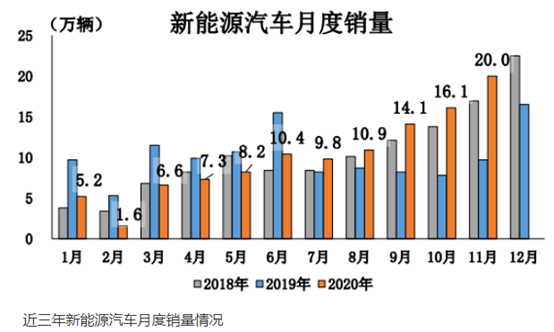
Source: China Automobile Association
The rapid development of new energy vehicle market has led to the demand for raw materials upstream of cobalt and lithium.
Electrolytic cobalt
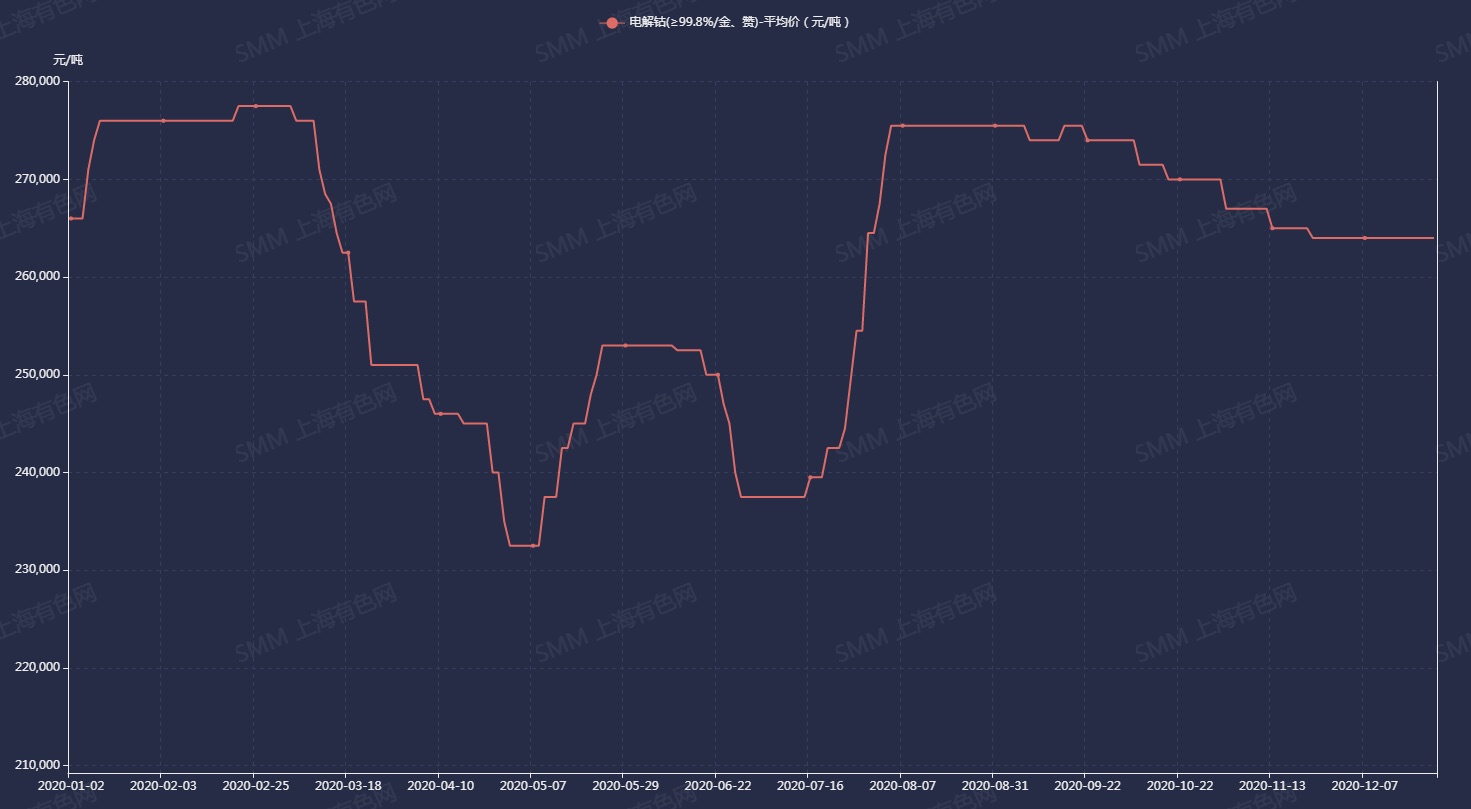
According to SMM research, in the second quarter, affected by the epidemic, the price of electrolytic cobalt showed a "V" trend, with the lowest price of 232500 yuan / ton, the lowest since mid-August 2019. In the third quarter, prices bottomed out and rose again, reaching a peak of 27550 yuan / ton. In the fourth quarter, the price of electrolytic cobalt showed a downward trend. As of today, the average price of electrolytic cobalt is 264000 yuan / ton, up 31500 yuan / ton from the lowest level since the beginning of the year.
Average price of SMM electrolytic cobalt (yuan / ton)
SMM believes that under the influence of the epidemic in 2021, the impact of cobalt raw material supply and logistics is difficult to return to normal quickly, the demand side expects the growth rate of the new energy market to be objective, the 5G replacement trend in the digital market continues, and the overall expectation is optimistic. In addition, the industry chain integration model changes the pricing method, and in the future, with the supply and demand of cobalt city gradually reaching a balance, the fluctuation range of cobalt price will gradually narrow. Based on the fundamental judgment of the balance of supply and demand in China from 2021 to 2023 and the evaluation of the above factors, SMM predicts that the average annual price of electrolytic cobalt in 2021 is about 280000 yuan / ton.
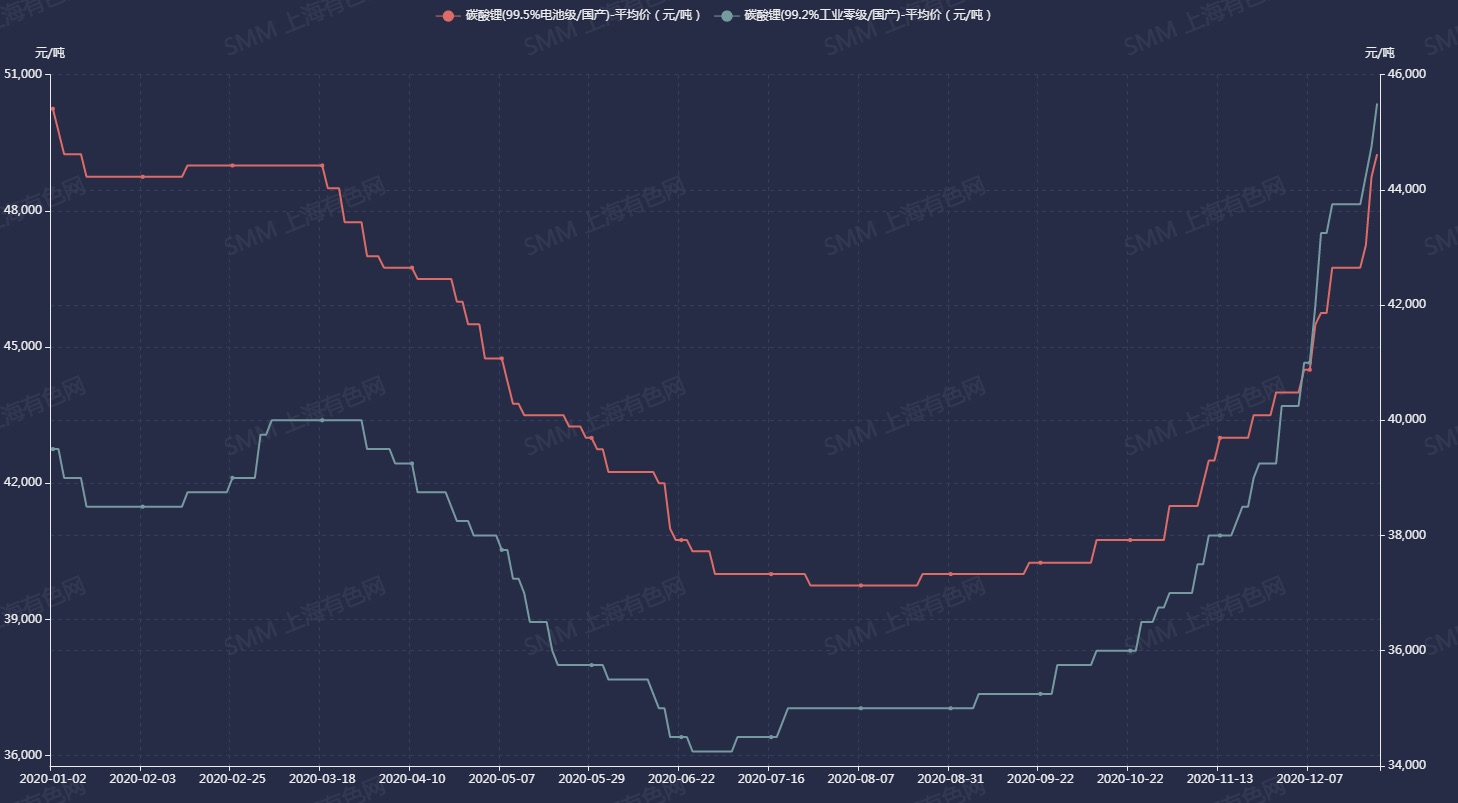
Average price of SMM lithium carbonate (yuan / ton)
"Click to view SMM metal industry chain data
Lithium carbonate
According to SMM research, the price of battery-grade lithium carbonate has been falling since mid-late March, reaching a record low of 39750 yuan per ton. Prices have been rising since the end of August. as of today, the average price of battery-grade lithium carbonate is 49250 yuan / ton, up 9500 yuan / ton from the lowest level since the beginning of the year.
SMM believes that January 2021 will continue the mood of stock preparation at the end of the year, superimposing some lithium salt manufacturers from January to February to stop production and maintenance one after another, to the market or centralized stock procurement behavior, so we expect the supply and demand structure to be tight or will intensify, SMM expects the price in the first quarter may steadily rise to 53000 yuan / ton. Starting from the second quarter, the supply volume of some enterprises has increased and the overseas imported lithium carbonate has increased considerably. The demand side in May and June is the off-season for procurement, and the price may drop slightly, and the demand side will gradually begin to take an impulse in the third or fourth quarter. The price of lithium carbonate may continue to rise to 58000 yuan / ton.
![[Rumeur sur la batterie à semi-conducteurs réfutée : Wang Fang du CATARC déclare qu'aucune détermination de conformité n'a été faite pour les entreprises de batteries à semi-conducteurs]](https://imgqn.smm.cn/usercenter/JSjkr20251217171728.jpg)
![[Batterie au lithium : Foshan Plastics prévoit plus de 7 milliards de RMB pour une capacité de séparateurs haut de gamme]](https://imgqn.smm.cn/usercenter/aXRJI20251217171728.jpg)
![[État solide : ProLogium démarre la production en série de cellules tout-solide Gen 3.5 à 381 Wh/kg]](https://imgqn.smm.cn/usercenter/mpqgn20251217171727.jpg)