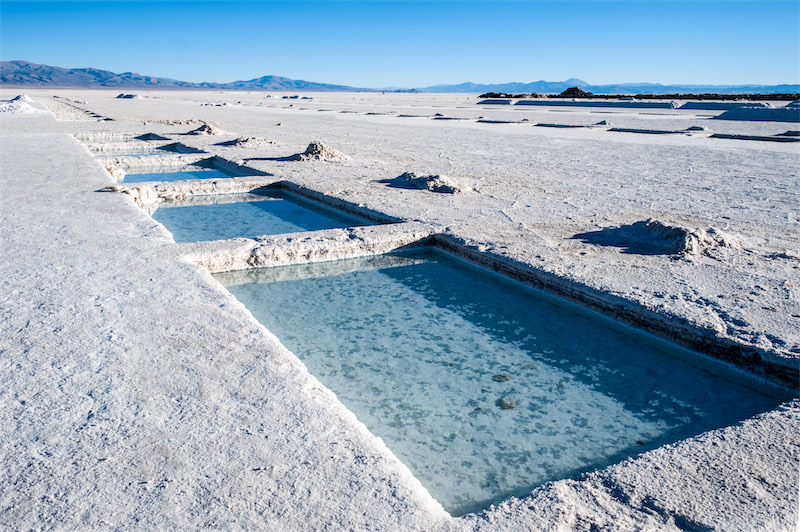
SMM News: at the end of October 2020, Quan Batu Village, Baotou City, Inner Mongolia is different from the past. Due to the arrival of the project of thin soil improvement in the north, the 2000 mu moderate saline-alkali experimental field in the village showed the busy scene of autumn harvest for the first time: two Ward harvesters shuttled back and forth in the vast expanse of rice fields, rice waves rolled and rice ears golden. Before this, because of the serious salinization problem, the surface of the earth was covered with snow-white saline particles all the year round. Coincidentally, the Miaoying village of Tumot right Banner, 100 kilometers away, was once in the same situation. This year's autumn harvest season, where 800 mu of heavy saline-alkali experimental fields, after a season of soil improvement and sowing and breeding, the best plot to harvest about 400 jin of rice per mu.
The idea of "growing grain in saline-alkali land" once flashed only in the dreams of local farmers. Now, as a world-famous and leading rare earth enterprise in China, northern rare earths follow the guidance of the state and local governments, and produce soil improvers through the comprehensive utilization of by-product resources of rare earth smelting, which not only reduces the production cost of rare earth smelting, but also helps local governments to effectively alleviate the difficulties such as salinization of land and abandonment of cultivated land around the Yellow River.
On September 18, 2019, a symposium on ecological protection and high-quality development of the Yellow River Basin was held in Henan, a "major agricultural province". General Secretary Xi Jinping pointed out in his important speech that the protection of the Yellow River is a grand plan related to the great rejuvenation of the Chinese nation, and it is necessary to jointly do a good job in great protection and promote great governance, so as to make the Yellow River a happy river for the benefit of the people. "Huanghe Ning, the world is peaceful." We will adhere to the comprehensive, systematic and source management of mountains, rivers, forests, fields, lakes and grasses, and promote the high-quality development of the Yellow River basin.
Hammering is the ultimate practice. As one of the provinces along the Yellow River, Inner Mongolia Yellow River Irrigation District is located in the northwest of the motherland, is one of the three super-large irrigation areas in China, and is also an important commercial grain and oil production base in the country and Inner Mongolia. However, in the vast land of Inner Mongolia, the problem of secondary salinization is extremely prominent. The existing 15.853 million mu of salinized cultivated land accounts for 11.6% of the total cultivated land. Moreover, with the shortage of water in the Yellow River and the introduction of a new water distribution scheme, the amount of water diverted from the Yellow River has been greatly compressed, and the effect of water irrigation on the improvement of alkaline soil in saline-alkali soil is not good. It is no longer the mainstream of saline-alkali soil improvement.
As an important pillar of Inner Mongolia industry, rare earths in the north have made great achievements not only in the field of rare earth application, but also by state-owned enterprises. Hao Zhongping, deputy general manager of rare earths in the north, said: "the research and development and application of soil improvers have not only achieved a win-win situation in the comprehensive utilization of by-products of rare earth production and saline-alkali farmland improvement, but also brought multiple benefits."
At the beginning of 2019, on the basis of a large number of previous investigations, rare earths in the north organized scientists to carry out a series of key problems in the preparation of soil improvers from liquid ammonium sulfate by-products. At the same time, we will jointly introduce Israeli brands and proprietary technology with partners to build a new soil improver test line. Subsequently, the "five-in-one" improvement technology of changing desulphurization gypsum into alkali and salt discharge, mixing sand and reducing capacity, increasing application of rare earth organic fertilizer, planting salt-tolerant crops and applying improver came out, and the salinization soil restoration project and field planting experiment project were launched one after another. the new technology of salinization soil improvement in Inner Mongolia Yellow River irrigation area was officially launched in the north.
In the midsummer of August, the saline-alkali experimental fields in Quan Batu Village are thriving, and strong rice is struggling to heading; rice field crabs perform "crab-rice symbiosis" among the field ridges; egrets and magpies circle low and live here; and the running water of rice fields converges into dozens of mu of fish ponds, raising grass carp, carp, and rice field ducks, forming a "water, land and air" three-dimensional ecological chain. Since the start of the saline-alkali land improvement experiment, Li Zhiqiang, director of the Engineering Department of the Northern rare Earth maintenance Service Branch, has been stationed in the fields. Over the past few months, he has not only gained a rusty red complexion, but also this vibrant beauty of the countryside in front of him. Workers in the field of rare earths, who used to be busy with the production line, are now bowing to the fields and turning the "integrated project of ecological co-cultivation of rice fields" from a blueprint into a reality.
Not only that, the research and application of soil modifiers also find a new way for sustainable utilization of ammonium sulfate by-products. Fayao, deputy head of the Agricultural Fertilizer Group of the functional Materials Division of the North rare Earth maintenance Service Branch, said that compared with the traditional ammonium sulfate by-product treatment process, the production of soil improver and its application in the surrounding areas can increase the economic benefits by more than 100 yuan per ton of by-products, and truly achieve industrial, agricultural, economic, environmental and social benefits.
With the success of the autumn harvest, thousands of mu of saline-alkali experimental fields gradually returned from hot to calm, while the soil improver test line switched from "production key" to "construction key". According to the current plan of 1 million tons of ammonium sulfate solution produced by rare earth smelting in northern China, and the plan to continue to expand the saline-alkali test field next year, more soil modifiers made from ammonium sulfate by-products will go off the test line, and the cost of comprehensive utilization will be greatly optimized. the efficiency of industrial and ecological environmental protection will be further improved. Therefore, in order to catch up with the idle agriculture in autumn and winter, rare earths in the north immediately began to upgrade the soil improvement production test line to the pilot test line, so as to make a good assembly reserve for soil improvement agents in the future.
Not only that, rare earths in the north have also implemented a special talent introduction program, and three agronomic postgraduates have stepped into the doors of industrial enterprises. With policy support, mature technology, rich resources, excellent equipment and professionals, the future of rare earths in the north is not only a better cost of comprehensive utilization and a "bumper year of rice blossoms", but also a wider world.