SMM9 March 18: on March 29, 2020, BYD officially released the blade battery, which uses lithium iron phosphate technology and will first be installed in the "Han" model. On July 12, BYD Han officially went on sale, equipped with BYD's newly developed blade battery with the main safety brand, which is highly sought after by consumers.
According to data, in August this year, the cumulative delivery volume of BYD Han reached 4000 vehicles, including Han EV and Han DM versions. In addition, in the field of new energy models, BYD sold 14009 vehicles in August, up 1.5 per cent from the previous month, of which the DM model rose 37.6 per cent from the previous month.
Through structural innovation, the "blade battery" can skip the "module" in the group, greatly improve the volume utilization, and finally achieve the design goal of installing more cells in the same space. Compared with the traditional battery pack, the volume utilization of the "blade battery" has increased by more than 50%, that is, the mileage can be increased by more than 50%, reaching the same level as the high energy density ternary lithium battery.
The "blade battery" can be called the upgraded version of lithium iron phosphate battery to some extent, and the safety of lithium iron phosphate battery is higher than that of ternary battery. Safety is not only the safety of car storage and charging, but also the safety of collision. The new incremental penetration rate of new energy vehicles is only 4%, and the number of new energy vehicles is less than 2%. If the retention is increased to 10%, the safety of the collision is more worthy of attention.
At present, BYD is accelerating the expansion of "blade battery" capacity, and has set up battery plants in Chongqing, Shenzhen, Xi'an, Qinghai, Changsha and Guiyang. Fudi Chongqing plant, which is an important production base for blade batteries, BYD will build eight production lines by the end of this year to achieve the capacity target above 20GWh.
And Fudi Changsha factory is also carrying out large-scale recruitment. On September 4, the factory held an oath meeting to ensure that the project was completed in mid-October this year, the production line equipment was put into operation, the first production line was put into production on December 15, and the "blade battery" products were put off the line. According to the previous plan, the Fudi Changsha plant will be put into production in April next year.
The "blade battery" capacity of Fudi Guiyang plant is 10GWH, and the proposed production date is July 2021. According to this calculation, the annual production capacity of BYD's "blade battery" will reach 33GWhby 2021, accounting for about 44% of BYD's total power battery production capacity in the same period.
BYD said it will use blade batteries in all its models after Q1 next year, and the super hybrid DMI4.0 will also introduce blade batteries.
As the "blade battery" has the advantages of safety, long service life and stable cost (not affected by the price fluctuation of cobalt, nickel and other raw materials), it attracts the major mainframe factories. It was previously reported that Mercedes-Benz and Toyota may have reached a partnership with BYD to lock the battery business in the "blade battery". BYD will also supply Daimler with its latest lithium iron phosphate power battery "blade battery".
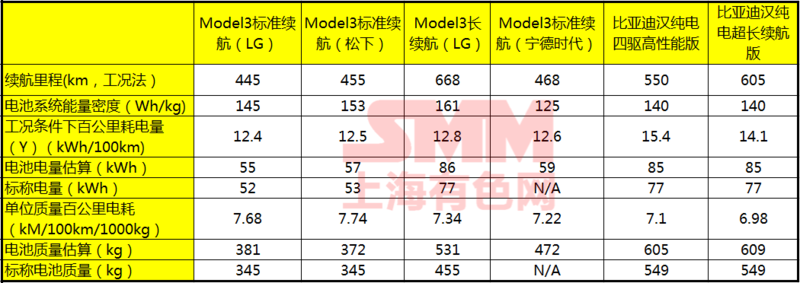
SMM believes that the safety of blade batteries, which brings long service life (up to 605KM) and the stability of iron and lithium costs (unlike Sanyuan, which is subject to fluctuations in cobalt and nickel prices), has not only attracted domestic mainframe factories, but also brought the attention of overseas car companies. At present, overseas best-selling models are still mainly 6-series ternary models, and iron-lithium batteries are seldom used in overseas car companies due to patent problems. In terms of three yuan, although the high nickel technology of overseas battery enterprises is better, but considering the safety, the proportion of high nickel used by automobile enterprises is still small. Now the performance of the blade battery meets the needs of overseas car companies. If the blade battery can match the vehicle model, it is believed that the iron lithium battery can also occupy a certain position in the overseas market in the future.
Scan the code to apply to join the SMM Cobalt and Lithium Industry Exchange Group
![Rétrécissement du volume : les concentrés de wolframite chutent de près de 5 % en moins d’un mois, que se passera-t-il après être passés sous la barre des 400 000 yuans ? [Commentaire SMM]](https://imgqn.smm.cn/usercenter/NPpAM20251217171723.jpeg)
![[SMM Flash Chrome] La multiplication des attaques sur les routes minières du Baloutchistan pakistanais menace la chaîne d'approvisionnement en chromite](https://imgqn.smm.cn/usercenter/xLlnY20251217171724.jpeg)
![[SMM Éclair Chrome] La KRAOMA de Madagascar relance l'exploitation de chrome à Brieville après des années d'inactivité](https://imgqn.smm.cn/usercenter/XUnxM20251217171723.jpeg)