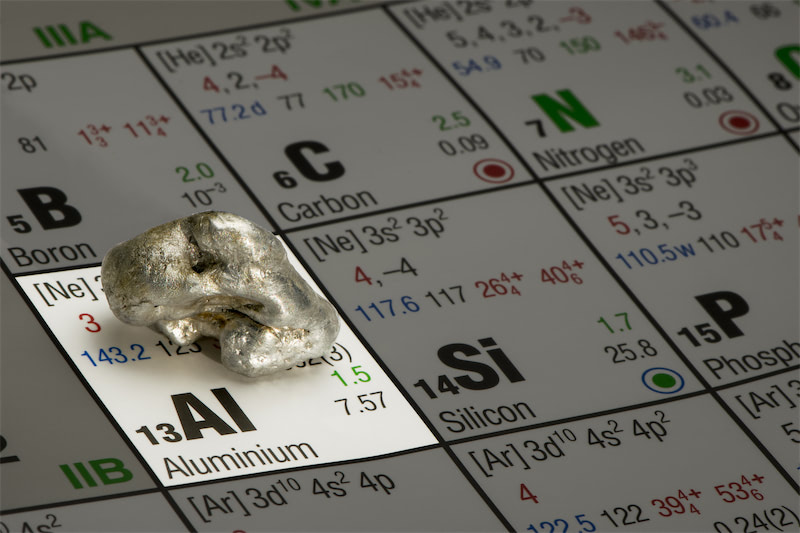
International Aluminum Association: global aluminum demand is expected to fall by 5.4% this year

Publié: Jul 22, 2020 16:07 (GMT+8)
Source: China Nonferrous Network

SMM News: MilesProsser, secretary-general of the International Aluminum Association, said that global aluminum demand is expected to fall 5.4% this year compared with 2019, which will lead to inventories because of the increase in production so far this year.

However, in an interview with S & P Global Platts Energy News, Prosser quoted research analyst CMGroup as saying that demand will grow strongly in the medium term because of government investment in infrastructure, construction and automotive industries to accelerate economic recovery after the coronavirus pandemic.

He pointed out that primary aluminium production has increased so far this year, in part because smelters rely on a stable power supply, making it difficult to shut them down.

"Global primary aluminum production in 2019 will be 63.7 million tons," Prosser said. Data from 2020 to the end of May show that overall global production has not declined but increased slightly as a result of the epidemic. This global data reflects regional growth in North America, the Gulf Cooperation Council and China this year compared with the same period in 2019, as well as increased production in Africa, South America, other Asia (excluding China) and Western Europe. "

Global output rose 0.4 per cent in January from a year earlier, up 4.4 per cent in February, 1.3 per cent in March, 0.6 per cent in April and 0.7 per cent in May, according to IAI.

In the medium to long term, the average growth rate of the aluminium market is expected to be between 2% and 4%, higher than the expected global average economic growth rate, as demand increases with population growth and demand for more construction, cars and packaging.

According to the Israeli Aviation Industry Corporation's vision, this will bring the current demand of about 90 million tons to an estimated 150 million tons by 2040, including recycled materials, which currently account for about 35 per cent of the total demand, and will rise to 45 per cent of the demand by 2040.

"after the outbreak, the outlook for the industry will be more optimistic," Prosser said. The current pandemic has brought about structural changes. We believe that aluminium demand will continue to grow strongly over the next 10 to 20 years and we will need much more production than we do at present. "

Overcapacity has long been considered a problem for the global aluminium industry, especially after market overcapacity was reported last year and at the beginning of the year, leading to a sharp fall in aluminium prices. However, Prosser said: "this is only a slight mismatch between current production and demand, and we can expect the market to solve this problem." With the passage of time, the problem of oversupply will become less serious, but I do not doubt that this is a problem at present. "

But months of depressed metal prices have still done damage. Rio Tinto announced in early July that it would close its New Zealand aluminium smelter, while Alcoa announced that it would idle its US Intalco smelter at the end of this month. Earlier this year, some analysts believed that nearly 1/4 of smelters had been losing capacity with aluminium prices below $1500 a tonne. Prosser acknowledges that there should continue to be M & A opportunities in the industry, which could be good for the industry as a whole.

Prosser said that with some fundamental market changes, the structure of the aluminum industry will become better in the future.

He said overcapacity may only be a temporary problem because the level of capacity investment is changing. Most of China's new aluminium smelting capacity has occurred over the past 20 years, but "the level of aluminium production in China is now in a stable period, so it is not clear where investment will be made," he said. "

The market may also have access to the London Metal Exchange's recent Transparency Initiative, which requires metal custodians to report "non-warehouse receipt" stock storage-that is, reporting how much metal is stored in traditional LME guarantee systems, which currently represent only part of a limited market.

The results of the new reporting system, which began to be released last week, "will increase visibility, although some metals will still be invisible to the market," Prosser said.

The secretary-general of the International Aluminium Association said the extent and timing of government intervention in economies to encourage infrastructure investment would be a key factor supporting the next phase of aluminium prices, and such intervention should be "net good" for the industry.

Aluminium prices have been on an upward trend since hitting a recent low of $1421 a tonne in early April, reflecting China's economic recovery from the peak of the epidemic and growing optimism in global stock markets that the worst is over. The spot price of LME closed at $1618 a tonne of aluminum on July 17th.

Scan the QR code and join the SMM metal communication group.
Déclaration sur la source des données : À l'exception des informations publiques, toutes les autres données sont traitées par SMM sur la base d'informations publiques, d'échanges avec le marché et en s'appuyant sur le modèle de base de données interne de SMM. Ils sont fournis à titre indicatif uniquement et ne constituent pas des recommandations décisionnelles.

Pour toute demande d'information ou pour en savoir plus, veuillez contacter : lemonzhao@smm.cn
Pour plus d'informations sur l'accès à nos rapports de recherche, veuillez contacter :service.en@smm.cn
Actualités Connexes
Alba progresse dans l'acquisition d'Aluminium Dunkerque et vise une expansion mondiale de l'aluminium bas carbone
il y a 4 heures
Alba progresse dans l'acquisition d'Aluminium Dunkerque et vise une expansion mondiale de l'aluminium bas carbone
Lire la suite
Alba progresse dans l'acquisition d'Aluminium Dunkerque et vise une expansion mondiale de l'aluminium bas carbone
[SMM Express Aluminium] Aluminium Bahrain (Alba) a indiqué que son projet d'acquisition d'Aluminium Dunkerque progresse, l'entreprise s'efforçant d'obtenir les dernières approbations réglementaires nécessaires à la finalisation de la transaction. Lors de la réunion du conseil d'administration du T3 le 22 septembre, le président Khalid Al Rumaihi a qualifié cet accord d'étape importante dans l'expansion internationale d'Alba et dans son ambition de bâtir une plateforme mondiale d'aluminium bas carbone. Alba a signé l'accord d'acquisition d'Aluminium Dunkerque en mai 2026, la transaction étant ensuite évaluée à environ 2,2 milliards de dollars américains. Aluminium Dunkerque est la plus grande fonderie d'aluminium primaire de l'UE, tandis qu'Alba exploite la plus grande fonderie d'aluminium mono-site au monde à Bahreïn. L'acquisition reste soumise à des approbations réglementaires en attente et n'est pas encore finalisée. Le conseil a également approuvé le plan marketing préliminaire 2027 d'Alba, tout en examinant les questions opérationnelles, commerciales et de gouvernance. Pour l'approvisionnement en aluminium, le principal enseignement est qu'Alba reste déterminée à mener à bien l'acquisition de Dunkerque malgré les perturbations régionales de l'approvisionnement qui ont affecté ses opérations à Bahreïn plus tôt cette année.
il y a 4 heures
La Guinée cherche un financement américain pour le projet de raffinerie d'alumine de la CBG
il y a 4 heures
La Guinée cherche un financement américain pour le projet de raffinerie d'alumine de la CBG
Lire la suite
La Guinée cherche un financement américain pour le projet de raffinerie d'alumine de la CBG
[SMM Express Aluminium] La Guinée cherche un financement américain pour la raffinerie d’alumine prévue par la Compagnie des bauxites de Guinée (CBG), alors que le pays accélère ses efforts pour transformer davantage sa bauxite localement. Le ministère guinéen des Mines a indiqué que des discussions ont eu lieu le 18 septembre avec la Société américaine de financement du développement international (DFC) et la Banque d’import-export des États-Unis au sujet d’une éventuelle participation au financement du projet. La CBG vise un début des travaux d’ici fin 2026, bien que le besoin de financement de la raffinerie et l’éventuelle contribution américaine n’aient pas encore été divulgués.
il y a 4 heures
Le Parlement européen soutient l'élargissement du MACF aux produits en aval de l'aluminium et de l'acier à partir de 2028
il y a 5 heures
Le Parlement européen soutient l'élargissement du MACF aux produits en aval de l'aluminium et de l'acier à partir de 2028
Lire la suite
Le Parlement européen soutient l'élargissement du MACF aux produits en aval de l'aluminium et de l'acier à partir de 2028
[SMM Dépêche Aluminium] Le Parlement européen a soutenu un élargissement du mécanisme d'ajustement carbone aux frontières de l'UE (MACF) aux produits en aval de l'aluminium et de l'acier à partir de 2028. Le Parlement a adopté sa position de négociation le 15 septembre par 464 voix contre 50, avec 159 abstentions, soutenant une couverture allant au-delà de la proposition initiale de la Commission européenne pour 180 produits en aval supplémentaires, y compris des produits à forte intensité d'aluminium tels que les fils, les fixations, les ressorts et certains produits finis. Pour l'aluminium, le Parlement propose également d'abaisser le seuil d'exemption du MACF de 50 tonnes à seulement 5 tonnes, ce qui signifie que les importateurs de plus petits volumes pourraient être soumis aux exigences du MACF. Il soutient également des règles anti-contournement plus strictes, y compris l'utilisation de valeurs par défaut d'émissions fondées sur le pays d'origine réel lorsque les autorités soupçonnent des tentatives d'éviter les obligations du MACF. Ces changements ne sont pas encore définitifs, des négociations avec le Conseil de l'UE étant encore nécessaires. S'il est adopté, cet élargissement augmenterait les obligations de déclaration carbone et potentiellement l'exposition aux coûts carbone pour les exportateurs de produits en aval de l'aluminium vers l'UE, étendant le MACF au-delà de l'aluminium primaire et semi-fini.
il y a 5 heures