SMM7, February 2: fuel consumption points and new energy vehicle points are policies put forward by the state that are of great significance to the long-term economic and ecological development. The Ministry of Industry and Information Technology, as the competent department of the automobile industry, will, to a certain extent, implement effective management and control over automobile production enterprises according to the integral policy.
The average fuel consumption of Chinese passenger car enterprises and the points of new energy vehicles in 2018.
Today, the Ministry of Industry and Information Technology, the Ministry of Commerce, the General Administration of Customs, and the General Administration of Market Supervision of the people's Republic of China issued an announcement, according to the measures for the Administration of the average fuel consumption of passenger vehicle Enterprises and the points of New Energy vehicles (decree No. 44 of the Ministry of Industry and Information Technology, the Ministry of Finance, the Ministry of Commerce, the General Administration of Customs and the General Administration of Market Supervision), The average fuel consumption of Chinese passenger car enterprises and the points of new energy vehicles in 2018 will be announced.
In 2018, a total of 23.1391 million passenger vehicles (including new energy passenger vehicles, excluding export passenger vehicles, the same below) were produced / imported by 141 passenger car enterprises in China, with an average vehicle preparation mass of 1456 kg, an average fuel consumption of 5.80L / 100km, a positive fuel consumption score of 9.9299 million points and a negative fuel consumption score of 2.9513 million points. The positive score for new energy vehicles is 4.0353 million points.
Among them, 112 domestic passenger car manufacturers have produced a total of 22.1961 million passenger vehicles, with an average vehicle preparation mass of 1438 kg, an average fuel consumption of 5.74L / 100km, a positive fuel consumption score of 9.7952 million points, a negative fuel consumption score of 262.22 million, and a new energy vehicle positive score of 3.9374 million points. 943000 passenger vehicles were imported from 29 imported passenger car supply enterprises, with an average vehicle preparation mass of 1872 kg, an average fuel consumption of 7.26L / 100km, a positive fuel consumption score of 134700 points, and a negative fuel consumption score of 3291000. the positive score of new energy vehicles is 97900 points.
"double integral" policy
The fuel consumption integral in the "double integral" policy is calculated by the average fuel consumption of the enterprise and the target value of the average fuel consumption of the enterprise. The average fuel consumption of the enterprise is the sum of the product of the passenger vehicle consumption produced or imported by the enterprise in the accounting year and the corresponding production or import volume in the current year divided by the average fuel consumption calculated by the total amount of production or import in the current year, that is, the actual value of fuel consumption. Fuel consumption integral = (up to standard value-actual value) * actual production. If the enterprise reaches the standard, it will produce the positive integral of fuel consumption; if the enterprise fails to meet the standard, it will produce the negative integral of fuel consumption.
According to the bicycle points based on mileage, the proportion requirements of enterprise new energy points and the production and import quantity of new energy vehicles, the actual value and target value of new energy points are calculated. The actual value greater than the target value is the new energy vehicle positive integral, on the contrary, it is the new energy negative integral.
Positive fuel consumption points allow carry-over and transfer in affiliated enterprises. Positive points for new energy vehicles allow free trading and cannot be carried forward. Negative points for fuel consumption and negative points for new energy must be offset in the reporting year, that is, negative points generated in the previous year must be compensated to zero in the current year.
For some netizens, double points is still a strange concept, and the double points policy is not very familiar with the double points policy. From the policy level, the double points policy is closely related to the new energy vehicle new policy. This is in contrast to the traditional fuel consumption. The policy of the state coming out of Taiwan is in order to be more environmentally friendly and the general trend in the future. If car companies do not produce enough new energy vehicles, then no matter how good the vehicles are, if the points are not enough, they will not be able to sell cars on the market.
In addition, the policy is currently targeted at companies that produce or import more than 30,000 units, such as Ferrari, Rolls-Royce and so on, which are not subject to examination.
The change of the New "double integral" Policy
Double points policy began in 2019, 2018 only encouraged, not included in the assessment criteria. In previous versions, points for new energy vehicles were required to be 8% in 2018, 10% in 2019 and 12% in 2020. 2018 is just a transition, and the real review period will begin in 2019. The formal landing of the new policy indicates that on the one hand, the government requires traditional automobile enterprises to reduce fuel consumption, on the other hand, it requires enterprises to improve the production and marketing of new energy vehicles.
On the same day, Xin Guobin, member of the leading party group of the Ministry of Industry and Information Technology and vice minister of the Ministry of Industry and Information Technology, mentioned in his keynote speech at the 2019 World New Energy vehicle Conference that in the first five months of this year, China's production and sales of new energy vehicles were 480000 and 464000 respectively, up 46 percent and 41.5 percent respectively over the same period last year. And according to incomplete statistics, the development of China's new energy vehicle industry has achieved a cumulative reduction of 24.25 million tons of refined oil consumption, with a total output value of 2 trillion yuan.
In view of the two major issues of concern to the industry, namely, new energy security and the double-point policy, Xin Guobin said that the Ministry of Industry and Information Technology is speeding up the improvement of the safety and security system, and at the same time, the Ministry of Industry and Information Technology is also carrying out the investigation of hidden dangers in the whole industry. It is reported that through the summary of the implementation of the current double-point policy, the Ministry of Industry and Information Technology is drawing up a draft implementation of the 2021-2023 double-point policy, and is about to enter the stage of public consultation.
SMM believes that from 2015 to 2018, China's new energy vehicle industry has developed rapidly under the promotion of various policies, especially the new energy subsidy policy, and has gradually stepped into the right track of development. However, the development of the new energy vehicle industry is still not mature. In the future, under the market-oriented competition environment of complete withdrawal of new energy subsidies, we still need the support of other policy means, including fiscal and taxation policies to non-fiscal and tax policies, such as supporting facilities; double points policy to promote the transformation of the industry, and so on.
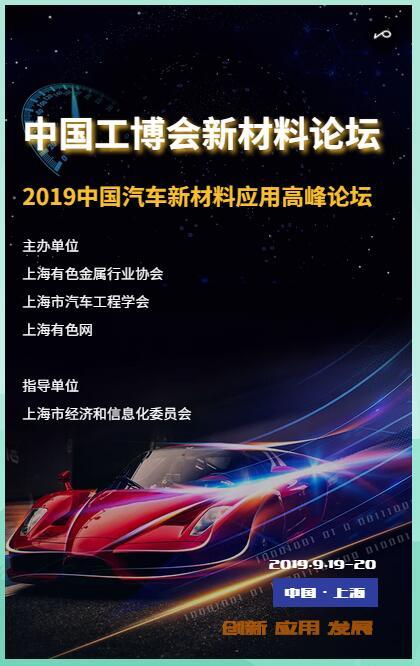
"Click to enter the registration page

Scan QR code and apply to join SMM metal exchange group, please indicate company + name + main business
![[SMM Flash Chrome] La multiplication des attaques sur les routes minières du Baloutchistan pakistanais menace la chaîne d'approvisionnement en chromite](https://imgqn.smm.cn/usercenter/xLlnY20251217171724.jpeg)
![[SMM Éclair Chrome] La KRAOMA de Madagascar relance l'exploitation de chrome à Brieville après des années d'inactivité](https://imgqn.smm.cn/usercenter/XUnxM20251217171723.jpeg)
![Rétrécissement du volume : les concentrés de wolframite chutent de près de 5 % en moins d’un mois, que se passera-t-il après être passés sous la barre des 400 000 yuans ? [Commentaire SMM]](https://imgqn.smm.cn/usercenter/NPpAM20251217171723.jpeg)