SMM June 9: Recently, multiple rare earth scrap recycling enterprises reported that operating rates may decline in June-July. Large enterprises, with a higher proportion of self-procurement, are seeing more significant production reductions; small and medium-sized enterprises, relying less on self-procurement and more on processing orders, are relatively less affected.
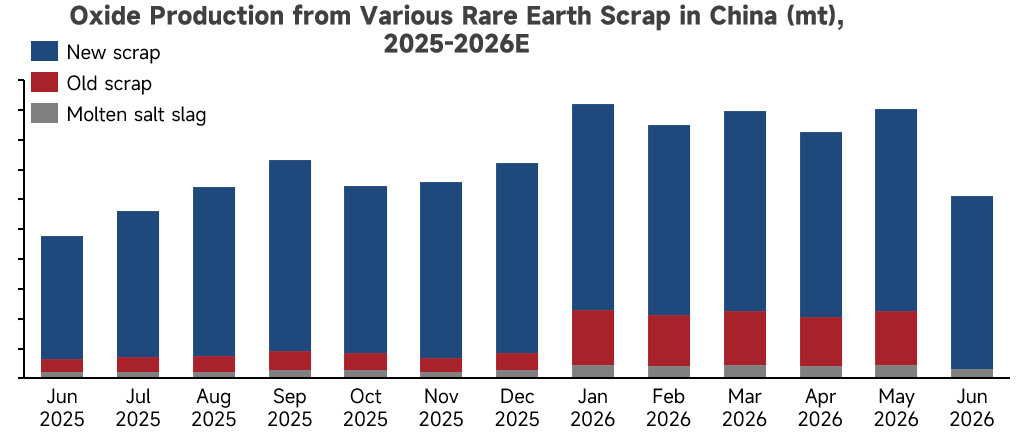
The main reason for these production cuts is a shortage of taxed scrap supply, making it difficult to sustain high operating rates at recycling enterprises. Behind this situation is the ongoing tightening of tax compliance reviews, which has somewhat constrained scrap procurement. Specifically, from H2 2025, local fiscal rebate policies were successively abolished. Entering 2026, invoice-related tax compliance audits intensified further, prompting rare earth scrap recycling enterprises to essentially suspend the quoting and purchasing of untaxed scrap for compliance reasons.
Before this, untaxed scrap mainly comprising old scrap, scrap generated by small and medium-sized NdFeB enterprises and downstream processors, as well as material held by scrap traders. The remainder was taxed scrap, mainly sourced from large magnetic material enterprises, commanding a relatively higher purchase price due to compliance costs. Currently, recycling enterprises face an inability to obtain invoiced material, and as inventory continues to be consumed, recycling and separation enterprises are generally under pressure to cut production.
Affected by recycling enterprises' effective suspension of untaxed scrap purchases, small and medium-sized NdFeB enterprises, downstream processors, and scrap traders face two choices: convert untaxed scrap into taxed scrap for normal trading; or stockpile inventory and hold off shipments. Either option will impose significant financial pressure on small and medium-sized enterprises and traders. Intense NdFeB market competition means scrap sales are a primary profit source for some smaller enterprises; rising scrap shipment costs will further squeeze their profit margins, potentially leading to losses. In the long term, if SME profitability fails to improve, their market share will gradually shrink, large magnetic material plants will increase their capacity concentration, and the supply of taxed scrap in the market may eventually move toward a relatively orderly and controllable landscape.