On April 9, 2026, the Japanese Cabinet officially approved the latest amendment to the Waste Disposal and Public Cleansing Act (commonly known as the "Waste Cleansing Act"). The core of the amendment is to upgrade metal recycling operations from a notification system to a permit system, and to impose a new obligation requiring confirmation from the Minister of the Environment for scrap metal exports. The aim is to curb the illegal outflow of domestic metal resources while addressing issues such as fires and pollution at scrap yards.
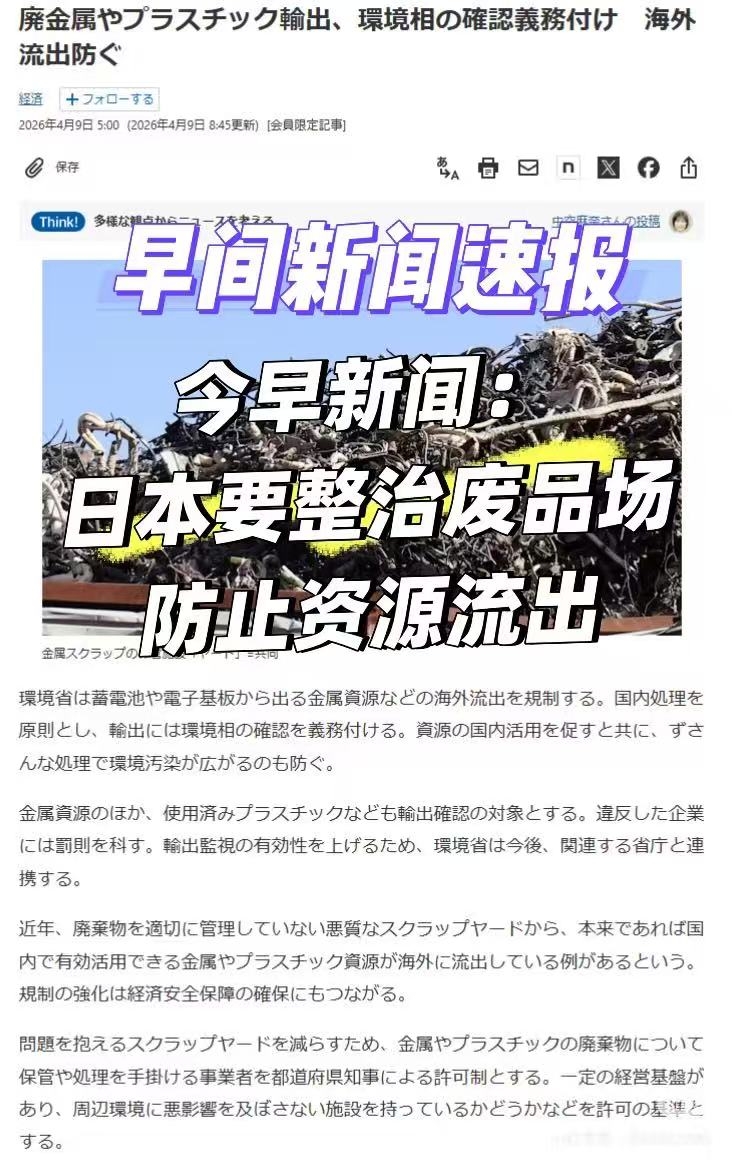
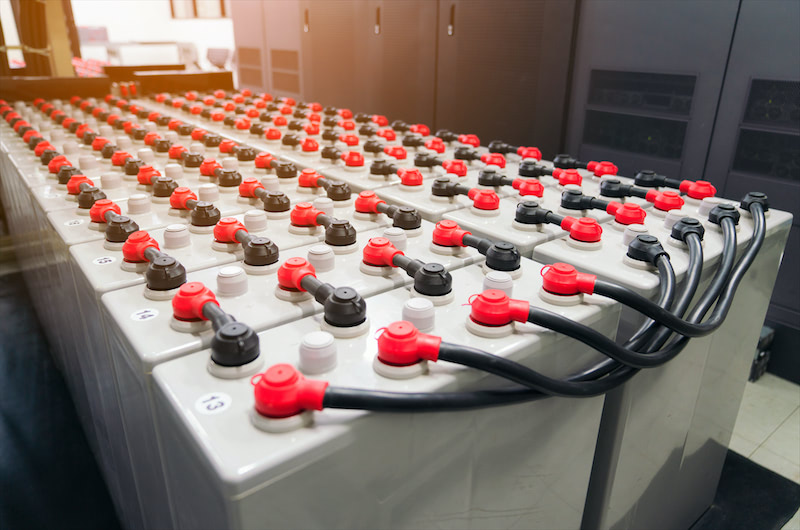
The proposal of this legislation was not achieved overnight. As early as 2025, Japan's Ministry of the Environment had initiated relevant discussions, soliciting opinions from industry multiple times regarding the illegal export of metal-containing scrap such as waste lead-acid batteries and electronic circuit boards. In February 2026, the Japan Iron and Steel Recycling Institute publicly opposed the draft provision that "treats all metal scrap as potentially hazardous materials," arguing that the permit system threshold was too high and could threaten the survival of small and medium-sized recycling enterprises. However, citing "safeguarding economic security and preventing resource outflow," the Japanese government still pushed the legislation to be finalised at the Cabinet in April and plans to submit it to the Diet for deliberation. It is expected to be implemented in phases within two years and six months after promulgation, with the core export confirmation and permit system provisions taking priority.
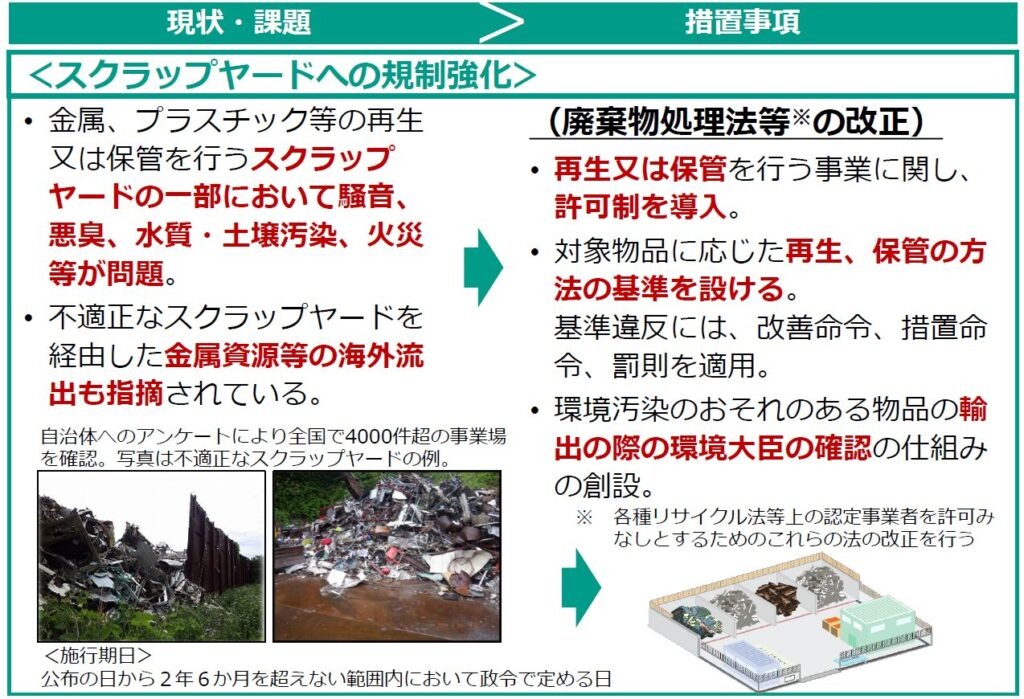
Domestic enterprises in Japan showed divided attitudes. Large recycled metal enterprises generally supported the new regulations, believing they could eliminate non-compliant small and medium-sized dismantling yards, reduce vicious competition in the industry, and ensure stable domestic supply of recycled raw materials. However, small and medium-sized recyclers were concerned that the site, environmental protection, and capital thresholds of the permit system were too high, posing risks of closure. Some traders reliant on exports also indicated that the addition of export confirmation procedures would significantly extend delivery cycles and increase compliance costs.
This legislation represents an important step in Japan's strengthening of resource control. In the short term, it will reshape the domestic metal recycling and export landscape, while in the long term, it will drive Japan's recycled metal industry toward standardisation and concentration.
Source disclaimer: SMM derived this content based on public information and market communication for reference only. For any objections, please contact 021-20707896.
![SHFE Lead Moved Sideways Around Moving Average Intraday, Recording a Three-Day Winning Streak [Lead Futures Brief]](https://imgqn.smm.cn/usercenter/bAjSC20251217171721.jpg)
![Lead Prices Fell Then Rose During the Week, Secondary Lead Premiums Diverged [SMM Secondary Refined Lead Weekly Review]](https://imgqn.smm.cn/usercenter/EhsCj20251217171721.jpeg)
![Smelter Raw Material Inventory Pullback Combined with Lead Price Recovery Supports Scrap Battery Purchase Prices [SMM Scrap Battery Weekly Review]](https://imgqn.smm.cn/usercenter/qnyHQ20251217171721.jpeg)