Key Points: South Korea's Solivis focuses on sulphide solid electrolytes. Founder Dong-wook Shin, a professor in the Department of Materials Science and Engineering at Hanyang University, has over 20 years of R&D experience. The core product has an ionic conductivity as high as 12 mS/cm, surpassing the level of liquid electrolytes. The world's largest mass production plant for sulphide electrolytes was completed in November 2025, with plans to expand capacity to 400 mt by 2027. It has already supplied to leading battery and automaker companies in South Korea and Japan, aiming to become the world's top solid electrolyte provider by 2030.
Solivis, a South Korean company specializing in the R&D and mass production of sulphide solid electrolytes, a core material for all-solid-state batteries, has been selected as a "pre-unicorn" by the South Korean government. The company is accelerating the commercialization of solid-state battery technology through the construction of a globally leading mass production facility.
I. Company Overview: A "Pre-Unicorn" Founded by a Professor
Founded in March 2020, Solivis is headquartered in Gwacheon-si, Gyeonggi-do, South Korea. It is a materials innovation enterprise focusing on the R&D and mass production of sulphide solid electrolytes, a core material for all-solid-state batteries.
The company's founder, Dong-wook Shin, is a professor in the Department of Materials Science and Engineering at Hanyang University. With over 20 years of research experience in solid-state battery technology, he is one of the leading scholars in this field in South Korea. Solivis serves as the core platform for the industrialisation of his academic achievements.
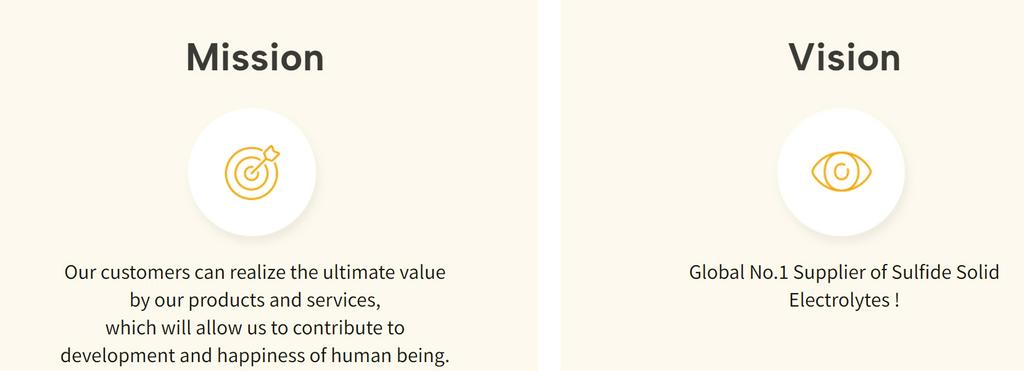
In September 2025, Solivis was selected as a "pre-unicorn" enterprise by the Ministry of SMEs and Startups, qualifying it for up to 20 billion won (approximately 106 million yuan) in special guarantee support. The company's goal is clear: to become the global leader in solid electrolytes by 2030.
II. Core Technologies: Ionic Conductivity Exceeding Liquid Electrolytes
Solivis' technological barriers are mainly reflected in three dimensions:
1. Ultra-High Ionic Conductivity
The room-temperature ionic conductivity of its sulphide solid electrolyte reaches 12 mS/cm, which not only far exceeds that of similar solid electrolytes (typically 1-10 mS/cm) but also surpasses the average level of liquid electrolytes (about 8 mS/cm). This is Solivis' core competitiveness, indicating that its material has the potential to replace liquid electrolytes in terms of ionic transmission efficiency.
2. Third-Generation Wet Synthesis Process
The wet synthesis process independently developed by the company has significant advantages over traditional dry methods:
Cost Control: Reduces the need for high-cost production facilities such as ultra-low dew point drying rooms
Consistency: Precise control of particle size and morphology ensures batch-to-batch consistency
High Performance Output: The crystal structure of the material under the wet process is more stable, and the ionic transmission channels are smoother
3. Intellectual Property Layout
The company holds over 100 original core technology patents in the field of all-solid-state batteries, covering key aspects such as material composition, synthesis processes, and modification technologies, forming a relatively complete intellectual property moat.
III. Capacity and Factory Layout: From "World's Largest" to "Tenfold Expansion"
Solivis has a clear roadmap for capacity expansion:
Hoechun Plant 1: Located in Hoengseong County, Gangwon Province, it was completed in November 2025 and began its first shipments. This plant is the world's largest continuous process smart factory for sulphide solid electrolytes, with a designed annual capacity of up to 42 mt. It is expected to be fully operational in H2 2026.
Hoechun Plant 2: Scheduled to start operations in 2027, it will be approximately ten times larger than Plant 1 to meet the anticipated surge in future market demand. IV. Commercialization Progress: Supply to Leading Clients Achieved
Client Validation: Solivis has officially supplied to domestic battery enterprises in South Korea and Japanese automakers. As early as April 2022, the company began providing evaluation samples to clients. After multiple rounds of validation, it has now entered the stage of small-scale supply.
Price Trends: With the advancement of mass production, the sample price of sulphide solid electrolytes has significantly decreased from 8 million won/kg (approximately 42,000 yuan) at the beginning of 2024 to about one-third of that level (around 2.6 million won/kg, equivalent to 12,600 yuan). The company's long-term goal is to reduce the price to 40,000 won/kg (approximately 189 yuan), at which point it will have cost advantages to directly compete with liquid electrolytes.
Market Expectations: The CEO of Solivis expects that EV demonstration models equipped with all-solid-state batteries will be launched around 2027, aligning closely with the industry's mainstream judgment (small-scale in 2027, large-scale by 2030).
Company Milestones:
- May 2024: Groundbreaking for the factory in Hoengseong, Gangwon Province
- March 2024: Signed an investment memorandum of understanding with Gangwon Province
- February 2024: Series B financing
- August 2023: Clients conducted expanded scale sample evaluations
- May 2023: Obtained KIBO technical warranty certification
- October 2022: Bridge financing
- September 2022: Established Henan R&D center
- April 2022: Provided evaluation samples
- November 2021: Series A financing
- May 2021: Organized R&D
- December 2020: Selected for TIPS (Technology Incubation Program for Startups driven by Accelerator Investment)
- March 2020: Company establishment
SMM's View: The shipments from Solivis' Hoengseong factory mark the transition of sulphide solid electrolytes from "laboratory metrics" to the "mass production validation" phase. Its 12 mS/cm conductivity is indeed leading, but in a global context, the race is far from over. Technologically, Toyota, in collaboration with Idemitsu Kosan, has developed sulphide electrolytes supporting 450Wh/kg battery cells, with plans for mass production and vehicle installation from 2027-2028, holding numerous core patents. In terms of production scale, Solivis' current 42 mt/year, expanding to 400 mt by 2027, contrasts with Chinese enterprises: SEMCORP's 10 mt/year production line is already operational, while Easpring Technology has signed a contract to build a 3,000 mt/year solid electrolyte project and formed a strategic partnership with ProLogium Technology. On the cost path, Solivis aims for 40,000 won/kg, similar to SEMCORP's push for lithium sulphide towards 200,000 yuan/mt, but this requires support from kiloton-level mass production. The lesson from Solivis is that in the sulphide track surrounded by giants like Toyota, Samsung SDI, and Solid Power, "pre-unicorns" with single-point breakthroughs may gain an early window, but the decisive factor lies in who can first complete the "material-battery cell-automaker" closed-loop validation, controlling costs and yield rates during the 2027-2030 mass production sprint. The entry ticket has been secured; the long run has just begun.
According to SMM forecasts, all-solid-state battery shipments will reach 13.5 GWh by 2028, while semi-solid-state battery shipments will reach 160 GWh. Global lithium-ion battery demand is projected to reach approximately 2,800 GWh by 2030, with the EV sector's lithium-ion battery demand showing a CAGR of around 11% from 2024 to 2030, ESS lithium-ion battery demand at a CAGR of about 27%, and consumer electronics lithium battery demand at a CAGR of roughly 10%. Global solid-state battery penetration is estimated at about 0.1% in 2025, with all-solid-state battery penetration expected to reach around 4% by 2030, and global solid-state battery penetration potentially approaching 10% by 2035.
**Note:** For further details or inquiries regarding solid-state battery development, please contact:
Phone: 021-20707860 (or WeChat: 13585549799)
Contact: Chaoxing Yang. Thank you!