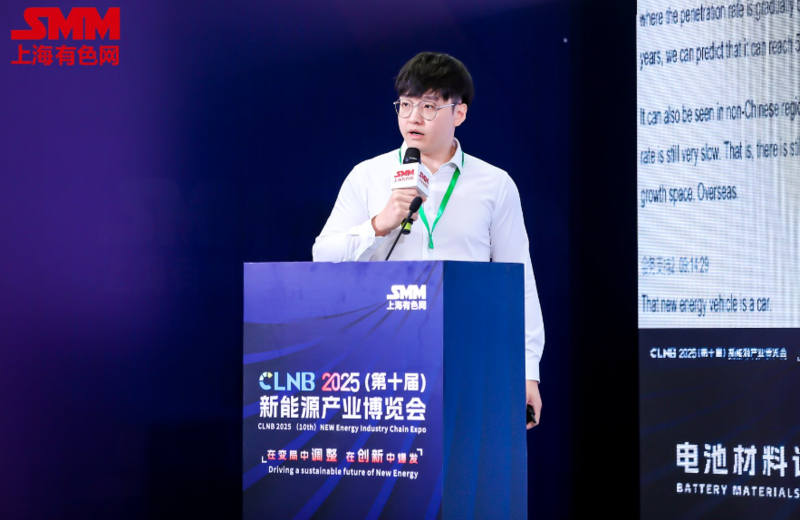
En el Foro de Materiales de Baterías de la CLNB 2025 (10ª) Exposición de la Cadena Industrial de Nueva Energía, organizada por SMM Information & Technology Co., Ltd., Chen Bolin, analista de materiales de cátodo de Shanghai Metals Market, compartió sus conocimientos sobre el tema "Tendencias de la industria de materiales de cátodo LFP de China en 2025 y cambios en el patrón de oferta y demanda".
Afirmó que SMM espera que la producción de celdas de baterías LFP supere los 1.100 GWh en 2025, superando con creces la producción de celdas de baterías ternarias. A nivel mundial, la cuota de mercado de las celdas de baterías LFP alcanzó el 60 % en 2024 y se espera que aumente a alrededor del 63 % en 2025. En el mercado chino, la cuota de mercado de las celdas de baterías LFP fue de alrededor del 71 % en 2024 y se proyecta que aumente a aproximadamente el 74 % en 2025.
Demanda mundial de baterías de litio en crecimiento constante
Beneficiándose de la implementación mundial de la política de "doble carbono", el mercado de vehículos de energía nueva (NEV, por sus siglas en inglés), tras un período de rápido crecimiento, continuará manteniendo un crecimiento estable, aunque a un ritmo más lento en comparación con años anteriores. China seguirá siendo el actor dominante en el mercado a largo plazo, con tasas de penetración que aumentarán gradualmente.
SMM espera que las ventas mundiales de NEV alcancen alrededor de 21 millones de unidades en 2025, un aumento interanual del 20 % con respecto a 2024, y se espera que la penetración de NEV alcance alrededor del 54 %, y las tasas de penetración futuras seguirán aumentando.
De 2025 a 2028, se espera que las ventas mundiales de NEV aumenten de manera constante, con una tasa de crecimiento anual compuesto (CAGR, por sus siglas en inglés) de alrededor del 11 % de 2024 a 2028.
En general, SMM anticipa que, impulsada por la orientación política, la inversión continua de los fabricantes de vehículos y baterías, la colaboración de la cadena industrial y el aumento de la conciencia del mercado, las ventas de NEV seguirán creciendo de manera constante en los próximos años, y China mantendrá su posición dominante en el mercado.
En 2024, la demanda del mercado extranjero siguió siendo débil, lo que llevó a una rápida disminución de la cuota de mercado mundial de las baterías ternarias, mientras que la demanda de baterías LFP aumentó año tras año. Se espera que la demanda extranjera de baterías ternarias se recupere lentamente, mientras que la cuota de mercado de las baterías LFP seguirá aumentando de manera constante.
Según el análisis de SMM, el LFP ha estado erosionando constantemente la cuota de mercado de los materiales ternarios debido a su alta rentabilidad, seguridad y rápidos avances tecnológicos. En el contexto del aumento de los precios del níquel y el cobalto, la cuota de mercado del LFP ha aumentado aún más. Los fabricantes extranjeros de cátodos planean ingresar al campo del LFP, y las empresas chinas de LFP están comenzando a expandir proyectos en el extranjero. En general, el LFP consolidará aún más su posición en el mercado y se espera que represente alrededor del 63 % del mercado de NEV para 2028.
Tras una rápida expansión, la tasa de crecimiento general del mercado de sistemas de almacenamiento de energía (ESS, por sus siglas en inglés) se ha estabilizado, y China sigue siendo el mercado dominante
En 2025, debido a la cancelación de la asignación obligatoria de almacenamiento de energía en China y los nuevos aranceles en Estados Unidos, se espera que la demanda mundial de ESS se revise ligeramente a la baja.
SMM espera que la demanda mundial de ESS alcance alrededor de 350 GWh en 2025, un aumento interanual del 12 % con respecto a 2024. De 2024 a 2028, se espera que la demanda mundial de ESS crezca a una CAGR de alrededor del 16 %, alcanzando aproximadamente 550 GWh para 2028.
A largo plazo, según el análisis de SMM, la demanda mundial de ESS seguirá creciendo de manera constante. China, América del Norte y Europa desempeñarán roles importantes. Aunque la cancelación de la asignación obligatoria de almacenamiento de energía en China ha afectado la demanda a corto plazo, el impacto a largo plazo es limitado. A medida que el mercado de energía se vuelva más racional, las empresas se centrarán más en I+D e innovación tecnológica, acelerando la consolidación del mercado.
Cabe destacar que los recientes aumentos de aranceles por parte de Estados Unidos sobre las importaciones chinas han llevado a una ligera revisión a la baja de las expectativas de demanda anual de ESS de 2025 a 2028, con un enlentecimiento del crecimiento general.
En 2025, se espera que la cuota de mercado mundial de las celdas de baterías LFP supere el 60 %, impulsada por los avances tecnológicos y las ventajas de costo, mientras que se espera que la cuota de mercado de LFP en China supere el 70 %.
A nivel mundial, la cuota de mercado de las celdas de baterías LFP alcanzó el 60 % en 2024 y se espera que aumente a alrededor del 63 % en 2025.
En el mercado chino, la cuota de mercado de las celdas de baterías LFP fue de alrededor del 71 % en 2024 y se proyecta que aumente a aproximadamente el 74 % en 2025.
En términos de producción, se espera que la producción de celdas de baterías LFP supere los 1.100 GWh en 2025, superando con creces la producción de celdas de baterías ternarias.
Se espera que la producción de celdas de baterías LFP aumente en más del 20 % interanual en 2025.
De 2025 a 2028, se espera que la producción total de celdas de baterías en China crezca a una CAGR de alrededor del 15 %, alcanzando aproximadamente 1.600 GWh para 2028.
Suministro mundial de materiales LFP
La capacidad total de LFP en China está aumentando gradualmente, y se espera que la producción alcance alrededor de 3 millones de toneladas métricas (mt) en 2025. La tasa de funcionamiento general de la industria se mantiene en alrededor del 50 %, pero las empresas de primer nivel mantienen tasas de funcionamiento superiores al 70 %, y la concentración CR5 está disminuyendo.
SMM predice que la capacidad total de LFP en China aumentará gradualmente de 2025 a 2028, y se espera que la producción alcance alrededor de 3 millones de mt en 2025, y la tasa de funcionamiento general de la industria se mantenga en alrededor del 50 %.
A medida que más fabricantes de nuevos materiales ingresan al mercado, mejorando rápidamente sus capacidades de I+D y asegurando pedidos de mercado a precios bajos, la concentración de los principales actores ha disminuido.
En 2025, algunas empresas saldrán del mercado, pero la capacidad general seguirá siendo suficiente.
La producción de materiales LFP en el extranjero comenzó a aumentar en el cuarto trimestre de 2024, con pequeños envíos iniciándose. A medida que la capacidad continúa expandiéndose, se espera que la producción aumente, alcanzando más de 20.000 mt en 2025.
En los mercados extranjeros, según SMM, la producción de materiales LFP comenzó a aumentar en el cuarto trimestre de 2024, con pequeños envíos iniciándose. A medida que la capacidad continúa expandiéndose, se espera que la producción de LFP en el extranjero aumente, alcanzando más de 20.000 mt en 2025 y alrededor de 78.000 mt para 2028.
Distribución de nueva capacidad de LFP en China en 2025
Según SMM, en 2025, Jiangxi añadirá alrededor de 200.000 mt de capacidad, Shandong añadirá alrededor de 100.000 mt, Hubei añadirá alrededor de 95.000 mt, y Sichuan y Hunan añadirán alrededor de 80.000 mt cada una.
Expansión global de empresas chinas de materiales LFP
La globalización se ha convertido en un nuevo punto de crecimiento. Varias empresas líderes de LFP se están expandiendo en el extranjero a través de su propia tecnología y capacidades o formando alianzas con empresas globales, construyendo capacidad de cátodo en el extranjero, invirtiendo en proyectos de recursos, mejorando su disposición de recursos y formando lazos más profundos con socios aguas arriba y aguas abajo, contribuyendo al desarrollo de la nueva energía mundial.
SMM espera que la capacidad de LFP en el extranjero supere las 600.000 mt para 2028.
Se espera que los materiales de baterías LFP de alta tensión de cuarta generación aumenten gradualmente en volumen en el primer trimestre de 2025, con envíos duplicándose en comparación con 2024, alcanzando alrededor del 15 % de los envíos totales en 2025.
Según SMM, actualmente solo 2 a 3 empresas en la industria pueden producir en masa y enviar materiales de baterías LFP de alta tensión de cuarta generación. La mayoría de los fabricantes de materiales LFP se están centrando en dominar la tecnología de cuarta generación y esforzándose por lograr la producción en masa y el envío.
La tasa de crecimiento de las aplicaciones de materiales LFP de cuarta generación depende no solo de la I+D de los fabricantes de materiales, sino también de los avances tecnológicos de los fabricantes de celdas de baterías. El progreso de las capacidades de I+D de los fabricantes de celdas de baterías es fundamental para el crecimiento de la demanda de materiales de cuarta generación.
En 2024, el mercado estuvo dominado por productos de segunda generación y productos semiterminados de segunda generación, pero para 2025, los productos de tercera generación dominarán, representando el 64 % del mercado.
En el futuro, a medida que aumente la capacidad de cuarta generación, los productos de cuarta generación pasarán de un exceso a un equilibrio, y los precios volverán gradualmente a niveles racionales.
Análisis de precios de LFP
En 2024, los precios de LFP generalmente siguieron las tendencias de los precios del carbonato de litio. A medida que la capacidad de LFP convencional se volvió gradualmente excedente, las tarifas de procesamiento de productos convencionales disminuyeron a pesar del aumento de los precios de las materias primas en 2024.
Según el análisis de SMM, el carbonato de litio, como el principal componente de costo de LFP, tiene un impacto decisivo en las tendencias de precios de LFP. Por lo tanto, en 2024, los precios de LFP generalmente siguieron las fluctuaciones de los precios del carbonato de litio.
Las tarifas de procesamiento de LFP se ajustan trimestralmente y se ven afectadas significativamente por los precios del fosfato de hierro. Sin embargo, las tarifas de procesamiento reales en contratos a largo plazo son relativamente bajas. Con la capacidad excedente de productos convencionales, los fabricantes de celdas de baterías tienen más poder de negociación a través de licitaciones.
Aunque los precios del fosfato de hierro aumentaron lentamente en 2024, las tarifas de procesamiento de productos convencionales disminuyeron. A principios de 2025, algunos proveedores de LFP de densidad de compactación media y alta tenían un poco más de poder de negociación en las tarifas de procesamiento. Se espera que los precios de LFP en 2025 sigan siendo afectados en gran medida por los precios del carbonato de litio, pero será difícil aumentar las tarifas de procesamiento. Solo al romper continuamente la tecnología de alta densidad de compactación pueden los fabricantes ganar más poder de negociación con los fabricantes de celdas de baterías.
Proceso de desarrollo tecnológico de LFP - LMFP
El LMFP tiene muchas ventajas, y las expectativas del mercado son altas. Los posibles problemas técnicos aún se están abordando. Actualmente, los productos principales aún necesitan ser mezclados con NCM, pero la demanda general es débil, y la concentración de la industria es extremadamente alta.
Específicamente, en comparación con el LFP, el LMFP tiene ventajas en densidad de energía, potencia de salida, rendimiento a bajas temperaturas y rentabilidad. En comparación con las baterías ternarias, el LMFP tiene mejor seguridad y estabilidad térmica. Sin embargo, también tiene desventajas, como una menor estabilidad estructural (disolución de manganeso), malas propiedades cinéticas (tasa de C y rendimiento del ciclo) y altos requisitos de proceso (baja densidad de compactación).
Según SMM, las tres principales empresas en la industria de LMFP representan el 88 % del mercado, lo que indica una concentración extremadamente alta.
LinkedIn: https://www.linkedin.com/company/98924065/admin/dashboard/
Facebook: https://www.facebook.com/profile.php?----text start--- id=61572704694550
----text end---![[Batería de litio: Proyecto de 50.000 toneladas/año de fosfato de hierro planificado para Suining, Sichuan]](https://imgqn.smm.cn/usercenter/QGlKw20251217171730.jpg)
![[SMM Flash] Proyecto de litio Bandeira de Brasil inicia adquisición de equipos de largo plazo](https://imgqn.smm.cn/usercenter/wZUBk20251217171729.jpg)
![[Lithium Battery: Times BAIC Battery Factory's First Cell Rolls Off Production Line]](https://imgqn.smm.cn/usercenter/KySZv20251217171726.jpg)