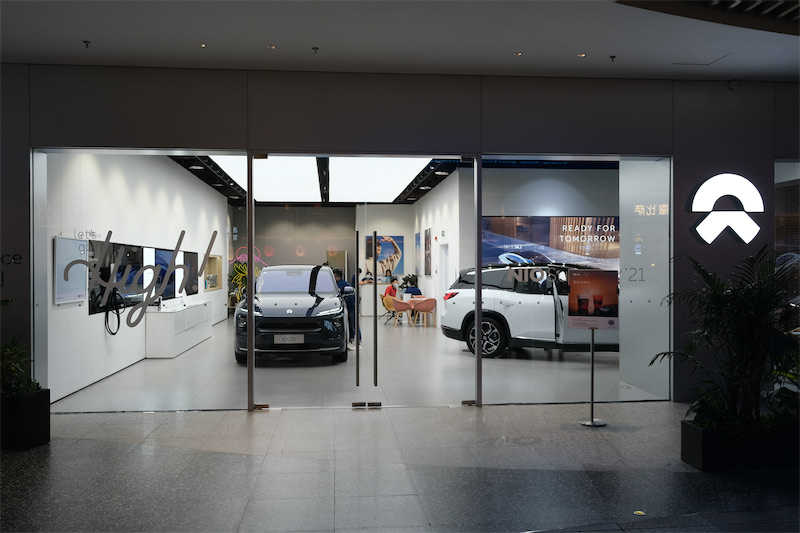
Global Battery Capacity Reached 3 TWh Will It Triple in the Next Five Years

Published: Mar 24, 2025 08:59
[Global Battery Capacity Reaches 3 TWh, Set to Triple in the Next 5 Years?] According to IEA data, in 2024, global EV sales increased by 25% to 17 million units, with annual battery demand surpassing 1 TWh for the first time; global battery capacity reached 3 TWh. If all announced projects are completed, battery capacity is expected to triple over the next five years. (Battery Network)
Recently, the International Energy Agency (IEA) released its latest report, pointing out that with a sharp rise in demand and a continuous decline in prices, the global battery market size is rapidly expanding. IEA data shows that in 2024, global EV sales will increase by 25% to 17 million units, with annual battery demand exceeding 1 TWh for the first time; global battery capacity will reach 3 TWh, and if all announced projects are completed, battery capacity is expected to triple over the next five years. Meanwhile, the average price of EV batteries has dropped below $100/kWh, meaning that EVs can now compete with traditional internal combustion engine vehicles in terms of cost. The IEA analysis indicates that, in addition to robust EV demand, the decline in key battery material prices, particularly lithium, which has fallen by more than 85% from its 2022 peak, is a major factor in the cost reduction. Technological advancements have also contributed to the downward trend in battery prices. The IEA states that declining raw material prices and continuous technological innovation are driving the global battery industry into a new development phase, accelerating the transition from regional to global markets. Looking ahead, factors such as economies of scale, supply chain collaboration, manufacturing efficiency, and technological innovation will accelerate the integration of the battery industry on a larger scale. At the same time, government-driven localization of manufacturing is reshaping the battery supply chain. In the Chinese market, the decline in battery prices is slowing. In 2024, China will account for more than three-quarters of global battery sales. Moreover, the average price of Chinese batteries is decreasing the fastest, with a drop of nearly 30%, making them over 30% and 20% cheaper than those produced in Europe and North America, respectively. Some EVs produced in China are already priced lower than internal combustion engine vehicles. The IEA believes that the cost advantages of Chinese companies can be attributed to four main factors: technological innovation driven by scale effects, high levels of supply chain integration, the growth in LFP market share, and intensified cut-throat competition. Specifically, over 70% of the world's cumulative EV batteries are produced in China, with giants like CATL and BYD concentrating industry resources and driving innovation. These companies expand production faster and more efficiently than their competitors, achieving higher yields. Additionally, the Chinese battery ecosystem covers all steps of the supply chain, from mining and refining of metals to battery manufacturing equipment, precursors, and other components, as well as the final production of batteries and EVs, leading to a faster and greater reduction in manufacturing costs. Furthermore, Chinese battery companies have a clear advantage in producing lower-cost LFP batteries, which now account for nearly half of the global EV market, with prices about 30% lower than the currently dominant NMC batteries. The IEA also notes that, in the face of intense competition in the Chinese market, some companies have been compressing profit margins, selling batteries at lower prices to consolidate and expand market share. However, the trend of falling battery prices in the Chinese market is expected to slow down. Under intense market competition and continuously shrinking profit margins, some battery producers will be eliminated, while others will gain greater influence and pricing power. Nevertheless, China is expected to remain the world's largest battery producer for the next decade. Outside of China, battery production is accelerating in other markets. The IEA points out that although China currently dominates the battery market, battery production in other regions is also advancing rapidly. Japanese and South Korean companies are major players in the global battery industry, primarily producing NMC batteries. Although their capacity is limited, they are traditional battery manufacturers with significant overseas investments. South Korea's overseas battery capacity is close to 400 GWh, far exceeding Japan (60 GWh) and China (30 GWh). The main challenge for South Korean batteries is their lag in transitioning to LFP, but they have started to increase their presence in this area in recent years. Since the implementation of battery production tax credits in 2022, US battery capacity has doubled, reaching over 200 GWh in 2024, with an additional 700 GWh under construction. About 40% of the existing capacity is operated or developed through close cooperation between established battery manufacturers and automakers. However, US battery manufacturing progress is slower, with cathode and anode materials mainly relying on imports. Over the past two years, although the demand for ESS has been relatively small, it has grown by over 60% annually, becoming a major growth point outside of EVs. Additionally, several Southeast Asian countries and Morocco are emerging as potential centers for battery and component production. Indonesia, which holds half of the world's nickel ore, will begin producing its first EV batteries and graphite anode factories in 2024. Morocco, with the largest phosphate reserves, is a crucial source of raw materials for LFP batteries. Regarding the European market, the IEA mentions that "European battery production is facing a make-or-break moment." Battery production costs in Europe are about 50% higher than in China, and the battery supply chain ecosystem is relatively weak, with a severe shortage of specialized talent. Many European battery producers have delayed or canceled expansion plans due to uncertain profitability. The IEA cites the example of Northvolt, Europe's largest battery producer, which has filed for bankruptcy protection, highlighting the gap in scale and technology between European and Asian companies in battery manufacturing. The IEA also notes that despite current challenges, Europe still has the potential to develop a more competitive battery industry. Some South Korean companies have already begun investing in LFP battery production in Europe to better compete with Chinese producers. Chinese battery manufacturers may continue to expand their presence in Europe. Finally, the IEA warns that, despite rapid declines in battery prices and continuous innovation, the concentration of the battery supply chain in recent years has raised security concerns in some countries. The IEA believes that in emerging markets, EVs are the only strong driver for large-scale production, but local demand may not be sufficient. Introducing mature battery companies through joint ventures or technology licensing can shorten the cycle for local production and supply chain development. At the same time, enhanced international cooperation is needed. Some countries' market sizes are too small to attract sufficient investment in the battery sector, requiring deep cooperation in EVs and batteries with other countries, as well as with resource-rich nations in South America, Africa, Australia, and Indonesia, to achieve the goal of localized battery production.

Data Source Statement: Except for publicly available information, all other data are processed by SMM based on publicly available information, market communication, and relying on SMM‘s internal database model. They are for reference only and do not constitute decision-making recommendations.

For any inquiries or to learn more information, please contact: lemonzhao@smm.cn
For more information on how to access our research reports, please contact:service.en@smm.cn
Related News
SMM Daily Review: Spot Lithium Carbonate Prices Continued to Decline on May 19
33 mins ago
SMM Daily Review: Spot Lithium Carbonate Prices Continued to Decline on May 19
Read More
SMM Daily Review: Spot Lithium Carbonate Prices Continued to Decline on May 19
[SMM Daily Review: Spot Lithium Carbonate Prices Continued to Fall on May 19] Today, SMM battery-grade spot lithium carbonate prices fluctuated downward compared to the previous working day. Futures side, the lithium carbonate 2609 contract opened high at 191,000 yuan/mt today, then quickly pulled back after the opening. During the morning session, it fluctuated downward and broke below the average price line. Around midday, it accelerated its decline to a daily low of 182,100 yuan/mt (a drop of over 5%). In the afternoon session, it rebounded slightly but struggled to rebound further, weakening again toward the close, ultimately settling down 3.71% at 184,400 yuan/mt, with open interest decreasing by 20,533 lots. Spot market, lithium carbonate prices pulled back from highs after the previous rapid rally, which notably stimulated downstream inquiries and purchasing enthusiasm. Upstream lithium chemical plants still maintained willingness to hold prices firm, and some enterprises that had hedged at previous highs increased spot order shipments to downstream buyers. Overall, inquiries and actual transactions in the spot market were active. Lithium prices are expected to have limited downside in the short term and are expected to hover at highs.
33 mins ago
World's First "Gas-Solid Battery" Unveiled, Achieving New Breakthrough in Efficient Hydrogen Storage at Ambient Temperature and Pressure
7 hours ago
World's First "Gas-Solid Battery" Unveiled, Achieving New Breakthrough in Efficient Hydrogen Storage at Ambient Temperature and Pressure
Read More
World's First "Gas-Solid Battery" Unveiled, Achieving New Breakthrough in Efficient Hydrogen Storage at Ambient Temperature and Pressure
7 hours ago
"Tesla Invests $250M in German Gigafactory to Boost EV Battery Production as European Sales Recover"
9 hours ago
"Tesla Invests $250M in German Gigafactory to Boost EV Battery Production as European Sales Recover"
Read More
"Tesla Invests $250M in German Gigafactory to Boost EV Battery Production as European Sales Recover"
Tesla, owned by Elon Musk, will invest $250 million in its German factory to increase EV battery cell production capacity. As sales recover in the European market, Tesla is using this investment to further boost its overall output in the region. The Berlin-Brandenburg Gigafactory is Tesla's first manufacturing base in Europe. The "Gigafactory," which began production in March 2022, produces hundreds of thousands of Model Y vehicles as well as millions of battery cells — the energy storage units that power electric vehicles.
9 hours ago