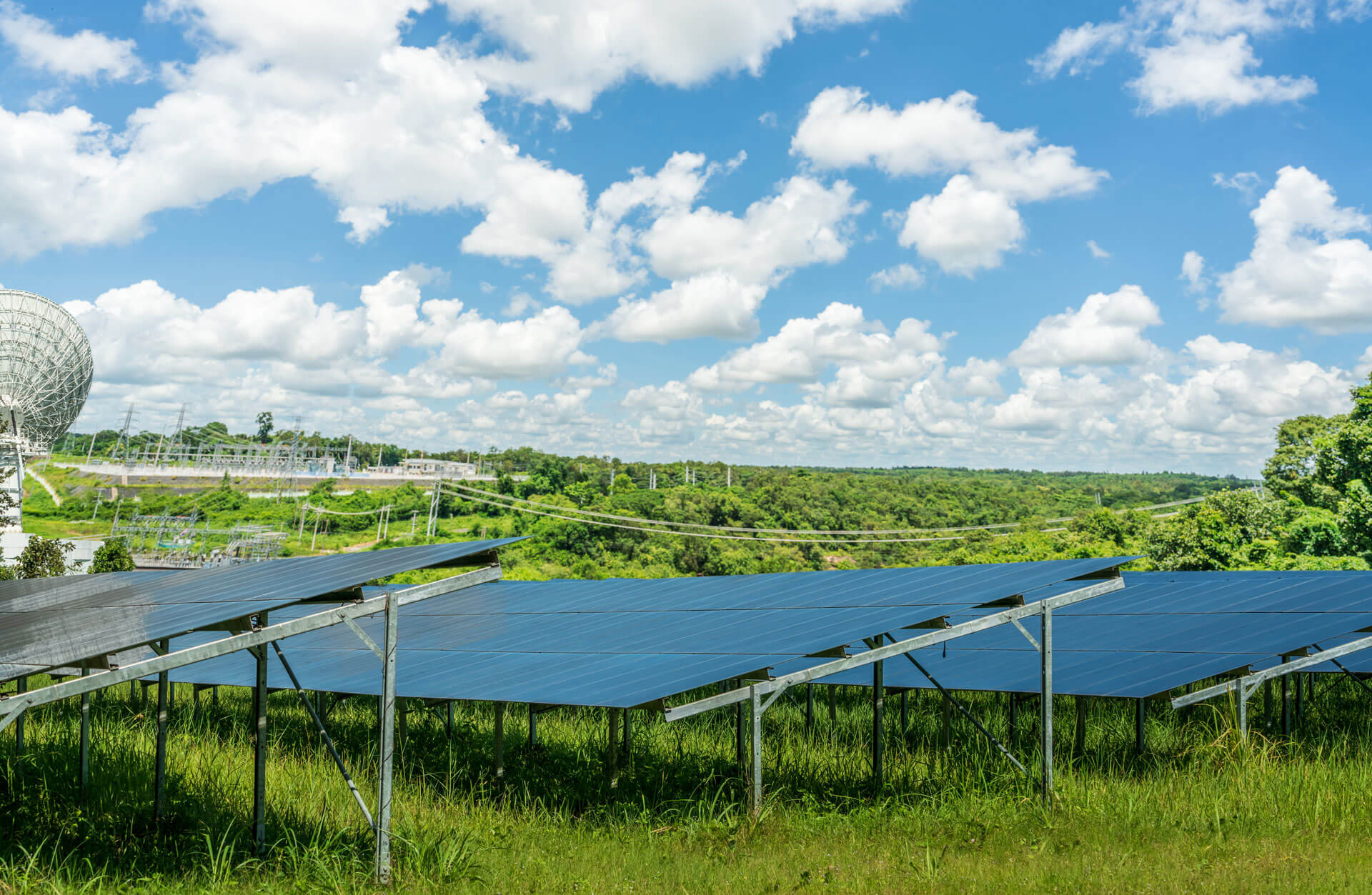
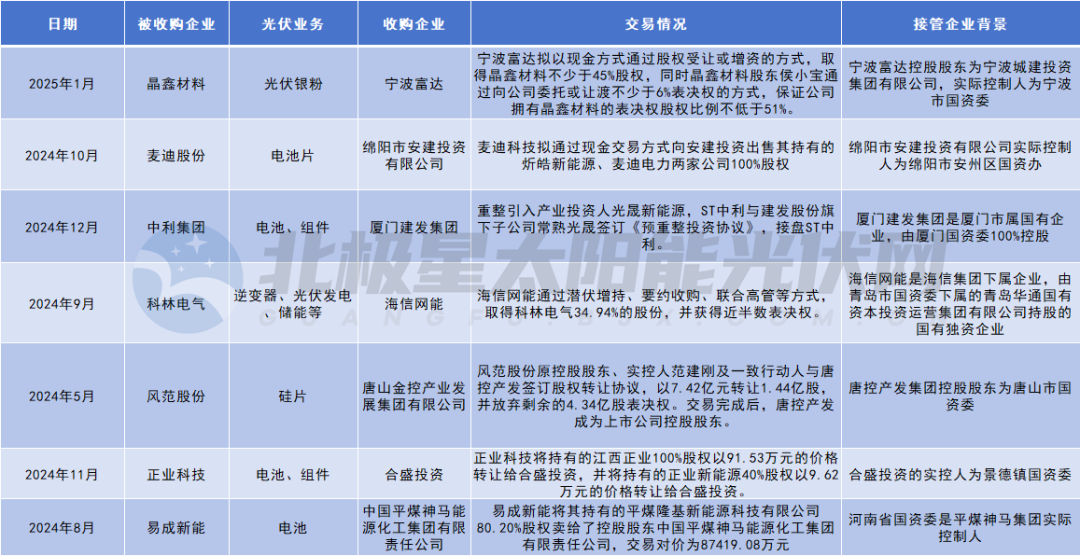
In 2024, amidst the PV winter, a new wave of mergers and acquisitions has begun. During this period, local state-owned enterprises have been particularly active. According to Polaris statistics, since the beginning of 2024, seven listed PV manufacturing companies have "changed hands" to local state-owned capital.
Tracing back individual acquisition cases reveals that the motivations of state-owned enterprises for "taking over" vary. Many aim to align with the energy transition trend and optimize industrial structure layouts.
For instance, among the "Three Musketeers" of Xiamen state-owned capital, Jianfa Group has been the most active. In December 2024, Changshu Guangsheng, a subsidiary of Jianfa, took over the bankrupt ST Zhongli, whose subsidiary Tenghui PV module shipments once ranked among the global top ten. Just half a month later, Jianfa Group made another move, taking over the management of the veteran module giant Suntech Power. By consecutively acquiring two module companies, the market speculates whether Zhongli and Suntech will "join forces" to explore new development opportunities under Jianfa Group's coordinated planning, which had already ventured into downstream power station development.
Of course, the road to acquisitions in the capital market is not always smooth. In the battle for control of Colin Electric, Hisense Network Energy, under Qingdao state-owned capital of Shandong, engaged in a six-month-long intense competition with Shijiazhuang State-owned Capital Investment and Operation Group to secure control. Colin Electric has been deeply involved in the new energy sector for 14 years, expanding its business from PV inverters to PV ESS and other fields. For Hisense, which is undergoing transformation, gaining control of Colin Electric is undoubtedly a shortcut to entering the new energy sector.
Similarly seeking transformation through cross-province and cross-sector acquisitions are Tang Control Development Group and Ningbo Fuda. As a subsidiary of Tangshan state-owned capital, Tang Control Development Group entered the transmission and PV manufacturing sectors through the cross-province acquisition of Fengfan Co., aiding Tangshan, the "steel city," in achieving industrial transformation. After the acquisition, Fengfan Co. has been active, establishing a subsidiary in Cambodia to rapidly expand the overseas silicon wafer market. Earlier this year, Fengfan Co. completed a debt restructuring with Cambodia SOLARLONG, revitalizing over $42 million in overdue receivables.
Meanwhile, Ningbo Fuda, a subsidiary of Ningbo Urban Investment Group, plans to acquire Jingxin Materials, venturing into the PV silver paste materials sector to achieve a breakthrough in industrial transformation, building on its existing core businesses of commercial real estate and cement building materials.
Undeniably, the influx of various forces, including local state-owned enterprises, has collectively driven the "Great Leap Forward" in PV capacity. However, with severe supply-demand imbalances, capacity clearing often ends up being shouldered by state-owned capital.
For example, in 2022, Meditech changed hands to Haoxiang Holdings, a wholly-owned subsidiary of Mianyang Anzhou state-owned capital's Antou Group, which then invested 1.862 billion yuan to acquire Xin Hao New Energy and planned a 9GW battery project to enter the PV sector. However, with the unpredictable market, Meditech's PV business continued to incur losses. As a result, Meditech had to sell the related assets to Mianyang Anjian Investment and return to its core medical business.
Zhengye Technology faced a similar predicament. After its actual controller changed to the Jingdezhen State-owned Assets Supervision and Administration Commission, Zhengye Technology ventured into the PV sector, planning to build 5GW PV modules and 8GW solar cells. However, two years later, the PV business showed no progress, and Zhengye Technology's operational situation worsened. Under immense pressure, it had to terminate its PV projects and sell the assets of its two PV subsidiaries to Hesing Investment, under Jingdezhen state-owned capital, ending its cross-sector PV journey.
Yicheng New Energy, a subsidiary of Henan State-owned Assets Supervision and Administration Commission's Pingmei Shenma Group, has been focusing on new energy and new materials, with businesses covering high-efficiency monocrystalline silicon solar cells and PV power station investment, construction, and operation. However, during the PV industry's winter, Yicheng New Energy's solar cell business fell into losses, with increasing operational pressure. In August 2024, Yicheng New Energy sold 80.20% of Pingmei LONGi's equity to China Pingmei Shenma, divesting its solar cell business.
In fact, similar to central state-owned enterprises, local state-owned enterprises, as key players in the terminal power station market, have long entered PV manufacturing, either to seize the PV opportunity or to ensure supply.
As early as 2021, Zhuhai state-owned capital acquired a 25.009% stake in Xiangqiang Co. through Zhuhai Port, becoming its actual controller. In February 2023, Zheneng Group also became the actual controller of Zhonglai Co. through equity acquisition.
In recent years, with the accelerated iteration of N-type technology, local state-owned capital has actively invested in high-efficiency technologies. For example, Zhoushan Marine Comprehensive Development Investment Co., a Zhoushan state-owned enterprise, partnered with China Resources Power and others to establish Runhai New Energy, focusing on heterojunction high-efficiency solar cell technology. In early 2023, Zhuhai Fuhong Juneng, together with Primavera Capital, Gree Group, and Doumen District state-owned capital, jointly invested in the establishment of Hongjun New Energy. Its 7.2GW heterojunction solar cell and 5GW module project, as a key project in Zhuhai, was included in Guangdong Province's 2024 key construction list. Additionally, Shanghai Electric Group established Shanghai Electric Hengxi PV Technology (Nantong) Co., planning a 20GW heterojunction and perovskite tandem solar cell and module capacity. In April 2024, Hengxi PV shipped its first batch of Pioneer 2.0 series modules. Three months later, its first heterojunction solar cell rolled off the production line, and in December of the same year, its first N-type module was completed.
Notably, the reshuffling of the PV industry continues to intensify. While local state-owned capital provides lifelines to struggling companies, some market observers point out that such "takeover" actions make the path to capacity clearing even more challenging. Currently, guiding the industry through the winter and back on track has become the primary issue that urgently needs to be addressed.
![[SMM Noticias FV] ¡A 4.700 metros de altitud! Se ha completado el mayor proyecto fotovoltaico del curso medio y bajo del río Yarlung Zangbo en el Tíbet.](https://imgqn.smm.cn/usercenter/rnXTf20251217171741.jpg)
![[SMM Noticias FV] El Departamento de Energía de EE. UU. (DOE) invierte 12 millones de dólares para desarrollar tecnología fotovoltaica espacial](https://imgqn.smm.cn/usercenter/ZbnfH20251217171741.jpg)
![[SMM Noticias FV] Creando un referente europeo | Se pone en marcha oficialmente el proyecto de sistema de seguimiento de 221 MW de Chiko Solar Energy en Italia](https://imgqn.smm.cn/usercenter/GOtTW20251217171740.jpg)