Overseas PV Mounting Bracket Business Continues to Grow, Profit of CITIC Bo in 2024 Expected to Increase by Over 80%.

Publicado: Jan 22, 2025 08:34
[Overseas PV Mounting Bracket Business Continues to Grow, CITIC Bo Expects 2024 Net Profit to Increase by Over 80%] ① The company expects its net profit in Q4 2024 to reach 208 million yuan, up 10.69% YoY and up 6.02% QoQ. It stated that robust demand for PV ground-mounted power stations overseas, along with the rise of emerging markets such as the Middle East and Latin America, has driven the continuous growth of its overseas PV mounting bracket business. ② As of December 31, 2024, the company's orders on hand totaled approximately 4.65 billion yuan. (Sci-Tech Innovation Board Daily)

On January 21, Arctech released its 2024 annual performance forecast.

According to the announcement, the company expects to achieve a net profit attributable to shareholders of approximately 635 million yuan in 2024, up 84.04% YoY; the net profit excluding non-recurring items is expected to be 610 million yuan, up 99.13% YoY.

On a quarterly basis, Arctech's net profit in Q4 2024 is expected to be 208 million yuan, up 10.69% YoY and 6.02% MoM.

Arctech stated that during the reporting period, robust demand for PV ground-mounted power station installations overseas, along with the rise of emerging markets such as the Middle East and Latin America, drove the continuous growth of its overseas solar panel mounting bracket business. The company's horizontal and vertical integrated layout of PV mounting bracket systems in overseas markets gradually showed results during this period, leading to growth in both revenue and net profit.

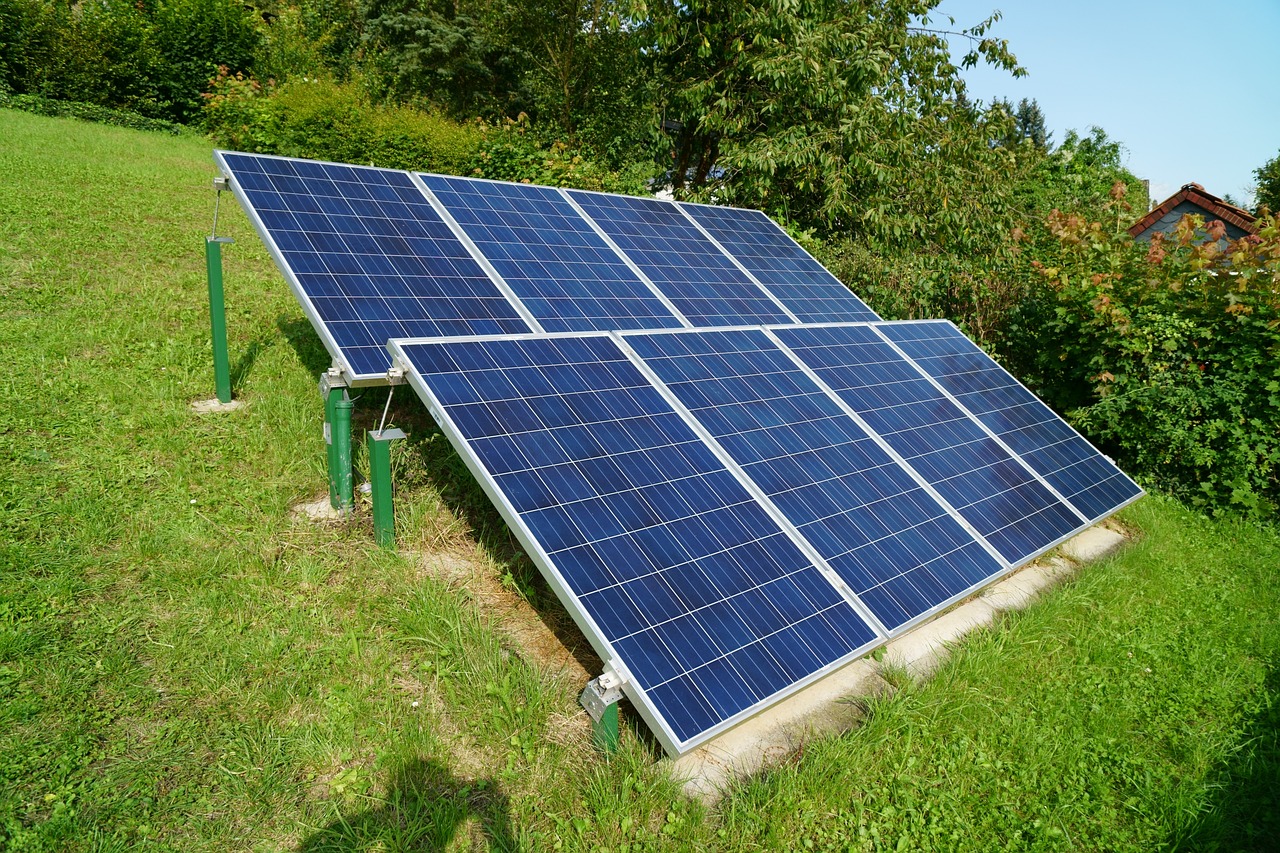
Arctech focuses on centralized ground-mounted power stations and commercial and industrial distributed BIPV sectors, with its main products including PV tracking bracket systems, fixed bracket systems, BIPV PV rooftops, and BIPV carports.

As of December 31, 2024, the company had orders on hand totaling approximately 4.65 billion yuan, including about 3.5 billion yuan for tracking systems and about 1.15 billion yuan for other products.

Regarding its advantages in overseas deployment, Arctech mentioned during an institutional survey that these mainly include its early establishment of a global marketing network and the early development of a global supply chain.

"Relying on its early go-global strategy in markets such as India, the Middle East, Central Asia, and Latin America, the company has continuously expanded its market share overseas. Arctech has built localized capacity in India and Saudi Arabia, combined with its domestic production sites, to establish an increasingly comprehensive global supply chain system. This effectively meets the stringent delivery requirements of the growing market size for PV mounting brackets in major global PV markets," the company stated.

In terms of specific capacity layout, in 2024, the company signed a land lease agreement with the Saudi Authority for Industrial Cities and Technology Zones (MODON) to plan the construction of localized capacity in Saudi Arabia. Once completed, the Saudi factory will become the company's second overseas production site after the Indian factory. "With a designed capacity of 3GW, supported by the company's global supply chain system, it will have a local delivery capacity of approximately 10GW, meeting the delivery needs of local and surrounding regional projects."

In terms of new products, in 2024, the company launched the world's first wireless multi-point parallel drive system—"Tianrou" flexible tracking bracket system, which is compatible with scenarios such as agrivoltaics, aquavoltaics, pastoral photovoltaics, and wastewater treatment plants, forming "a new growth driver for the company's business."

Zhibang Zhang from Huaan Securities stated that with the decline in module prices, global demand for ground-mounted power station installations is rising, and the installation volume of overseas tracking brackets is showing an increasing trend, with an expected installation volume exceeding 660GW, 2022-2030.

"Due to factors such as market usage habits, product technology, power station construction environments, and power station investment costs, the penetration rate of tracking brackets in China differs significantly from that in overseas markets. In the future, with the acceleration of China's wind and solar power base construction projects (large-scale base projects paired with ultra-high voltage construction will be the main driver of tracking bracket growth), the resolution of electricity consumption issues, and strong policy support, the domestic tracking bracket market is expected to see greater development opportunities," Zhang stated.

Declaración de Fuente de Datos: Excepto la información disponible públicamente, todos los demás datos son procesados por SMM basándose en información pública, comunicación de mercado y confiando en el modelo de base de datos interna de SMM. Son solo para referencia y no constituyen recomendaciones para la toma de decisiones.

Para cualquier consulta o para obtener más información, por favor contacte: lemonzhao@smm.cn
Para más información sobre cómo acceder a nuestros informes de investigación, contacte con:service.en@smm.cn
Noticias relacionadas
[Solar: Nueva Jersey aprueba legislación sobre energía solar en balcones]
hace 1 hora
[Solar: Nueva Jersey aprueba legislación sobre energía solar en balcones]
Leer más
[Solar: Nueva Jersey aprueba legislación sobre energía solar en balcones]
[Solar: Nueva Jersey aprueba legislación sobre energía solar en balcones]
Nueva Jersey ha promulgado la Ley de Energía Solar para Balcones del Estado Jardín, convirtiéndose en el noveno estado de EE. UU. en permitir explícitamente los sistemas solares enchufables. Según la ley, los dispositivos solares enchufables pueden conectarse al sistema eléctrico existente de una vivienda a través de un tomacorriente estándar de 120 V. Los clientes pueden usar dispositivos solares portátiles con una potencia combinada de hasta 1.200 W sin un acuerdo de interconexión, mientras que los sistemas de 400 W o menos están exentos de los requisitos de modificaciones en el cableado del edificio o en los paneles eléctricos, aunque deben cumplir con las normas de seguridad. La ley también impide que los propietarios, las asociaciones de propietarios y los municipios prohíban dichos sistemas o exijan permisos para su uso. La ley entrará en vigor el 1 de marzo de 2027.
hace 1 hora
[Solar: La energía solar alcanza nuevos máximos de generación eléctrica en Portugal en agosto]
hace 2 horas
[Solar: La energía solar alcanza nuevos máximos de generación eléctrica en Portugal en agosto]
Leer más
[Solar: La energía solar alcanza nuevos máximos de generación eléctrica en Portugal en agosto]
[Solar: La energía solar alcanza nuevos máximos de generación eléctrica en Portugal en agosto]
La generación de energía solar en Portugal alcanzó un pico récord de aproximadamente 3,85 GW en agosto, respaldada por el continuo crecimiento de la capacidad, con 372 MW de energía solar añadidos entre diciembre de 2025 y mayo de 2026, lo que eleva la capacidad acumulada a unos 7,3 GW. La energía solar fotovoltaica se convirtió por primera vez en la mayor fuente de generación eléctrica de Portugal en julio, cubriendo el 19% del consumo nacional, por delante de la hidroeléctrica con un 16% y la eólica con un 13%, mientras que las renovables suministraron el 52% del consumo en agosto. En los primeros ocho meses del año, las renovables cubrieron el 66% del consumo eléctrico portugués, con la hidroeléctrica en un 25%, la eólica en un 23% y la solar en un 13%. Las importaciones netas de electricidad también alcanzaron un nuevo máximo por encima de 5,2 GW tras el refuerzo de la capacidad de interconexión con España.
hace 2 horas
[Solar: El Senado de Brasil aprueba un régimen fiscal para centros de datos que vincula los incentivos al uso de energías renovables]
hace 2 horas
[Solar: El Senado de Brasil aprueba un régimen fiscal para centros de datos que vincula los incentivos al uso de energías renovables]
Leer más
[Solar: El Senado de Brasil aprueba un régimen fiscal para centros de datos que vincula los incentivos al uso de energías renovables]
[Solar: El Senado de Brasil aprueba un régimen fiscal para centros de datos que vincula los incentivos al uso de energías renovables]
El Senado Federal de Brasil aprobó el Proyecto de Ley 278/2026, que establece el régimen fiscal especial Redata para centros de datos, suspendiendo los aranceles de importación y los impuestos federales IPI y PIS/Cofins sobre equipos y componentes durante cinco años. Entre las condiciones para acceder a los beneficios, los centros de datos deben cubrir toda su demanda de electricidad contratada mediante acuerdos de suministro o autogeneración con fuentes renovables o de bajas emisiones. Entre 2021 y 2024 se firmaron once contratos renovables de largo plazo entre generadores y centros de datos, por un total de 330 MW y cerca de 7.700 millones de reales (1.400 millones de dólares), y se espera que el nuevo régimen amplíe aún más la demanda de proyectos solares y eólicos y de PPA a medida que crece el mercado de centros de datos en Brasil. El proyecto pasa ahora al presidente para su sanción.
hace 2 horas
Overseas PV Mounting Bracket Business Continues to Grow, Profit of CITIC Bo in 2024 Expected to Increase by Over 80%. - Shanghai Metals Market (SMM)