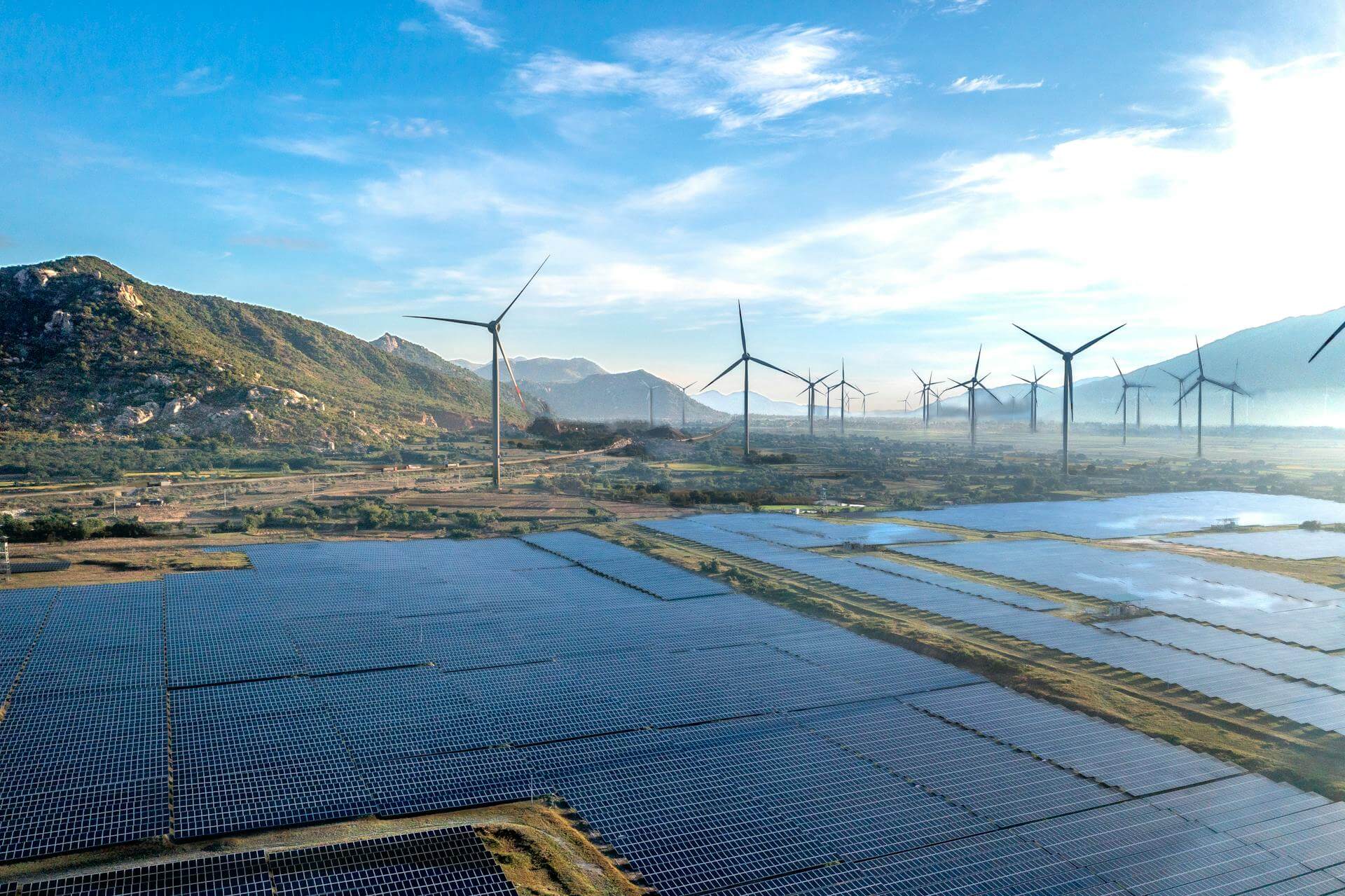
In 2023, global photovoltaic installed capacity will increase to twice the installed capacity in 2018. As the photovoltaic market gradually increases in volume and large-scale production promotes technological change, the performance of solar power panels is rapidly improved, driving the power generation efficiency of photovoltaic power generation systems to simultaneously increase. The average cost of photovoltaic power generation dropped to US$ 0.05-0.20 per kilowatt hour in 2023. The outstanding cost-effectiveness of solar power generation has driven the rapid development of the photovoltaic industry.
According to data released by the National Energy Administration: China's installed power generation capacity in 2023 was 2.920 billion kilowatts, a year-on-year increase of 13.9% compared to 2022 ; among which thermal power accounted for 47.6% of the total installed power generation capacity , and the installed capacity of solar power generation is second only to thermal power generation, accounting for 20.9%; wind power accounted for 15.1% , hydropower accounted for 14.4%, and wind power accounted for only 1.9%.
In addition to relatively single application scenarios such as distributed photovoltaic power generation and large-scale photovoltaic power stations, in recent years, China has also gradually launched a " photovoltaic +" exploration model, such as photovoltaic + highway, photovoltaic + logistics park, photovoltaic + station, photovoltaic + Comprehensive application scenarios such as agricultural greenhouses, photovoltaics + fishery and animal husbandry.
As the penetration rate of new energy vehicles in China gradually increases, charging piles, as supporting facilities for the power supply of new energy vehicles, ensure the smooth driving of new energy vehicles to a great extent, and their market demand is also expanding. On this basis, photovoltaics are combined with charging piles to convert solar energy into electrical energy, avoiding problems such as distribution transformers and wiring, and consuming electricity on-site, truly realizing economical and environmentally friendly zero-carbon travel with no noise or pollution. At present, among the new energy vehicle charging piles in China, the application proportion of photovoltaic charging piles is still low. The core reason is the stability of solar photovoltaic power generation technology and the economic improvement of charging piles. At the same time, it is also necessary to solve the charging power adjustment and charging of photovoltaic charging piles. Speed control and other issues. In addition, photovoltaic charging piles can rely on solar energy to generate electricity during the day and need to be equipped with an energy storage system for use at night and when light intensity is low. There is still room for improvement in the current state of the art.
In the future, if provincial and local governments provide incentives and guidance at the policy level, encourage the development of photovoltaic operation platforms, and provide policy subsidies, it will promote the penetration rate of distributed photovoltaics.
In addition to various application scenarios on land, photovoltaic application scenarios at sea are also increasingly abundant, including offshore photovoltaic power stations, offshore ship photovoltaic applications, etc. Offshore photovoltaic power station refers to the establishment of floating or pile-type photovoltaic modules on the sea surface and the use of sea surface sunlight to generate electricity. Since the sea surface is unobstructed and the sunlight is sufficient, offshore photovoltaic power generation is more efficient than onshore photovoltaic power generation ( 5% -7% ); the electricity generated within the offshore range is supplied to coastal residents. Maritime ship photovoltaics refers to the use of solar power supply chain ships for lighting, communications, etc. to reduce ship fuel consumption.
At present, offshore photovoltaic applications are in a relatively early stage, with little historical application experience and high maintenance costs for faults. The main reason is insufficient economic efficiency and lack of enthusiasm for corporate research and development. Offshore photovoltaic power stations are far less mature than offshore wind power.
![Tasas operativas de marcos fotovoltaicos estables, expectativas debilitándose; el desabastecimiento de lingotes de aluminio se acelera y el centro del precio del aluminio sube [Análisis de SMM]](https://imgqn.smm.cn/usercenter/chMqV20251217171743.jpg)
![[SMM PV Flash]](https://imgqn.smm.cn/usercenter/xAoMy20251217171743.jpg)
![[SMM Noticias FV] El proyecto fotovoltaico Huaneng Shaanxi Shenmu de 100 MW logra la conexión a red a plena capacidad](https://imgqn.smm.cn/usercenter/HKFoG20251217171742.jpg)