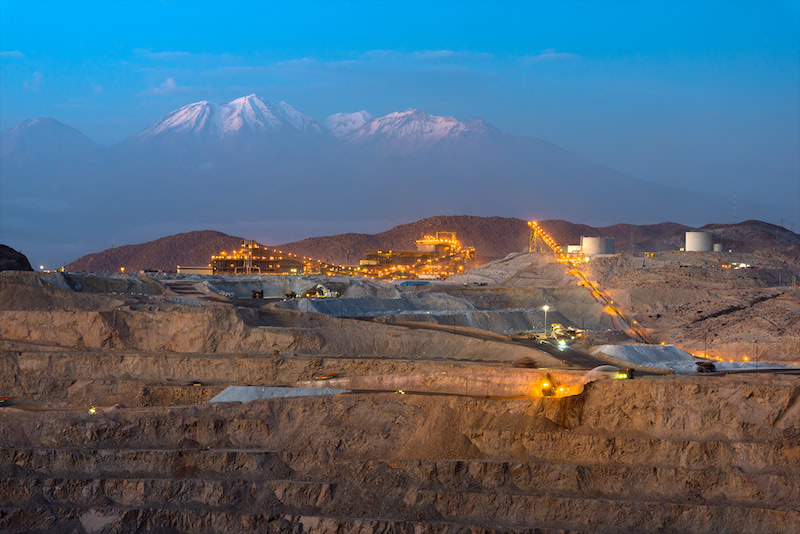
Nickel, as an important industrial metal, plays a key role in modern industry. Nickel price movements have a profound impact on the global industrial economy. Nickel price is not only affected by industrial factors such as nickel ore supply, demand for nickel compounds, and stainless steel production, but also by a combination of macroeconomic and geopolitical factors.
Nickel
Nickel ores, nickel compounds and stainless steel are key elements and materials indispensable to modern industry. They have a wide range of applications in several fields and play an important role in driving the development of modern industry.
Nickel Ore:
Nickel ores are the main source of nickel metal, and their mining and smelting provide the raw material for the subsequent production of nickel compounds as well as the manufacture of stainless steel. The distribution and grade of nickel ores directly affect the production cost and market supply of nickel. With technological advances, the nickel mining and smelting processes are becoming more efficient, environmentally friendly and sustainable.
Nickel compounds:
Nickel sulfate is an important nickel compound widely used in the electroplating, battery, catalyst and pigment industries. In the battery field, nickel sulfate is a key raw material for nickel-cadmium and nickel-metal hydride batteries. In addition, nickel sulfate is used in the manufacture of other nickel salts and other nickel chemicals.
Nickel oxide is another common nickel compound with a variety of applications. In the ceramics industry, nickel oxide is used as a coloring agent for ceramic glazes and pigments, giving ceramic products a specific color and luster. In addition, nickel oxide is used in the manufacture of catalysts, electronic ceramics, and magnetic materials.
Stainless steel is an important alloy steel, mainly composed of iron, chromium and nickel. The role of nickel in stainless steel is to increase its corrosion resistance and toughness so that it can maintain stable performance in a variety of harsh environments. Stainless steel has a wide range of applications in the chemical industry, construction, food processing, medical devices and aerospace. Especially in the chemical industry, stainless steel is widely used in the manufacture of reactors, tanks, pipelines and other equipment because of its excellent corrosion resistance.
In summary, nickel ore, nickel compounds and stainless steel are key elements and materials indispensable to modern industry. They have a wide range of applications in many fields and play an important role in promoting the development of modern industry. With the progress of science and technology and the rapid development of industry, the application fields of these materials will continue to expand and deepen.
Nickel ore supply and price movements of the close connection
Nickel ore is the source of nickel metal, and its mining cost, reserves and quality directly affect the price of nickel. Factors such as nickel ore mining cost, reserve distribution, mining difficulty and political and economic environment all have an impact on nickel ore supply. In recent years, with supply constraints in major nickel-producing countries such as Indonesia, the global supply of nickel ore has tightened, leading to higher nickel prices. This suggests that nickel ore supply is an important influence on nickel price movements. In addition, the quality of nickel ore also affects the price of nickel. High-quality nickel ore can reduce smelting costs and increase nickel production, thus exerting some pressure on nickel prices.
Nnickel compounds market demand for price promotion
Nickel compounds are one of the important application areas of nickel, its market demand directly affects the price of nickel. Nickel compounds are widely used in electroplating, catalysts, batteries and other fields, of which nickel sulfate, nickel oxide and other common nickel compounds. With the rapid development of the new energy vehicle market, the demand for nickel compounds continues to grow, driving up the price of nickel. This once again proves the important impact of nickel compound market demand on nickel prices.
Development of the stainless steel industry and nickel price fluctuations
Stainless steel is the main consumption area of nickel, its production and market demand directly affect the price of nickel. The nickel content in stainless steel is usually between 6% and 10%, so the development of the stainless steel industry has an important impact on the demand for nickel. In recent years, affected by the global economic and trade environment, stainless steel production and market demand have fluctuated, which also affects the price of nickel.
Linkage between macroeconomic factors and nickel prices
Global economic growth rate, monetary policy, trade policy and other macroeconomic factors will also have an impact on the price of nickel. When the global economic growth rate is accelerated, nickel demand and prices tend to rise; and when the global economic growth rate slows down or monetary policy is tightened, nickel demand and prices may be under some pressure.
Geopolitical risk and nickel price volatility
Geopolitical risk is another important factor affecting nickel prices. Nickel mines are mainly concentrated in some regions with high geopolitical risks, such as Africa and South America. Political conflicts and social unrest in these regions may have an impact on the supply of nickel, thus triggering fluctuations in nickel prices. Nickel prices tend to fluctuate when political conflicts or social unrest occur in these regions.
Interaction between spot price and the futures price of nickel
The spot price of nickel is determined at the time of the actual transaction, based on the prevailing supply and demand, product quality, delivery location and time and other factors. Spot transactions are usually immediate or short-term, buyers and sellers negotiate and trade according to current market conditions. Futures prices for nickel are formed through the purchase and sale of futures contracts on futures exchanges.
A futures contract is a standardized contract for the delivery of nickel at a specific future date and price. Overall, both spot and futures prices for nickel are formed based on market supply and demand, but are influenced by different factors and reflect different market conditions and expectations.
In short, the price movements of nickel are affected by a variety of factors, including nickel ore supply, market demand for nickel compounds, development of the stainless steel industry, macroeconomic factors, geopolitical risks and so on.
In this regard, SMM, as a professional metal information platform, provides comprehensive and accurate nickel market data to help enterprises and investors better grasp market dynamics and make informed decisions. Whether you are concerned about nickel spot price and futures price, or nickel market and index, SMM is your indispensable reference website.
![[SMM Resumen de la reunión matutina sobre níquel] La probabilidad de subida de tipos de la Fed en septiembre sube al 66,9 %, el contrato de níquel más negociado del SHFE cae en las primeras operaciones](https://imgqn.smm.cn/usercenter/CWsEw20251217171732.jpeg)