Regarding the winter stockpiling of steel mills this year, the market initially said that the inventory pressure was not high, and it was okay to take less or no goods for winter stockpiling. According to SMM, steel mills have different performances in implementing the winter stockpiling policy, especially after the policies of steel mills in the north and south were released, the feedback from agents was also mixed. Looking at it by region:
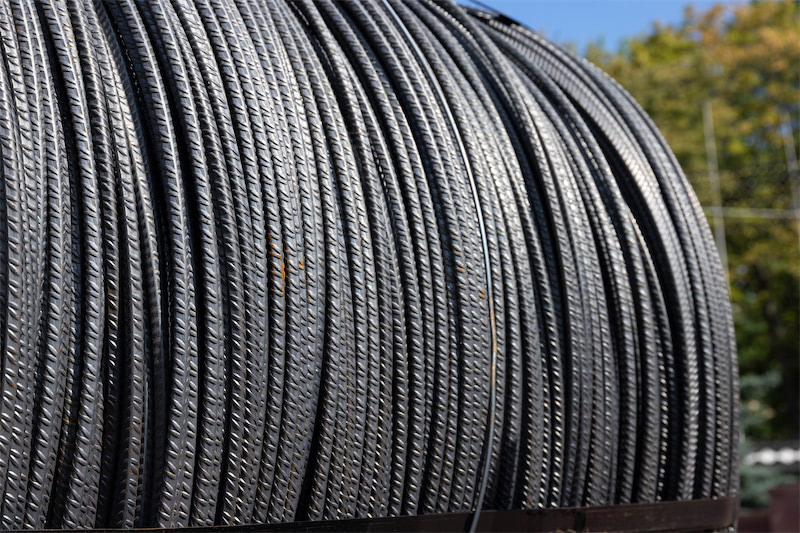
North China steel mills take the initiative to store in winter: North China Steel Plant takes the lead in launching a post-settlement value preservation policy, but steel trading agents mainly wait and see and do not easily obtain goods. The spot market has fluctuated recently and has been declining. Some Shanxi manufacturers have once again adjusted their winter storage policies and changed to a one-by-one negotiation model. The ex-factory price of rebar is 3,690-3,780 yuan/mt, the ex-factory price of high frame lines is 3,850-3,860 yuan/mt, and the ex-factory price of coiled rebar is 3,870-3,900 yuan/mt. Once the policy was changed, the winter storage price was generally 10-20 yuan/mt lower than the market price. Agents were more enthusiastic about purchasing goods and took the initiative to carry out winter storage. In particular, the order-taking situation in the wire cod was good. In Shanxi Jinnan, Huaxinyuan and Hongda, the highest number of orders for wire cods can be as high as 200,000 mt.
East China market is passive for winter storage: The east China market has a different performance. As several major manufacturers have recently made bids, steel trading agents reported that the price advantage of winter storage is not big, and it is not much different from the usual purchase of goods, but they have to take it, so they conduct more passive winter storage. Among them, some steel mills reported that there was less cargo this year and less winter storage, resulting in winter storage prices being relatively higher than market expectations.
According to SMM, the phenomenon of active winter storage by agents in the north and passive winter storage in east China is also inseparable from the expected bottom prices of agents in the two regions. The winter storage price announced by Shanxi manufacturers makes agents think that there is still room for dozens of winter storage resources to be distributed, but the market price of steel mills of the same type in Jiangsu and Zhejiang is lower than the winter storage policy of steel mills that have already released steel. Without an advantage, it is impossible to get winter storage first.
There is a big difference in the winter storage of steel mills between the north and the south. The overall winter storage price this year is lower than last year, which is also closely related to the performance of the spot market.
In terms of the rebar futures spot market: On January 25, the rebar prices fluctuated. As of the market close on the 25th, the most-traded rebar contracts closed at 3,967 yuan/mt, up 0.69% from the previous trading day. According to SMM's quotation, on January 24, the national average price of rebar was quoted at 3,970 yuan/mt, which was an increase of 5 yuan/mt from the average price of 3,965 yuan/mt on the previous trading day. On January 24, spot quotations in some markets rose slightly. On the supply, as of January 23, the operating rate of the country's 50 electric furnace steel plants that mainly produce building materials was 53.60%, a month-on-month decrease of 1.98 percentage points; the capacity utilization rate was 52.25%, a month-on-month decrease of 1.47 percentage points; the average daily output of building materials was 116,400 mt, a decrease of 3,300 mt. According to statistics, electric furnaces gradually enter the CNY holiday in late January. The proportion of EF steel plants that plan to shut down furnaces in late January accounts for nearly 60%, and rebar production will gradually decline.
Looking ahead, on the demand, as the CNY holiday approaches, downstream construction sites have been shut down one after another, and demand has dropped further. Merchants have a strong wait-and-see attitude overall, and there is no significant increase in transaction performance. At present, the contradictions in the fundamentals of rebar are not prominent. In the future, we need to focus on the pressure on pre-holiday inventory accumulation and winter storage conditions.
![Los precios del magnesio suben por tercera sesión consecutiva: el lado de los costos sigue "ardiendo" mientras la demanda lucha por tomar el relevo [Comentario de SMM]](https://imgqn.smm.cn/usercenter/EutUV20251217171724.jpeg)