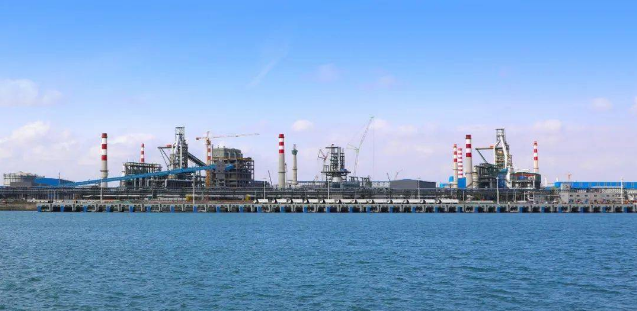
On October 9, Eastern Steel Sdn Bhd’s No. 2 blast furnace (1,380m³ capacity) , the largest BF in Malaysia, was officially put into operation, with an annual molten iron output of 1.7 million mt. At this point, the second phase project of the company was completely put into production, materializing Jianlong Group's plan to relocate capacity to Malaysia-based HRC market, thereby boosting steel demand throughout Southeast Asia. Meanwhile, it will also help transformation and upgrading of steel industry in the region where high-end steel products were insufficient.
lIn addition, some capacity of Alliance Steel (M) Sdn. Bhd came on-stream in Malaysia. Moreover, Hebei Wen'an Steel's investment in the region is about to be launched.
Investment cases and progress of Chinese steel mills in Malaysia
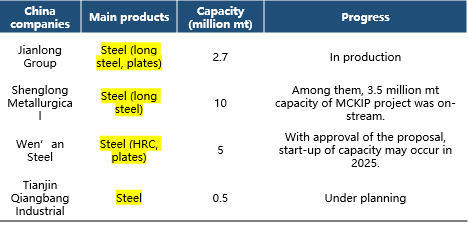
There was growing list of overseas investments by Chinese steel mills in recent years. Driven by the “One Belt, One Road” initiative, Chinese companies preferred Malaysia, rather than other countries. And why was that?
First of all, multiple indicators showed that investment environment of Malaysia’s steel industry was highly attractive.
Overview of Malaysian Steel Industry Investment Environment Assessment
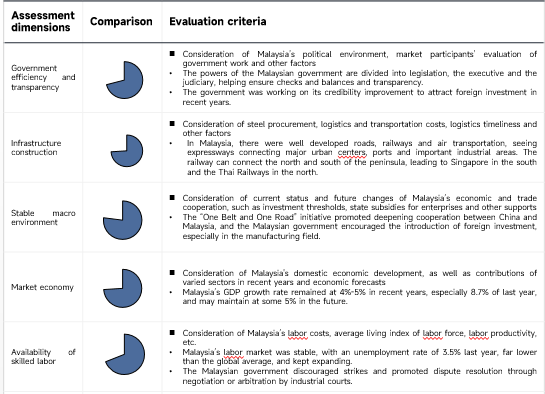
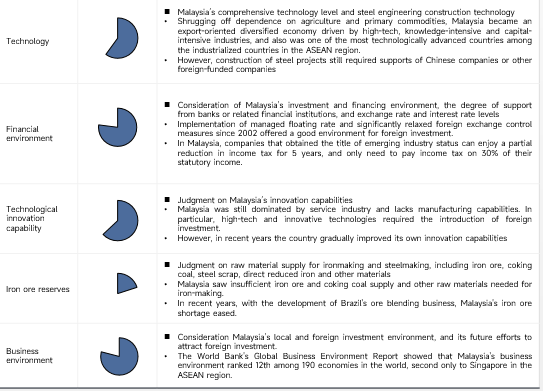
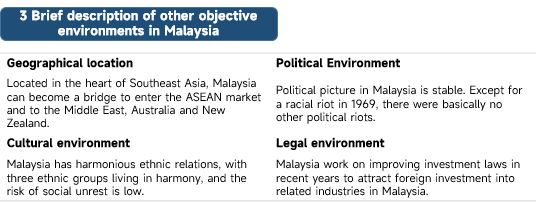
Overall, Malaysia boasts a stable political situation, complete financial market, outstanding geographical transportation advantages, and an international trade foundation, which provide opportunities to attract foreign investments.
However, It’s crucial for foreign investors to have knowledge of Malaysia’s supply and demand status of the steel industry chain.
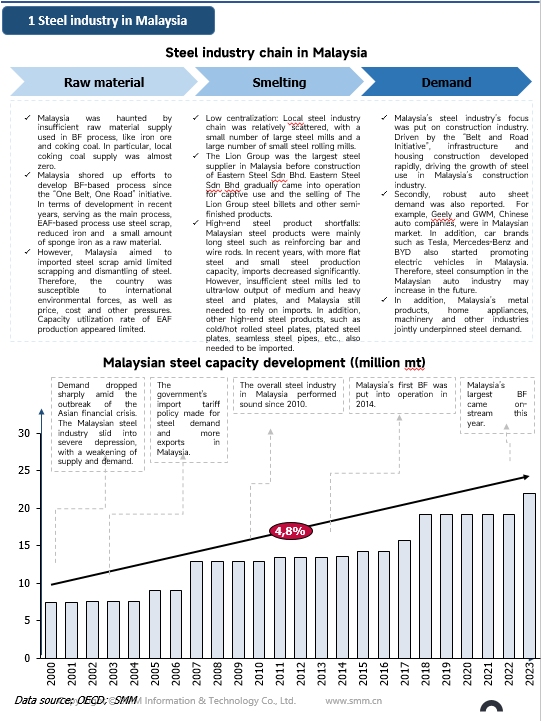
Major steel mills in Malaysia
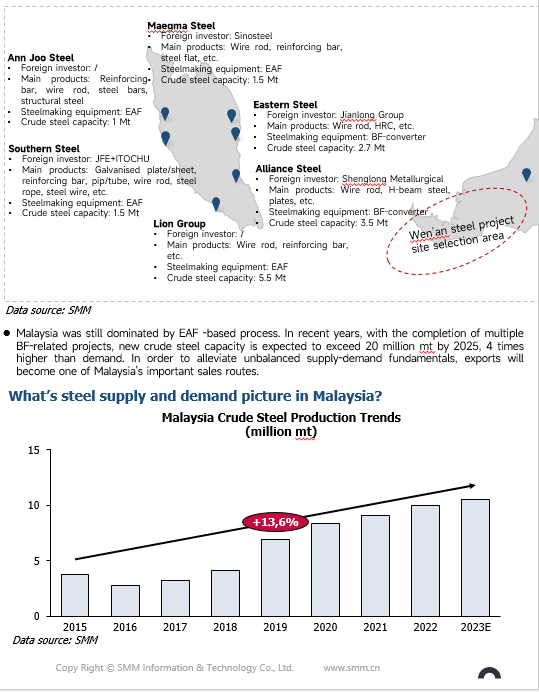
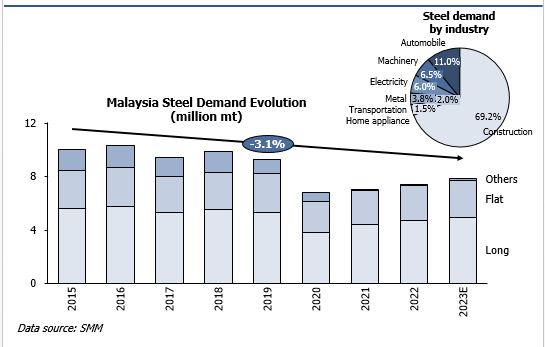
Malaysia's steel demand remained at around 7.4 million mt in 2022, and the downstream steel buyers were still heavy industries such as construction, auto, and machinery. Malaysia's annual consumption is expected to reach 15 million mt by 2025.
Malaysia mainly supplied long steel. Malaysia exported 5.3 million ton of long steel in 2022, lower than last year, but was still higher than ordinary steel capacity. In fact, steel market saw shrinking imports and a significant rise in exports since 2018 in Malaysia. Capacity gradually increased, while demand was far lower than output. Therefore, Malaysia became a "net exporter" of steel, which was a major reason for attracting foreign steel mills to invest. In the future, based on Malaysia, the steel sales market will not only expand its business in Malaysia, but will also in Southeast Asia and even the world.
In addition to export opportunities, is there still room for improvement in steel demand in Malaysia?
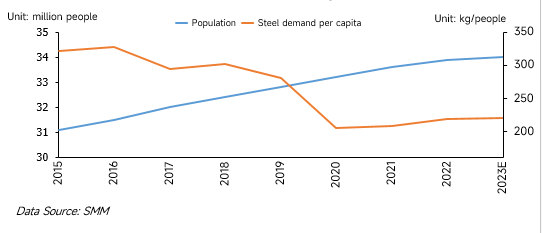
Malaysia’s population and per capita crude steel demand development
Comparison of per capita apparent consumption of finished steel in 2022 (kg/person)
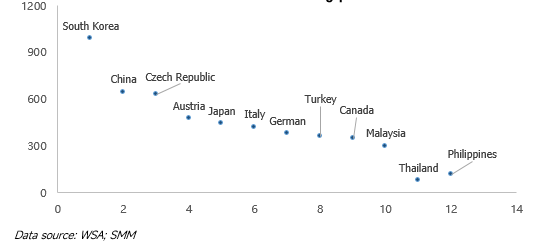
Compared with other countries in Southeast Asia such as the Philippines and Thailand, Malaysia's per capita steel consumption was above the average, but still lagged far behind developed countries and China. With downstream steel consumption and introduction of foreign investment in manufacturing industry, there will still be big room for steel demand to perk up.
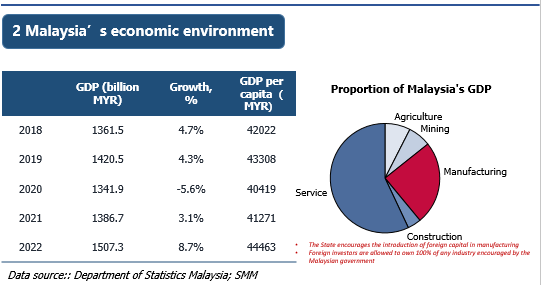
Malaysia's GDP grew by 8.7% YoY in 2022, reaching the highest economic growth rate since 2000. The hike was largely pinned on strong growth in local demand and exports, triggered by the smooth end of the pandemic last year.
Malaysia supported foreign investment, especially in manufacturing and high-tech industries. To balance regional development, the government encouraged investment in the emerging Iskandar Special Zone, the Northern Economic Corridor, the East Coast Economic Corridor, the Sabah Economic Corridor and the Sarawak Renewable Energy Corridor.
The Malaysian government's "Industry4WRD" proposed the goal of building Malaysia into a strategic partner for smart manufacturing, a high-tech industry investment destination, and a provider of high-tech solutions in the Asia-Pacific region by 2025.
The government made active efforts to reduce debt to safeguard national sovereignty and attract more foreign investment, thereby achieving stable GDP growth.
According to rational predictions of different institutions such as the Malaysian government, IMF and Bank Negara Malaysia, Malaysia’s GDP growth rate this year will still be able to stand at 4%-5%.
Tapping knowledge of global steel industry chain and regional markets, SMM can provide customers in the ferrous metal industry chain with a series of customized consulting services such as market research, cost research, due diligence, market entry strategy, and business transformation.
SMM ferrous metal-related consulting overseas research case display
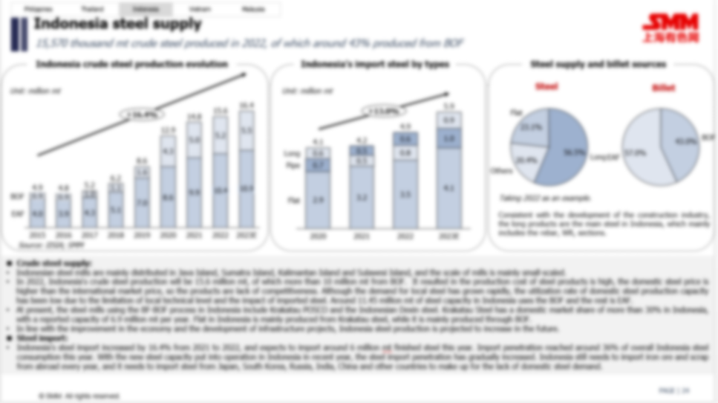
Research on Indonesian steel market and import opportunities
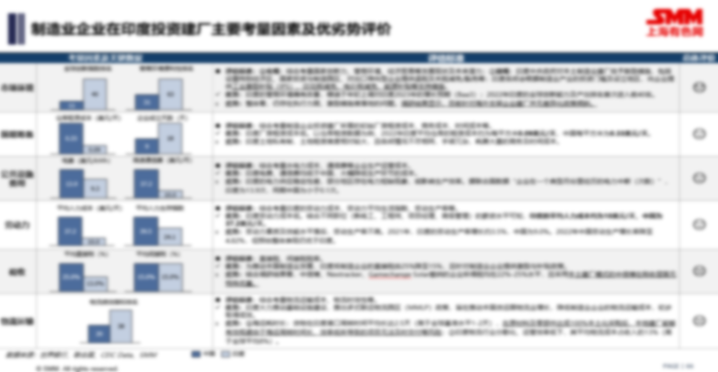
Main considerations and evaluations for manufacturing companies investing in and building factories in India
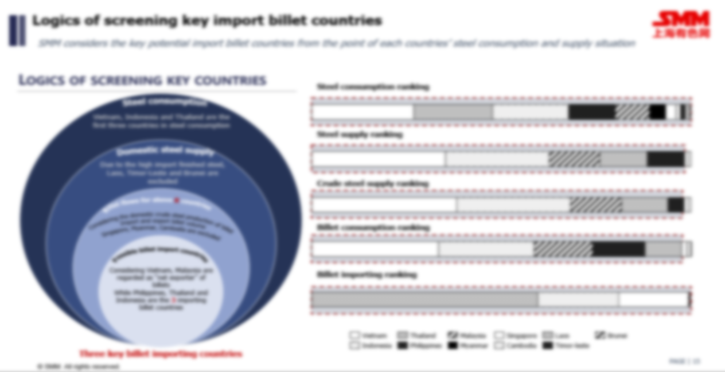
Research on market screening of steel billets launched by a global trading company in Southeast Asia
For more details, please contact:
Sun Jing
Project Manager
SMM Information & Technology Co., Ltd.
Mobile/WhatsApp: +86 15000619785
E-mail: sunjing@smm.cn | Web: www.smm.cn
9th FL in South Section, Building 9, Lujiazui Software Park, No. 20, Lane 91, E'Shan Road, Pudong New Area, Shanghai, 200127, China.
![[Comentario diario de láminas y placas SSMM] Los precios spot de HRC se movieron lateralmente, las transacciones intradía retrocedieron.](https://imgqn.smm.cn/usercenter/aPBtI20251217171717.jpg)
![[SMM Llegadas de bobinas laminadas en caliente] Llegadas mixtas en este período](https://imgqn.smm.cn/usercenter/SEwWP20251217171716.jpg)