SHANGHAI, Aug 31 (SMM) – Amid shifting energy paradigms, the energy storage industry is accelerating, attracting a diverse range of players from battery manufacturers and integrators to photovoltaic and wind power providers, and even cross-industry giants like Midea and Gree. The past year has seen 108 financing events in the sector, with major financing cases emerging frequently, marking a significant increase in both financing quantity and scale. After photovoltaics and electric vehicles, energy storage has become the new favorite of investment markets. While policy subsidies currently drive the sector, what will be the course of the industry as these support mechanisms taper off?
SMM posits that, irrespective of near-term policy aid or future policy shifts, China, the US, and the UK will persist in dominating the global large-scale energy storage market, while Europe, with Germany at the forefront, will excel in the household energy storage market. The key reasons are:
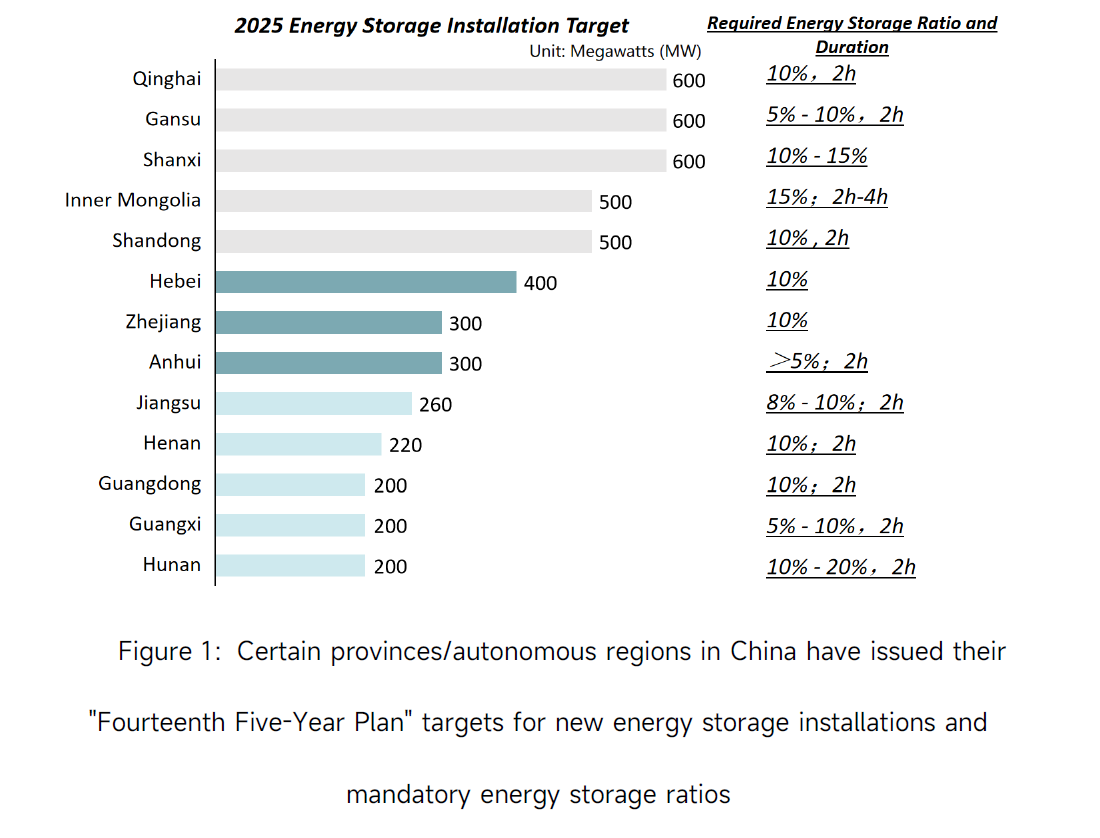
- China: Under the "14th Five-Year Plan", China's National Development and Reform Commission and National Energy Administration have issued guidelines aimed at accelerating the growth of novel energy storage. The guidelines predict an installed capacity of new energy storage exceeding 300 billion kilowatts by 2025. Accordingly, compulsory energy storage policies have been rolled out nationwide, resulting in a currently recorded installed capacity of 600 million kilowatts. They propose a new energy storage proportion of 10%-20%, emphasizing that the demand for over two hours of energy storage will become a necessity, serving as a critical propellant for power generation market development.
In the short run, China's policy priority lies in power generation, but in a long-term view, with gradual policy withdrawal, SMM anticipates strong potential for development in both power generation and grid aspects in China: First, China's extensive coastline and plentiful photovoltaic and onshore wind resources in western and northern regions offer unique geographical `advantages that boost energy transformation. However, the uneven geographical distribution of new energy power generation and consumption areas leads to high rates of wind power capacity and PV power capacity abandonment, necessitating energy storage systems for energy conservation and grid connection issues. Furthermore, regional imbalances in power generation and transmission capabilities imply that substituting grid upgrades with energy storage can reduce grid investments, becoming a central driver for future grid development.
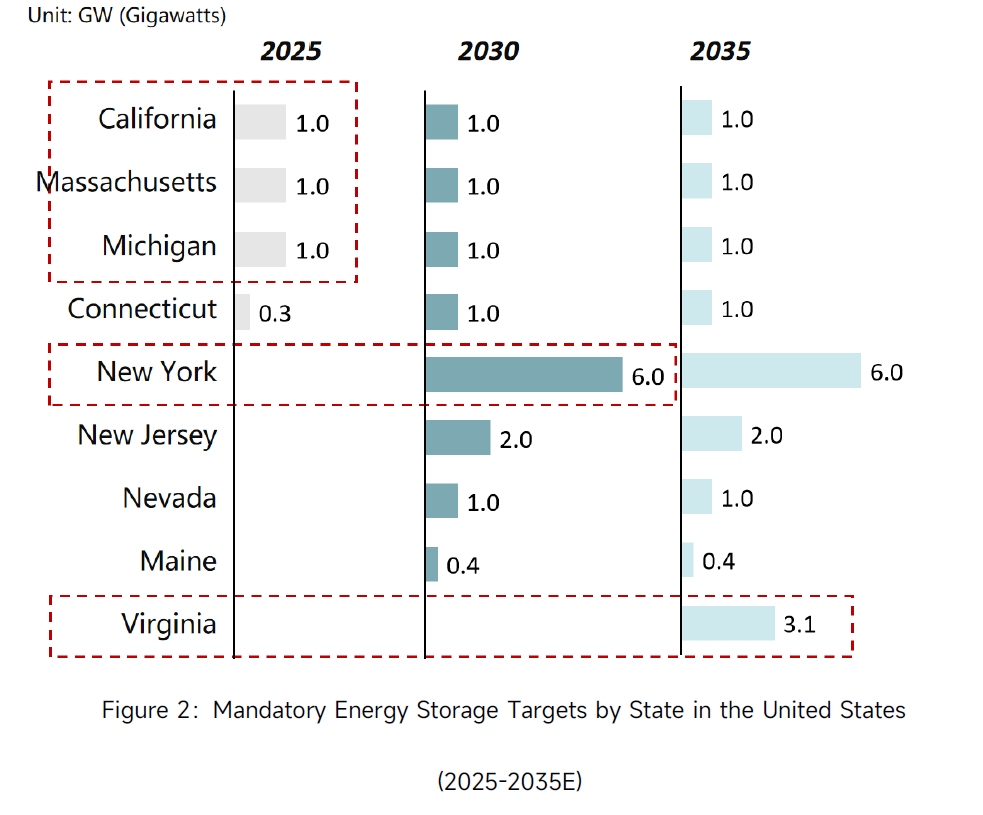
- The U.S. is driven to develop large-scale energy storage due to the independence of its regional grids and aging electrical equipment. The national grid, composed of East, West, and Texas sector grids, requires energy storage for extensive cross-regional dispatch due to their independence and the high costs of long-distance power transmission. The aging infrastructure and vulnerability to extreme weather boost the demand for energy storage solutions. Currently, policy primarily drives the U.S. market, with nine states already having set their energy storage installation targets.
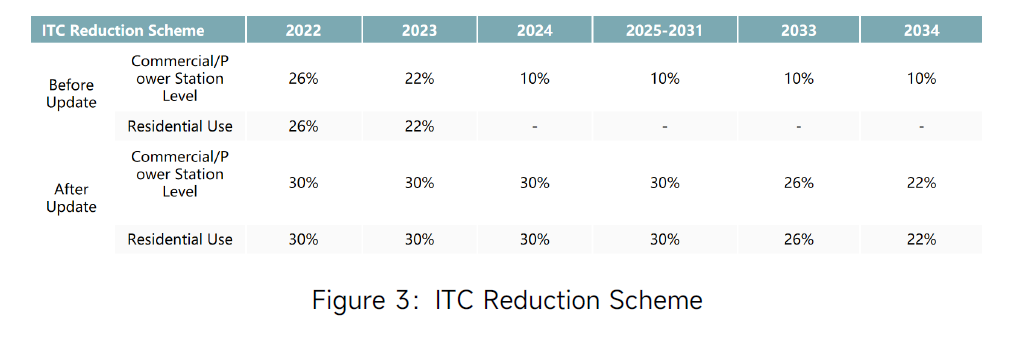
Furthermore, at the federal level, the IRA Act and ITC tax-exemption subsidy policies have catalyzed widespread growth in photovoltaic storage, standalone storage, and household storage. In 2022, the U.S. enacted the IRA Act, allowing not only photovoltaic storage but also large-scale standalone and household storage to benefit from tax deductions, raising the base tax deduction to 30%, with the subsidy period extended until 2033. In May 2033, the U.S. released precise IRA calculation rules, proposing two types of subsidies for energy storage projects, ITC and PTC, with standalone storage qualifying for ITC. The rules state that energy storage projects can attain a one-time 30% investment deduction in their first year of operation. If a project satisfies the award calculation rules, it can receive an additional 10% investment deduction, elevating the total deduction ratio to 40%.
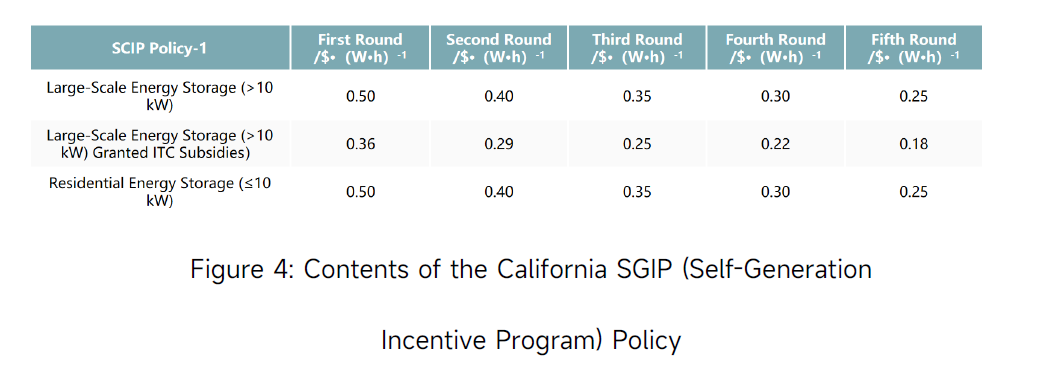
At the state level, about 17 states, spearheaded by California, have rolled out clear energy storage subsidy policies. For instance, California's SGIP policy has powerfully driven its emergence as a core hub within the U.S. energy storage market.
In the EU, energy shortages and security issues are expected to persistently drive demand for wind and solar energy, further propelling the growth of the energy storage market. In the short term, policy is the main driver of EU energy storage development: RE Power EU and "Fit for 55" have set a target for 45% of power installations to be from renewable sources by 2030 and provided a funding support scheme of 100 billion euros. Concurrently, the European Association for Energy Storage (EASE) released a roadmap with renewable energy installation goals of 187GWH by 2030 and 600GWH by 2050. Looking long term, Europe has a critical need for energy storage: Currently, the European energy system largely depends on hydroelectricity, natural gas, and coal, with the latter two mostly imported. Since Russia first limited natural gas flow to Europe in 2021, overall electricity prices have been on a consistent rise. The uncertainty in supply-demand dynamics will leave European electricity prices (both industrial and residential) in a state of flux. Additionally, the phase-out of coal power is an inevitable trend in the energy transition, and the demand for renewable energy generation and energy storage is projected to continually rise.
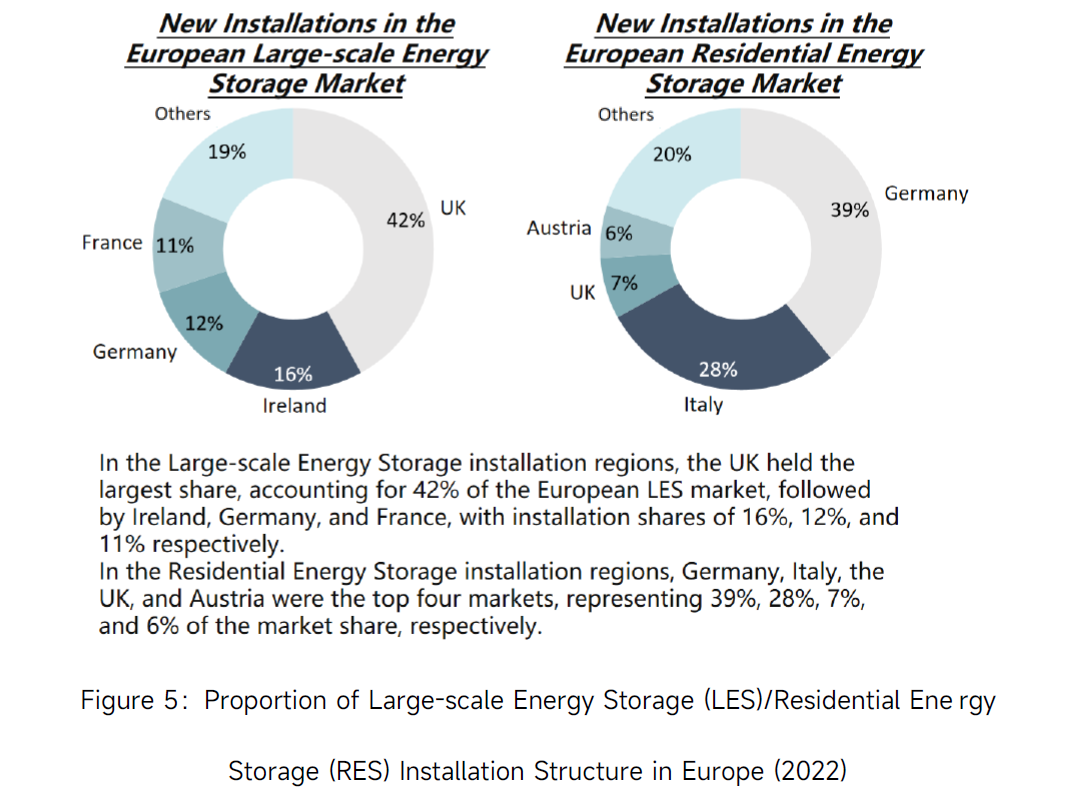
Regionally, the UK, as an island nation, faces constraints in power supply, which necessitates the use of renewable energy to supplement its power sources and propels the development of large-scale energy storage. Conversely, European countries, spearheaded by Germany, are primarily driven to advance due to the impact of energy crises causing fluctuations in electricity prices, affecting industrial, commercial, and residential energy storage.
In the long-term, SMM anticipates that even with the reduction of policy subsidies, the escalating global energy crisis and "carbon neutrality" goals will persistently stimulate the growth of energy storage. Each country's critical need for energy storage, national strategic energy security, and energy transition efforts will maintain this momentum. Furthermore, as countries persistently reform their electricity markets and refine their business models, they provide sources of return for investors and operators, thus continuing to propel the sustainable development of the global energy storage market.
![[Los precios de los módulos fotovoltaicos distribuidos siguen divergiendo]](https://imgqn.smm.cn/usercenter/CaHKo20251217171738.jpg)
![[Los productores de primer nivel siguen negociando los precios del vidrio fotovoltaico]](https://imgqn.smm.cn/usercenter/AuVub20251217171738.jpg)
![[Solar: Bangladés introduce una tarifa de 0,086 dólares/kWh para la energía solar en tejados con medición neta y un objetivo de 5 GW]](https://imgqn.smm.cn/usercenter/zvkUO20251217171743.jpg)