SHANGHAI, May 27 (SMM) - As China Customs released the first 4 months aluminium scrap import data, SMM notices there are some new features of China’s aluminium scrap imports. During the first 4 months, China imported total 404.8kt aluminium scrap from the rest of world, up 22% y/y. However, compared to the last December, monthly aluminium scrap imports remain downward trend. In March and April, imported aluminium scrap decreased by 4.3% and 22.7%, respectively, compared to the same period last year.
Aluminium scrap imports from Hong Kong significantly drop
Figure 1: Aluminium scrap imports by entrepot trade significantly decreased in China
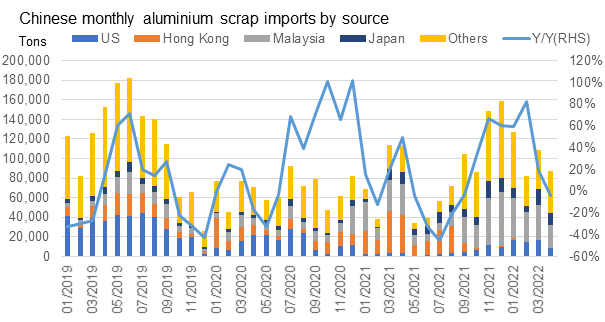
Data source: SMM, China Customs
The most interesting thing is that the imported scrap volume from Hong Kong, the main aluminium scrap source, dropped by 99% over the first 4 months. In April, there is no any imported aluminium scrap from Hong Kong. On the other hand, aluminium scrap from the US significantly increased by 349%, compared to the first 4 months of 2021.
SMM understands the main reason is China Customers at main ports start to require the scrap importers provide the certificate of origin. In particular, aluminium scrap is imported from Hong Kong and Southeast Asia countries. Because the majority of aluminium scrap from these regions actually originates from the US, the importers always can avoid paying 25% import duty by entrepot trade through Hong Kong or other Southeast Asia countries. As the certificate of origin is required by the Chinese authorities, these kind of trading activities cannot be sustained anymore. It resulted in the significant decrease in aluminium scrap imports from Hong Kong and Malaysia. Some traders are forced to shift to directly import scrap from the US under the toll manufacturing category, which can be exempted from 25% import duty.
However, aluminium scrap toll manufacturing is being banned now
According to our latest survey, we understand that aluminium scrap toll manufacturing has been banned since 1st April 2022. Unless the scrap has been shipped out before that, aluminium scrap will not be allowed to be imported under the toll manufacturing category. Currently almost 100% of aluminium scraps from the US are under the toll manufacturing category which can be exempted from 25% import duty. SMM expects the imported aluminium scrap volume from the US would significantly decrease next month under the current situation.
SMM understands these measures normally will drive aluminium scrap supply tighter in the domestic market. However, due to the lockdowns and weak demand, Chinese secondary aluminium producers have cut their operating rates, which reduce the scrap demand in China. Aluminium scrap supply is not tight in China as it should be. At the same time, aluminium alloy ingot imports remain strong growth during the first 4 months of this year, up by 41% y/y. More and more aluminium scraps have been melted to aluminium alloy ingots in other countries before delivery to China.
SMM believes one scenario might happen next couple of months. If the Biden administration can revoke the import duties on Chinese goods, and then the Chinese government will abolish the import duties on the goods from the US, including aluminium scrap, the aluminium scrap trading flow would back to normality before the trading war between the US and China. The other scenario is the current situation will remain unchanged. It means unless China can import more aluminium scrap from other countries or import more aluminium alloy instead of scrap, the Chinese domestic market will suffer from tight aluminium scrap supply, in particular after the lockdowns due to Covid-19. In terms of the second scenario, it is worth seeing if the Chinese authorities will release new policies on the aluminium scrap toll manufacturing in the remaining of 2022.
![Los precios nacionales se fortalecen mientras los precios en el extranjero se mantienen estables; la ventana de importación de aleación de aluminio se acerca a su apertura [Revisión diaria del precio del ADC12]](https://imgqn.smm.cn/usercenter/rUQIB20251217171723.jpeg)