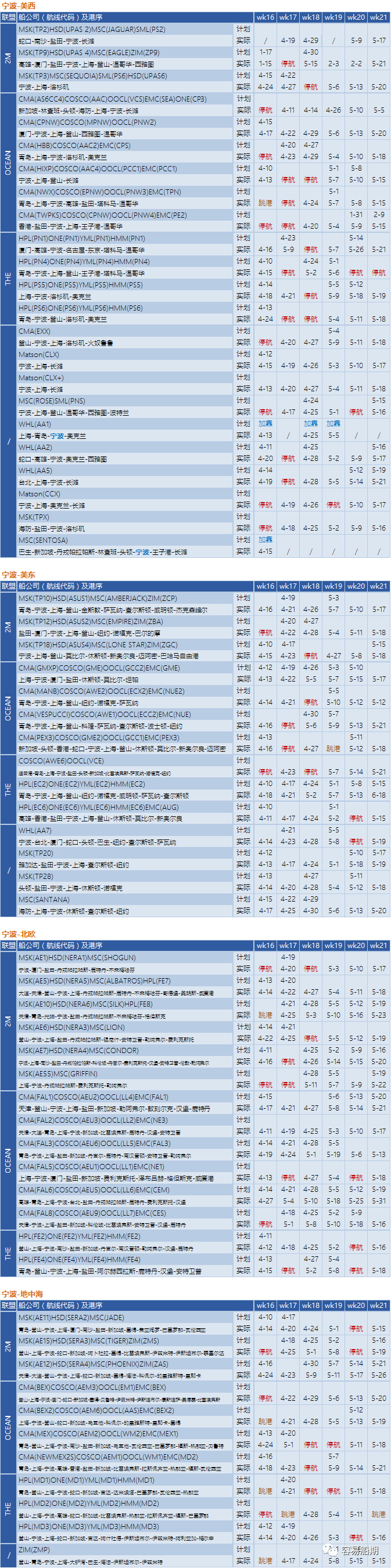
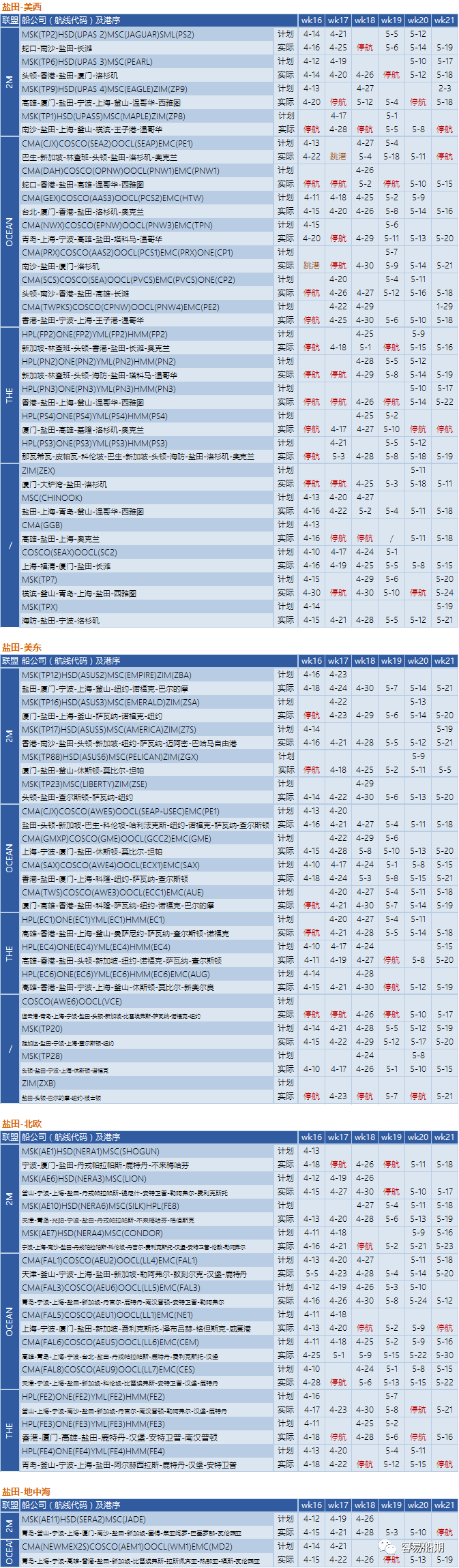
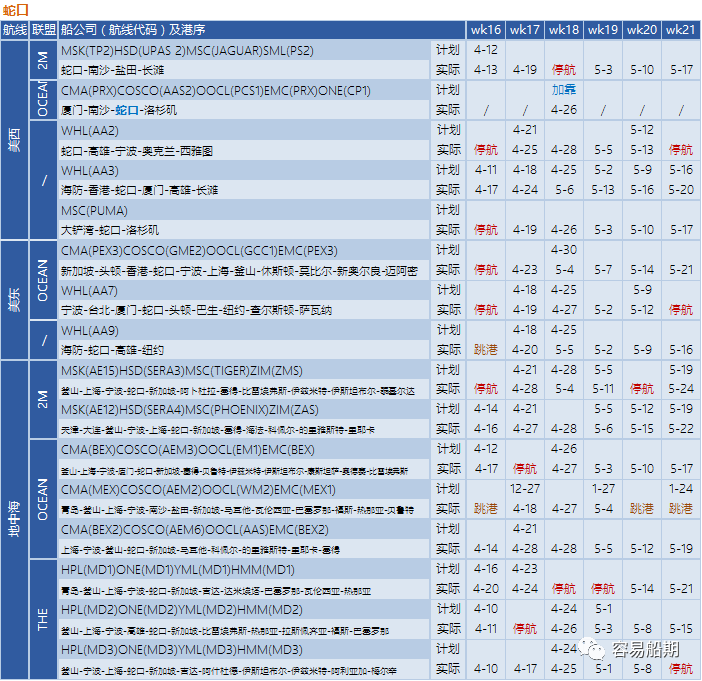
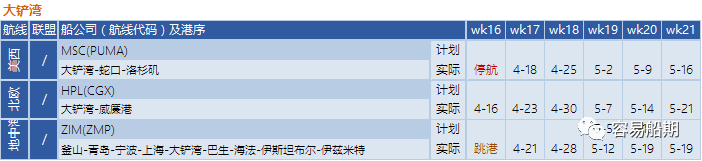
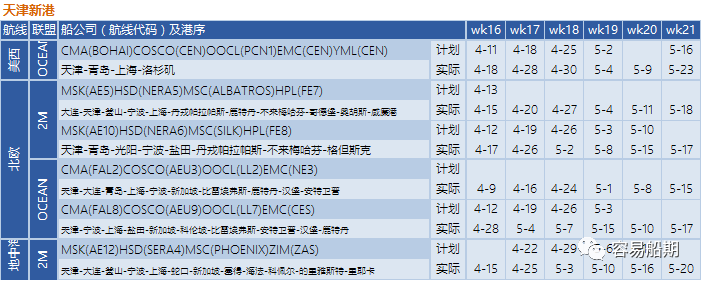
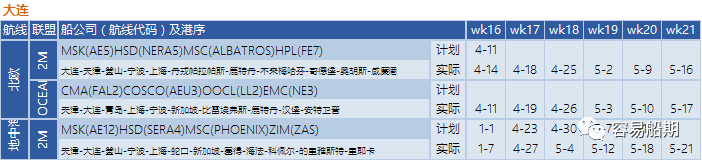
Three major leagues cancel 54 voyages! 58% of the air flights occur on trans-Pacific routes! Summary of suspension and jump into port is attached

Publicado: Apr 18, 2022 09:08 (GMT+8)
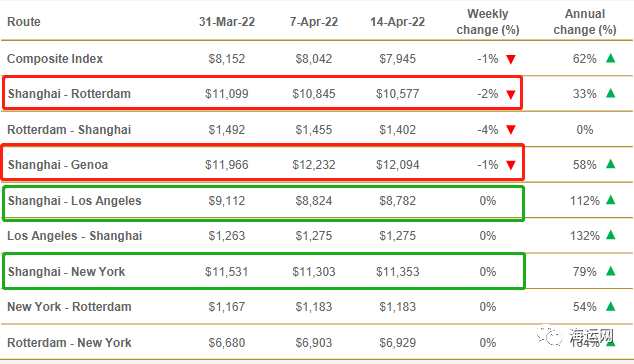
[three major leagues cancel 54 voyages! 58% of the air flights occur on trans-Pacific routes! With suspension and jump summary] Drury's latest composite world container index fell 1.2% to 7945.31 yuan per 40-foot container. It is still 62% higher than the same period last year. Drury's average WCI composite index so far this year is $9038 per 40-foot container, $5805 higher than the five-year average of $3232 per 40-foot container. The Drury index shows that freight rates have fallen for the seventh week in a row since February 24, 2022.

Drury's latest composite world container index fell 1.2 per cent to 7945.31 yuan per 40-foot container. It is still 62% higher than the same period last year. Drury's average WCI composite index so far this year is $9038 per 40-foot container, $5805 higher than the five-year average of $3232 per 40-foot container.
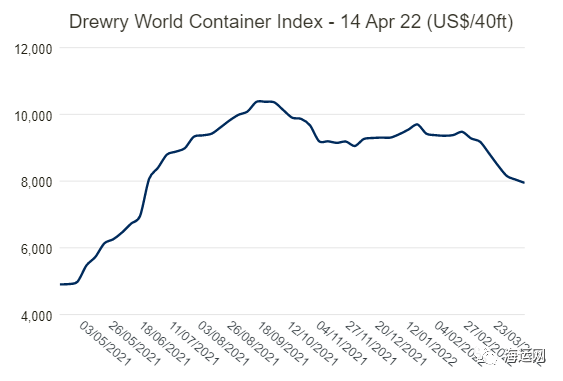
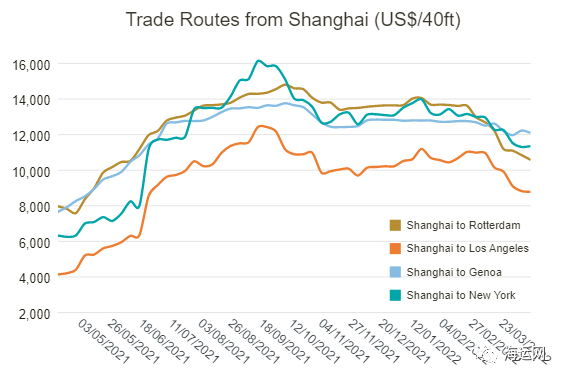
The Drury index shows that freight rates have fallen for the seventh week in a row since February 24, 2022.

1) freight from Shanghai to Rotterdam fell by 2 per cent, or US $268, to US $10577 / FEU.

2) freight rates between Shanghai and Genoa fell by 1 per cent, or $138to $12904 / FEU.

3) the freight rates of Shanghai-Los Angeles and Shanghai-New York remain basically unchanged compared with the previous period, reaching US $8782 / FEU and US $11353 / FEU respectively.

Drury expects Drury to expect spot rates to remain stable in the coming weeks.
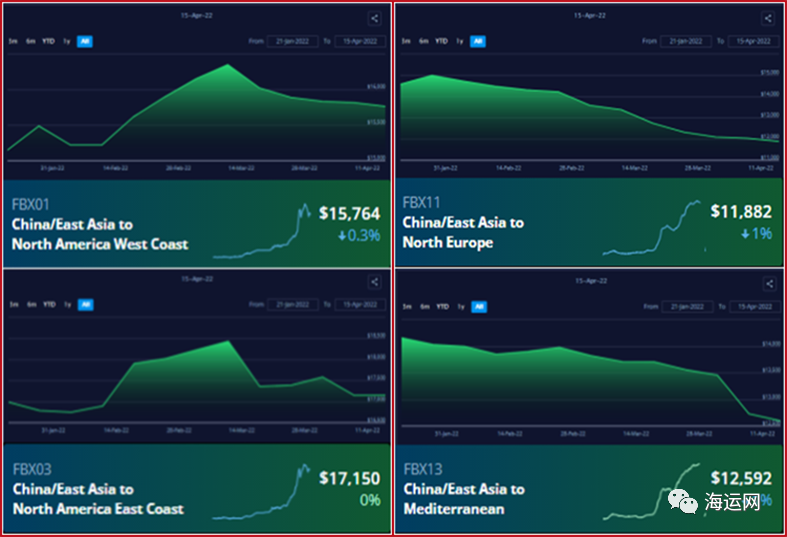
In addition, take a look at the latest Baltic Container Freight Index (FBX). The data show that:

1) the latest index from Asia to the US West fell slightly by 0.3 per cent to $15764 / FEU, the fifth consecutive week of decline since hitting a high of $16353 on March 11.

2) the latest index from Asia to the US East is basically unchanged at US $17150 / FEU, which is also a state of decline since reaching a high of US $18450 on March 11.

3) the latest Asia-Nordic index fell 1 per cent to $11882 / FEU, the 12th consecutive week of decline since hitting a high of $14999 on January 28th.

3) the latest index of Asia to the Mediterranean fell 1 per cent to $12592 / FEU, the 13th straight week of decline since hitting a high in January.
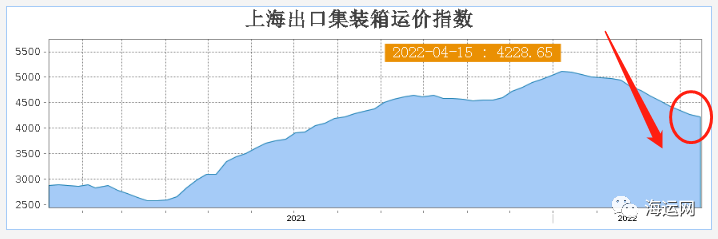
On April 15, the Shanghai Composite Container Freight Index (SCFI) released by the Shanghai Shipping Exchange closed slightly lower at 4228.65 points, down 35.01 points from the previous period of 4263.66 points.
Trends in shipping markets from Asia to North America:

With the continuous closure of Shanghai, suppliers and importers are facing increasing uncertainty. Seaborne carriers continue to assess the impact of booking. Due to the constraints of the current situation, China's export freight activity has decreased, and many carriers have turned to look for goods shipped from Southeast Asia. As the traditional peak season approaches, many importers and retailers are still in urgent need of restocking. Old problems that have not been alleviated include severe congestion, equipment imbalances, delays in cargo ships, port jumps, empty lines and higher fuel surcharges. The level of sea freight is still high compared with that before the epidemic, and the prices of a few market segments have declined. The priority transport market remains strong.

Trends in the Asian-European shipping market:

Shanghai is still under control, and some areas are likely to be unsealed in the near future. Cases have also been reported in other cities in eastern and northern China. The supply of factory production, warehouses and trucking services has been affected, although port terminals and trucking are still fully operational. All shipping alliances are available regardless of freight rates and spot freight, but carriers are still restricting transactions with long-term key customers. In response to recent changes in the situation, carriers are expected to announce port jump and air travel measures. Sea freight rates remain high, but prices as a whole show a downward trend from March to April as the market slows.

However, it is worth noting that freight rates for Southeast Asian routes have skyrocketed recently.

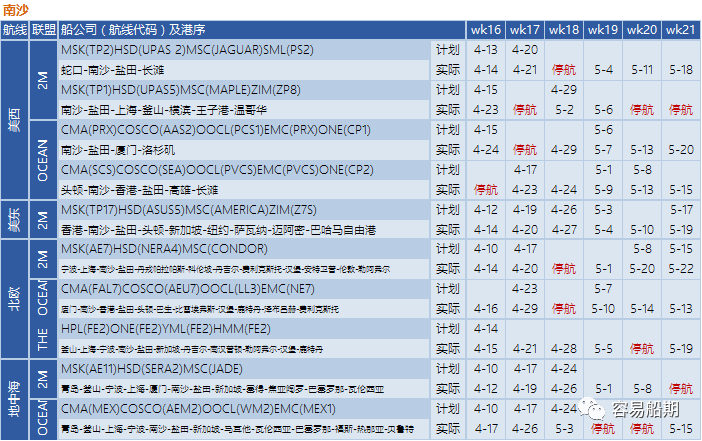
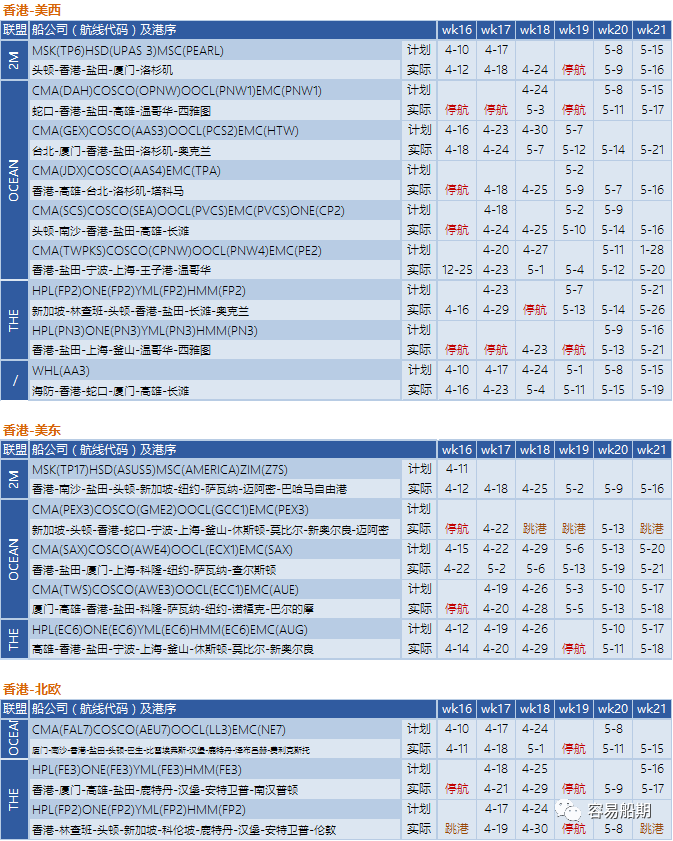
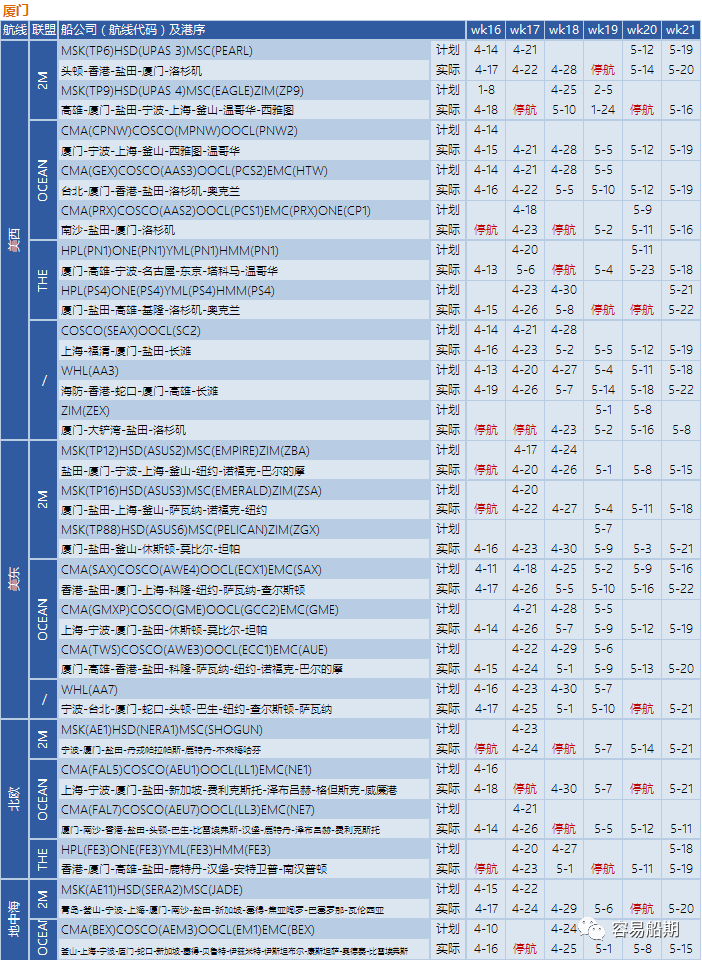
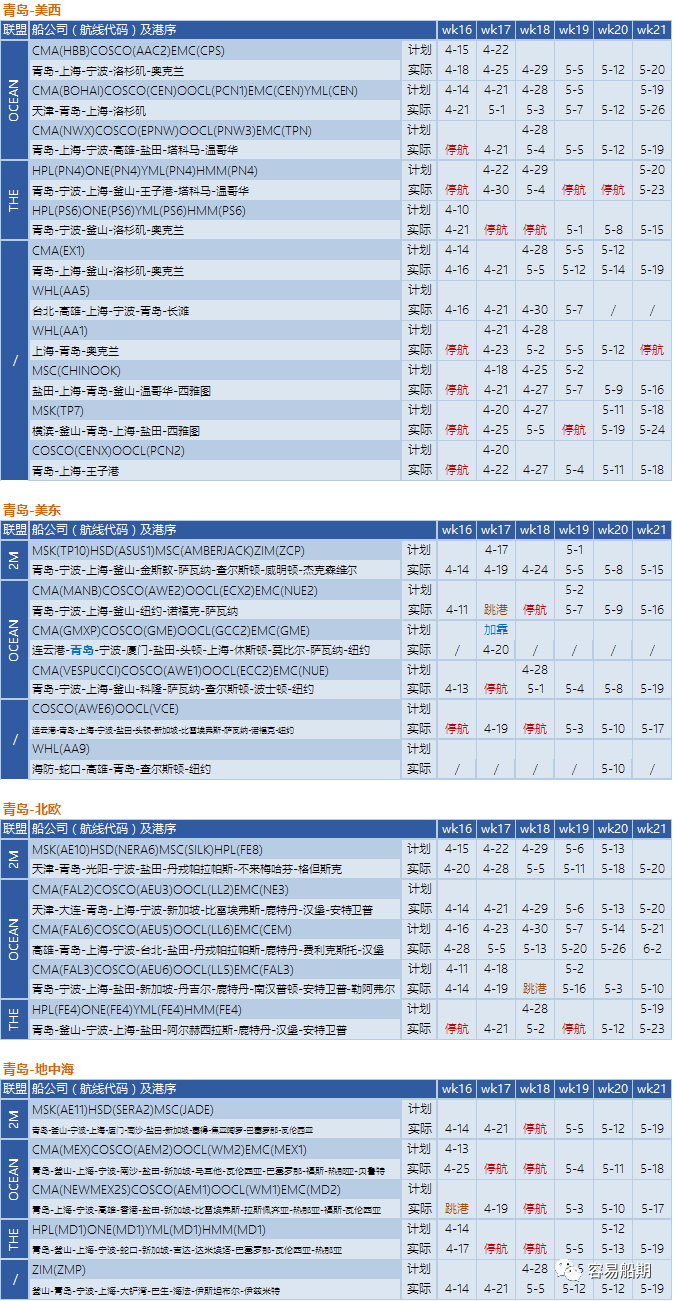
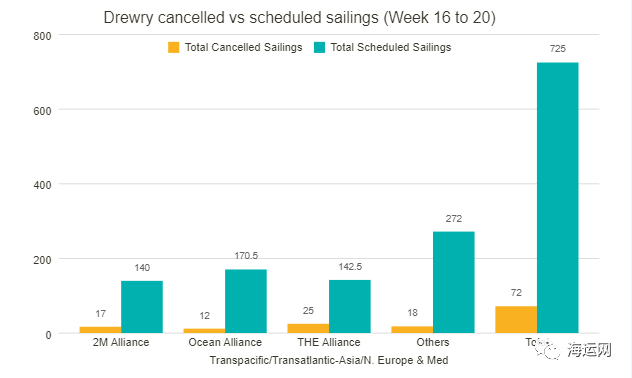
According to the latest data released by Drury a few days ago, in the following five weeks (weeks 16-20), the world's three major shipping alliances canceled a number of voyages one after another, of which the THE alliance cancelled the most 25 voyages; 2m alliance canceled 17 voyages; the least maritime alliance cancelled 12 voyages; a total of 54 voyages.
Drury said that the continued containment of the epidemic has put pressure on the already stretched supply chain, and shipping companies such as Maersk and Dafayton have begun to jump into Shanghai on some routes.

In addition, congestion at high-throughput ports has intensified again, especially in the United States, where imports have shifted from the west coast to the east coast. Many shippers are now focusing on the Gulf route and transferring goods to the port of Houston. With the ever-changing level of port productivity, it becomes more challenging to plan for shippers in a period of market uncertainty.

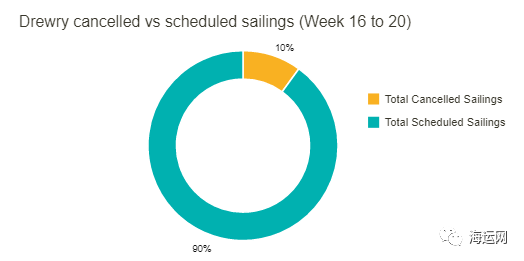
Of a total of 725 scheduled flights on major routes across the Pacific, transatlantic, Asia-Nordic and Asia-Mediterranean, 72 flights were cancelled between week 16 and the 20th week of next year, with a cancellation rate of 10 per cent. During this period, 58 per cent of blank voyages will take place on eastbound trans-Pacific trade routes, mainly to the west coast of the US, according to Drury's current data.
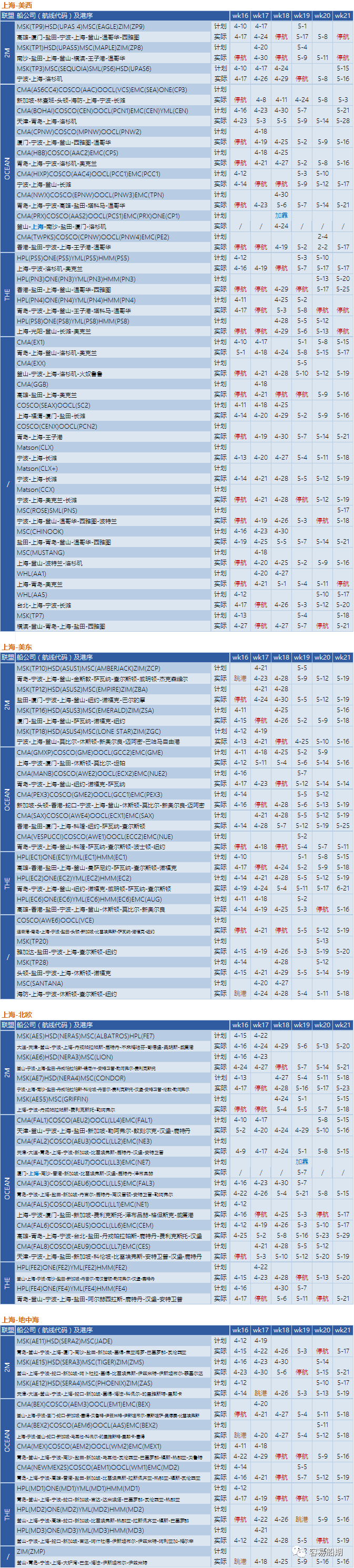
The following is a summary of easy shipping schedule statistics from Chinese mainland to North America, Europe and the Mediterranean for weeks 16-21 (from 2022-4-10 to 2022-5-21):

Summary of suspension and jump into port
Declaración de Fuente de Datos: Excepto la información disponible públicamente, todos los demás datos son procesados por SMM basándose en información pública, comunicación de mercado y confiando en el modelo de base de datos interna de SMM. Son solo para referencia y no constituyen recomendaciones para la toma de decisiones.

Para cualquier consulta o para obtener más información, por favor contacte: lemonzhao@smm.cn
Para más información sobre cómo acceder a nuestros informes de investigación, contacte con:service.en@smm.cn
Noticias relacionadas
El proyecto de ley de Ghana propone una acción especial del Estado y plazos más cortos para las concesiones mineras
hace 11 horas
El proyecto de ley de Ghana propone una acción especial del Estado y plazos más cortos para las concesiones mineras
Leer más
El proyecto de ley de Ghana propone una acción especial del Estado y plazos más cortos para las concesiones mineras
[SMM Gold Flash] Un proyecto de ley minera revisado por Reuters el 30 de septiembre permitiría al ministro de Minas de Ghana exigir a las empresas que emitan al Estado una acción especial gratuita con derechos de consentimiento sobre transacciones importantes. Mantendría el interés estatal existente del 10% sin costo y limitaría los arrendamientos mineros a 15 años o a la vida útil proyectada de la mina, lo que sea más corto. El proyecto también permitiría futuras normas que exijan procesamiento local y restrinjan las exportaciones de concentrados sin procesar. Ninguna de estas propuestas ha sido promulgada; Reuters no pudo determinar cuándo se preparó el proyecto. Para los mineros de oro de Ghana, los derechos propuestos y los arrendamientos más cortos podrían afectar el financiamiento, las valoraciones y las decisiones de renovación. Según el proyecto, los titulares de derechos existentes que busquen renovación recibirían consideración prioritaria para licencias equivalentes. Las empresas mineras esperan más consultas antes del debate parlamentario, informó Reuters. La redacción final y el calendario siguen siendo inciertos.
hace 11 horas
PGM: pruebas independientes impulsan la tecnología de baterías de platino y paladio
hace 11 horas
PGM: pruebas independientes impulsan la tecnología de baterías de platino y paladio
Leer más
PGM: pruebas independientes impulsan la tecnología de baterías de platino y paladio
[SMM PGM Flash] Platinum Group Metals anunció el 1 de octubre que las pruebas independientes del Battery Innovation Center validaron los electrodos a base de platino y paladio de su filial Lion Battery en celdas prototipo de litio-azufre. En comparación con celdas sin los catalizadores, los prototipos mostraron mejor capacidad y rendimiento de tasa, con las formulaciones ricas en paladio obteniendo los mejores resultados generales. Platinum Group y Valterra Platinum, que poseen el 52% y el 48% de Lion respectivamente, aprobaron la financiación para la siguiente fase. El resultado ofrece un posible nuevo uso para los metales del grupo del platino más allá de los catalizadores de escape de vehículos, pero sigue siendo un hito a nivel de prototipo. Lion planea fabricar y probar celdas tipo pouch, refinar los catalizadores y evaluar aplicaciones que incluyen drones. El rendimiento comercial y la demanda de volúmenes significativos de metales del grupo del platino aún no se han establecido. El trabajo es relevante para los proveedores de África austral: Valterra produce metales del grupo del platino en Sudáfrica y Zimbabue, mientras que Platinum Group está desarrollando el proyecto Waterberg en Sudáfrica.
hace 11 horas
Sibanye alcanza un acuerdo salarial en East Boulder; la huelga en EE. UU. continúa por separado
01 Oct 2026 16:45 (GMT+8)
Sibanye alcanza un acuerdo salarial en East Boulder; la huelga en EE. UU. continúa por separado
Leer más
Sibanye alcanza un acuerdo salarial en East Boulder; la huelga en EE. UU. continúa por separado
[SMM PGM Flash] Sibanye-Stillwater anunció el 30 de septiembre que los trabajadores de su mina de platino y paladio East Boulder en Montana habían ratificado un convenio colectivo con United Steelworkers. El acuerdo tiene efecto retroactivo desde el 1 de agosto de 2026 hasta el 31 de julio de 2029, con un aumento salarial del 4,5 % en el primer año, el mayor entre el 3,5 % o el IPC en el segundo año y el mayor entre el 3,0 % o el IPC en el tercer año. La huelga en la mina separada Stillwater East y en la planta metalúrgica de Columbus continúa, señaló la empresa. El acuerdo de East Boulder fija parte de la trayectoria de los costes laborales del negocio de PGM de Sibanye en EE. UU. y respalda su transición prevista hacia una minería más mecanizada e incentivos por equipos. No resuelve la otra huelga ni demuestra una recuperación de la producción; la empresa no reveló una guía de producción revisada en este comunicado.
01 Oct 2026 16:45 (GMT+8)