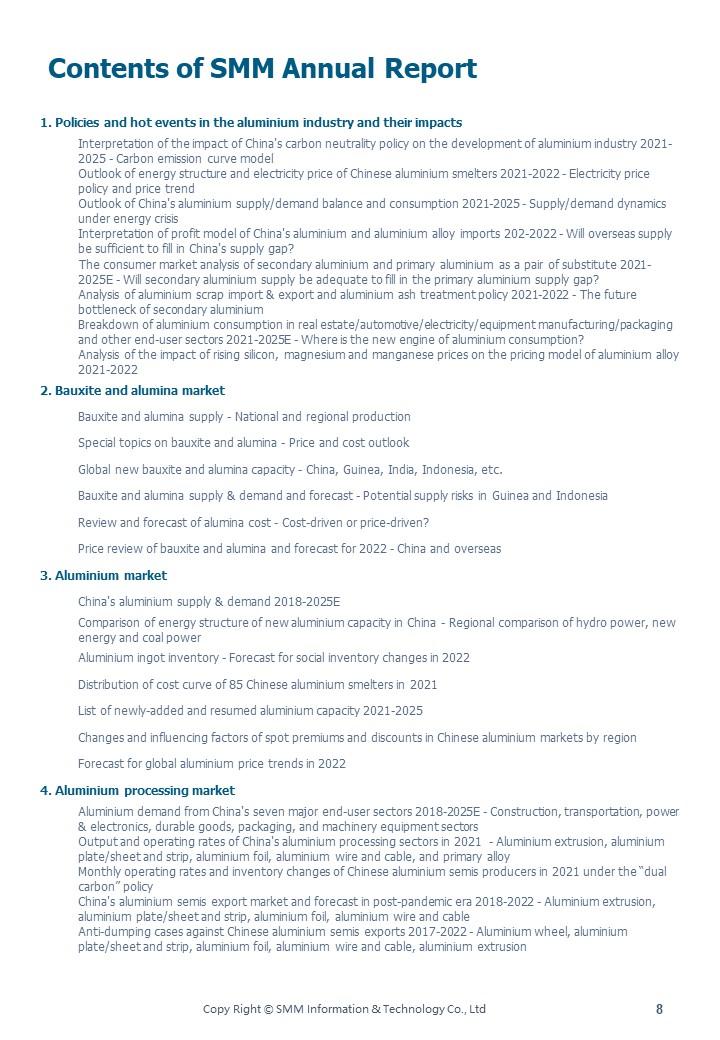
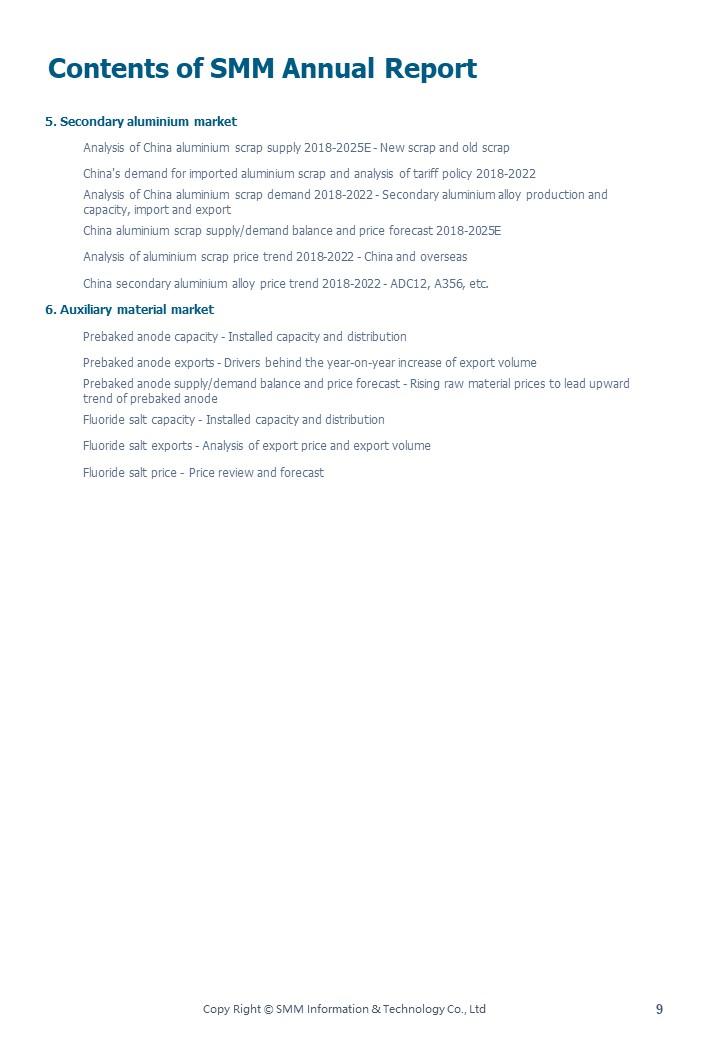
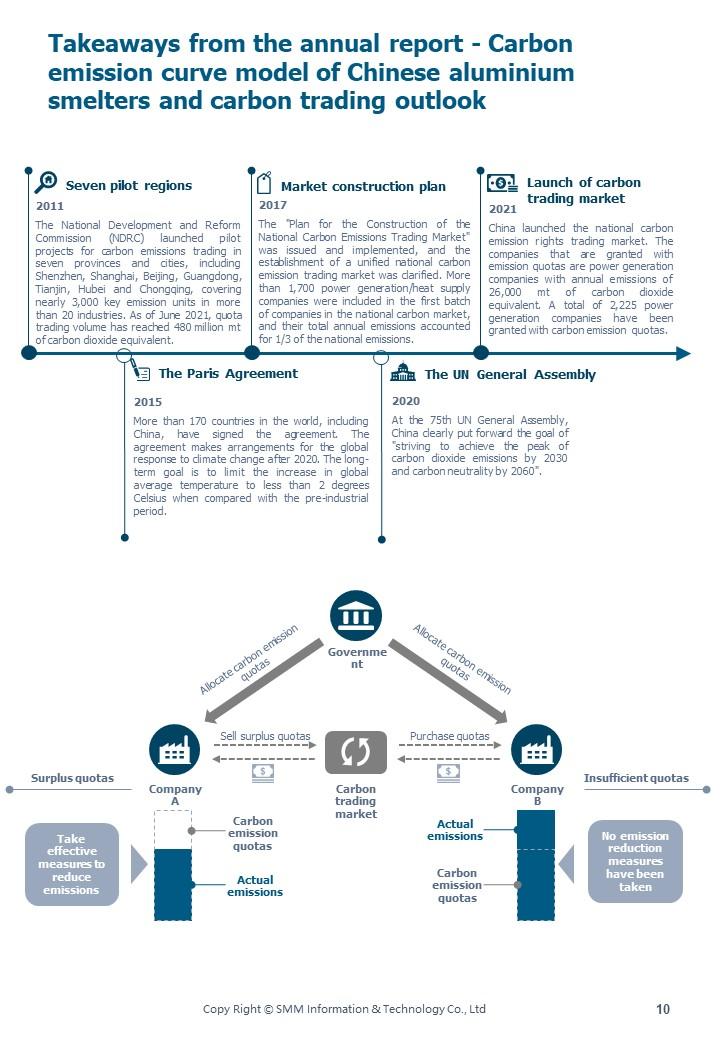
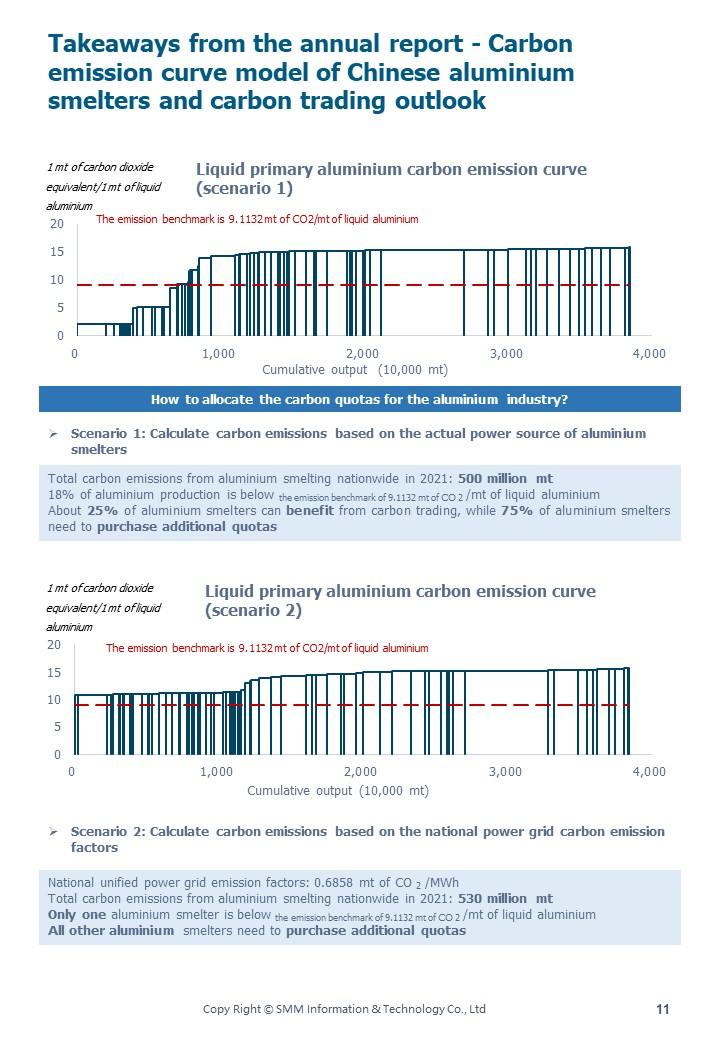
[Spoiler] SMM China Aluminium Industry Chain Annual Report 2021-2025

Publicado: Nov 10, 2021 13:49 (GMT+8)
Fuente: SMM
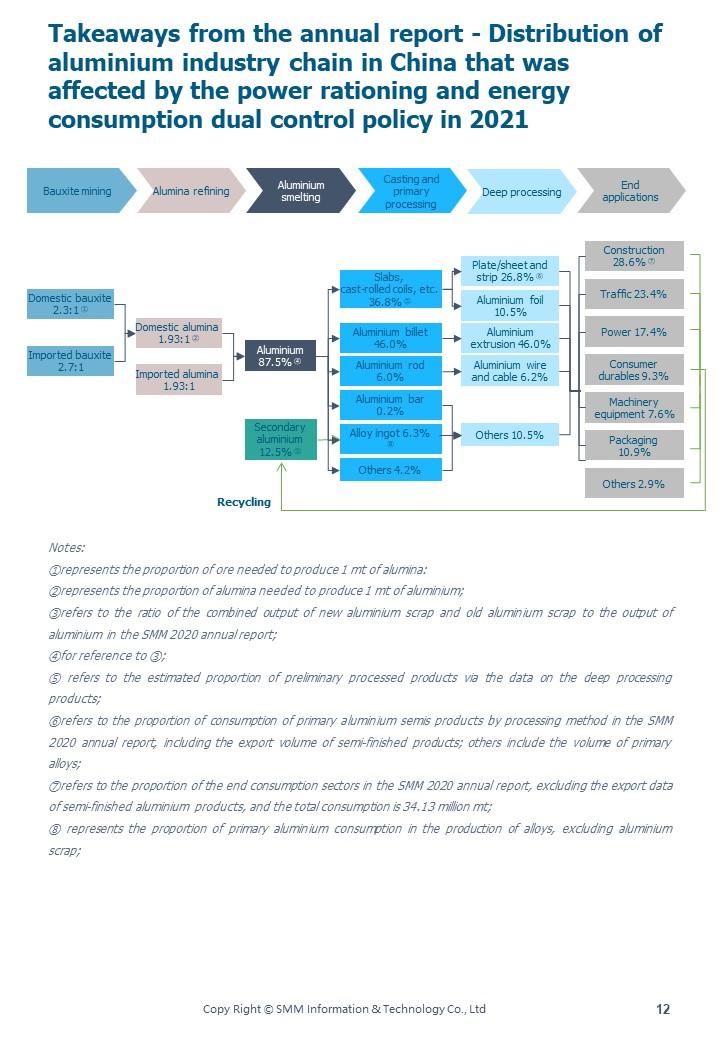
The carbon peak and carbon neutrality (“dual carbon”) policy has affected the Chinese and even the global aluminium supply and demand throughout 2021, a year which not only marks the beginning of the "14th Five-Year Plan” period (2021-2025), but also unveils the “dual carbon” policy.

SHANGHAI, Nov 10 (SMM) - The carbon peak and carbon neutrality (“dual carbon”) policy has affected the Chinese and even the global aluminium supply and demand throughout 2021, a year which not only marks the beginning of the "14th Five-Year Plan” period (2021-2025), but also unveils the “dual carbon” policy. The domestic and international aluminium markets have experienced earth-shaking changes in the past year. The domestic aluminium smelters have suffered frequent production restrictions and power rationing. The continuously rising prices of aluminium-related commodities, such as coal and natural gas, have increased the manufacturing costs of the aluminium industry chain. The production restrictions and power rationing extended from domestic aluminium smelters to downstream aluminium processing enterprises near the end of 2021, leading to an increase in social inventory in the peak season and weighing on aluminium prices. The "dual-carbon" policy, which is seen as a basic national policy, has been integrated into all aspects of industry policy and can provide guidance for the future trend of the aluminium industry.

The aluminium smelters struggled in a global "energy crisis" at the end of 2021. SMM will try to tell whether the energy crisis can be alleviated in 2022 by analysing the upstream, middle and downstream sectors of the aluminium industry chain. The energy crisis is one of the unprecedented challenges encountered by the global aluminium industry. The aluminium industry will continue to be affected by this crisis due to its high power consumption. How to survive under the "energy crisis" and “dual carbon” policy has become a common challenge for each enterprise in the Chinese aluminium industry.

In the upstream sectors, the political turmoil in Guinea and the flooding in Shanxi and Henan, which are the two main alumina producing provinces, disrupted the supply of bauxite and alumina in 2021, boosting their prices, even as the power rationing toward aluminium smelters has softened the demand for alumina. SMM will predict the future price trend of bauxite and alumina from multiple perspectives including the costs, supply and demand, and policy. The much-anticipated alumina futures will be launched in 2022. Whether this can create new trading models and what data should be closely watched for guidance on future price trends are worth of market attention. SMM will make a detailed interpretation of the opportunities and challenges in the bauxite and alumina markets.

In the aluminium downstream sectors, 2021 is a difficult year for the aluminium processing enterprises. The aluminium smelters reaped lucrative profits in the first three quarters of 2021, but the aluminium processing enterprises suffered higher costs and unexpected power rationing. The surge in the prices of raw material (aluminium), auxiliary materials (silicon, magnesium, and manganese), as well as energy (natural gas and electricity) significantly pushed up the costs of the aluminium processing enterprises. Besides, the unexpected power rationing and production restrictions in late 2021 severely affected the operating rates of aluminium processing enterprises in Jiangsu, Guangdong and some other provinces. This situation was complicated by the anti-dumping, carbon tariffs, and high freight. SMM has sorted out the related industry events and core data, and analysed how these events will affect the future aluminium processing industry.

For the end consumption of aluminium, SMM has taken a review of the structural change of the aluminium consumption trend caused by the "dual carbon" policy. The consumption of low-carbon aluminium has gradually become a fashion. The secondary aluminium has become the first choice for green raw materials due to its extremely low carbon emissions. In the process of carbon peak in the aluminium industry, these two trends will deepen further. In 2022-2025, we will see more Chinese low-carbon aluminium brands, as well as more low-carbon aluminium products available in the market. The proportion of secondary aluminium in the total aluminium consumption will expand across the construction, transportation, packaging, machinery equipment, and power sectors. The aluminium consumption structure in China will emulate Europe and the United States by increasing the proportion of secondary aluminium while at the same time incorporating the essence of the "dual-carbon" policy by reducing the carbon emissions, thereby forming a low-carbon aluminium market with Chinese characteristics.

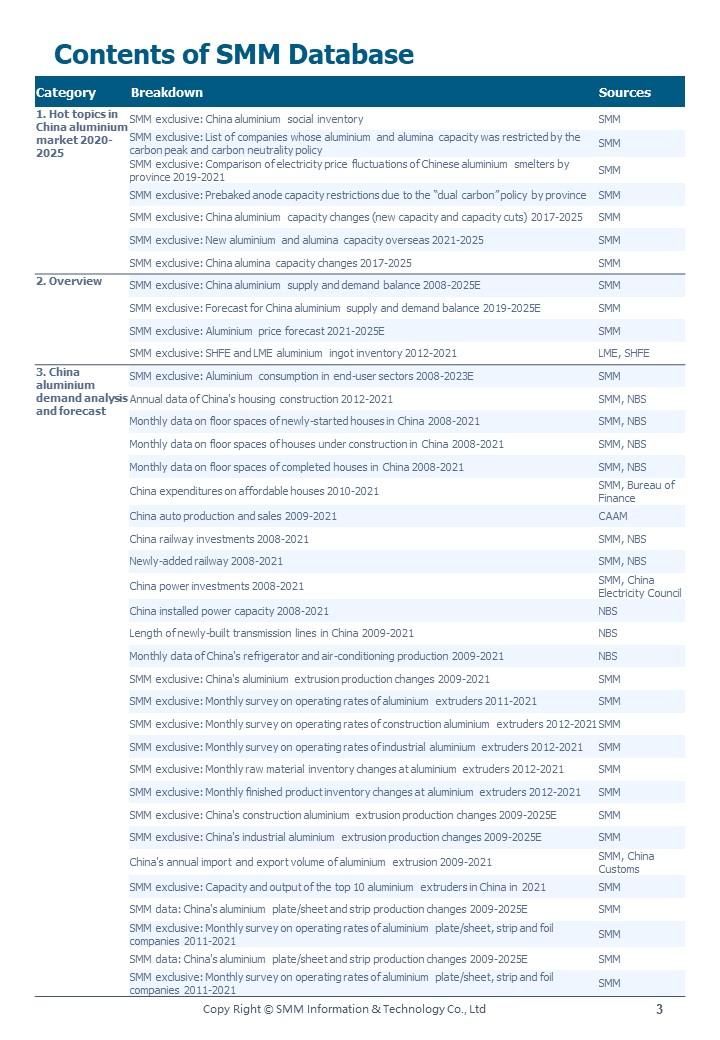
The development of China's aluminium market has entered a new stage. Having your finger on the pulse of the market, policy formulation, and investment decision-making require authoritative and reliable data, as well as in-depth and prudent consulting and research. SMM has updated the medium and long-term aluminium industry chain report, which could help you make more informed decisions and bring you ahead of your peers and one step closer to success.
Declaración de Fuente de Datos: Excepto la información disponible públicamente, todos los demás datos son procesados por SMM basándose en información pública, comunicación de mercado y confiando en el modelo de base de datos interna de SMM. Son solo para referencia y no constituyen recomendaciones para la toma de decisiones.

Para cualquier consulta o para obtener más información, por favor contacte: lemonzhao@smm.cn
Para más información sobre cómo acceder a nuestros informes de investigación, contacte con:service.en@smm.cn
Noticias relacionadas
Alba avanza en la adquisición de Aluminium Dunkerque y aspira a la expansión mundial del aluminio bajo en carbono
hace 10 horas
Alba avanza en la adquisición de Aluminium Dunkerque y aspira a la expansión mundial del aluminio bajo en carbono
Leer más
Alba avanza en la adquisición de Aluminium Dunkerque y aspira a la expansión mundial del aluminio bajo en carbono
[SMM Noticias Exprés de Aluminio] Aluminium Bahrain (Alba) informó que su propuesta de adquisición de Aluminium Dunkerque avanza, y la empresa trabaja para obtener las aprobaciones regulatorias restantes necesarias para cerrar la operación. En la reunión del Consejo del tercer trimestre celebrada el 22 de septiembre, el presidente Khalid Al Rumaihi describió el acuerdo como un paso importante en la expansión internacional de Alba y en su ambición de construir una plataforma global de aluminio bajo en carbono. Alba firmó el acuerdo para adquirir Aluminium Dunkerque en mayo de 2026, y la operación se valoró posteriormente en unos 2.200 millones de dólares. Aluminium Dunkerque es la mayor fundición de aluminio primario de la UE, mientras que Alba opera la mayor fundición de aluminio de un solo emplazamiento del mundo en Baréin. La adquisición sigue sujeta a aprobaciones regulatorias pendientes y aún no se ha cerrado. El Consejo también aprobó el Plan de Comercialización preliminar de Alba para 2027, al tiempo que revisó asuntos operativos, comerciales y de gobernanza. En cuanto al suministro de aluminio, la principal conclusión es que Alba mantiene su compromiso de completar la adquisición de Dunkerque a pesar de las interrupciones regionales del suministro que afectaron a sus operaciones en Baréin a principios de este año.
hace 10 horas
Guinea busca financiación estadounidense para el proyecto de refinería de alúmina de CBG
hace 10 horas
Guinea busca financiación estadounidense para el proyecto de refinería de alúmina de CBG
Leer más
Guinea busca financiación estadounidense para el proyecto de refinería de alúmina de CBG
[SMM Noticias Exprés del Aluminio] Guinea busca financiación estadounidense para la refinería de alúmina prevista por Compagnie des Bauxites de Guinée (CBG), mientras el país acelera sus esfuerzos por procesar más bauxita a nivel nacional. El Ministerio de Minas de Guinea informó que el 18 de septiembre se mantuvieron conversaciones con la Corporación Financiera de Desarrollo Internacional de Estados Unidos (DFC) y el Banco de Exportaciones e Importaciones de Estados Unidos sobre una posible participación en la financiación del proyecto. CBG tiene como objetivo iniciar la construcción a finales de 2026, aunque aún no se han revelado los requisitos de financiación de la refinería ni la posible contribución estadounidense.
hace 10 horas
El Parlamento Europeo respalda la ampliación del CBAM a productos transformados de aluminio y acero a partir de 2028
hace 10 horas
El Parlamento Europeo respalda la ampliación del CBAM a productos transformados de aluminio y acero a partir de 2028
Leer más
El Parlamento Europeo respalda la ampliación del CBAM a productos transformados de aluminio y acero a partir de 2028
[SMM Noticias exprés del aluminio] El Parlamento Europeo ha respaldado una ampliación más extensa del Mecanismo de Ajuste en Frontera por Carbono (CBAM) de la UE a los productos transformados de aluminio y acero a partir de 2028. El Parlamento adoptó su posición negociadora el 15 de septiembre por 464 votos a favor, 50 en contra y 159 abstenciones, apoyando una cobertura que va más allá de la propuesta original de la Comisión Europea para 180 productos transformados adicionales, incluidos productos con uso intensivo de aluminio como alambres, elementos de fijación, resortes y ciertos productos acabados. En el caso del aluminio, el Parlamento también propone reducir el umbral de exención del CBAM de 50 toneladas a solo 5 toneladas, lo que significa que los importadores de menores volúmenes podrían quedar sujetos a los requisitos del CBAM. Asimismo, apoya normas más estrictas contra la elusión, incluido el uso de valores por defecto de emisiones basados en el país de origen real cuando las autoridades sospechen intentos de eludir las obligaciones del CBAM. Los cambios aún no son definitivos, ya que todavía se requieren negociaciones con el Consejo de la UE. De adoptarse, la ampliación aumentaría la obligación de declarar las emisiones de carbono y, potencialmente, la exposición a los costes del carbono para los exportadores de productos transformados de aluminio a la UE, extendiendo el CBAM más allá del aluminio primario y semielaborado.
hace 10 horas