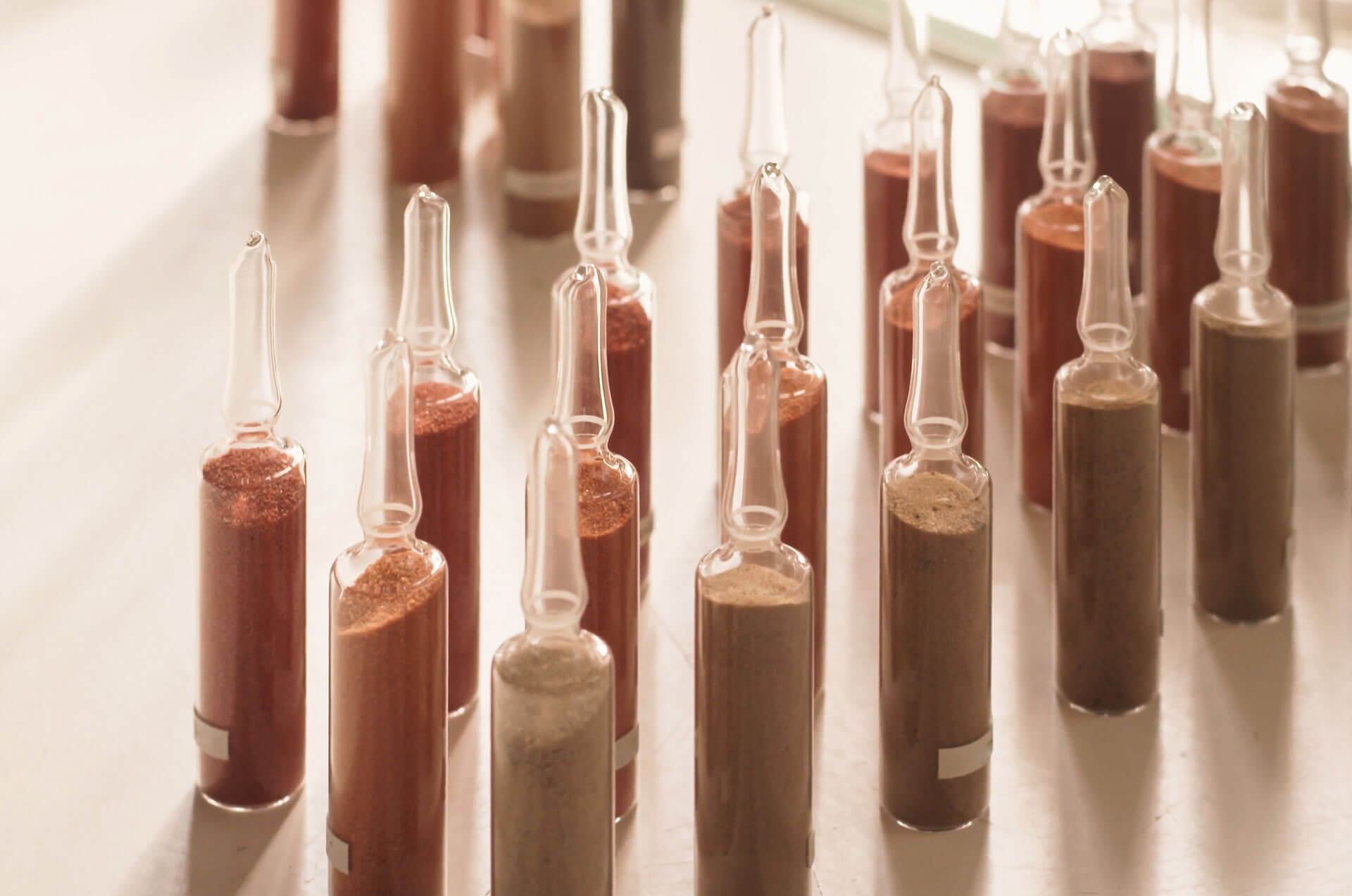
SHANGHAI, Aug 10 (SMM) - Rare earth is a general term that refers to lanthanides comprising of the 15 metallic chemical elements, naming lanthanum (La), cerium (Ce), praseodymium (Pr), neodymium (Nd), promethium (Pm), Samarium (Sm), Europium (Eu), Gadolinium (Gd), Terbium (Tb), dysprosium (Dy), holmium (Ho), erbium (Er), thulium (Tm), ytterbium (Yb), lutetium (Lu), as well as scandium (Sc) and yttrium (Y) that belong to the same group. They can also be divided into light rare earth elements and middle to heavy rare earth elements subject to atomic weight and respective physicochemical properties.
At present, the mainstream rare earth products include rare earth concentrates, rare earth salts, rare earth oxides, rare earth metals, etc. While rare earth permanent magnets, polishing powders, catalysts, phosphors, hydrogen storage alloys, are all deep-processing products.
Rare earth, due to its unique physicochemical property, is widely applied in sectors like new energy, home appliances, industrial robots, healthcare, information technologies, which has become an indispensable chemical element in modern industry.
Global Distribution of Rare Earth
According to the USGS, the global rare earth reserves in the form of rare earth oxides (REO) in 2020 reached 116 million mt. China has the largest reserves of 44 million mt (REO), accounting for 38% of the total amount followed by Brazil (22 million mt), Vietnam (22 million mt) and Russia (12 million mt).
Rare Earth Distribution outside China
Regions like Australia, Greenland and the US are all abundant in light rare earth mines. While middle and heavy rare earth mines are mainly found in Myanmar. Currently, Mount Weld and Mountain Pass are the two most important light rare earth mines overseas.
Mount Weld, Australia – a high-grade rare earth mine rich in bastnasite reserves, and comprises of two major tenements. It commenced production in 2013 with initial capacity at 11000 mt REO per annum. The capacity was later expanded to 25000 mt REO per annum, with a regular operating rates at around 75%. There is currently no near-term capacity expansion plan, thus limiting the overall output. The mine is now owned by Lynas, a rare earth minerals mining and separation company with businesses in Australia and Malaysia.
Mountain Pass, California – it is the largest rare earth mine outside China and owned by MP Materials. The mine possesses 21.10 million mt of ores in total, including 1.50 million mt REO with an average grade of 7.06%. It resumed operation in January, 2018 with a designed annual capacity of 40000 mt REO. Shenghe Resources (600392) is its leading distributor in China. There is also no near-term capacity expansion plan after reaching full capacity.
Rare Earth Distribution in China
In addition to Baiyun Ebo in Baotou, south Jiangxi, north Guangdong, and Liangshan in Sichuan, where rare earth resources are concentrated, rare earth deposits have also been found in Shandong, Hunan, Guangxi, Yunnan, Guizhou, Fujian, Zhejiang, Hubei, Henan, Shanxi, Liaoning, Shaanxi and Xinjiang, but with a much lower amount. 98% of the country rare earth resources are found in areas such as Inner Mongolia, Jiangxi, Guangdong, Sichuan and Shandong.
About Baiyun E'bo Mine
Baiyun Ebo iron ore mine, located in Baotou, Inner Mongolia, is a large deposit of iron, rare earth, niobium and other metals, containing more than 41% of the world's total proven reserves of rare earth minerals as well as 71 elements and 175 minerals such as iron, niobium, manganese, phosphorus and fluorite. Among them, the iron ore reserves are 1.4 billion mt with an average grade of 34%; the rare earth reserves are 100 million mt, accounting for 38% of the world's total proven reserves and ranking the first in the world. The mine was officially put into production in 1957.
According to Yang Zhanfeng, vice president of the China Rare Earth Society and director of the State Key Laboratory of Baiyun Ebo Rare Earth Resources Research and Comprehensive Utilization, the rare earth reserve data of Baiyun Ebo mine referred by the industry is still the result in the 1950s. Due to the limitation of the demand and exploration means at that time, the whole deposit was not fully explored, and no detailed exploration was done on the periphery of the iron ore body or deeper sections below 500 meters of the surface.
Features of China’s Rare Earth Resources
The rare earth resources in China are "rich in the north but scare in the south". Light rare earth mines are mainly located in the north China such as Baotou in Inner Mongolia and Liangshan in Sichuan, while middle to heavy rare earth mines are mainly located in the southern regions such as Ganzhou in Jiangxi and Longyan in Fujian.
There is a rich variety of rare earth minerals, including cerium fluorocarbon ore, monazite ore, ionic ore, yttrium phosphate ore, brown yttrium niobium ore, etc., covering almost all rare earth elements. The middle to heavy rare earth ores play an important role in the global industry.
The radioactive elements associated with light rare earth mines have a high impact on the environment. Most of the light rare earth mines can be mined with machines on a large scale. But radioactive elements such as thorium are more difficult to handle, and the impact on human health and the ecological environment needs to be taken into account during the mining, smelting and separation process.
Ionic middle to heavy rare earth ores are poorly endowed. Rare earth elements in ionic rare earth ores are reserved in an ionic state, thus are more scattered and in low abundance, making large-scale industrial mining difficult.
Rare Earth Mining in China is Restricted by Quotas
In 2006, China started to control rare earth mining. According to the relevant policy requirements, all enterprises engaged in rare earth mining and smelting & separation shall operate according to the plans and certain indicators, and those not included in the plan are not allowed to carry out such activities. The Ministry of Industry and Information Technology will issue the relevant indicators every year, which has been growing fast in recent years.
The Six Leading Rare Earth Groups in China
China completed the integration of rare earth mining and smelting enterprises in 2015 after obtained the approval from relative authorities, resulting in the births of six large rare earth groups in China, namely China Rare Earth Company Limited, Minmetals Rare Earth Group Company Limited, China Northern Rare Earth (Group) High-Tech Company Limited, Xiamen Tungsten Industry Company Limited, China Southern Rare Earth Group Ltd. and Guangdong Rare Earth Industry Group Co., Ltd. (hereinafter referred to as Chalco, Minmetals Rare Earth, Northern Rare Earth, Xiamen Tungsten, Southern Rare Earth and Guangsheng Nonferrous Metals respectively).
At present, these groups' mines, smelting and separation plants are located in Inner Mongolia, Guangxi, Sichuan, Jiangxi, and Guangdong, and the majority of which are in normal operation. However, it is worth noting that among the 60 mining enterprises owned by Southern Rare Earth, only 3 are in normal production, while the rest are in a state of suspension.
Rare Earth Recovery in China
In order to protect and rationally develop the mineral resources where China holds the advantages, it continues to control the mining of rare earth mines. Nonetheless, the extraction of rare earth oxides from rare earth waste is not included in the control scheme. Therefore, it has become an very important supplement to meet the downstream market demand.
Currently, rare earth is largely recovered from NdFeB in addition to polishing powders, catalysts and phosphors.
Companies that focus on rare earth wastes recovery are mostly located in Jiangxi. At present, leading companies like Ji'an Xintai Technology Co., Ltd., Zhongxi Tianma Co., Ltd. mainly produce praseodymium oxide, terbium oxide, dysprosium oxide and other high-value rare earth oxides.
Outlook of the Rare Earth Market
Now, rare earth permanent magnet in the No.1 consumption product of the downstream sector, accounting for nearly 50% of the total market. While automobile is the largest end-user. New energy vehicles will maintain high speed development in face of carbon peak and carbon neutrality targets.
Mr. Fu Bingfeng, Executive Vice President and Secretary General of the China Association of Automobile Manufacturers (CAAM), expects that the growth rate of electric vehicle production and sales will remain above 40% in the next five years, and that the proportion of new vehicles will exceed 20% by 2025, or reach a higher level.
In terms of policies, China also encourages the export of high value-added products, and China removed export tariffs on rare earth permanent magnets in 2010. Demand for Chinese rare earth permanent magnets from overseas markets has also increased year on year in recent years, with total exports of rare earth permanent magnets from China increasing by 13% between 2017 and 2020.
As downstream demand continues to grow, the tight supply and demand pattern for rare earths is expected to give rise to more rare earth demand.
![Chatarra de Pr-Nd se mueve lateralmente, el almacenamiento previo a las vacaciones sube y luego baja [Revisión semanal de tierras raras recicladas de SMM]](https://imgqn.smm.cn/usercenter/rqOXm20251217171744.jpeg)