SHANGHAI, Feb 8 (SMM)—This is a roundup of China's base metals output in January 2021, from an exclusive survey of key producers by SMM analysts.
Copper
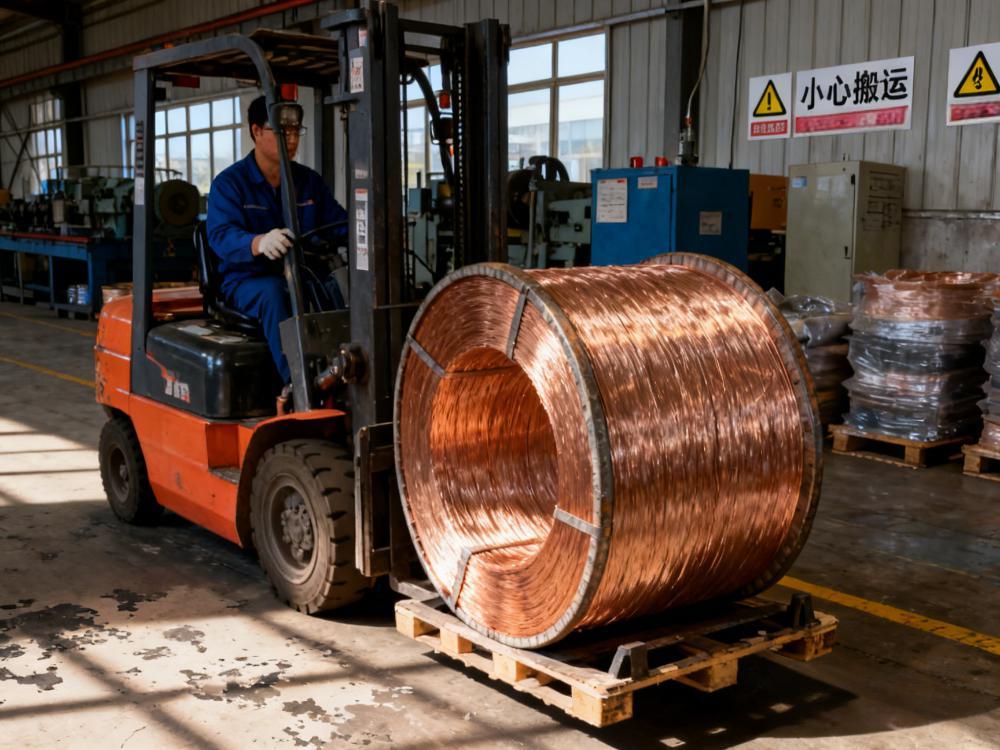
An SMM survey showed that China produced 798,300 mt of copper cathode in January, falling 7.39% from December, but rising 9.97% from a year ago.
Operating rates at copper smelters fell sharply in January as they completed annual production targets at the end of 2020. Besides, shipments of copper concentrate from South America were hampered, which also brought pressure to copper smelters.
According to smelters’ production schedules, SMM expects China’s copper cathode output to increase 1.71% on the month and 18.86% on the year to 812,000 mt in February, as several smelters recover from maintenance. For the first two months of 2021, output is likely to total 1.61 million mt, up 14.28% from the same period last year. Shortages of storage capacity for sulphuric acid drove smelters to reduce output in February 2020, which led to a sharp year-on-year increase in copper cathode output.
Alumina
China’s alumina output stood at 5.9 million mt in January. This included 5.69 million mt of metallurgical-grade alumina, with the daily output down 1.03% on the month but up 2.36% on the year to 183,500 mt. State Power Investment Wuchuan in south-west China is now operating at full capacity, while roasting capacities at alumina plants in Shanxi, Henan and Shandong were limited due to shortages of coal and production restrictions in a heating season.
As of early February, the operating capacity of metallurgical-grade alumina stood at 70.53 million mt/year. SMM sees output of metallurgical-grade alumina at 5.41 million mt in February (28 days), with the daily output rising slightly to around 192,300 mt, as roasting capacities in north China have started to recover from late January and several alumina plants plan to ramp up production.
Aluminium
China’s primary aluminium output rose 8.14% year on year to 3.32 million mt in January (31 production days), showed an SMM survey. As of early February, there was 39.55 million mt among 43.2 million mt per year of existing primary aluminium capacity in operation, while operating rates across Chinese primary aluminium producers stood at 91.6%. The daily average primary aluminium output rose 1,400 mt from December to 107,200 mt in January as Yunnan Shenhuo and Inner Mongolia Chuangyuan continued to release output. The proportion of aluminum water came in at 63.3%, down 3.3 percentage points month on month.
As new aluminium projects in Yunnan will continue to release output, SMM expects China’s primary aluminium output to stand at 3.02 million mt in February, while import at about 80,000 mt. Demand is expected to continue to weaken in February due to the CNY holiday.
Nickel
China’s refined nickel output shrank 11.63% from December and 10.17% from a year earlier, to 13,000 mt in January. Gansu smelter and Xinjiang smelter were still in operation in January, producing 12,000 mt and 981 mt of refined nickel respectively, while other smelters continued to suspend their refined nickel production lines, putting raw materials into nickel sulphate production.
SMM expects China’s refined nickel output to fall to 12,000 mt in February 2021 due to shorter operating days of the month. Jinlin smelter plans to resume refined nickel production in March, with monthly output of 500 mt. Shortages of overseas feedstock and cash flow issues are likely to keep other smelters suspended.
Nickel pig iron (NPI)
China’s NPI output rose 3.27% from December to 38,600 mt Ni in January. This included 31,600 mt Ni of high-grade NPI, up 5.74% on the month, and 7,000 mt Ni of low-grade NPI, down 6.58% month on month. Strong demand from steel makers and sufficient raw materials inventories encouraged a large-scale NPI plant in east China to ramp up production, which contributed to the sharp rise in high-grade NPI output in January. #200 stainless steel mills in east and south China halted production for maintenance, which led to the steep fall in low-grade NPI output.
SMM expects China’s NPI output to fall 6.86% on the month to 35,900 mt Ni in February. Output of high-grade NPI is likely to shrink 6.51% to 29,500 mt Ni, while that of low-grade NPI to decline 8.45% to 6,400 mt Ni.
Nickel sulphate
China’s nickel sulphate output declined 6.38% on the month but surged 87.08% on the year, to 72,800 mt or 16,000 mt in nickel content in January. This included 64,500 mt of battery-grade materials and 8,300 mt of electroplating materials. Demand for nickel sulphate from new energy battery makers improved rapidly in recent months due to prosperity of new energy vehicles. A project of intermediate products of nickel hydro-metallurgy in New Caledonia suspended, and new projects have not been put into use yet, which led to shortages of raw materials.
SMM expects China’s nickel sulphate output to increase 1.06% from January and 150.02% from a year ago to 16,200 mt Ni in February, as downstream demand remains robust while nickel sulphate inventories continue to fall. Decent profits will prompt nickel salts plants to step up production, but shortages of raw materials will limit the rise in output.
Zinc
China's refined zinc output stood at 542,000 mt in January, falling 11,200 mt or down 2.02% on month and up 2.6% on year. Zinc smelters produced 78,600 mt of zinc alloy in January, basically flat from the previous month. Among them, mineral zinc output stood at 435,000 mt in January.
SMM survey showed that domestic refined zinc output decreased slightly more than expectations in January. The decline in domestic TCs for 50-grade zinc concentrates slowed in January. The main reason was that zinc prices fell from a high level and smelters' profits shrank severely. Therefore, zinc smelters in some areas lowered their production plans, while smelters in Hunan stopped production during the CNY ahead of schedule. The reduction is mainly concentrated in the routine maintenance of domestic smelters.
China's refined zinc output is expected to decrease 64,000 mt to 547,200 mt in January as the number of natural monthly days in February decreased by 3 days from the previous month, domestic small smelting companies suspended production for the CNY holiday, and some domestic refineries have regular maintenance during the CNY.
Primary lead
SMM data showed that China produced 261,300 mt of primary lead in January, down 8.73% from December, and up 1.77% from a year ago. Production capacities of enterprises involved in the survey will stand at 5.48 million mt in total in 2021.
SMM survey showed that in early January, the COVID-19 pandemic resurfaced in Hebei, and the intensified pandemic prevention hindered the logistics of the local and surrounding areas. At the same time, the pandemic situation overseas was also fluctuating. The pandemic prevention policy of Manzhouli Customs in Inner Mongolia was upgraded. Therefore, the import of lead concentrate was blocked, and the tightening of supply led to a decrease in TCs of lead concentrate. Primary lead smelting enterprises increased maintenance or holidays due to the approach of the CNY, such as Henan Minshan, Shibin, Yunnan Mengzi and other enterprises are on maintenance, and the output decreased to varying degrees. In addition, smelting enterprises in Inner Mongolia carried out equipment maintenance due to insufficient supply of raw material lead, and their output also decreased. Anhui Copper Crown and Yunnan Zhenxing resumed production from maintenance, and their output was not stable. Therefore, the overall output decreased significantly from the previous month, and the decline was greater than expectations in the previous report.
Most small and medium-size smelting companies started maintenance or on holidays in February. This situation is similar to previous years, and the affected output is limited as compared with last year. Medium and large enterprises routinely produce in shifts during CNY, and the output declined due to shift factors. However, the companies that took maintenance in January, such as Yunnan Zhenxing, Mengzi, Henan Xinling, Shibin and Anhui Copper Crown, will gradually resume production. SMM expects China's primary lead output to decrease to 254,400 mt in February.
Secondary lead
SMM data showed that China produced 332,800 mt of secondary lead in February, down 4.36% from December, and up 106.3 % from a year ago. Production capacities of enterprises involved in the survey will stand at 8.58 million mt in total in 2021.
SMM survey showed that the uncertainty of pandemic prevention and control measures made non-local workers hope to return home early due to the spread of the pandemic in China again since January. As a result, the secondary lead refineries in Guangdong, Jiangxi, Inner Mongolia and other provinces mostly started the holiday ahead of schedule in late January. Some refineries in Hubei, Jiangxi, Zhejiang and other places have started maintenance since mid-to-early January and then took a holiday. However, the regenerated lead profits repaired with the recovery of lead prices boosted the enthusiasm of refineries to expand production. Among them, the newly expanded smelting companies such as Anhui Chaowei and Camel, which were put into operation in December, contributed a substantial increase. At the same time, many refineries in Anhui and Jiangxi were also actively increasing production. The severe situation of the pandemic was difficult to match the enthusiasm of refineries to expand production. China's secondary lead output finally increased from the previous month in January.
In addition, since the CNY holiday last year was at the end of January, most of the secondary lead refineries were closed in January last year, so the secondary lead output in January of this year recorded a significant year-on-year increase.
Most of the secondary lead refineries were shut down for holidays as in previous years in February. A batch of secondary lead refineries is expected to resume production on February 18-21, and a batch will return to work in end February, based on the current pandemic situation in China. It is worth noting that secondary lead smelters generally delayed the resumption of work due to raw material procurement difficulties due to the prevention and control of the pandemic in 2020. The procurement of battery scrap may still be a major factor restricting secondary lead smelting companies from resuming production in February this year. As there are fewer work days in February than other months, it is inevitable that the output of secondary lead companies will decrease. However, at the same time, many secondary lead companies in Anhui, Hubei, and Jiangxi are still producing normally during the CNY. In particular, many newly expanded refineries in Anhui will release a large amount of secondary lead production capacities to offset part of the reduction. SMM expects China's secondary lead output to decrease over 40,000 mt to 289,200 mt in February.
Tin
China's refined tin output stood at 15,868 mt in January, down 4.66% on month.
Although tin prices were firm in January, Wa State of Myanmar was blocked for about 2 weeks due to the pandemic prevention, which made it difficult for some production enterprises in Yunnan to purchase raw materials, thus reducing production. In addition, some enterprises in Jiangxi started their holiday ahead of schedule in late January, which caused the output of these enterprises to decline. These factors led to a month-on-month decline in output in January. Individual enterprises in Yunnan will stop production during the CNY holiday, and most enterprises in Jiangxi will also stop production. China's refined tin output is expected to decrease to 12,000 mt in February.