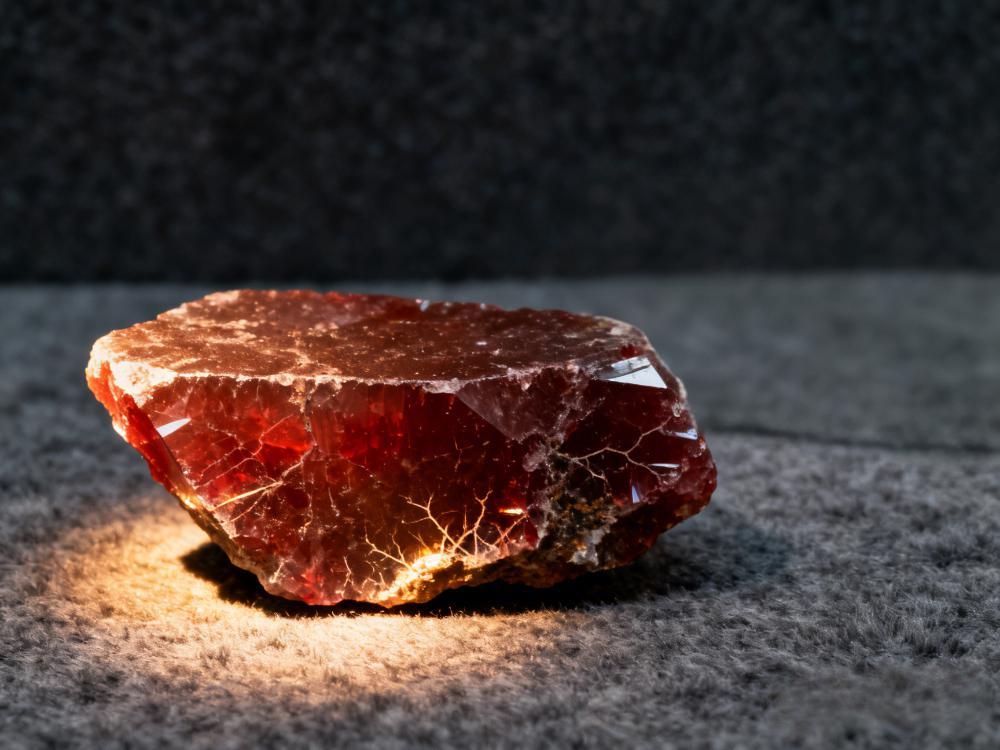
SMM6, June 6: China accounts for 71% of the world's rare earth production. At a time when trade frictions between China and the United States are heating up, the market believes that rare earths may become a sword against the United States, and the United States also feels the pressure to cut off the supply of rare earths in the near future. The US government recently stressed the importance of rare earth resources in protecting national security, and before China tightened export restrictions on rare earths, US Commerce Secretary Wilbur Ross also pledged to take "unprecedented action."
Us mining companies have reduced their market share after a collapse in rare earth prices in 2011, while increasing US dependence on Chinese rare earths.
Jon Blumenthal, chief executive of Blue Line, a US rare earth company, said China had pushed up prices of rare earths to an all-time high after announcing the first export quotas in 2011, prompting US companies to consider investing in factories. Increase the supply of rare earths in the United States. However, after China lifted restrictions on rare earth exports, the price of rare earths in the United States plummeted, causing miners to continue to wander. Previously, U. S. miners encountered strong competition from Chinese rivals, so they did not keep up with the development of rare earths. But now that there are trade tensions between China and the United States, American mines are beginning to realize the importance of the problem. These measures may stimulate the supply of rare earths in the United States, but the project will not be available until next year at the earliest.
Blue Line had previously signed a memorandum of understanding with Lynas Corp, an Australian rare earth producer, to set up a rare earth separation plant in the US, controlled by Lynas.
The two companies said the proposed joint venture would focus on separating heavy rare earths such as dysprosium and terbium and would become the only large producer of medium and heavy rare earths outside China and could expand to produce light rare earths in the coming years.
China is a large country of rare earths, with excess supply of light rare earths and light rare earths in export. Lanthanum oxide, which has a large proportion of exports, accounts for 42.96% of the total exports, and cerium carbonate accounts for 29.14% of the total exports. Ceria exports accounted for 12.65% of the total exports. The proportion is more than that of medium and heavy rare earths, and only yttrium oxide accounts for 10.26% of the total export volume. In terms of medium and heavy rare earths, due to the shortage of ionic rare earth minerals in China, China has imported a large number of mixed rare earth carbonate from Myanmar for a long time, and the mixed rare earth carbonate imported by China in 2018 accounted for 84.3% of the total rare earth products.
Can alternative resources be found if China restricts exports of rare earths to the United States?
SMM believes that in terms of China's trade in rare earths with the United States, if China restricts exports of rare earths to the United States, many industries in the United States will be affected, and rare earths imported from China cannot be completely replaced by other countries and resources, especially heavy rare earths. So this could lead to a surge in the price of rare earths as they did in 2010. The United States imports about 30% of China's total exports of rare earth oxides and chemicals, mainly light rare earth lanthanum and cerium, mainly used in catalysts, polishing and so on. Although these light rare earths are also distributed in Australia, Canada and even the United States, at present, with the exception of China, other countries do not have enough separation technology, and it also takes technology, investment and time to build new factories. And although heavy rare earths account for less than 30% of China's rare earth exports to the United States, heavy rare earths cannot be replaced by other countries because of China's dominant position in rare earth production. Heavy rare earths have an important impact on magnets and high-tech industries. As a result, we believe that rare earths have a huge impact on other industries, and that the United States will not be able to find alternative sources in a short period of time. "[SMM dry information] to grasp the rare earth market must first grasp: supply and demand, import and export and policy information
"[investment must see] Trade friction news flying all over the metal how to win in chaos?

"Click to enter the registration page

Scan QR code and apply to join SMM metal exchange group, please indicate company + name + main business
![Los precios del mercado de tierras raras están en horas bajas y las transacciones reales carecen de impulso [Informe diario de tierras raras de SMM]](https://imgqn.smm.cn/usercenter/aKNUH20251217171744.jpg)
![[SMM Resumen de la reunión matutina de tierras raras] El óxido de praseodimio-neodimio se consolidó con tono moderado por la tarde, con más concesiones de los vendedores; el disprosio se mantuvo estable, mientras que el terbio se sostuvo firme en niveles bajos, y la actividad del material magnético fue moderada.](https://imgqn.smm.cn/usercenter/tXtym20251217171745.jpeg)