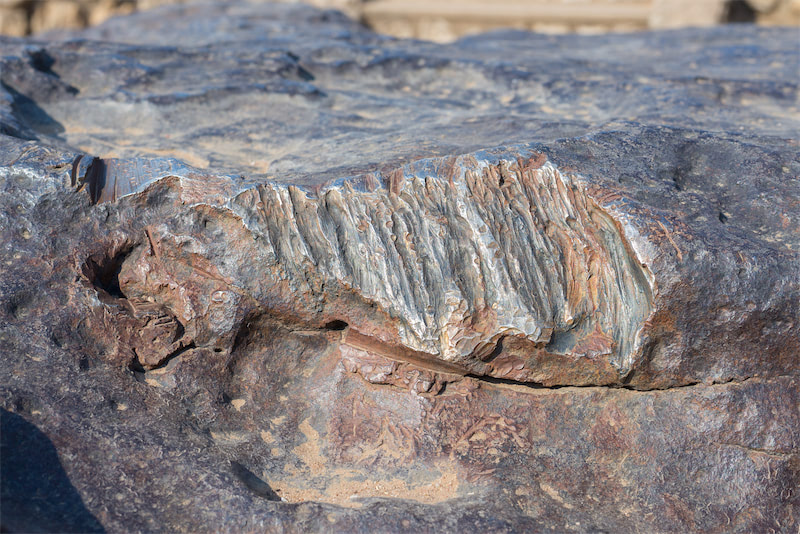
Lithium ore:
This week, the lithium ore market continued to consolidate overall, with ore-side quotes relatively firm and ore-salt price negotiations still notably tense. On the supply side, overseas lithium ore shipments and domestic port arrivals continued to advance, and inventories accumulated earlier at ports and in trading channels still exerted some pressure on the spot market. However, actual circulation varied across ore sources and grades, and some traders retained a willingness to hold prices firm. On the demand side, downstream cathode material and battery cell production maintained some resilience, supporting raw material consumption at lithium chemical plants. But as lithium carbonate price volatility intensified, lithium chemical plants using externally purchased ore became more cautious in procurement and pricing, with enterprises adjusting procurement pace more flexibly based on production orders and raw material inventories. Meanwhile, ore-side quote adjustments lagged relatively, and processing margins at lithium chemical plants remained under some pressure. Divergences between ore and salt sides over cost pass-through and profit distribution had yet to ease notably. Overall, the lithium ore market remains in a phase where expectations of growing overseas supply are pitted against actual near-term procurement demand. Ore prices are expected to consolidate with adjustments in the short term, with attention focused on actual overseas ore arrivals at ports, inventory changes at ports and among traders, and how downstream production schedule fulfillment drives raw material procurement at lithium chemical plants.
Lithium carbonate:
In the spot market, SMM average spot price was reported at 91,700 yuan/mt on Thursday, down 4,400 yuan/mt from the previous Thursday's average of 96,100 yuan/mt, a weekly decline of 4.6%. In the futures market, the most-traded lithium carbonate contract opened lower and moved higher on Thursday, with a slight correction from the day's high in the afternoon, closing up 3.64% at 91,580 yuan/mt, up 3.64% WoW from the previous Thursday. On the supply side, China's lithium carbonate production continued to increase this week, but the growth rate narrowed WoW. By raw material, spodumene-based production continued to rise this week as lithium ore arrivals persisted alongside new production line ramp-ups, though the incremental volume narrowed slightly; lepidolite-based production edged down; salt lake and residue-based lithium production slipped slightly WoW; in the recycling segment, LFP black mass producers showed increased inquiry activity, but high cost pressure still constrained transactions, leaving overall market trading mediocre; ternary black mass transactions remained normal with no notable changes. black mass, affected by this week's slight correction, saw enterprises that had previously suspended external purchases resume buying. Seller quotes remained at mainstream market levels with strong willingness to hold prices firm, but downstream acceptance was mediocre. Overall, the earlier sustained production cut trend in the recycling segment has stabilized, though some enterprises under maintenance have yet to resume production. On the demand side, judging from market transactions and inventory conditions, upstream lithium chemical plants still mainly shipped under long-term contracts, but their willingness to sell spot orders improved from earlier. Downstream spot order purchases remained primarily need-based with low trading volume. Cathode plants did not build excess inventory and basically maintained supply security. Precursor production schedules for November declined notably. Weak battery cell demand led enterprises to continue digesting earlier inventories and delay restocking. All segments focused on proactive inventory control, driving synchronized destocking. This week, lithium carbonate inventory stood at 125,391 mt, down 2,994 mt WoW, with the destocking pace widening from the prior week. Futures opened lower and closed higher this week, rising 3.64% on Thursday to 91,580 yuan/mt, while the average spot price was 91,700 yuan/mt, down 4.6% WoW, extending the downtrend though the futures rebound helped repair market sentiment to some extent. On the supply side, production continued to grow but the growth rate narrowed MoM, with sustained lithium ore arrivals and new production line ramp-ups remaining the main sources of growth. In the short term, the futures rebound and accelerating destocking have lent some support to market confidence, but demand has yet to show a clear recovery and downstream players remain cautious in controlling inventory. are expected to trade in the range of 82,000-105,000 yuan/mt.
Lithium hydroxide:
This week, lithium hydroxide prices edged down WoW. Amid supply-side disruptions and macro sentiment, lithium prices fell first and then rebounded. For lithium hydroxide, some lithium chemical plants are currently under certain shipment pressure, while others are largely shipping under long-term contracts and still hold some willingness to hold prices firm. Traders were active in selling, with quotes mostly at a discount of 4,000-10,000 yuan/mt to the lithium carbonate 2701 contract, and some deals were done amid consolidating lithium prices. On the downstream side, a very small number of manufacturers showed modest purchasing interest due to November order adjustments, with prices mostly around 80,000 yuan/mt. In the short term, upstream output has been trimmed somewhat, while downstream production has recovered modestly, though the magnitude remains relatively weak. Combined with lithium resource supply disruptions, prices are currently running at relatively low levels.
Refined cobalt:
The refined cobalt market saw a notable recovery this week, with electronic trading prices rebounding quickly from around 200,000 yuan/mt, touching an intraweek high of 238,000 yuan/mt before consolidating around 230,000 yuan/mt. The rebound early in the week was driven mainly by bullish news and capital flows, with the previous support near the 200,000 yuan/mt level being validated. However, the rapid price recovery was not accompanied by any material change in fundamentals. On the demand side, downstream enterprises continued to make just-in-time procurement, with limited follow-through in transactions. On the supply side, mainstream smelters raised their ex-works prices to 240,000 yuan/mt, while other smelters generally maintained quotes at a slight premium to the basis. Worth noting is the shift in supply pace: since October, refined cobalt production has recovered rapidly, and given the production resumption plans of some enterprises, output pressure is expected to become increasingly evident going forward. With the supply-demand pattern shifting back toward inventory buildup, and with enterprises purchasing low-priced cobalt salt for toll processing of refined cobalt while hedging on futures, the sustainability of this rebound remains to be seen.
Intermediate products:
The cobalt intermediate product market was largely unchanged this week, with the price center continuing to drift lower. Supply side, miners' pricing strategies were largely consistent with last week. China miners maintained their target prices at around $11-12/lb, while ex-China miners continued to hold relatively high offer prices. Demand side, smelters showed no improvement in purchase willingness. Based on current cobalt salt and refined cobalt prices, downstream raw material purchase prices would still need to be around $10/lb to ensure no losses in immediate production. The psychological price gap between buyers and sellers persisted. Two developments this week are worth noting: first, market talk began circulating about transactions below $10/lb, with the boundary of low-price deals still being tested; second, some Chinese miners were conducting tenders this week, and the actual transaction results will provide an important reference for gauging the market's true acceptance level.
Cobalt salts (cobalt sulphate and cobalt chloride):
This week, the cobalt sulphate market maintained a fluctuating trend, with prices showing some signs of recovery. As refined cobalt prices rebounded sharply, sentiment in the cobalt salt market was lifted. Smelter offers returned to around 43,000-45,000 yuan/mt, and some enterprises that had previously sold at lower prices also raised their offer prices back above 40,000 yuan/mt. Demand side, however, failed to follow suit. Downstream purchase intentions remained concentrated around 40,000 yuan/mt, and most enterprises' acceptance levels did not improve despite the sentiment recovery. Offers moved higher while target prices stayed put, meaning the gap between buyers and sellers did not truly narrow. Whether this round of price recovery can be sustained ultimately depends on whether downstream buyers are willing to take orders at the new prices.
This week, cobalt chloride offers halted losses and steadied from the start of the week, but the support came not from demand but from news flow.At the beginning of the week, refined cobalt futures rallied sharply. Suppliers' willingness to sell at low prices visibly diminished, and previously discounted cargoes were withdrawn from the market, with offers broadly held firm. However, this boost remained largely at the sentiment level and did not translate into actual cobalt chloride transactions, as trading quickly returned to a wait-and-see mode. Supply side, producers showed stronger willingness to hold prices firm compared with earlier, but without transactions to back them up, the firmness of offers was more of a posture. Demand side, downstream Co3O4 inventory remained at relatively high levels, purchase willingness stayed low, and the gap between their psychological price levels and current offers persisted, leaving actual transactions sparse. It can be seen that this week's changes occurred only in sellers' offer behavior, while buyers' decision-making basis remained unchanged. In the short term, the sentiment-driven boost can hardly substitute for actual demand. If downstream inventory destocking shows no significant progress, the cobalt chloride price center may still face renewed downward pressure.
Cobalt salts (Co3O4):
This week, Co3O4 prices shifted from previous weakness to stability. Market sentiment showed signs of repair, but the repair is so far reflected only in willingness, not yet in actual transactions. At the start of the week, a sharp rise in refined cobalt futures boosted downstream sentiment. Purchasing sentiment at cathode plants clearly recovered, and several enterprises have begun contacting Co3O4 producers to discuss locking in orders. The intended volumes are not small, but most remain at the negotiation stage and have yet to be finalised. Some cathode plants judged that prices have reached a low and that bearish factors have largely played out, shifting instead to certain expectations for a price hike, and their reluctance to purchase has eased accordingly. On the supply side, producer quotes were broadly stable, and the willingness to hold prices firm strengthened in tandem. In the short term, Co3O4 prices are expected to move sideways. If the lock-in orders under discussion can be finalised one after another and purchasing sentiment persists, prices are likely to find support.
Nickel sulphate:
As of Thursday this week, the SMM average price of battery-grade nickel sulphate declined.
From the demand side, downstream demand overall maintained expectations of reduction. Some enterprises' long-term contracts can already secure their main raw material supply, so spot external purchase volumes are relatively limited and price acceptance is low. From the supply side, some upstream enterprises, affected by weakening downstream demand, plan to lower operating rates to destock. In addition, nickel prices rebounded at one point this week, prompting some enterprises to hold prices firm, and low-priced cargoes in the market were relatively fewer than last week. Looking ahead, the market is expected to remain in a supply-demand weak pattern in the short term. Attention should be paid to the sustainability of the nickel price rebound and the extent of downstream destocking.
On the inventory front, this week the upstream nickel salt smelter inventory index held at 7 days, the downstream precursor plant inventory index rose from 9.7 days to 12.7 days, and the integrated enterprise inventory index held at 9 days. In terms of buying and selling strength, this week the upstream nickel salt smelter Willingness to Sell Sentiment Factor held at 2.1, the downstream precursor plant purchasing sentiment factor held at 2.0, and the integrated enterprise sentiment factor held at 2.1. (Historical data can be queried by logging into the database.)
Ternary cathode precursor:
This week, ternary cathode precursor prices weakened. During the week, nickel sulphate prices weakened, while cobalt sulphate and manganese sulphate prices held steady.
On discounts, for November and Q4 orders, precursor coefficients weakened overall due to the soft performance of nickel and cobalt salts. For long-term contracts, although some top-tier players still intend to hold prices firm, downstream acceptance of coefficients for quarterly orders is weak, and Q4 long-term contract coefficients are expected to be in the doldrums. For spot orders, some producers faced weak downstream demand, while others sought customer-supplied nickel and cobalt salts. November order coefficients are expected to decline as well.
On production, some producers' operating rates will pull back from next month due to export orders. Some top-tier domestic producers also saw operating rates decline from Q3 highs because end-use demand fell short of expectations, dragging down the industry's overall production schedule.
Looking ahead, sulphate prices have yet to show a clear rebound. Pricing of future new orders will depend on actual downstream demand in Q4.
Ternary cathode material:
This week, ternary cathode material prices remained weak, with the decline slowing down. From the raw material side, nickel sulphate prices were basically flat, cobalt sulphate and manganese sulphate prices held steady, while lithium carbonate and lithium hydroxide prices ground mildly lower with a noticeably narrower decline, dragging ternary cathode material prices down slowly from low levels. In November, ternary market orders showed no significant change, with demand remaining weak. In the EV market, sales of mid-to-high-end car models have been lacklustre in recent months. Although automakers have the incentive to push volumes at year-end, weak domestic demand makes it difficult for sales to outperform expectations. The ex-China EV market remained at high levels in November, but a seasonal pullback is expected in December. While policy changes such as export restrictions on China-Europe hybrid vehicles and the reduction of auto export tax rebates are mainly driving LFP market orders, their impact on ternary demand is minimal. In the consumer market, as raw material prices continued to grind lower, downstream purchasing sentiment remained cautious, with demand still dominated by rigid procurement. Cathode plants also refrained from holding excessive inventory, generally maintaining supply security.
LFP:
This week, LFP enterprise production remained generally stable, with weekly production edging up slightly WoW and little change in the market. Production schedules diverged among enterprises, with some increasing production modestly while others lowered their production plans, with overall increases and decreases basically offsetting each other. On the demand side, the EV market continued to show weakness. In energy storage, although demand from some leading battery cell manufacturers pulled back slightly from earlier levels, overall market demand for energy storage remained relatively strong, providing solid support to the LFP market. On the inventory side, enterprise inventory increased slightly this week, partly due to slower delivery progress at some enterprises and partly due to appropriate inventory replenishment by enterprises that had destocked significantly earlier. In addition, as some new capacity came on stream, related enterprises also increased stockpiling appropriately. Overall, the current LFP market supply-demand balance is relatively stable, with energy storage demand offsetting some of the impact of weakness in the EV sector. Although enterprise inventory increased, it was mainly driven by normal turnover and phased replenishment, with overall inventory pressure not yet evident.
Iron phosphate:
Iron phosphate prices have recently remained stable, with new order negotiations for November gradually concluding. Transaction prices edged down overall, with large enterprises maintaining their psychological expected prices for November new orders unchanged MoM, but downstream cathode plants' desired prices began to decline, with actual prices also falling by a certain margin of around 100 yuan/mt. On the production side, with profits currently considerable and orders still stable this month, the iron phosphate industry overall maintained high production enthusiasm. However, as some new capacity comes online, total industry production will continue to increase. On the cost side, phosphoric acid prices continued to fall steadily, while ferrous iron, as the main iron source, edged up slightly recently. Demand side, some downstream LFP clients saw orders decline in November, non-iron phosphate processes continued to gain volume, and the demand share of iron phosphate processes weakened somewhat.
LCO:
This week, China's LCO market continued its overall weak trend, with industry fundamentals clearly under pressure. Upstream raw material sector, Co3O4 and lithium carbonate prices remained low, exerting downward pressure on LCO quotes. Supply side, faced with insufficient orders, mainstream domestic LCO producers generally maintained a conservative production schedule based on sales, proactively controlling output. Industry production pulled back from earlier levels, with voluntary supply-side contraction offsetting demand pressure. However, the demand side showed no improvement. Shipments from traditional consumer electronics terminals such as mobile phones, tablets, and portable energy storage remained weak. Downstream battery cell enterprises saw limited order growth and generally maintained low inventory operations, with a slow procurement pace, only following up on just-in-time orders as needed and showing little willingness to stockpile proactively. The overall destocking process across the industry chain remained slow, and the supply-demand imbalance had yet to ease. Falling raw material prices combined with sluggish end-use demand continued to weigh on LCO market conditions. At present, LCO prices are grinding lower. In the short term, before downstream consumer demand shows clear signs of recovery, LCO prices still face downside risks, and a market turning point will need to wait for improved end-user shipments and the start of concentrated downstream restocking.
Anode:
Artificial graphite anode prices appeared stable on the surface, but market conditions became more complicated than last week. This week, the high-level stalemate in raw material coke costs is beginning to loosen. Battery cell manufacturers' push for lower prices has not eased, while delivery negotiations in the graphitisation segment have added uncertainty to production scheduling. Anode producers' capacity utilization rate remains high, with full order books and smooth shipments, leaving prices locked in a bargaining state. Natural graphite remains at the other extreme, hovering near cost levels at low prices under high inventory pressure, with sluggish trading. Looking ahead, the pattern of artificial graphite being "hard to fall and hard to rise" is unlikely to break in the short term. Loosening coke prices have indeed weakened cost-side support against declines, but anode producers' own inventories are not high, and top-tier players' order visibility remains moderate. Even if battery cell production schedules adjust in the short term, it is more likely to be structural differentiation, so artificial graphite prices are expected to remain mainly stable in the short term. Natural graphite's low-level stalemate will continue, with no reversal catalyst visible in the short term.
Separator:
This week, separator prices remained stable, with mainstream specification quotes flat WoW. According to data, 7μm+2μm wet-process coated separator quotes were 1.143-1.35 yuan/m², 9μm+3μm wet-process coated separator quotes were 1.14-1.3 yuan/m², 5μm+2μm held at 1.57-1.87 yuan/m², and base film prices were unchanged. Market transactions were mainly execution of existing orders.
Recently, downstream battery cell enterprises have lowered production schedules somewhat, and the separator procurement pace has slowed, with the previously tight supply-demand relationship easing slightly. Separator producers' order delivery pressure has eased, and the supply side is no longer in a state of full production rushing to meet orders. Looking ahead to November, downstream production schedules are expected to fall 1%-2% MoM. If realized, separator demand will weaken accordingly.
In our assessment, the supply-demand relationship has weakened slightly, and prices are unlikely to rise in the short term. Going forward, attention should be paid to the duration and magnitude of the production schedule pullback. If year-end push for annual targets in December drives demand recovery, prices will still find support; if the pullback continues, there is potential for the price center to loosen.
The backdrop of this week's stable prices has changed. Previously, price support came mainly from tight supply and demand, but recently downstream battery cell enterprises have lowered production schedules somewhat, the separator procurement pace has slowed, and the previously tight supply-demand relationship has eased to some extent. Separator producers' order delivery pressure has eased, inventories have rebounded from low levels, and the supply side is no longer in a state of full production rushing to meet orders.
Electrolyte
This week, electrolyte market prices declined somewhat. Cost side, LiPF6 prices continued their weak trend. Upstream lithium carbonate continued to pull back, weakening cost support for LiPF6. Downstream electrolyte enterprises held pessimistic expectations for LiPF6's outlook, shifted procurement to just-in-time needs, prioritized consuming previously high-priced inventory, and showed low willingness to restock proactively, driving continued inventory accumulation at LiPF6 producers. To ease inventory pressure, LiPF6 producers' willingness to sell increased, and quotes continued to move lower. In the additive segment, the tight VC supply-demand situation has clearly eased. On one hand, end-use demand growth fell short of expectations; on the other hand, new capacity was gradually released, with supply growth becoming evident. Coupled with VC prices previously being at high levels, electrolyte enterprises, out of cost control considerations, slowed their procurement pace, prioritized digesting existing high-priced supply, and delayed restocking, pushing VC prices lower. Driven by the synchronized weakening of core raw materials such as LiPF6 and VC, electrolyte production costs shifted downward, and market prices followed suit. Looking ahead, end-use battery cell demand is expected to remain weak, making it difficult to effectively boost upstream raw material demand. Major raw material prices are likely to remain in the doldrums, cost pressure will continue to transmit downward, and electrolyte prices still have downside.
Sodium-ion battery:
This week, the sodium-ion battery market continued its pattern of "rising volume and weak prices." Cathode-side capacity ramp-up still fell short of expectations, with orders accelerating toward top-tier players. Top-tier enterprises' orders on hand have reached the kt level, requiring both their own production lines and toll processing to ensure supply. Mainstream NFPP transactions held at 24,000-27,000 yuan/mt, with divergent quotes and a continued stalemate. The cost pressure of iron phosphate at 16,000 yuan/mt remained unresolved. Hard carbon anode entered a critical commissioning window in October-November, with stockpiling willingness warming up. Electrolyte top-tier shipments hit new highs, but the entire chain remained dominated by scattered project-based orders, with prices declining along with formulations. Battery cell side, driven by the "1230" grid connection deadline, entered a concentrated delivery period. Mainstream energy storage battery cell prices were around 0.55 yuan/Wh, with top-tier players operating at breakeven. November cathode and battery cell production are expected to increase 9% and 27% MoM respectively. The short-term focus remains on delivery realization amid the energy storage push for annual targets, while medium and long-term industry consolidation and concentration are expected to accelerate.
Recycling:
Raw material side: This week, lithium carbonate prices drifted lower before rebounding slightly. As of November 5, lithium carbonate prices consolidated in a range around 92,000 yuan/mt. Nickel sulphate extended its grind lower during the week before also rebounding slightly. Cobalt sulphate prices saw downstream demand remain at low levels, and prices were basically stable this week.
By material type, LFP hydrometallurgy recycling side: From the start of this week, lithium carbonate prices fluctuated slightly downward, and LFP black mass prices were adjusted down slightly. Although lithium carbonate prices rebounded on the 5th, the market has not accepted higher-priced LFP black mass due to a lack of confidence in the subsequent market trend. Overall prices initially stabilized, and downstream hydrometallurgy players' acceptance of % lithium in LFP black mass remained lower than that of grinding plants overall. Overall transactions: Purchases remained mainly just-in-time procurement, with low market trading volume.
Ternary and LCO recycling side: Ternary payable indicators were basically stable this week, with cobalt payables pulling back slightly. Some enterprises' ternary battery black mass transactions for nickel, cobalt, and lithium payables have returned to parity. For LCO black mass cobalt and lithium payables, as cobalt sulphate prices gradually stabilized, extremely low prices in the market decreased, and even a small amount of high-price purchasing began to appear. However, most downstream enterprises, concerned about future cobalt market demand, did not rush to raise their psychological price levels, and actual transaction prices remained in a bargaining stage. Current overall payable indicators remain near one-year lows. Influenced by factors such as grinding plant costs and relatively stable salt prices recently, payable indicators are unlikely to fall further, but they are also difficult to rise under demand pressure from various salt segments. Actual absolute transaction prices of ternary and LCO black mass fluctuate with salt prices while payable indicators remain stable. Overall transactions: Market wait-and-see sentiment was relatively strong, and overall trading was sluggish.
Downstream and end-user:
On November 4, Longyuan Power under China Energy Investment Corporation announced the recommended winning candidates for its 2026 ESS integration equipment framework procurement. The total framework procurement scale was 1.2 GWh, comprising three sections: 500 MWh grid-following, 500 MWh grid-forming, and 200 MWh string-type.
Recommended winning candidate information:
Section 1 (500 MWh grid-following):
First recommended winning candidate: CATL, bid price 320.092192 million yuan, equivalent to 0.64 yuan/Wh
Second recommended winning candidate: Cospowers Technology, bid price 328.0776 million yuan, equivalent to 0.656 yuan/Wh
Section 2 (500 MWh grid-forming):
First recommended winning candidate: Zhiguang Energy Storage, bid price 328 million yuan, equivalent to 0.656 yuan/Wh
Second recommended winning candidate: HyperStrong, bid price 338.2 million yuan, equivalent to 0.676 yuan/Wh
Section 3 (200 MWh string-type):
First recommended winning candidate: Zhiguang Energy Storage, bid price 130.2775 million yuan, equivalent to 0.651 yuan/Wh
Second recommended winning candidate: HyperStrong, bid price 132.46 million yuan, equivalent to 0.662 yuan/Wh
Brief comment: All three sections' bids fell within the 0.640-0.676 yuan/Wh range, with an average price of about 0.657 yuan/Wh, a clear increase from the average price of about 0.52 yuan/Wh in CNNC's 2.98 GWh centralised procurement in mid-October. The main reasons were the high proportion of grid-forming sections and higher technical barriers. The highest grid-forming bid of 0.676 yuan/Wh represented a premium of about 5.6% over the lowest grid-following bid of 0.640 yuan/Wh. CATL won the grid-following section with the lowest bid in the entire procurement at 0.640 yuan/Wh, showing that top-tier producers' cost advantages remain significant.
News:
[MIIT: Publicly soliciting opinions on the Interim Provisions on Digital Identity Management for New Energy Vehicle Power Batteries (Draft for Comments)] To implement the Action Plan for Improving the New Energy Vehicle Power Battery Recycling and Utilization System and the Interim Measures for the Management of Recycling and Comprehensive Utilization of Waste Power Batteries from New Energy Vehicles, strengthen full-chain supervision of NEV power batteries, and enhance power battery recycling and utilization capabilities, MIIT has researched and drafted the Interim Provisions on Digital Identity Management for New Energy Vehicle Power Batteries, and is now soliciting public comments.
[Industry insiders optimistic about prospects for China-Europe battery industry cooperation] The 6th Hungary Battery Day conference opened on the 4th in Debrecen, eastern Hungary. Industry participants at the conference said that Chinese enterprises' investment and technological advantages will bring important opportunities for the development of Europe's battery industry, and that China and Europe should strengthen cooperation to promote industrial competitiveness and sustainable development. Ilka von Dalwigk, Secretary General of the European Association for Advanced Rechargeable and Lithium Batteries, said in an interview with Xinhua News Agency that China is at the forefront of battery technology, and China-Europe cooperation provides a good opportunity for Europe to learn from China's technology and experience. Oskaras Alsauskas, an energy modeller at the International Energy Agency, said that the development of the EV and energy storage industries will continue to drive battery demand growth, and the regional distribution of demand will become more diverse. The battery industry not only provides key support for the energy electrification transition but also brings important development opportunities for emerging industries. (Xinhua News Agency) (Jin10 Data APP)
[Five departments: Vigorously promote the recycling and utilization of solid waste such as PV, lithium-ion battery and NEV, and build a full life cycle management system for NEV power batteries] Five departments issued the Action Plan for Implementing the Comprehensive Conservation Strategy. It mentioned accelerating the improvement of resource utilization levels. Vigorously promote the recycling and utilization of solid waste such as PV, lithium-ion battery and NEV, build a full life cycle management system for NEV power batteries, and improve regulations for the retirement and scrapping of wind power and PV equipment. Accelerate the layout of a batch of rare and precious metal resource recycling projects, and promote the recovery and high-value utilization of valuable components. Promote the recycling and utilization of waste plastics and waste textiles. By 2030, the annual utilization of bulk solid waste will reach about 4.5 billion mt. (Jin10 Data APP)
Data source statement: Except for public information, all other data are processed by SMM based on public information, market communication, and SMM's internal database models, and are for reference only and do not constitute decision-making advice.
SMM New Energy Research Team
Wang Cong 021-51666838
Ma Rui 021-51595780
Lin Ziya 86-2151666902
Feng Disheng 021-51666714
Lyu Yanlin 021-20707875
Zhou Zhicheng 021-51666711
Wang Zihan 021-51666914
Wang Jie 021-51595902
Zhang Haohan 021-51666752
Chen Bolin 021-51666836
Xu Mengqi 021-20707868