SMM, October 30:
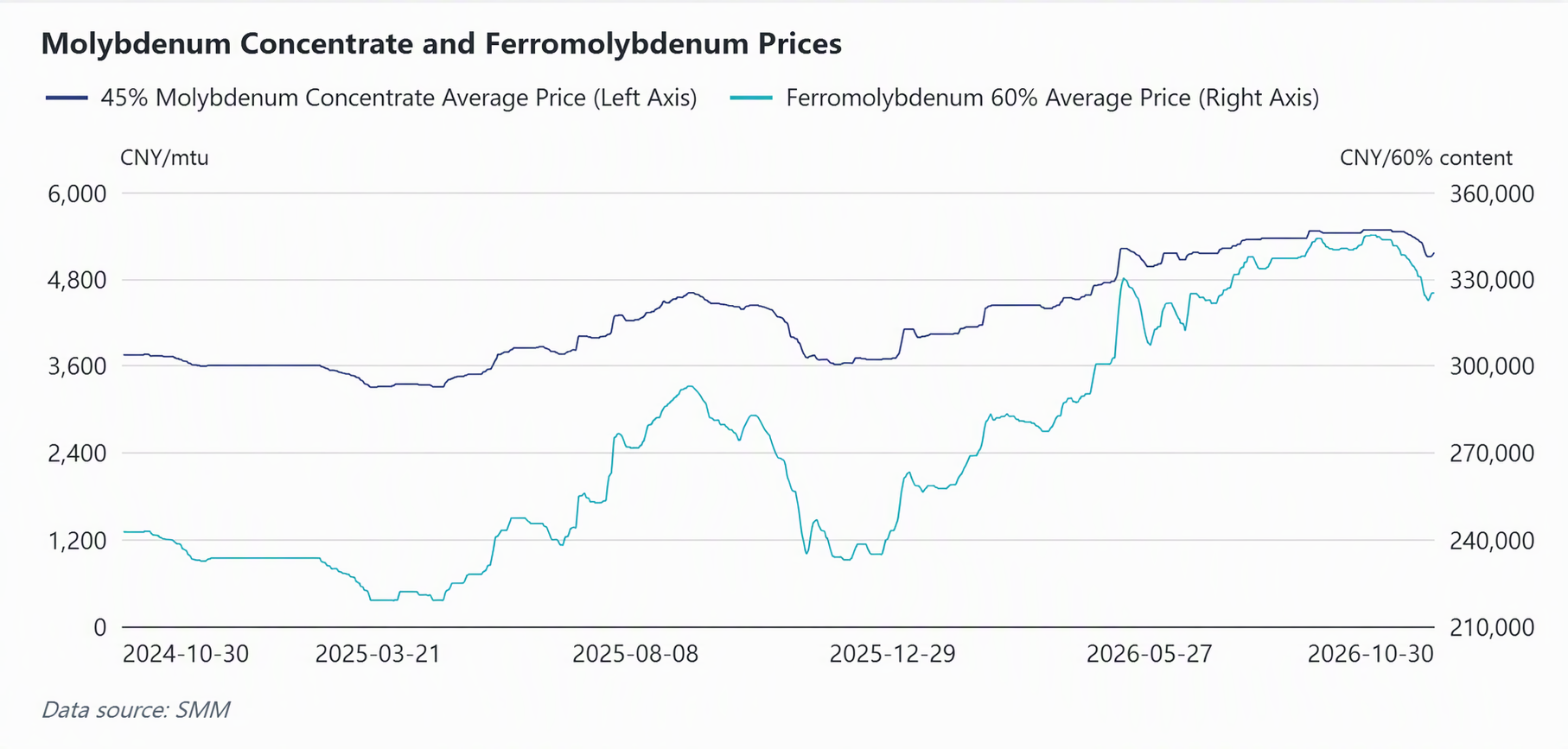
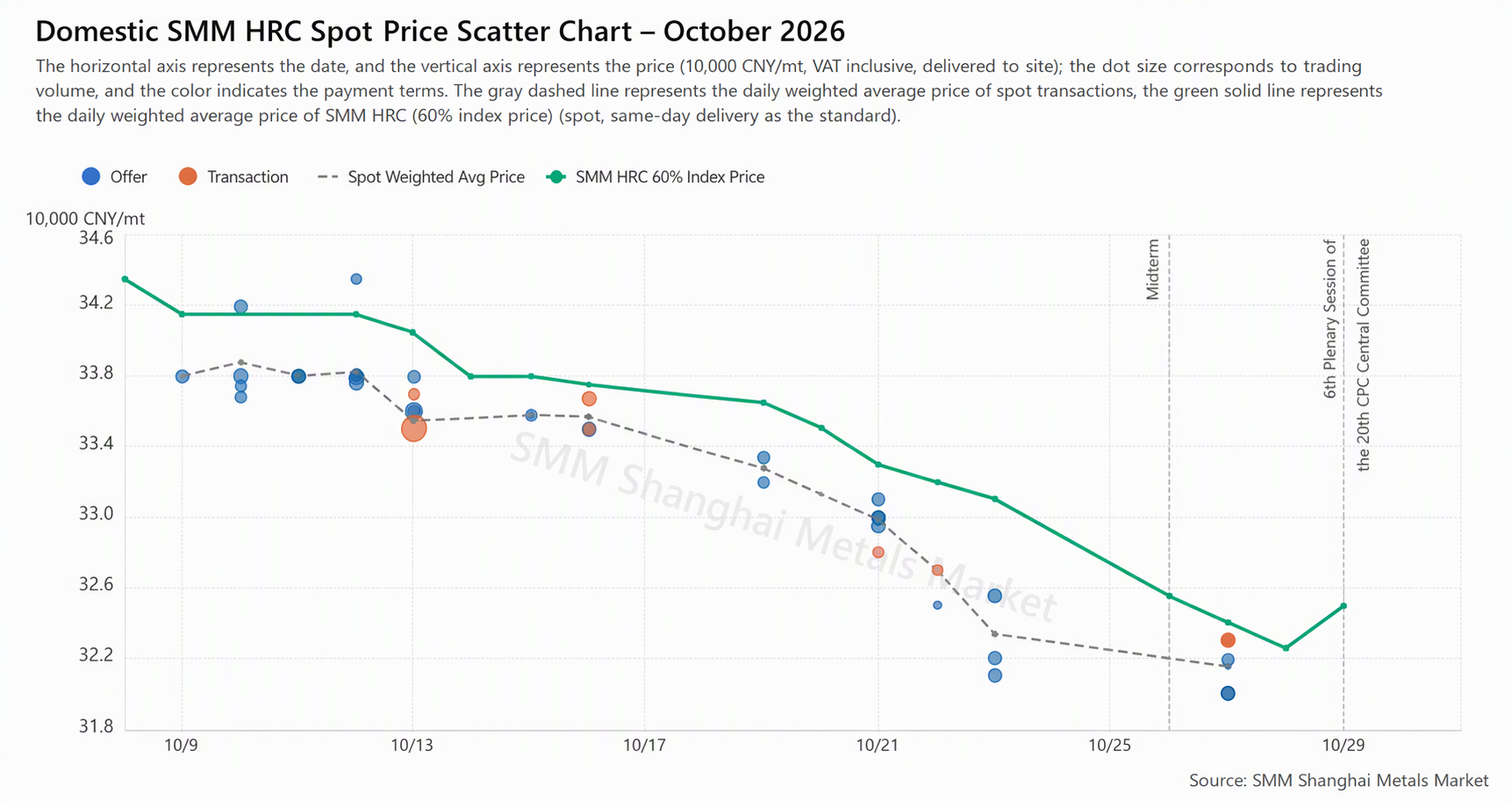
In October, China's molybdenum market broke away from the high-level pattern seen in the first three quarters. After a brief period of stability following the holiday, prices fell rapidly from mid-month, with molybdenum concentrates, ferromolybdenum, molybdenum oxide, molybdenum powder, and other products across the entire industry chain weakening in tandem. At month-end, signs of stabilization emerged amid a tug-of-war between cost support from the mining side and persistent downward pressure from steel mill tender prices. The core drivers of this downward cycle were the continuous decline in steel mill tender prices, deep losses in ferromolybdenum smelting that forced smelters to purchase cautiously, and the pullback in ex-China molybdenum oxide prices that opened the import window, with expectations of incremental supply weighing on China's spot market. As of October 30, the SMM average price for 45% molybdenum concentrates stood at 5,165 yuan/mtu, down approximately 5.7% from the monthly high, while SMM ferromolybdenum closed at 325,000 yuan/mt, down 5.4% from the monthly high. The tug-of-war between longs and shorts intensified in the market at the end of October.
Supply side: Limited primary growth, with pressure coming from imports and shipment pace rather than mine production increases
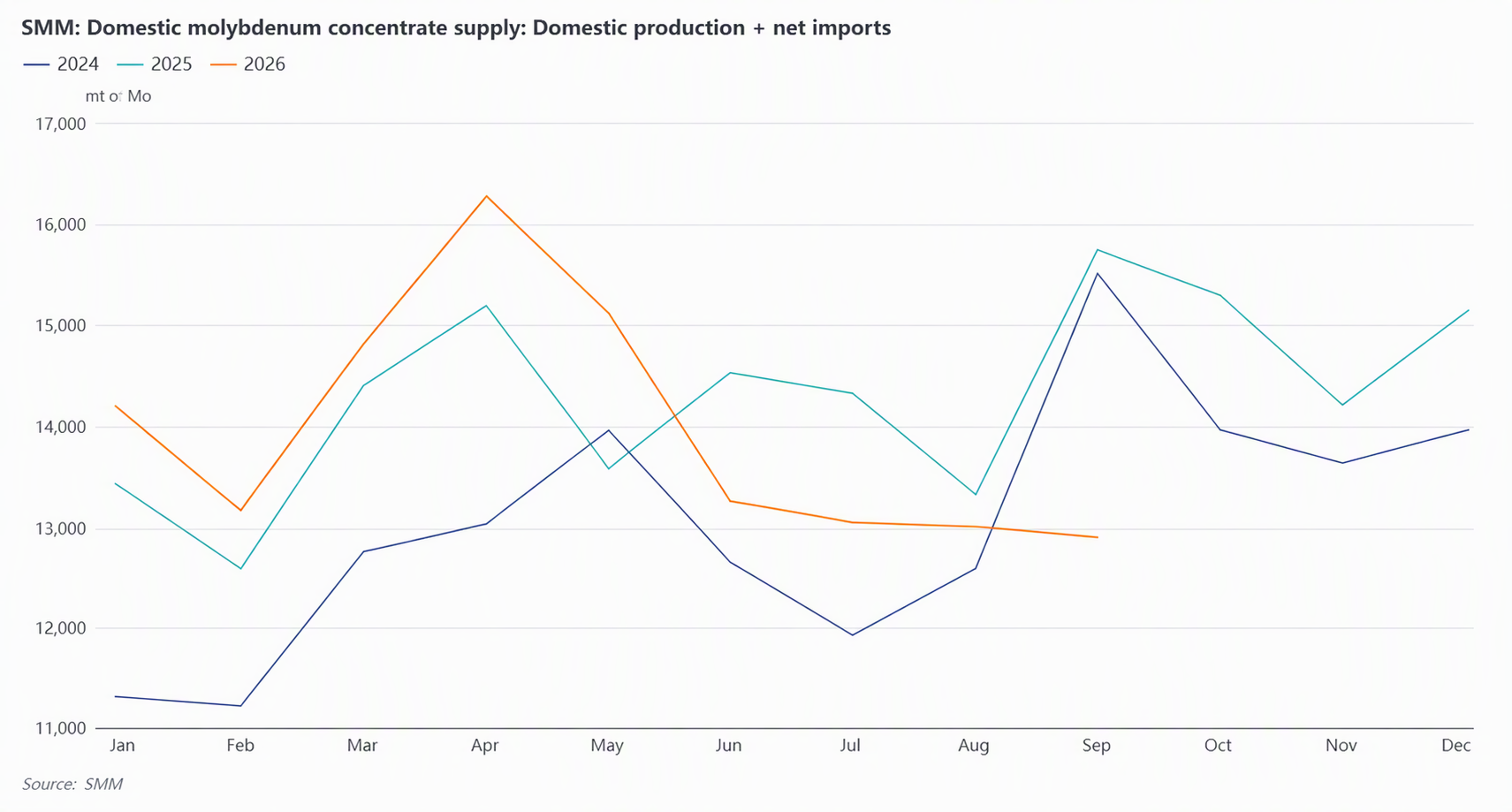
In October, China's molybdenum mines maintained stable production, with mines in Luanchuan that had previously cut production not yet shipping material. Monthly production fluctuated relatively little MoM. In Q3, China's molybdenum concentrate production fell 6.9% YoY, and full-year production may decline 4.7% YoY. In Q3, production at major ex-China mines was not released in a concentrated manner. Freeport's Q3 production was flat, with growth coming only from front-loaded shipment pace. Production at Southern Copper, Teck Resources, and South32 declined YoY/MoM. Although Antofagasta posted a slight MoM production increase, a union strike occurred at the end of the quarter, posing a potential production reduction risk. There was no fundamental basis for looseness in ex-China primary mine supply. Starting in mid-October, the number of failed auctions at China's mines increased, and downstream smelters mostly adopted a wait-and-see approach to purchasing. At the same time, reports emerged that actual off-market transactions for molybdenum concentrates were 50-100 yuan/mtu lower than public market prices. The real marginal supply pressure in October came from the import side: molybdenum product imports rose MoM in September, with the effective growth concentrated in roasted molybdenum concentrates. After the holiday, ex-China molybdenum oxide prices pulled back, and the decline in Busan molybdenum oxide prices widened the price spread between China and ex-China markets, restoring import economics. Expectations of replenishment from overseas sources weighed on China's spot market. The SMM price for 57% molybdenum oxide at Busan warehouses hit a high of $33.35/lb Mo on October 8-9, then retreated steadily, with the range falling to $32.95-33.05/lb Mo on October 21. By October 29, the low-end price of molybdenum oxide at Busan port had dropped to around $32.4/lb Mo, with some deals concluded at discounts to list prices. The rapid decline in the overseas market and the repair of the price spread between China and ex-China markets were driven by active price reductions in the overseas market, which in turn opened the import window. In January-September, China's molybdenum product imports in physical content surged 41.4% YoY, with metal content up 9.9%. Net imports in metal content reached 18,449 mt, up 32.7% YoY. Low-grade material indeed accounted for the bulk, but conventional molybdenum concentrates imports came to 44,272 mt, down only 1.8% YoY, and October import data are still expected to remain mainly in slight growth.
Demand side: rigid demand remains the base, but the purchasing strategy has shifted from restocking to pushing for lower prices and controlling inventory, which is the core contradiction of this market cycle.
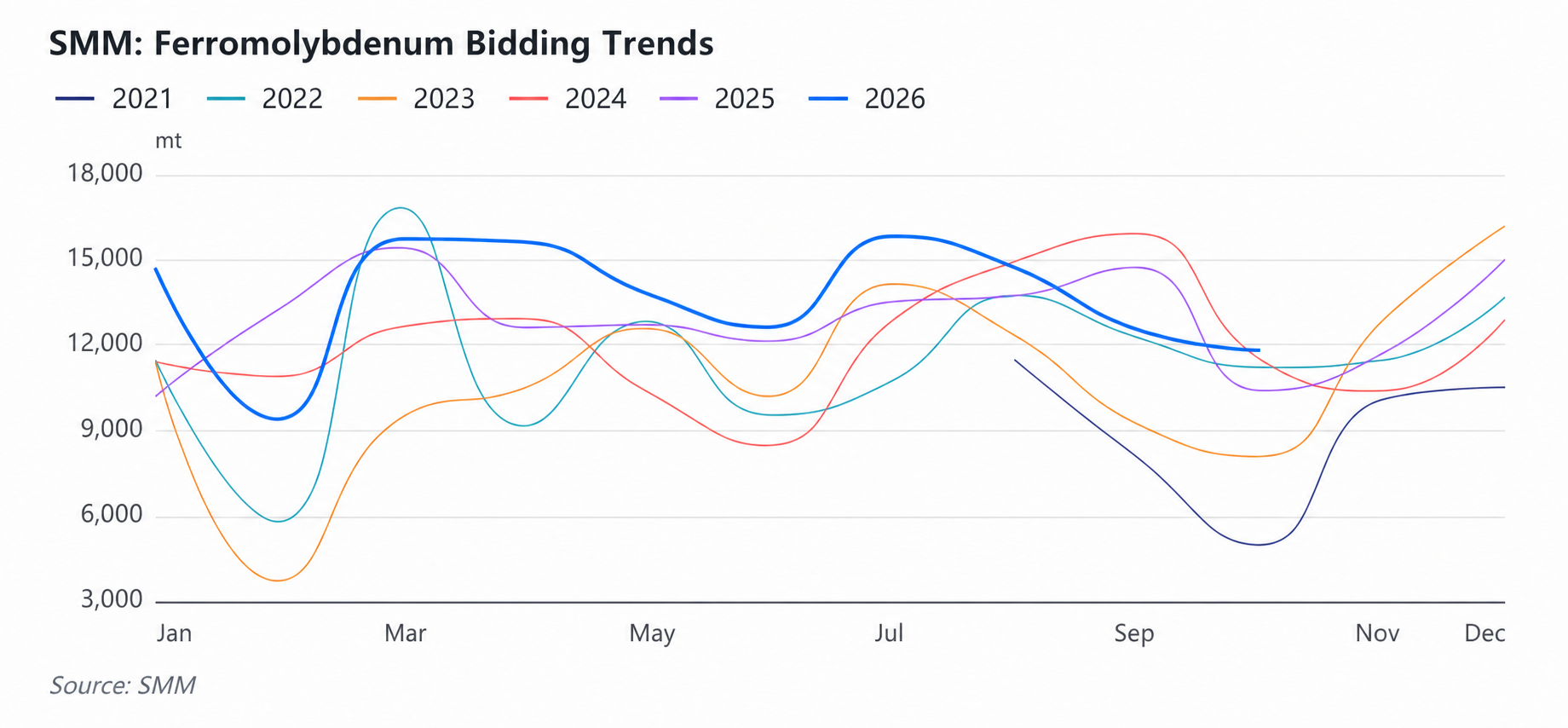
Over 70% of molybdenum demand is concentrated in tenders from special steel and stainless steel mills, forming a rigid base. Total steel tender volume for the year remains strong YoY, and the medium and long-term demand logic for high-end special steel, nuclear power, and oil and gas has not been disrupted. In October, domestic ferromolybdenum steel tender volume weakened seasonally, with total monthly tenders at approximately 118,000 mt, down 5.6% MoM but up 13.5% YoY. Domestic ferromolybdenum steel tender volume for January-October rose 6.3%. Overall, after molybdenum prices continued to climb, downstream demand was suppressed and market demand shifted. Steel mills' inventory strategy changed from active restocking to purchasing as needed and tendering at lower prices. Tender frequency was maintained, but winning bid prices fell repeatedly, and even failed bids occurred. Amid expectations of falling prices, traders and steel mills simultaneously delayed purchases and reduced spot stockpiling, weakening spot transactions and creating a negative feedback loop of "price decline → wait-and-see → weaker transactions." The long-term demand gap logic remains unchanged, but short-term demand bargaining power has risen, shifting from mine-side pricing to steel mill pricing, which is the root cause of the turning point in October. The chemical sector (ammonium molybdate, molybdenum powder) followed raw material prices downward, with orders also weak, further amplifying weakness across the entire industry chain.
Supply-demand structure rebalancing across the industry chain: profits are being redistributed among mines, smelting, and steel mills.
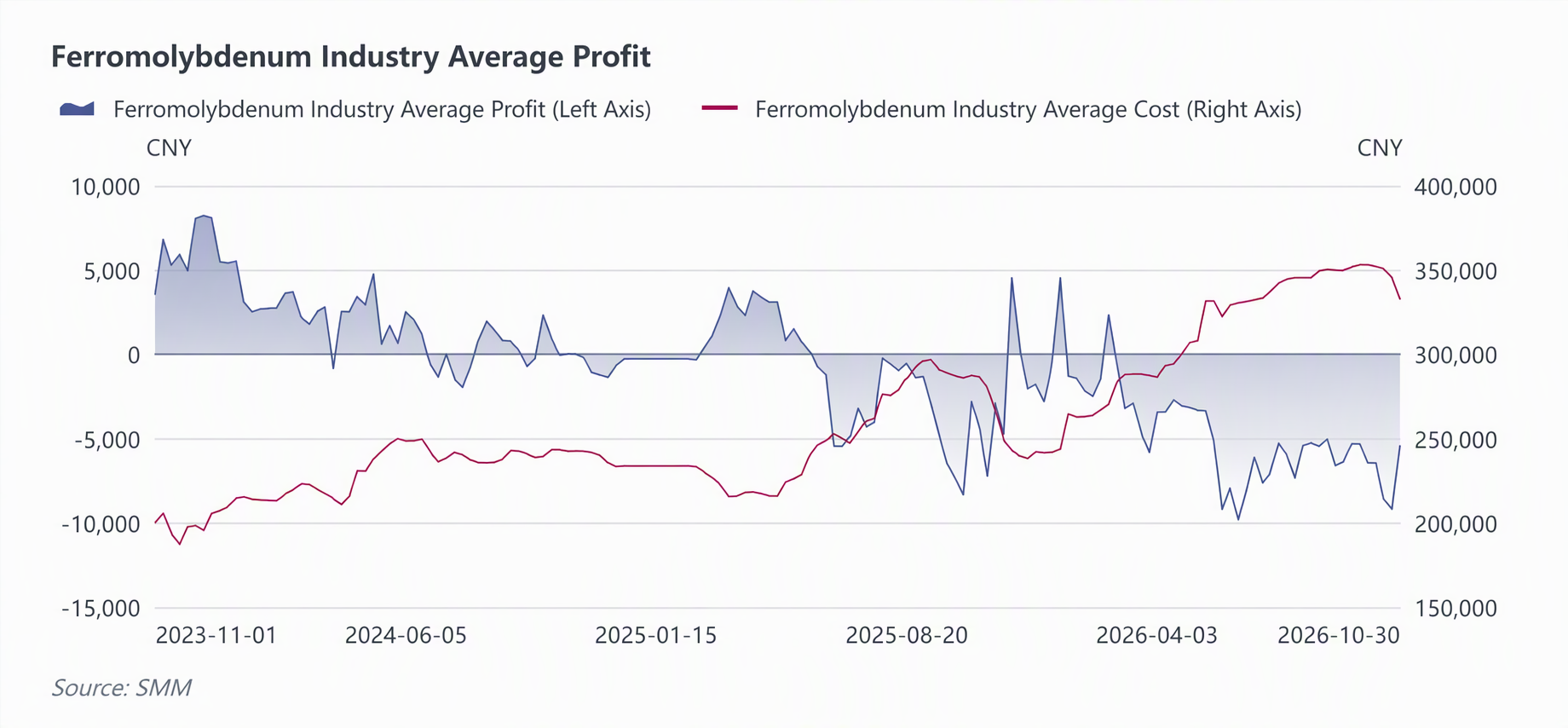
The uneven profit distribution in the molybdenum industry chain has become prominent. Mines, leveraging tight supply, enjoy substantial profits, while downstream ferromolybdenum enterprises and processing enterprises mostly operate with thin margins or even losses. Entering October, steel mills used their purchasing leverage to push prices down on downstream players, fully transmitting loss pressure to smelting and then upstream to mines, forming a typical bottom-up transmission. This structure determines that the market bottom has a support boundary: with ferromolybdenum suffering sustained deep losses, smelters have limited room to concede further. Losses to a certain extent will force production cuts and reduce ferromolybdenum supply in circulation, which in turn supports ferromolybdenum prices and transmits back to molybdenum concentrates, thereby underpinning the molybdenum concentrates market.