After the National Day holiday ended, magnesium prices continued their pre-holiday decline, drifting lower. The magnesium ingot spot inventory accumulated during the holiday left the market well supplied, while downstream buyers had restocked sufficiently before the holiday and existing inventories had yet to be effectively absorbed, resulting in a severe supply-demand imbalance. To stimulate transactions, primary magnesium smelters cut prices repeatedly, kicking off the post-holiday downtrend. The rapid price decline kept eroding smelter profits, and losses at primary magnesium smelters continued to deepen. With losses mounting, when will magnesium prices stop falling? 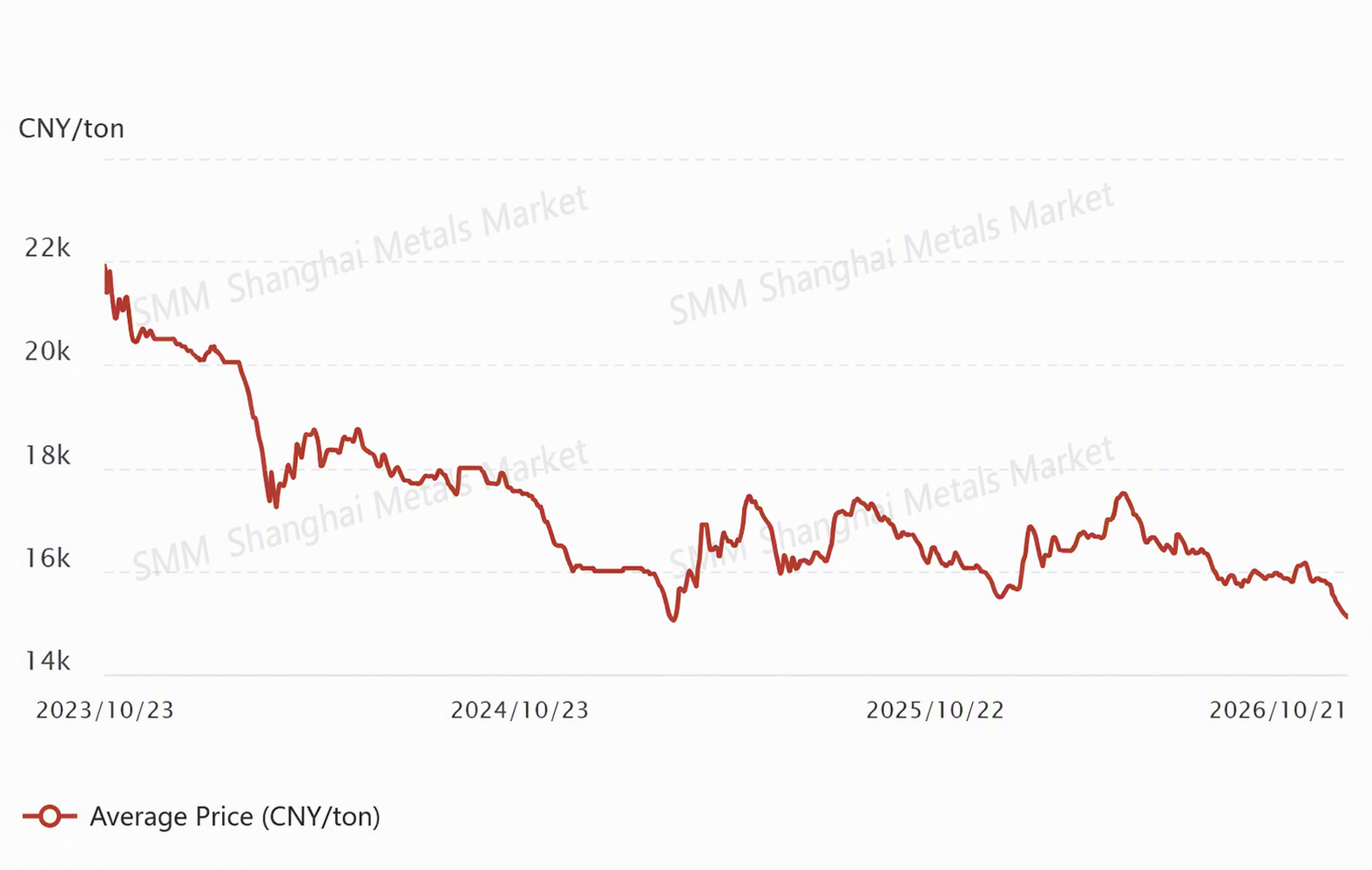
Magnesium prices fell rapidly after the holiday, and the pace of decline slowed somewhat after prices approached 15,300 yuan/mt, but the overall downtrend has not yet reversed, and the market continues to grind lower. During this period, primary magnesium smelters frequently released news of production cuts: according to SMM statistics, four primary magnesium smelters have now halted production for maintenance and three have lowered operating rates, with a combined impact on daily production of about 220 mt (not including changes at smelters before the September production statistical adjustment). Considering that some smelters that underwent maintenance in September have seen their October operating rates rebound slightly, overall October primary magnesium production is expected to be basically flat compared with September.
On the demand side, magnesium alloy demand from both the automotive and two-wheeler sectors is weak, and inventory pressure at magnesium alloy smelters has grown significantly. Magnesium alloy smelters have been forced to cut production, with total affected magnesium alloy output of nearly 3,000 mt. Other sectors may see some growth, but the overall supply-demand pattern in the magnesium metal market is difficult to reverse effectively.
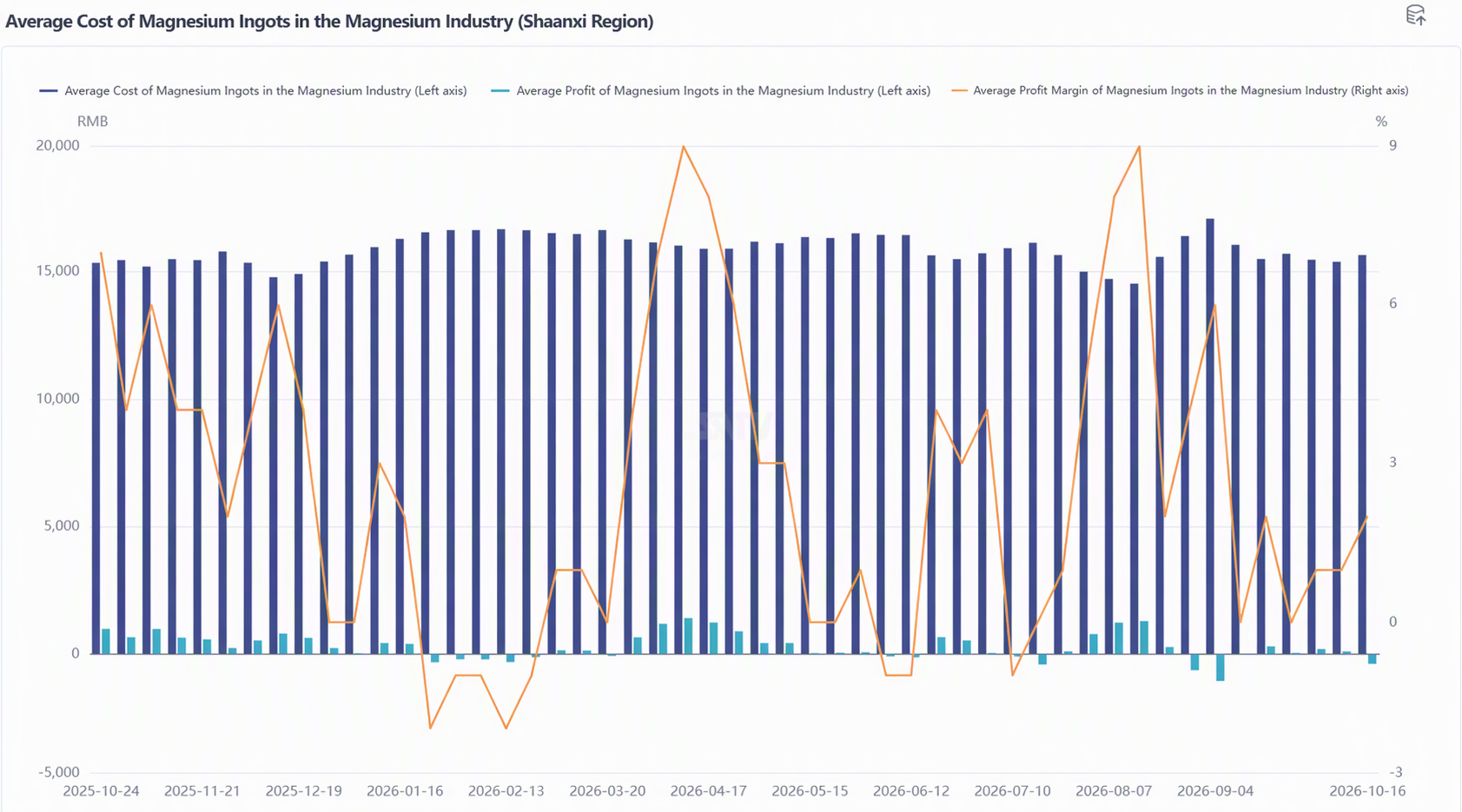
On the cost side, entering October, ferrosilicon and coal prices have partially pulled back from earlier highs, with 75# ferrosilicon prices falling to 6,100 yuan/mt and coal for semi coke production pulling back to around 900-950 yuan/mt, but overall costs remain high, and cost differences across provinces persist. Benefiting from the offsetting effect of semi coke prices, Shaanxi's average production cost in October is about 15,500 yuan/mt, basically flat with current magnesium prices. Costs in other provinces have pulled back, but absolute levels remain high. Affected by the rapid weakening of magnesium prices, regional loss differences have widened quickly, and with the recent sharp decline in magnesium prices, losses at primary magnesium smelters have continued to deepen. Losses in high-cost provinces have kept widening, and primary magnesium smelters are under significant operating pressure.
According to SMM, as of press time, primary magnesium smelter quotes have edged up slightly, with overall market quotes raised to 15,200 yuan/mt. Magnesium prices have now stopped falling and rebounded, with market quotes awaiting transaction confirmation, and overall sentiment has improved modestly. This rebound is more the result of short-term factors converging: smelters' increased willingness to hold prices firm after the earlier rapid decline, combined with low prices attracting end-user restocking. The foundation for price support is not yet solid. In the long term, the market's supply-demand imbalance remains unresolved. For the magnesium market to truly stabilize, supply-side production cuts need to be implemented and demand-side recovery needs to materialize.