I. A Quiet Week for Prices: Why Focus on Computing Power Site Selection?
From October 12 to 19, 18 of the 19 monitored points in the SMM computing power leasing price index remained unchanged. The only adjustment occurred in the Yangtze River Delta A100-80G.
This week, the lowest monthly rental quote for this product was lowered from 38,000 yuan per unit to 34,000 yuan, a decrease of 10.5%; the average price dropped from 39,000 yuan to 37,000 yuan, a decrease of 5.1%. Per-card-hour prices were also lowered by approximately 5.2%, while the highest quote remained at 40,000 yuan.
These changes indicate that low-end quotes for the Yangtze River Delta A100-80G have shifted downward, but the high-end has not yet adjusted in tandem. In the absence of actual trading volume and order structure information, a more prudent assessment is that the current quote center has shifted downward, but it cannot yet be concluded that the entire high-end GPU leasing market has entered a broad price reduction cycle.
At the same time, the same index table presents another set of noteworthy data:
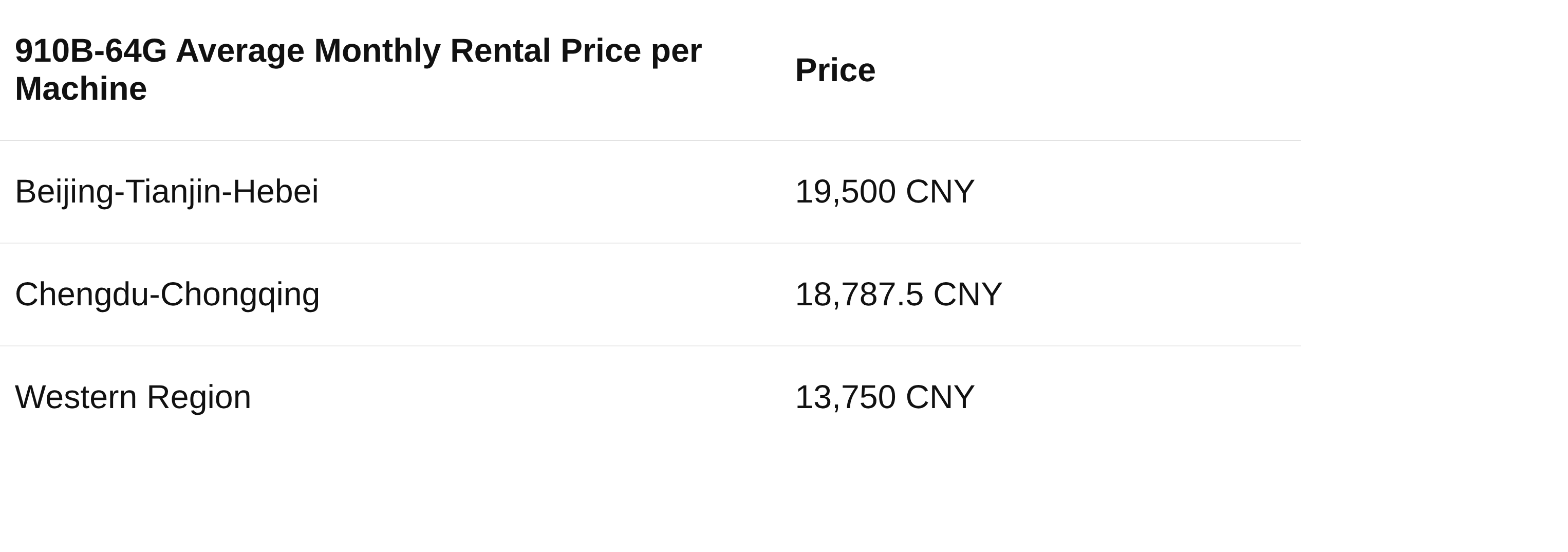
Based on the above quotes, the average leasing price in the western region is approximately 29.5% lower than in Beijing-Tianjin-Hebei and approximately 26.8% lower than in Chengdu-Chongqing.
This means that for some domestic AI computing power products, regional quote differences have become quite pronounced. Where do these price differences come from? This week, industrial information released collectively by the Ulanqab municipal government, the Inner Mongolia Autonomous Region Government Services and Data Management Bureau, and media outlets such as People's Daily provides a sample worth further analysis.
SMM view: When short-term quote changes are limited, industrial analysis should not focus solely on price changes but should also examine the cost structure behind prices. The quote difference for the 910B-64G between the western region and Beijing-Tianjin-Hebei offers clues for studying regional competitiveness, but determining whether the price spread can persist requires comprehensive observation of equipment supply, actual transactions, utilization rates, and service standards.
II. The First Account: Wind Brings Green Electricity—How Do Abundant Energy Resources Translate into an Electricity Price Advantage?
Ulanqab has long been known as the "capital of wind power."
According to local public information, its wind power equivalent annual utilization hours are approximately 3,600 hours, and PV approximately 1,800 hours; new energy grid-connected installed capacity exceeds 20 million kW, with green electricity accounting for 67%.
The industrial significance behind these figures is not merely that local wind and solar resources are abundant, but more importantly, that sufficient new energy resources create conditions for data centers to obtain competitively priced power supply.
Why are data centers so concerned about electricity prices? Because electricity is not a one-time construction investment, but an ongoing operating expense that continues to accrue as servers run continuously. For intelligent computing centers that require long-term operation and large-scale GPU deployment, electricity price differences can accumulate into significant cost gaps over a multi-year operating cycle.

According to local public information, the end-user electricity price for data centers in Ulanqab is approximately 0.32–0.36 yuan/kWh, while the actual electricity cost for relevant data centers in Beijing is approximately 0.80 yuan/kWh. Using these two figures as a reference, the former is roughly 40%–45% of the latter.
However, electricity prices for different projects may be affected by power supply methods, electricity trading mechanisms, transmission and distribution charges, basic electricity fees, and other additional costs. When comparing regional electricity prices, it is still necessary to confirm whether the statistical scope is consistent.
In addition to new energy resources, the supply model for green electricity is also undergoing innovation.
In July 2025, China's first data center green electricity direct-connection generation-grid-load-storage integrated project was put into operation in Ulanqab. The project is equipped with 300,000 kW of wind and solar capacity and 45,000 kW of energy storage, and is expected to generate approximately 800 million kWh of green electricity annually for self-consumption.
The so-called "generation-grid-load-storage" concept can be simply understood as integrating power supply, the power grid, electricity load, and energy storage systems into a single coordinated solution: when wind and solar power generation conditions are favorable, generation resources are fully utilized, and supply and demand are regulated through energy storage and other means to meet the data center's continuous and stable electricity demand as much as possible.
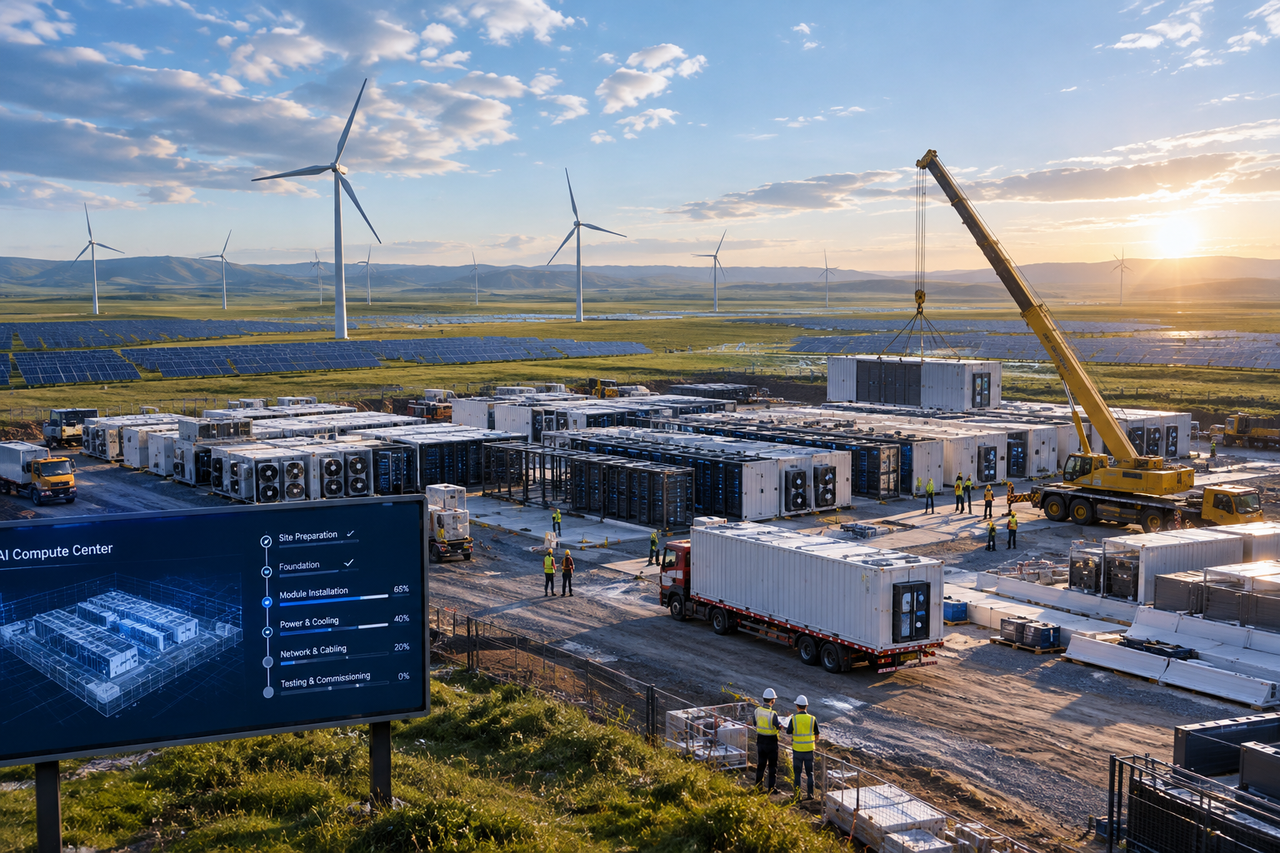
In earlier surveys in the northwestern region, SMM also recorded end-user electricity prices of approximately 0.35–0.38 yuan/kWh for green electricity direct-supply projects. The power supply conditions and cost structures of different projects are not entirely identical, but these cases collectively demonstrate that new energy resources are entering the cost systems of data centers through different power supply models.
SMM view: Abundant wind and solar resources are the foundation, but the key factors affecting computing power leasing costs are the price at which green electricity can be supplied, the mechanisms through which it is delivered, and how much can be sustained. As green electricity direct-connection and generation-grid-load-storage projects gradually develop, the competitiveness of computing power in western China will depend not only on natural resources, but also on electricity trading capabilities, power supply stability, and overall electricity costs.
III. The Second Account: Cooling Efficiency—With an Average Annual Temperature of 4.3°C, How Much Cooling Cost Can Be Saved?
If electricity prices determine a fundamental base cost for data centers, then cooling efficiency determines how much of that electricity can actually be used for computing.
Servers continuously generate heat during operation. To keep equipment operating stably, data centers must remove heat in a timely manner through air conditioning, cooling systems, or other technical means.
Therefore, not all of the electricity purchased by a data center is used for GPU and CPU computing. A portion of electricity is also consumed by cooling, power supply and distribution, and other auxiliary facilities.
The natural conditions in Ulanqab provide room to reduce this portion of energy consumption.
The local average annual temperature is about 4.3°C, and the average summer temperature is about 18.8°C, allowing outdoor cold air to assist in cooling the equipment rooms for a relatively long period each year. Public data shows that the PUE of some local data centers can be below 1.2, with the lowest reaching 1.1.
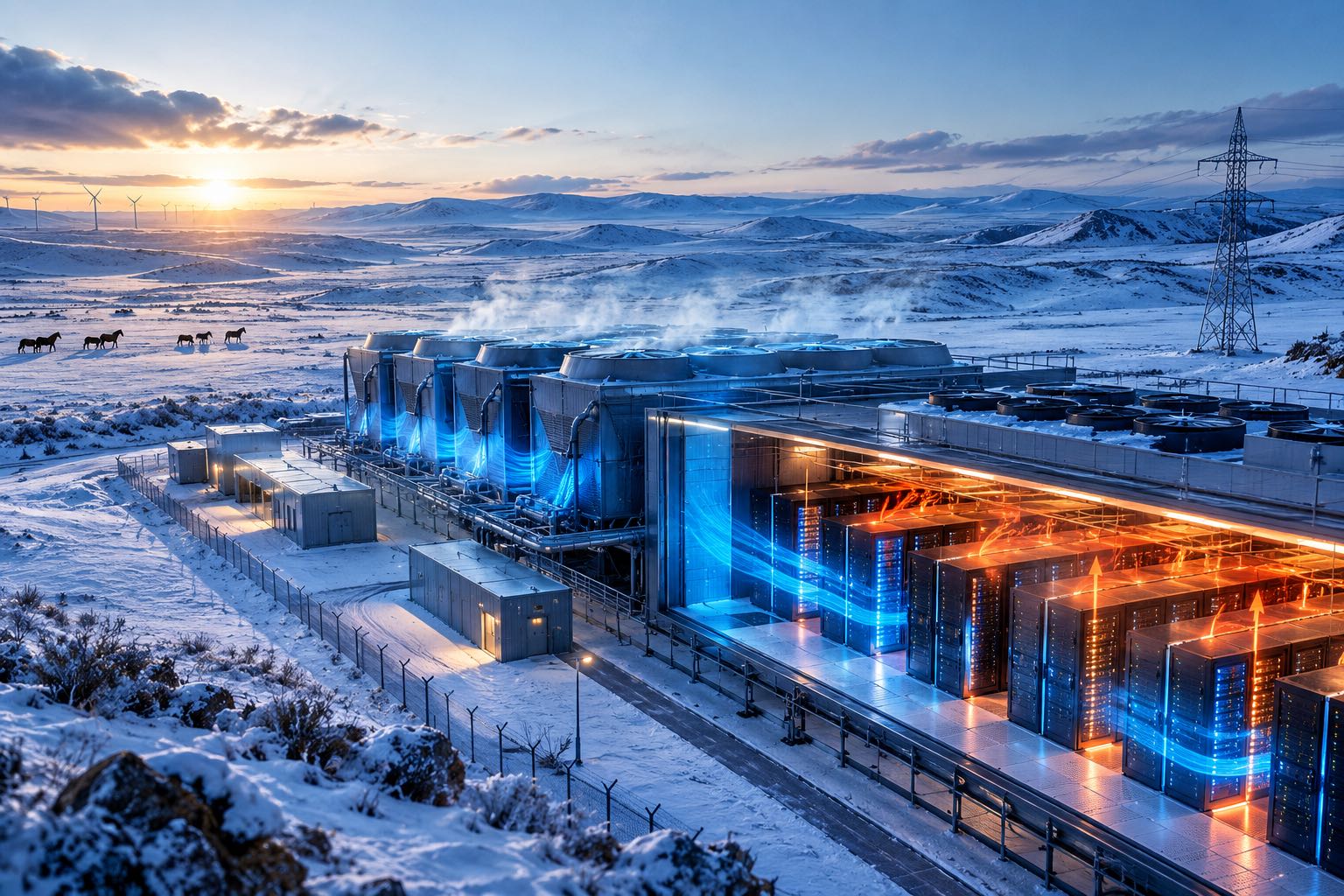
PUE is an important indicator for measuring the energy efficiency of data centers, calculated as the total electricity consumption of a data center divided by the electricity consumption of IT equipment. The closer the value is to 1, the less electricity is consumed by auxiliary facilities such as cooling and power supply and distribution.
A simple example:
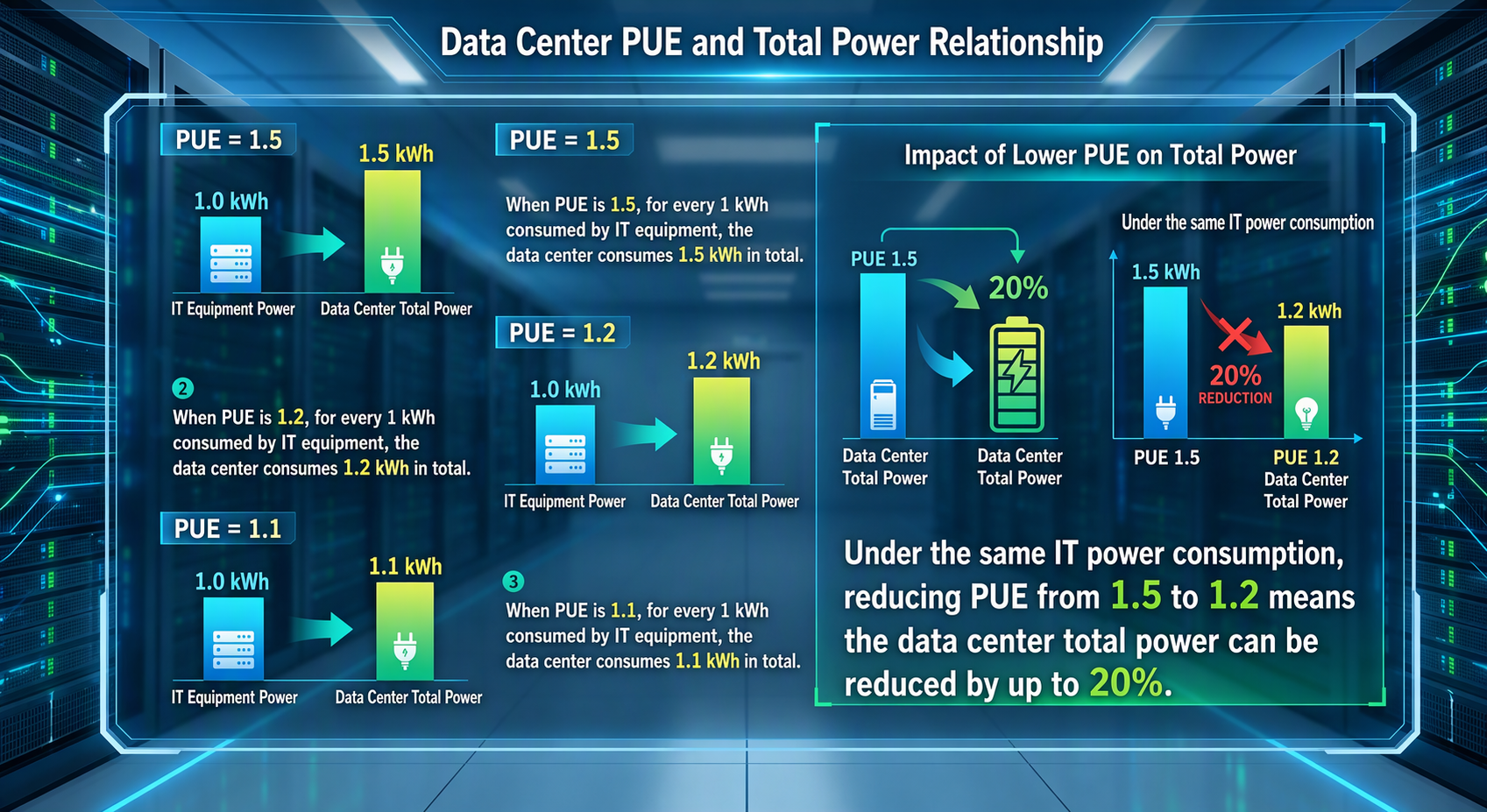
However, it should be noted that a 20% reduction in PUE does not necessarily mean that the overall operating cost of the entire data center will definitely decrease by 20%. The actual savings also depend on electricity prices, equipment load, cooling solutions, and other operating expenses. The value of a cool climate lies precisely in this: it can help data centers improve PUE, reduce heat dissipation energy consumption, and further amplify the advantage of low electricity prices.
Of course, low temperatures are not unique to Ulanqab. Some other areas in the northwest and north also have the conditions to use natural cooling sources. What truly determines competitiveness is not a single climate indicator, but whether electricity costs, cooling efficiency, network conditions, and project construction conditions can form a combined force.
SMM view: A cool climate is a favorable condition for reducing heat dissipation costs, but it is not an independent pricing advantage. For the computing power leasing market, what is more worth tracking is the actual PUE, the comprehensive electricity cost per unit of IT load, and whether these indicators can remain stable across different seasons and under different loads. Only by converting natural cooling sources into sustainable energy efficiency performance can climate advantages truly enter long-term cost models.
IV. The third account: a nearby market - 240 kilometers away, can it efficiently serve Beijing's computing power demand?
With only low electricity prices and low temperatures, data centers cannot necessarily take on the computing power demand of first-tier cities.
The reason is simple: computing power must not only be cheap, but also be usable by clients in a timely and stable manner.
Ulanqab is about 240 kilometers from Beijing. A 144-core point-to-point dual-route high-capacity optical cable directly connecting to Beijing has already been completed locally, and public data shows that the one-way network latency is about 0.0021 seconds, with end-to-end latency of about 0.0042 seconds. Some telecom operators have also upgraded the city to an Internet provincial-level switching center.
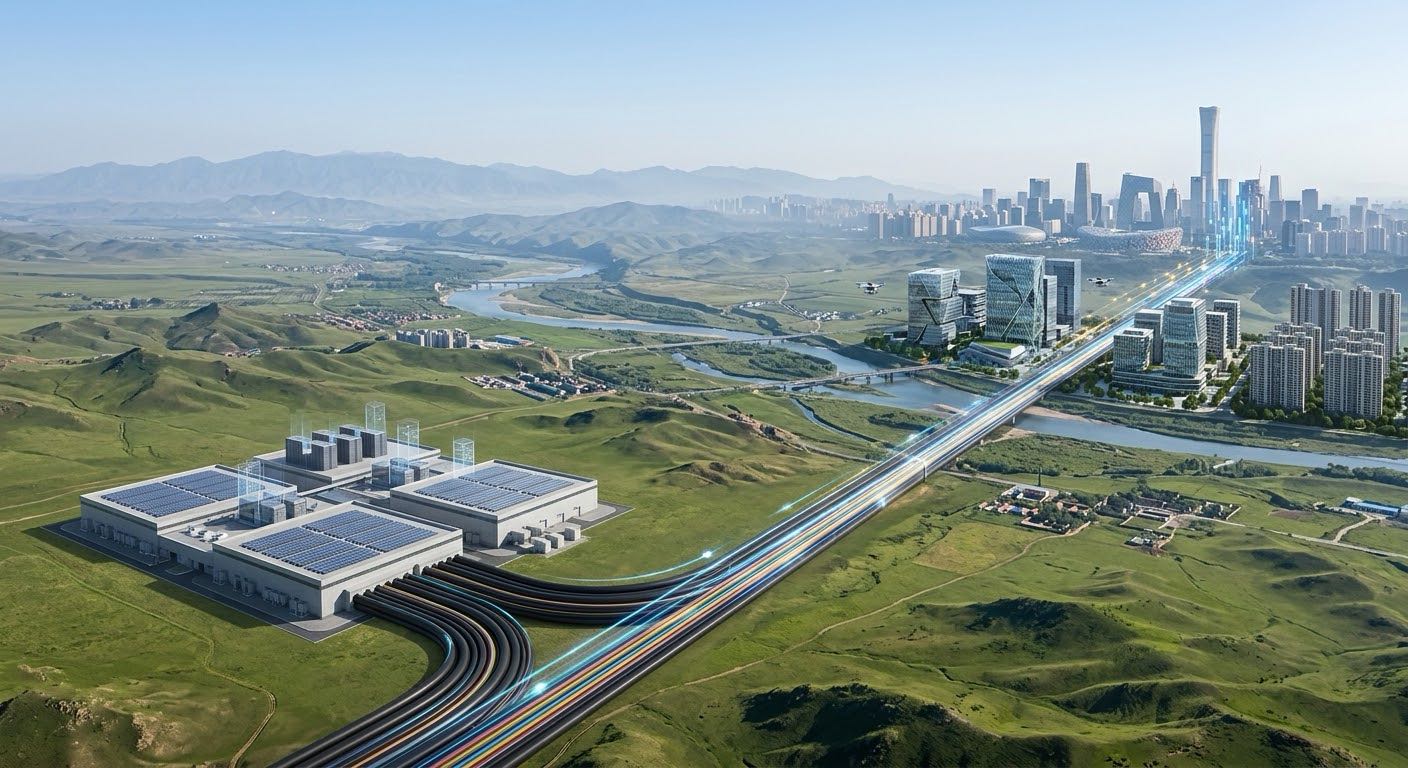
What do these figures mean? For some tasks that do not require high real-time response and can be invoked remotely over the network, network latency of a few milliseconds is generally highly acceptable. Enterprises do not need to deploy all computing equipment in Beijing; they also have the opportunity to place part of their computing power in surrounding areas with lower costs.
Official media information from Ulanqab shows that Ulanqab has stably absorbed approximately 75,000 P of computing power overflow from Beijing. However, network latency does not equal complete application response time. Actual experience is also affected by factors such as network congestion, data transfer volume, storage access, model inference methods, and system scheduling.
Different tasks also have varying degrees of latency sensitivity:
Large model training: Provided technical requirements are met, some tasks can be deployed in lower-cost regions through distributed computing, task scheduling, and other approaches.
Batch inference and offline computing: As long as delivery deadlines are met, there is usually greater room to choose low-cost computing resources.
Real-time interaction and low-latency applications: These place greater emphasis on end-to-end response speed, network stability, and data access efficiency, and have relatively higher requirements for deployment location.
Therefore, Ulanqab's locational advantage is not simply about being close to Beijing, but rather that it combines network connectivity with relatively favorable power and climate conditions.
SMM view: Being close to the core demand market means low-cost computing power has the opportunity to enter a broader range of client procurement, but ultimate competitiveness still depends on network quality, delivery stability, and task suitability. For Ulanqab, the 0.0021-second one-way latency is an important foundational condition; whether it can continue to absorb Beijing's overflow demand still needs to be further verified based on actual orders, business types, and service quality.
V. Beyond the three accounts: Can industrial clustering turn locational advantages into long-term competitiveness?
Electricity prices, heat dissipation, and latency explain why Ulanqab is attractive. But whether a city can form a true computing power cluster also depends on its industrial base, land availability, infrastructure, and capacity for sustained expansion.
According to public information, Huawei signed on and established a presence as early as 2013, and companies such as Alibaba, Apple, Kuaishou, and ByteDance have also successively entered the market.
As of August 2026, more than 100 data center projects had been signed locally, with commissioned computing power reaching 190,000 P, up 112% YoY; intelligent computing accounted for more than 90%, and the signed standard rack scale exceeded 5 million racks.
These figures reveal a noteworthy shift: Ulanqab's industrial positioning is evolving from a traditional data center hosting base toward an intelligent computing cluster centered on AI computing.
However, signed scale, planned racks, and actual commissioned capacity are different metrics. Signed projects do not mean everything has been completed, and standard rack scale cannot be directly converted into deliverable GPU computing power. Assessing the quality of industrial development also requires continuous observation of project commissioning rates, equipment configuration, actual utilization rates, and client demand.
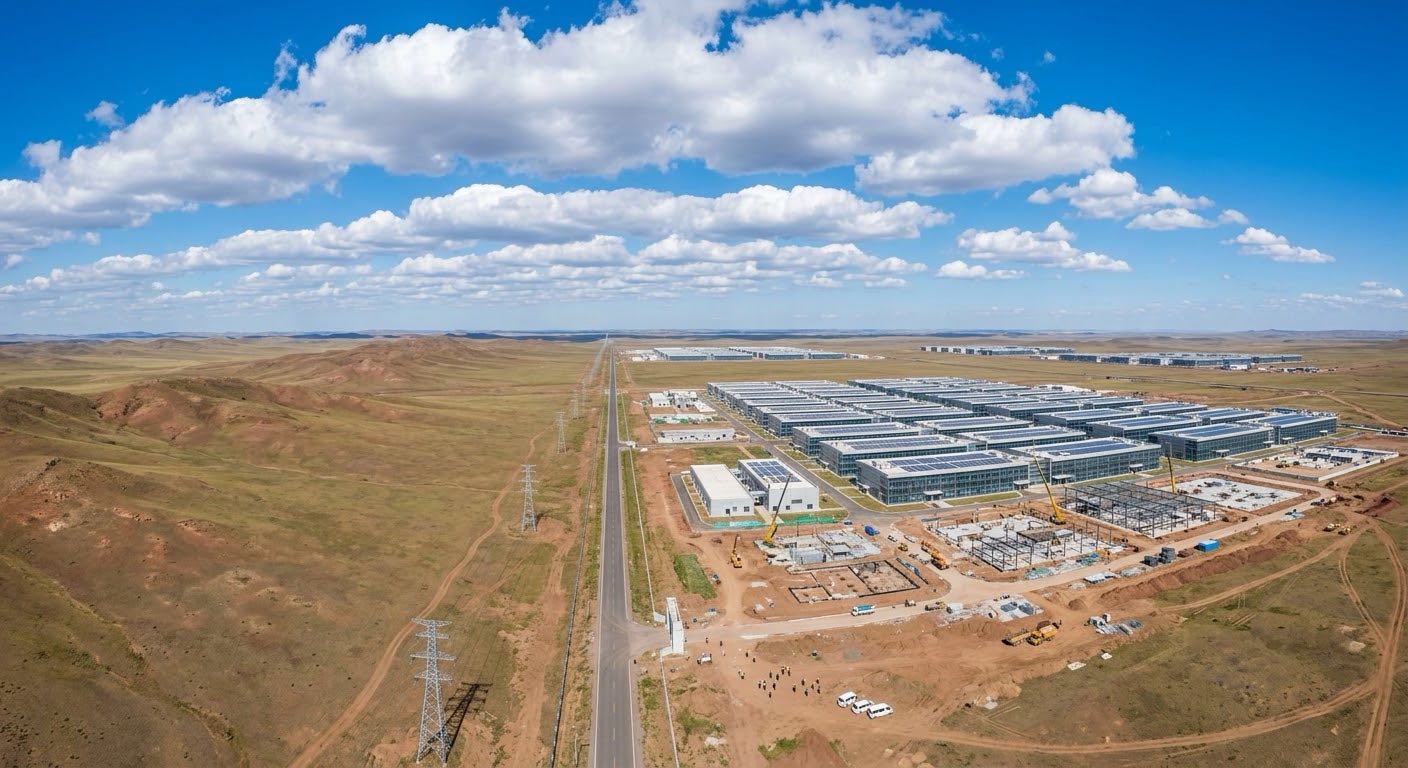
Infrastructure conditions are equally important: public materials mention that Ulanqab has extensive basalt coverage, with relatively stable geological conditions in some areas and ample land supply. For data centers that require large-scale construction, long-term operation, and reserved expansion space, geological safety, land resources, and supporting facilities are all important site selection factors, and Ulanqab's advantages in data center construction are self-evident.
These conditions may not directly lead to lower GPU rental prices, but they will affect project construction feasibility, delivery cycles, and subsequent expansion capacity. As more enterprises enter, networks, power, operations and maintenance, and industrial supporting facilities also have the opportunity to gradually improve, forming an intelligent computing industrial clustering effect that lowers the construction and operational barriers for subsequent projects.
SMM view: The value of industrial clustering lies in turning the locational advantages of individual projects into regional infrastructure advantages. But judging the quality of cluster development cannot rely solely on signed projects and planned scale; greater attention should be paid to actual commissioned capacity, equipment utilization rates, client structure, and sustained delivery performance. Only by forming real computing power supply and stable market demand can industrial clustering exert a more lasting impact on regional rental prices.
VI. SMM price observation: Behind regional price spreads, what is changing in the computing power rental market?
-
Regional price spreads are a market signal of cost differences, but not a direct equation of cost differences
SMM computing power rental prices show that in the average monthly rental price of 910B-64G full servers, the western region is about 29.5% lower than Beijing-Tianjin-Hebei.
This difference has a certain logical consistency with the potential cost advantages of western regions such as Ulanqab in electricity, climate, and land.
But rental quotes depend not only on data center operating costs, but are also affected by equipment procurement prices, depreciation cycles, financing costs, supply-demand relationships, utilization rates, service levels, and contract terms.
Therefore, regional price spreads can serve as an important market observation signal, but they cannot alone prove that rental differences are entirely caused by electricity prices and cooling costs. To further verify this relationship, it is also necessary to compare actual transaction data for the same equipment models, equivalent service standards, and similar delivery conditions.
SMM view: Regional price spreads deserve continuous tracking, but analysis must distinguish among quote differences, cost differences, and profit differences. Only by combining comparable products, actual transactions, and operational indicators can we determine whether the lower prices in the west stem from structural cost advantages or from differences in supply-demand relationships, equipment configuration, and contract terms.
-
The three accounts are all indispensable, but their competitive barriers differ
The natural cooling advantage brought by low temperatures can be found in other cities with similar climate conditions; new energy resources may also be gradually improved through power grid construction, green electricity trading, and generation-grid-load-storage projects.
In contrast, being close to Beijing as a core demand market while also having relatively low network latency and competitive power conditions is harder to replicate through any single project. Therefore, what is truly worth watching in Ulanqab is not that any single indicator leads, but whether it can sustain the combined advantage among power, cooling, network, and industrial supporting facilities over the long term.
SMM view: In computing power site selection competition, green electricity and cooling sources determine cost space, location and network conditions affect demand coverage capability, and industrial supporting facilities affect project implementation and expansion efficiency. Regional competitiveness is not determined by any single indicator, but is formed by the combined effect of multiple conditions.
-
The computing power market is moving from device-based price comparison to task-based matching
This week, the quoted price center for A100-80G in the Yangtze River Delta moved lower, while the quoted price for 910B-64G full servers in the west was relatively low. These are market signals from two different products and two different regions.
They are not yet enough to directly prove that training tasks are migrating westward on a large scale, nor can they be used to conclude that demand for high-end GPU rentals in the east has undergone structural change.
But from an industrial logic perspective, computing power procurement should indeed not only compare GPU models and per-card prices; it also needs to consider whether tasks can be migrated, network transmission costs, delivery time, equipment utilization rates, and overall computing efficiency.
For tasks that are latency-insensitive and can be flexibly scheduled, low-cost regions may be more attractive; for real-time interaction, data localization, or tasks with high delivery speed requirements, deployment close to clients and business systems still holds value.
SMM view: In the future, regional divergence in the computing power rental market may increasingly reflect the different requirements of different tasks for cost, latency, and delivery capability. Analysts need to track both product quotes and actual application demand, rather than simply interpreting price changes for a certain type of GPU as a migration trend for the entire computing power market.
VII. Outlook: From selling electricity and racks to selling tokens
Short term: Watch whether low-cost computing power can translate into actual orders
In the next 3-6 months, what deserves attention is not simply comparing quotes across regions, but observing whether low-cost resources can translate into actual orders. Three indicators need to be closely tracked:
Green electricity supply: the commissioning progress of direct green power connection projects, actual power supply costs, and traceability.
Computing power demand: actual trading volume, equipment utilization rates, and new client situations for products such as the 910B and H100 in the west.
Cross-regional absorption capacity: actual growth in computing power demand overflow from Beijing-Tianjin-Hebei, and whether network, power supply, and delivery capabilities can match the new demand.
If orders for low-cost computing power in the west continue to grow while equipment supply does not expand significantly in tandem, regional quote differences may gradually narrow. Conversely, if new supply grows faster than demand, low-cost resources may persist for a long time.
SMM view: The key to short-term price trends lies not in whether the west has low-cost conditions, but in whether these conditions can attract sufficient effective demand. Actual trading volume, utilization rates, and supply growth rates will better indicate whether regional prices have a basis for convergence than the number of signed projects alone.
Medium and long-term: The real competitiveness lies in how much value computing power can create
Ulanqab has launched a three-year action plan to transition from selling electricity and selling racks to selling tokens. This shift corresponds to an important upgrade in the AI infrastructure industry.
In the past, data centers mainly provided equipment rooms, power, networks, and equipment hosting services; as AI applications develop, clients are increasingly concerned about whether models can run stably, whether unit costs can decline, and how many effective computing tasks can be completed within the same budget.
For the computing power rental market, low electricity prices and high energy efficiency can lower the cost floor, but they do not necessarily determine final returns. What truly affects long-term competitiveness also includes GPU utilization rates, cluster scheduling efficiency, model inference efficiency, software ecosystems, and client acquisition capabilities. In other words, site selection determines how low the cost of running computing power can be, while operational capability determines how much value that computing power can create.
SMM view: As basic conditions such as electricity prices, climate, and land are gradually replicated in more regions, the competitive focus of the computing power industry will shift further toward delivery efficiency, cluster utilization rates, and unit token costs. Whether Ulanqab can grow from an infrastructure hosting base into a high-efficiency AI computing power service center will determine the upper limit of its long-term value.
Data sources and caliber notes
Price data: SMM computing power rental prices, with a statistical period from October 12 to 19, 2026, covering both monthly and per-card-hour calibers, all of which are tax-inclusive market quotes. Quotes are not equivalent to actual transaction prices.
Industry data: information released in October 2026 by the Ulanqab Municipal People's Government and the official website of the Inner Mongolia Autonomous Region Government Services and Data Management Bureau, as well as reports from People's Daily, Xinhua News Agency, and China News Service during the same period. The statistical time points, project scopes, and calculation calibers of different indicators may differ.
Information related to overseas enterprise projects: DeepSeek-related planning information is based on Bloomberg reports from July 31 and September 4, 2026. The relevant planning scale, chip procurement, and construction methods should be subject to the company's subsequent official disclosures.
Green electricity prices: The Horinger green power direct supply price was collected by SMM through on-site visits, and the power supply models and fee structures of different projects may vary.
Analytical caliber: The discussion in this article on regional price spreads, operating costs, and computing power task migration constitutes industry analysis and does not imply that all projects in each region have the same cost, latency, or return performance.