Domestic shipments of alkaline electrolyzers reached 383.2 MW in Q2 2026 and fell to 295.17 MW in Q3 2026. On a quarter-on-quarter basis, shipment volume in Q3 dropped by approximately 23%, marking a notable quarterly pullback. When benchmarked against historical industry trends, Q2 recorded a cyclically high shipment level, while Q3 stayed within the normal quarterly shipment range for the sector. Overall, the market saw a peak in equipment deliveries in Q2 followed by a slowdown in Q3, demonstrating a quarterly pattern of "rally followed by correction".
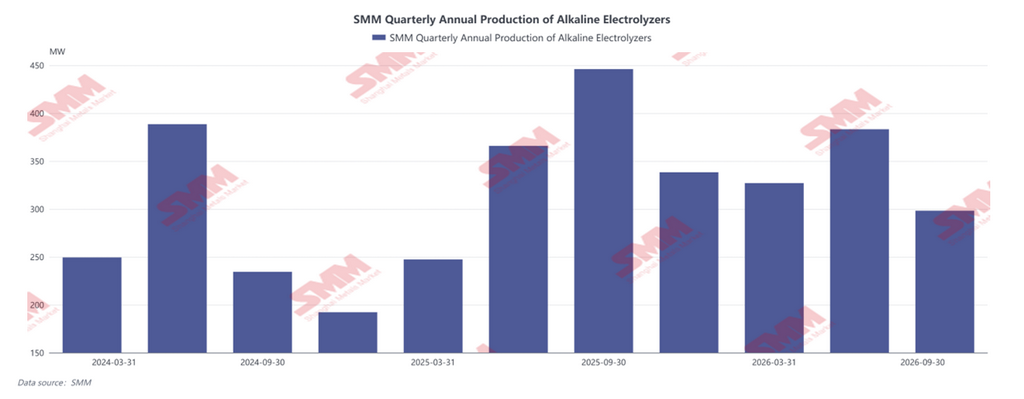
The surge in Q2 2026 shipments was mainly driven by large-scale wind-solar coupled hydrogen production and green hydrogen substitution projects in the chemical sector, which had won bids earlier and entered the window for concentrated equipment delivery. Multiple hydrogen production projects supporting wind and solar bases completed tender awards previously, with project owners requiring equipment arrival and acceptance in Q2. Coupled with tight delivery deadlines for several demonstration projects, the above factors jointly lifted the shipment volume by power capacity in this quarter. Delivery momentum cooled down in Q3. For one thing, deliveries of those large projects that saw concentrated rollouts in the prior period were mostly completed, and the pace of tendering for new projects slowed temporarily. For another, some pending delivery projects were hampered by supporting wind-solar construction, capital approval and land-use formalities, pushing back equipment delivery schedules and contracting overall shipment volume in Q3.
The difference in shipment volume between the two quarters mainly stems from mismatched delivery cycles of large-scale projects. The growth in Q2 was primarily supported by fulfillment of backlogged orders, representing concentrated delivery of orders accumulated in earlier periods that boosted shipments in the short term. The shipment decline in Q3 does not signal a long-term contraction in green hydrogen demand. Instead, the sector lacked large projects of equivalent scale to sustain continuous deliveries, creating a temporary gap in project handover. Meanwhile, downstream project owners adopted a more prudent stance on investment, leading to delays of some projects. New orders have not yet contributed to large-scale equipment deliveries. Such supply-demand timing mismatch ultimately resulted in the substantial drop in Q3 shipments versus Q2.
![[SMM survey] Hydrogen energy industry weekly review, 20260925-0930](https://imgqn.smm.cn/usercenter/Bwmed20251217171726.jpg)
![[SMM Hydrogen Policy Update] Jiaxing issues the "15th Five-Year Plan" for scientific and technological innovation, focusing on breakthroughs in hydrogen fuel cell systems and hydrogen storage and transportation equipment](https://imgqn.smm.cn/usercenter/MbKXH20251217171730.jpg)