Recently, the Gansu Natural Energy Research Institute (GNERI) and the Jordan Renewable Energy Association (REES) completed a signing ceremony in Lanzhou, where the two sides signed a memorandum of understanding on international scientific and technological cooperation, establishing a regular communication channel in the renewable energy field between China and Jordan. The two sides agreed to carry out joint scientific research and talent development across a range of cutting-edge green energy areas, with the green hydrogen and green ammonia industry as the core focus of this cooperation.
Jordan has abundant solar resources, and green hydrogen and green ammonia can optimise its energy structure
Jordan is located in the arid region of West Asia, with vast desert areas within its borders and outstanding solar energy resource endowments, giving it natural conditions for large-scale PV power plant development. The country has long relied on external energy imports and has a strong desire for energy self-sufficiency. Green hydrogen and green ammonia, as storable and long-distance transportable green fuels, are regarded as important pathways for optimising the country's energy structure and reducing dependence on fossil fuels. Green ammonia can also be directly used in agricultural fertiliser production, industrial raw material supply, and ocean shipping fuel, giving it high industrial value for water-scarce Middle Eastern countries.
Gansu has abundant desert wind and solar power resources within China and has accumulated extensive scientific research achievements and engineering practice experience in new energy development, green hydrogen production, and green ammonia synthesis. GNSRI has long been deeply engaged in research on renewable energy technologies in desert areas and has formed a complete research system in new energy project development and supporting technology implementation in arid regions, which has also become the foundation for the cooperation between the two sides.
Multi-technology pathways working in synergy, with desert PV providing the foundational support for green hydrogen and green ammonia
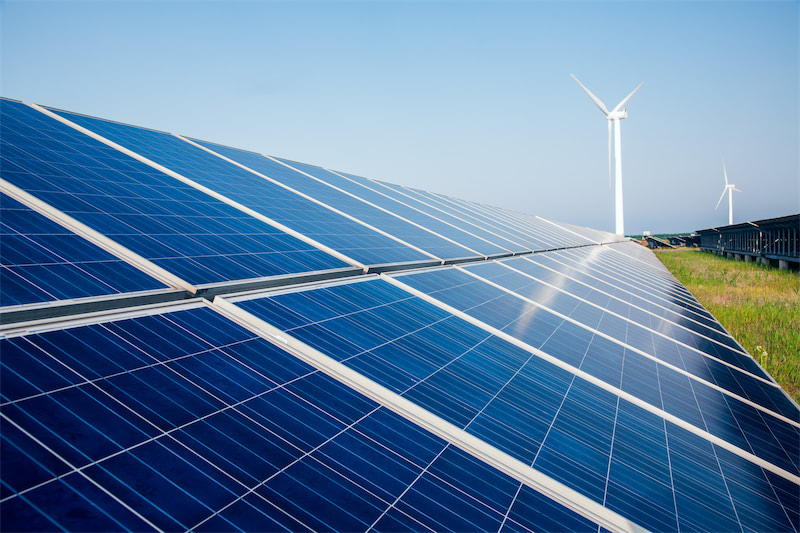
The scope of cooperation defined in the memorandum covers not only the two core areas of green hydrogen and green ammonia, but also desert solar energy development and PEDF (photovoltaic, energy storage, direct current and flexibility) technology research. Desert solar energy is the source of the entire zero-carbon industry chain, and sufficient, stable PV power is the prerequisite for producing green hydrogen through water electrolysis.
Building PV projects in arid desert zones requires solving a series of practical challenges such as sand and dust, high temperatures, and water scarcity. GNSRI has conducted relevant experiments in China's Gobi deserts for many years, accumulating research experience in desert PV operation and maintenance, high-efficiency power generation, and water-saving supporting facilities. These technical experiences can provide a reference for the development of local PV power plants in Jordan, and the continuous supply of clean electricity will also support the implementation of local green hydrogen and green ammonia projects.
PEDF technology can improve the level of new energy consumption, smooth out fluctuations in PV power output, and ensure the continuous operation of equipment such as electrolysers that require high power supply stability. Wind and solar power generation combined with ESS can continuously and stably output electricity, ensuring that green hydrogen production facilities operate continuously over long periods and reducing the unit cost of green hydrogen production.
Joint scientific research and talent development proceeding in parallel
This cooperation is not limited to simple exchanges of technical solutions. The two sides plan to carry out joint scientific research to jointly explore various engineering challenges in the industrialisation of green hydrogen and green ammonia. Green hydrogen production, purification, storage and transport, as well as green ammonia synthesis processes and system integration, are all technical difficulties that cannot be avoided at the industrialisation stage.
The hot and dry climate of the Middle East places special requirements on the high-temperature resistance and sand and dust resistance of water electrolysis hydrogen production equipment and green ammonia synthesis units. The two sides can combine the natural conditions of their respective regions to conduct technical experiments adapted to arid-area operating conditions and develop complete technical solutions for green hydrogen and green ammonia suited to desert environments.
Talent development is also an important part of this cooperation. Green hydrogen and green ammonia are emerging interdisciplinary fields, and the industry chain requires a large number of interdisciplinary professionals proficient in electrochemistry, chemical engineering, and new energy systems. The two sides will rely on research platforms to carry out personnel exchanges, academic seminars, and technical training, continuously cultivating a professional talent pool familiar with desert wind and solar power-based hydrogen and ammonia production.
Complementary resource endowments, exploring a new model of cross-border green fuel cooperation
Jordan has abundant solar resources and the potential to build green hydrogen and green ammonia production sites, but it has shortcomings in core equipment, engineering technology, and research systems. Gansu has a mature new energy research system and has accumulated rich experience in desert new energy engineering and pilot-scale research on green hydrogen and green ammonia. The resource advantages of the two sides can complement each other.
Green fuels such as green hydrogen and green ammonia also have cross-border trade attributes. In the future, as technologies mature, green ammonia produced from desert PV can be exported as a low-carbon raw material, providing a new pathway for regional energy transition. The memorandum of understanding signed this time is a cooperation framework at the scientific and technological level, which will prioritise starting with basic research and technical exchanges, and gradually explore feasible pathways for subsequent industrial implementation.
Many arid desert regions around the world have abundant solar energy resources, and developing green hydrogen and green ammonia is a common choice for many arid countries to achieve energy transition. The cooperation between GNSRI and the Jordan Renewable Energy Association provides a new sample for cross-border renewable energy scientific research collaboration in arid regions.

![[SMM Hydrogen Policy Express] Ministry of Ecology and Environment Releases National Carbon Market Development Report: Green Hydrogen Included in Voluntary Emission Reduction Methodology](https://imgqn.smm.cn/usercenter/cTxNb20251217171727.jpg)