SMM, September 22: According to the latest data from the General Administration of Customs, in August 2026, China's rare earth metal ore imports stood at 1,034 mt, down 42% MoM from 1,787 mt in July, but up 3,127% YoY from 32 mt in the same period last year. Thorium ore and concentrates imports came in at 2,793 mt, up 67% MoM from 1,668 mt in July, and edging down 3% from 2,882 mt in the same period last year. On a cumulative basis, China's rare earth metal ore imports totaled 8,469 mt in January-August 2026, down 64% from the same period in 2025. Thorium ore and concentrates imports totaled 41,486 mt, basically flat YoY.
Looking at the monthly trend, rare earth metal ore imports fluctuated notably during the year: February saw only 377 mt, the low point of the year, while April rose to a high of 1,863 mt. After shooting up again to 1,787 mt in July, August pulled back to 1,034 mt. Thorium ore and concentrates saw even sharper monthly fluctuations: January reached 9,824 mt and June further climbed to 11,625 mt, forming two arrival peaks during the year, while July plunged to 1,668 mt, the low point of the year, before rebounding to 2,793 mt in August.
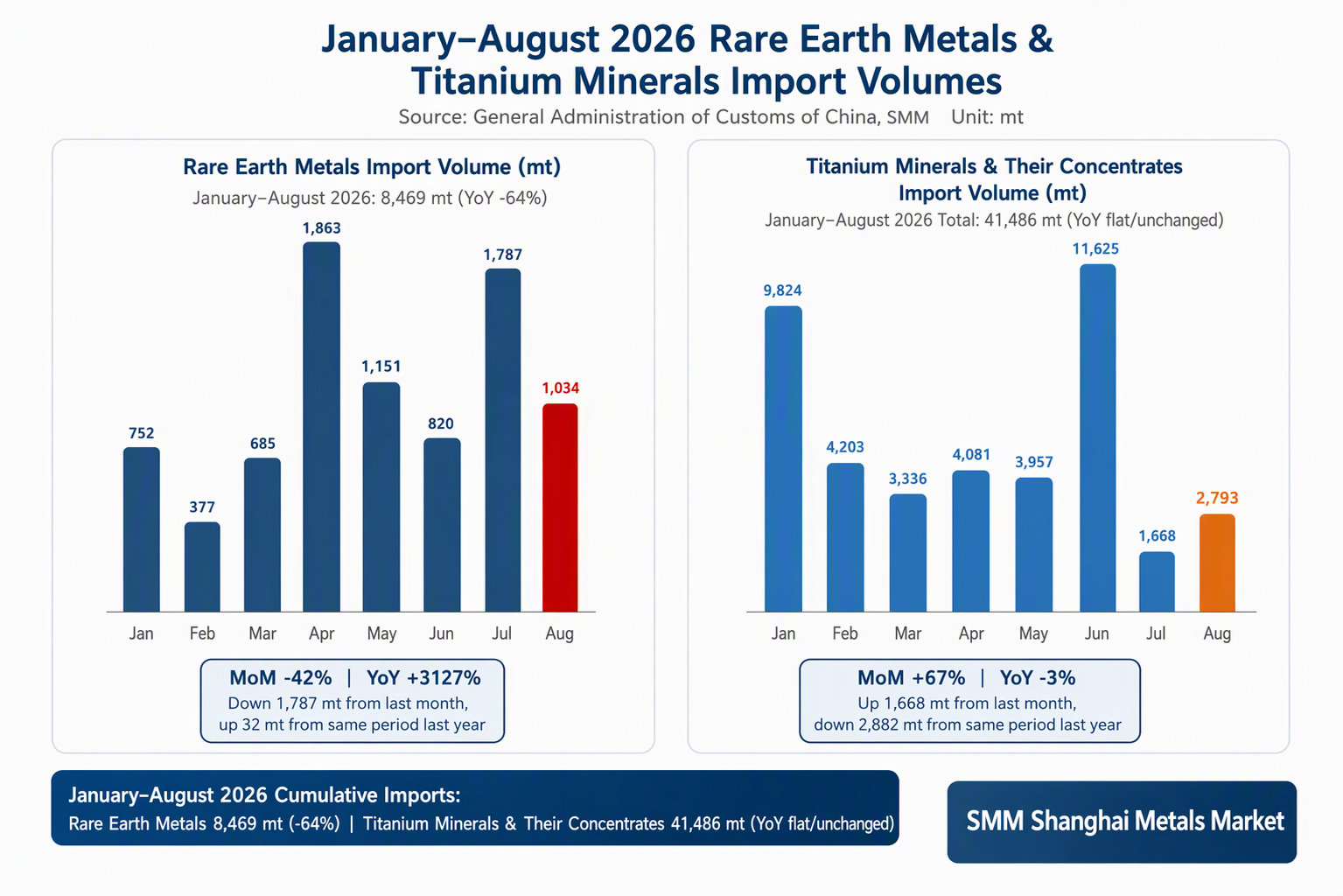
In August, the import trends of the two rare earth ore categories diverged notably. Although rare earth metal ore posted a sharp YoY increase for the single month, this was mainly due to the extremely low base in the same period last year (only 32 mt). Its cumulative imports in January-August were still down 64% YoY, reflecting that the overall import scale of this ore category remains in a contraction channel. In contrast, thorium ore and concentrates maintained a relatively stable procurement pace, with cumulative January-August imports basically flat YoY. Cumulative imports reached 41,486 mt, about 4.9 times that of rare earth metal ore, making it the mainstay category of rare earth ore imports at present.
Both ore categories saw sharp monthly fluctuations, especially thorium ore and concentrates, which experienced concentrated arrivals in January and June and a sharp pullback in July. This was related to the shipping pace of overseas mines, vessel scheduling, and the procurement pace of domestic smelters.
Looking ahead, as the operating rate of domestic rare earth smelting and separation stays high, demand for raw materials continues to be released, and rare earth ore import demand is expected to remain at a certain scale. Rare earth metal ore imports are unlikely to reverse the trend of continued YoY decline in cumulative terms. Thorium ore and concentrates, as the current mainstay of imports, are likely to continue showing irregular monthly arrival fluctuations. Overall, the supply landscape of rare earth ore outside China, changes in the international trade environment, and domestic rare earth industry policies remain the key variables affecting rare earth ore imports.