According to the latest draft implementation plan, India, Thailand and Malaysia may have failed to meet the environmental management requirements for importing metal waste. If the final list remains unchanged, the three countries may no longer be able to directly receive relevant non-hazardous metal waste from the EU from May 21, 2027.
However, the disclosed document remains a draft rather than a final decision. The European Commission is expected to publish the official list by November 21, 2026. The affected countries may therefore still seek approval by submitting additional information or adjusting their treatment processes.
Approval Is Not a Simple “Country Whitelist”
Approval under the WSR applies not only to destination countries but also to specific waste streams and treatment methods. Even if a country is approved, it does not automatically qualify to receive every type of waste.
Applicants must demonstrate adequate environmental management, waste traceability and treatment capacity, while showing that imported waste will not place an excessive burden on their domestic waste systems.
Whether European copper scrap can continue entering these markets will therefore depend on its waste classification, the qualifications of receiving facilities and whether the final processing route meets EU requirements.
European Copper Scrap May Be Forced to Find New Destinations
If India, Thailand and Malaysia fail to obtain approval for the relevant waste streams, European copper scrap could follow three main routes.
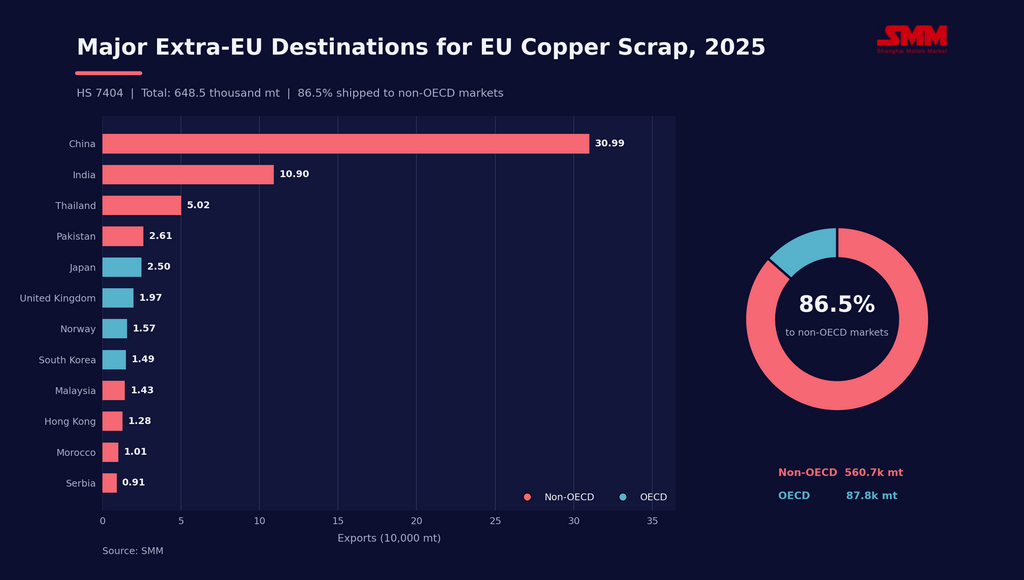
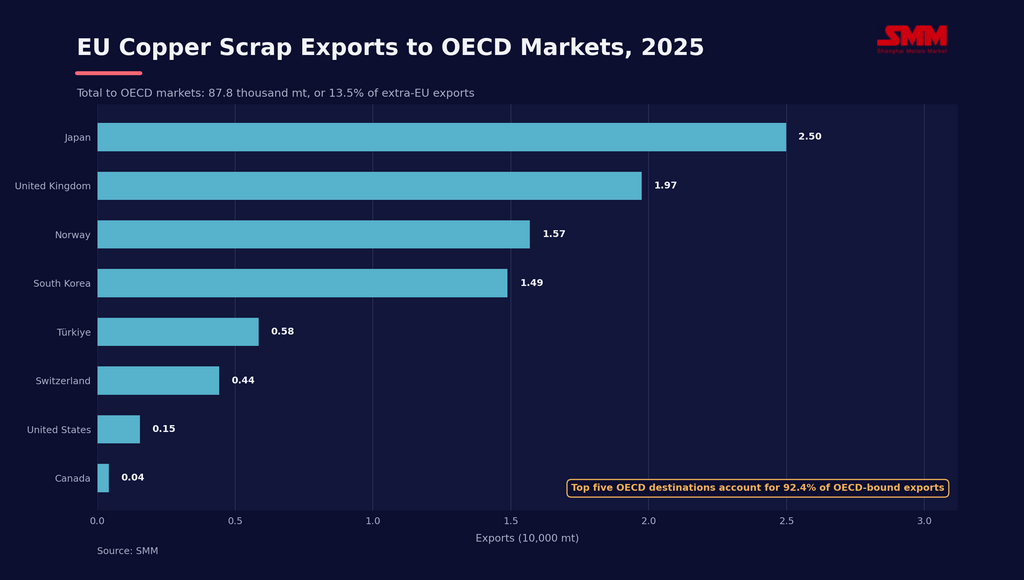
First, some material may be redirected to OECD markets such as Türkiye, Japan and South Korea. However, exporters will still need to demonstrate that receiving facilities manage the waste in an environmentally sound manner.
Second, cargoes may move to other non-OECD countries that obtain EU approval. With fewer eligible destinations, approved importers and treatment facilities could become more attractive to European suppliers.
Finally, some copper scrap may remain in Europe for further sorting, preprocessing or smelting before being exported as higher-purity recycled feedstock or metal products. This would increase Europe’s domestic processing share but could also raise labour, energy and environmental costs.
India and Southeast Asia May Intensify Competition for Alternative Supply
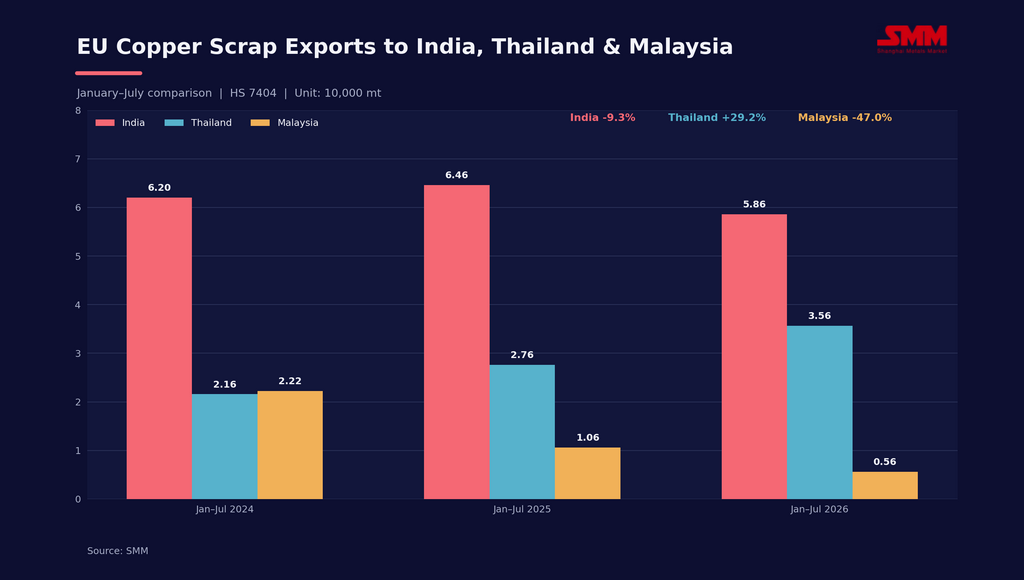
India previously applied to maintain access to EU waste shipments. If European supply is restricted, procurement of copper and other recycled metals—not only aluminium scrap—could come under pressure.
Indian buyers may consequently increase purchases from the US, the Middle East and Latin America.
Thailand and Malaysia are both major scrap-importing markets and important Asian sorting and processing hubs. If they can no longer directly receive certain European copper scrap, local companies may turn to the US, Japan, South Korea and Australia, intensifying competition for high-quality material.
If the three countries ultimately obtain approval, the risk of direct supply disruption will decline. However, facility audits, cargo traceability, composition testing and documentation requirements may still raise transaction costs.
How Will China Be Affected?
China could be one of the markets most directly affected by the WSR. In 2025, the EU exported approximately 309,900 physical tonnes of HS 7404 copper scrap to China, accounting for 47.8% of its extra-EU exports. China is not an OECD member and currently does not appear on the EU’s published applicant list.
If China does not obtain approval for the relevant waste streams, some European copper scrap will no longer be able to reach China through existing direct trade routes from May 21, 2027.
Meanwhile, large volumes of domestically generated scrap cannot easily enter compliant procurement channels because of incomplete invoice documentation. Imported recycled copper feedstock generally has a complete customs, tax and invoice trail.
Restrictions on European supply could therefore further tighten China’s effective supply of compliant feedstock and push Chinese buyers toward the US, the Middle East and Latin America.
The rerouting of European cargoes will also intensify global competition. With tradable inventories already low, reduced direct supply from Europe and stronger competition for alternative origins may further support Millberry and other high-grade copper scrap payabilities.
How Could Copper Scrap Trade Change in 2027?
SMM believes the WSR will not directly reduce global copper scrap generation, but it may further restrict the volume of material that can move freely across borders.
If India, Thailand and Malaysia fail to obtain approval, more European copper scrap may flow to OECD countries, approved non-OECD markets or remain in Europe for further processing. Longer trade routes, higher compliance costs and greater concentration of supply among qualified facilities could widen regional price differences.
If the three countries are ultimately approved, the market will face higher entry barriers and compliance costs rather than a complete closure of trade routes.
The key question for 2027 is therefore not whether Europe will stop exporting copper scrap, but which countries, waste streams and processing facilities will remain within legal trade channels. The EU’s final list, expected in November 2026, will be a critical factor shaping European copper scrap flows and global competition for high-quality material.
![Price spread between futures contracts widens, spot premiums surge after delivery, expected to remain high next week [SMM South China copper cathode spot weekly review]](https://imgqn.smm.cn/usercenter/KtfdC20251217171713.jpeg)