The August lithium battery recycling hydrometallurgical plant scrap procurement data is out. In terms of black mass equivalent, the hydrometallurgical plant's scrap procurement volume fell 6% month-over-month (MoM) from July, ending the previous streak of consecutive rebounds. The decline in procurement volume was not driven by a single factor. On one hand, LFP black mass suppliers were hesitant to sell and showed low willingness to do so, limiting procurement growth. On the other hand, hydrometallurgical plants faced profit and loss pressures when externally purchasing black mass to extract nickel, cobalt, and lithium chemicals, which directly weakened their purchase willingness. The combination of these two factors jointly pushed down the overall procurement level for the month.
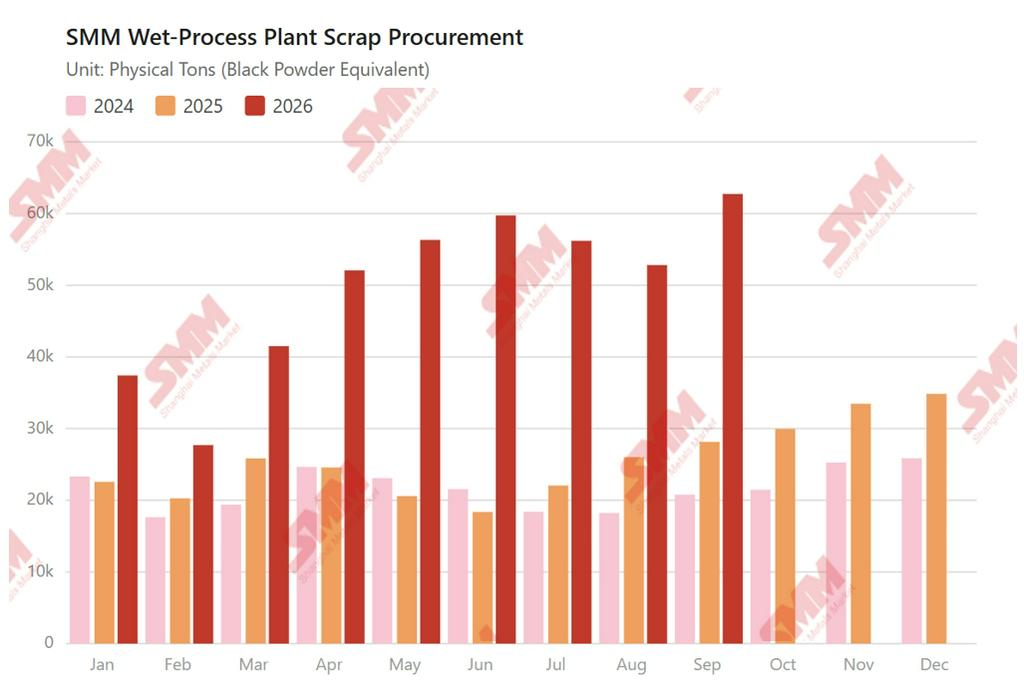
From the demand side, the recycling sector's demand is not uniformly weakening but is clearly diverging. Demand in the ternary industry chain remains relatively strong. Currently, demand for ternary cathode precursors is edging up, with high-nickel products accounting for a significant share. This, in turn, increases the consumption of nickel salts and keeps procurement of ternary scrap active, providing support for hydrometallurgical plants' purchasing. By contrast, in the LCO chain, the consumption of cobalt sulphate is generally subdued, with demand remaining mediocre, which is insufficient to drive the procurement of cobalt-bearing scrap. The structural differences in demand directly affect the procurement performance of various types of black mass.
By category, procurement and profitability varied significantly across different types of black mass. Trading in ternary black mass was relatively smooth, with suppliers generally showing strong willingness to sell, ensuring sufficient market circulation and serving as the main support for that month's procurement volume. Although profits from externally purchased nickel, cobalt, and lithium chemicals remained under pressure and were prone to widening losses as raw material prices fluctuated, hydrometallurgical plants still had procurement demand driven by precursor orders, maintaining procurement at a certain scale. LFP black mass, by contrast, showed a pattern of "sellers holding back and buyers in a passive position." Affected by rising lithium carbonate prices, suppliers were bullish on the future market and clearly adopted a wait-and-see sentiment, holding back from selling, with low willingness to sell and insufficient available supply in the market. In terms of profitability, lithium extraction from LFP black mass was close to break-even and relatively resilient among all categories, but limited supply release directly constrained procurement growth. LCO black mass was dragged down by a notable decline in cobalt sulphate prices, with market transactions remaining mediocre. Buyers and sellers mostly maintained cooperation through long-term contracts, while spot order procurement was limited. Correspondingly, losses from extracting nickel, cobalt, and lithium chemicals were the most severe among all categories, with profits clearly inverted as prices weakened. Enterprises had insufficient willingness to make new purchases and mostly adopted a wait-and-see attitude.
From the profit perspective, hydrometallurgical plants that externally purchase black mass to extract nickel, cobalt, and lithium chemicals are generally facing losses, with profit margins narrowing significantly. On the raw material side, although lithium carbonate prices consolidated in August, the overall trend was upward, providing some support for black mass procurement costs. Cobalt sulphate prices fell notably, while nickel sulphate prices edged down. Specifically, raw material prices declined slowly, while product prices fell more quickly. Black mass purchase prices could not come down due to support from lithium carbonate, while downstream salt product prices fell more sharply, dragged down by weaker cobalt sulphate and nickel sulphate. The divergence between buying and selling price trends continued to squeeze processing margins, with some enterprises already operating at a loss and becoming more cautious in procurement and production. This pressure on profits was a key driver behind the pullback in procurement volume in August. In comparison, enterprises with their own recycling channels can be self-sufficient in raw materials and are less affected by fluctuations in external purchase prices, with procurement and production conditions overall better than those of enterprises relying mainly on externally purchased processing.
Overall, the scrap procurement by hydrometallurgy recycling plants in August showed a pattern of "total volume pullback with structural divergence," as upstream holdback from selling and losses jointly suppressed procurement volume. Looking ahead, according to market communication feedback, scrap procurement volume is expected to rebound in September, though the extent of the rebound remains to be seen. Whether LFP black mass suppliers' willingness to sell will ease, whether externally purchased processing margins will improve, and whether the supply-demand pattern for ternary black mass will persist remain key factors affecting the procurement pace of hydrometallurgy recycling plants.
![[SMM Analysis] September Peak Season Stockpiling Meets Rising Costs, Anode Prices Enter an Uptrend Channel](https://imgqn.smm.cn/usercenter/KySZv20251217171726.jpg)
![[SMM Analysis] Lithium Carbonate Supply Recovered Yet S&D Deficit Persist: Outlook For H2 2026](https://imgqn.smm.cn/usercenter/JSjkr20251217171728.jpg)