Recently, the Beijing Municipal Development and Reform Commission issued a public notice soliciting opinions on the Policy Measures for Supporting Hydrogen Energy Infrastructure Construction with Municipal Government Fixed Asset Investment (Draft for Comments), with the comment period running from September 7 to September 11, 2026.
Policy Background
To implement the national requirements for the comprehensive application pilot work on hydrogen energy, accelerate the advancement of hydrogen production, storage, transmission, and utilization, and encourage the manufacturing and application of advanced equipment across the entire hydrogen energy chain, the Beijing Municipal Development and Reform Commission, together with relevant departments, has researched and drafted these policy measures. Previously, the Ministry of Industry and Information Technology (MIIT), the Ministry of Finance, and the National Development and Reform Commission (NDRC) jointly issued the Notice on Carrying Out Pilot Work for Comprehensive Application of Hydrogen Energy in March 2026, and approved the Work Plan for the Beijing-Tianjin-Hebei Hydrogen Energy Comprehensive Application Pilot City Cluster in August.
Five Major Support Directions and Subsidy Standards
The policy plans to provide municipal government fixed asset investment support across five directions spanning the entire hydrogen energy chain of production, storage, transmission, and utilization: hydrogen production facilities, hydrogen transmission facilities, hydrogen refueling stations, innovative scenario applications, and platform development.
For hydrogen production facilities, projects such as newly built integrated hydrogen production and refueling stations, standalone hydrogen production facilities, and newly added hydrogen production facilities at existing hydrogen refueling stations will receive subsidies at 30% of project engineering investment (excluding land acquisition and demolition costs).
For hydrogen transmission pipelines, projects involving new construction of hydrogen transmission pipelines or retrofitting of existing gas pipelines (including those passing through Beijing and supplying hydrogen to the city) will receive subsidies at 30% of the project engineering investment within Beijing (excluding land acquisition and demolition costs).
For hydrogen refueling stations, newly built (including renovated and expanded) hydrogen refueling stations within Beijing's administrative area with a compressor rated capacity of 1 mt or above over 12 hours (excluding integrated hydrogen production and refueling stations) will receive subsidies at 30% of project engineering investment (excluding land acquisition and demolition costs).
For innovative scenario applications, projects in areas such as backup power supply, combined heat and power supply, and new-type energy storage (hydrogen storage power generation) will receive subsidies at 30% of the demonstration application project engineering investment. Among these, individual backup power supply and combined heat and power supply projects will receive subsidies of no more than 800,000 yuan, and individual new-type energy storage (hydrogen storage power generation) projects will receive subsidies of no more than 1.6 million yuan.
For platform development, enterprises in the hydrogen energy sector are encouraged to independently invest in the construction of platforms for innovative research, pilot testing, inspection and detection, and analysis and monitoring, with subsidies at 35% of total project investment, capped at 100 million yuan.
Application Process and Fund Disbursement
Applications for hydrogen production facilities, hydrogen transmission pipelines, and hydrogen refueling stations involve four stages: project planning, project application, investment plan review and issuance, and supervision and management. The Beijing Municipal Development and Reform Commission organizes open solicitations twice a year. Applications for innovative scenario applications and platform development involve three stages: project application, investment plan review and issuance, and supervision and management, organized on a rolling application and periodic joint review basis.
Regarding fund disbursement, funds will generally be disbursed in two batches, with the first batch not exceeding 70% of the planned allocation. After project completion acceptance and post-evaluation or review, the remaining funds will be released to projects that meet the requirements.
These policy measures shall take effect from the date of issuance, and remain valid until December 31, 2030, with the Beijing Municipal Development and Reform Commission responsible for interpretation.
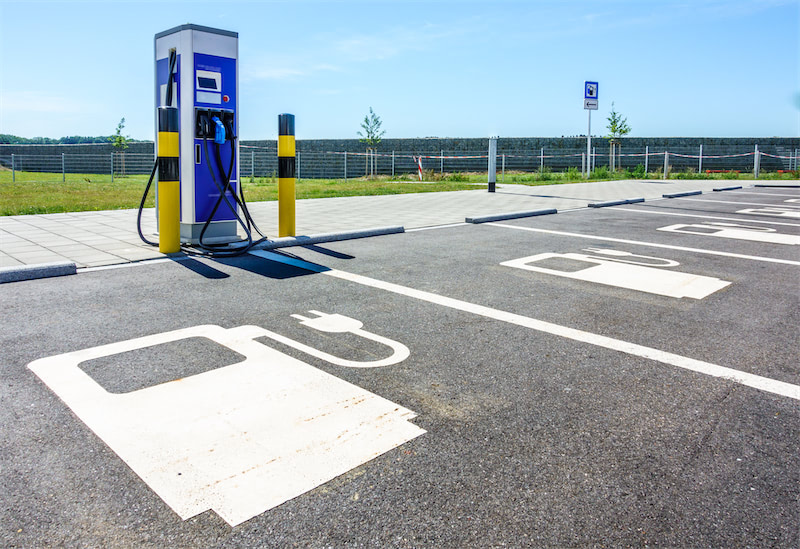
![[SMM Hydrogen Policy Express] Cangzhou Issues Administrative Measures for Hydrogen Refueling Stations (Trial), Clarifying Regulatory Requirements for the Entire Process of Planning, Construction, and Operation](https://imgqn.smm.cn/usercenter/QxQbN20251217171727.jpg)