SMM, September 6:
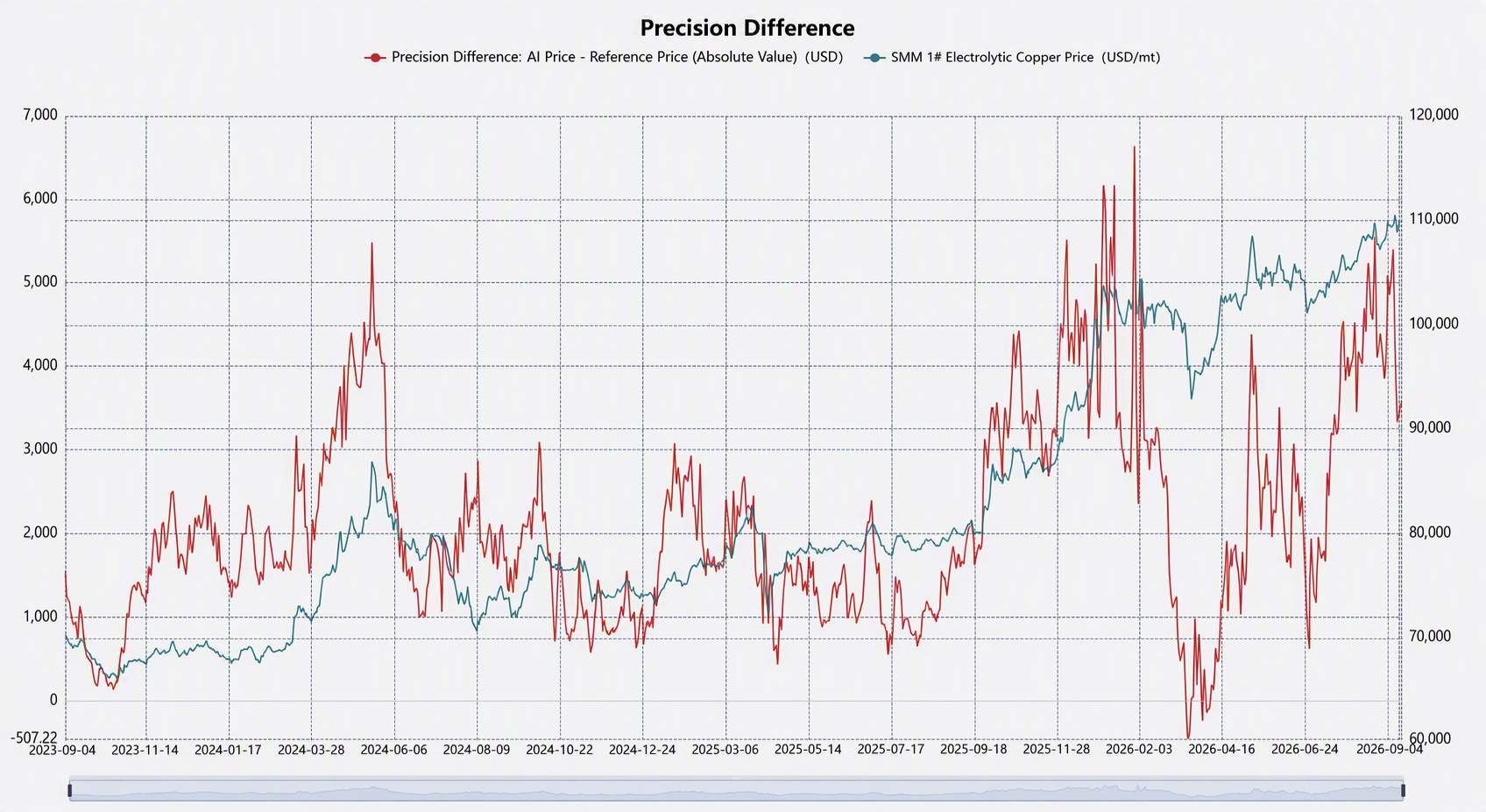
In August 2026, the price difference between copper cathode and copper scrap widened persistently from 3,455 yuan/mt at the start of the month to above 5,000 yuan/mt at month-end, an extreme historical range. On August 17, it shot up to 5,533 yuan/mt. The price difference between copper cathode rod and secondary copper rod also fluctuated at highs in the 1,150-2,260 yuan/mt range. On paper, the substitution advantage of copper scrap over copper cathode reached an unprecedented level. However, in sharp contrast to the "golden price spread," spot copper scrap transactions failed to pick up volume throughout the month. The market exhibited a distorted pattern of "high price spread, low transaction volume, and strong invoice constraints." The core contradiction has shifted completely from the "copper price level" at end-July to the dual pressure of "invoice costs eroding price spread benefits and physical demand suppressed by high copper prices."
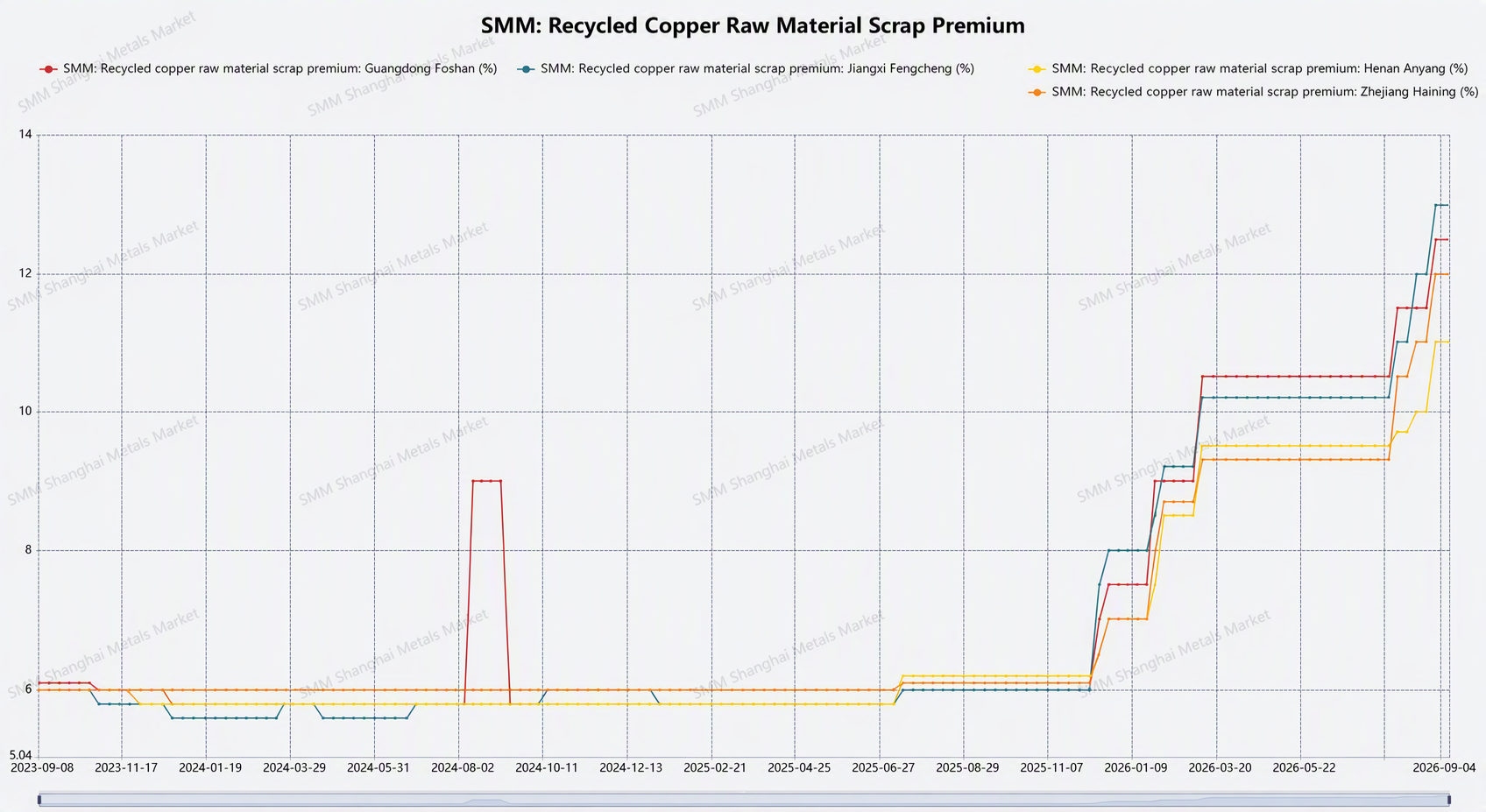
Supply side, the underlying constraint in the copper scrap market remains the combined impact of the reverse invoicing policy and the scarcity of tax-inclusive invoices. SMM data shows that the invoice tax rate for tax-inclusive copper scrap raw materials across regions has climbed from 10.5% all the way to 11.5%-12%, with Guangdong even reaching 12%. Domestic tax-inclusive copper scrap supply is scarce, and enterprises competing for input invoices have kept compliant supply tight. The rapid widening of the price difference between copper cathode and copper scrap this round was not driven by demand, but by tax costs being passed upstream along the industry chain to the copper scrap raw material segment—competition in the secondary copper rod finished product segment is intense and prices cannot be raised, so scrap utilization enterprises can only pass the additional costs from higher invoice tax rates upstream by lowering the tax-exclusive purchase price of copper scrap. As a result, the price increase of tax-exclusive copper scrap raw materials has consistently lagged that of copper cathode. Suppliers' selling pace amid wild swings in copper prices showed the typical pattern of "selling into rallies and holding back from selling on dips."
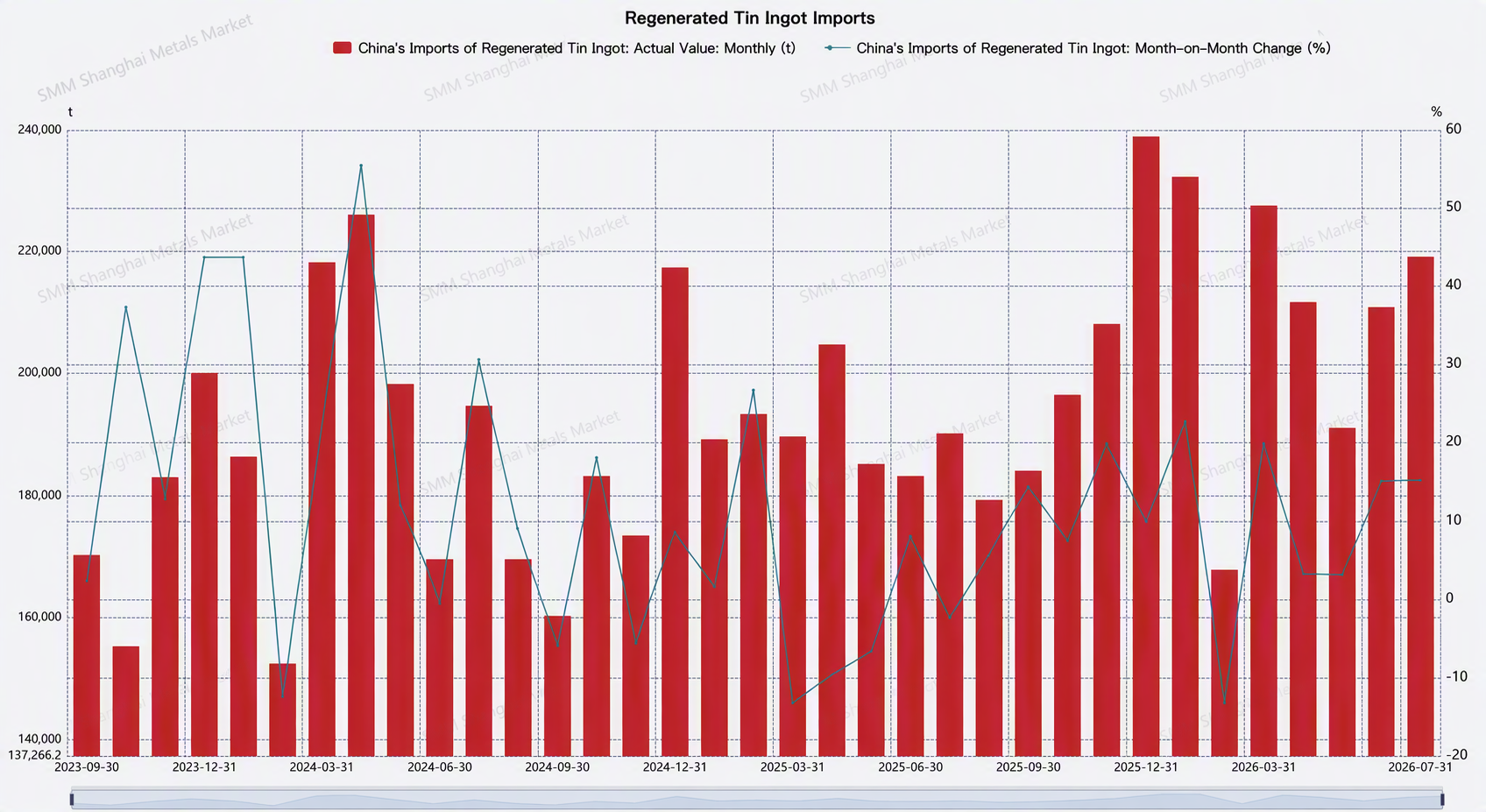
Imports, China's copper scrap imports in July came in at 219,100 mt, up 3.89% MoM. The slight increase in imports was mainly due to tight spot supply of domestic copper cathode, which raised enterprises' reliance on copper scrap. Copper prices continued to shoot up in July, and most downstream enterprises still made just-in-time procurement, with orders performing generally. Entering August, affected by high copper prices and the off-season, copper scrap imports are expected to pull back slightly MoM. Price-wise, with current inventory tight and spot premiums for copper cathode staying high, the payable indicator for ex-China copper scrap remains elevated, and suppliers hold prices firm with strong sentiment. Although end-use demand has yet to show clear improvement, against the backdrop of persistently tight domestic invoice supply and limited tax-inclusive cargoes, tax-inclusive copper scrap prices are expected to stay high.
Demand side, secondary copper rod enterprises at the processing end indicated that with the widening price difference between copper cathode rod and secondary copper rod, end-user wire and cable orders were active and traders accelerated cargo pick-up. With ample orders, secondary copper rod enterprises urgently needed to replenish raw material inventory, and procurement activity picked up noticeably. The market shifted from "suppliers selling, rod enterprises waiting" to "suppliers selling, rod enterprises scrambling to buy" in active trading. On the other hand, at the smelting end, copper anode producers using scrap saw their operating rates remain low due to shortages of tax-inclusive raw materials, with blister copper RCs hovering at the year's low of 600-800 yuan/mt and long-term contract delivery volumes expected to shrink, further confirming that the shortage of tax-inclusive supply is squeezing the entire scrap utilization industry.
Overall, after the invoice tax rate for tax-inclusive copper scrap rose to 12% in August, the actual landed costs for scrap utilization enterprises did not decline correspondingly, and the price spread advantage was eroded by tax costs; meanwhile, under expectations for the traditional September-October peak season, end-user wire and cable enterprises remained reluctant to purchase due to persistently high copper prices, and pre-season stockpiling has not yet actually begun. Looking ahead to September, as the squeeze-driven buying subsides and copper prices retreat from highs, if the invoice tax rate remains elevated at 12% and copper prices continue to hold above 107,000 yuan, the copper scrap market will likely remain in a high-level stalemate characterized by suppliers holding prices firm and buyers staying on the sidelines. A genuine recovery in physical consumption will require copper prices to pull back to downstream psychological price levels or a substantial decline in invoice costs to rebuild reasonable profit margins for rod producers; otherwise, the "inflated" price difference between copper cathode and copper scrap will persist, and the substitution of copper scrap for copper cathode will remain constrained.