Indonesian coal prices have strengthened notably since the start of 2026, even as export tonnage has declined. According to data from Statistics Indonesia (BPS), export value rose 4.75% YoY in January-July, while export volume fell 6.17% YoY. This divergence is telling: what is supporting export revenue is higher prices, not increased shipment volumes. Entering September, the market has remained firm overall, with the global coal benchmark price rising for a sixth consecutive trading day on September 1 to its highest level since mid-June.
The recent price strength is being further reinforced by supply-side constraints within Indonesia. BMKG had previously warned that El Niño would intensify during the year, and it has now brought persistently dry weather to the main coal-producing areas of Kalimantan. The impact is particularly evident along the Barito River in Central Kalimantan, where water levels have fallen to a small fraction of the normal range. As a significant portion of coal from this region relies on river barges to reach transshipment points, the shallower water is forcing operators to reduce barge loadings, causing delivery delays and constraining the amount of coal that can reach the market.
This logistical disruption is now compounding with a separate regulatory constraint: the progressive issuance of 2026 RKAB production quotas and the tightening of DMO (Domestic Market Obligation) requirements. While newly approved RKAB volumes ostensibly imply greater supply, approved production does not automatically translate into coal immediately available for export. When mining quotas, domestic supply commitments, and constrained barge transport are considered together, Indonesia's actual exportable supply may be far tighter than headline production figures suggest. This mismatch and its impact on coal prices are the focus of this analysis.
I. Current Conditions on the Barito River
According to a forecast issued by Indonesia's Meteorology, Climatology, and Geophysics Agency (BMKG) on August 21, water levels at the Muara Teweh observation point in North Barito Regency, upstream on the Barito River, have fallen to approximately 0.6 meters, against a normal range of 5 to 11.5 meters. Large vessels, including coal barges, are currently unable to navigate this section, with only small boats able to pass on a limited basis. Further downstream, near the Kalahien Bridge in South Barito Regency, sandbars have emerged in areas that were riverbed just months ago, though BWS Kalimantan III, the river basin authority responsible for the watershed, stated that the main channel there remains open with a width of about 100 meters and is still navigable.
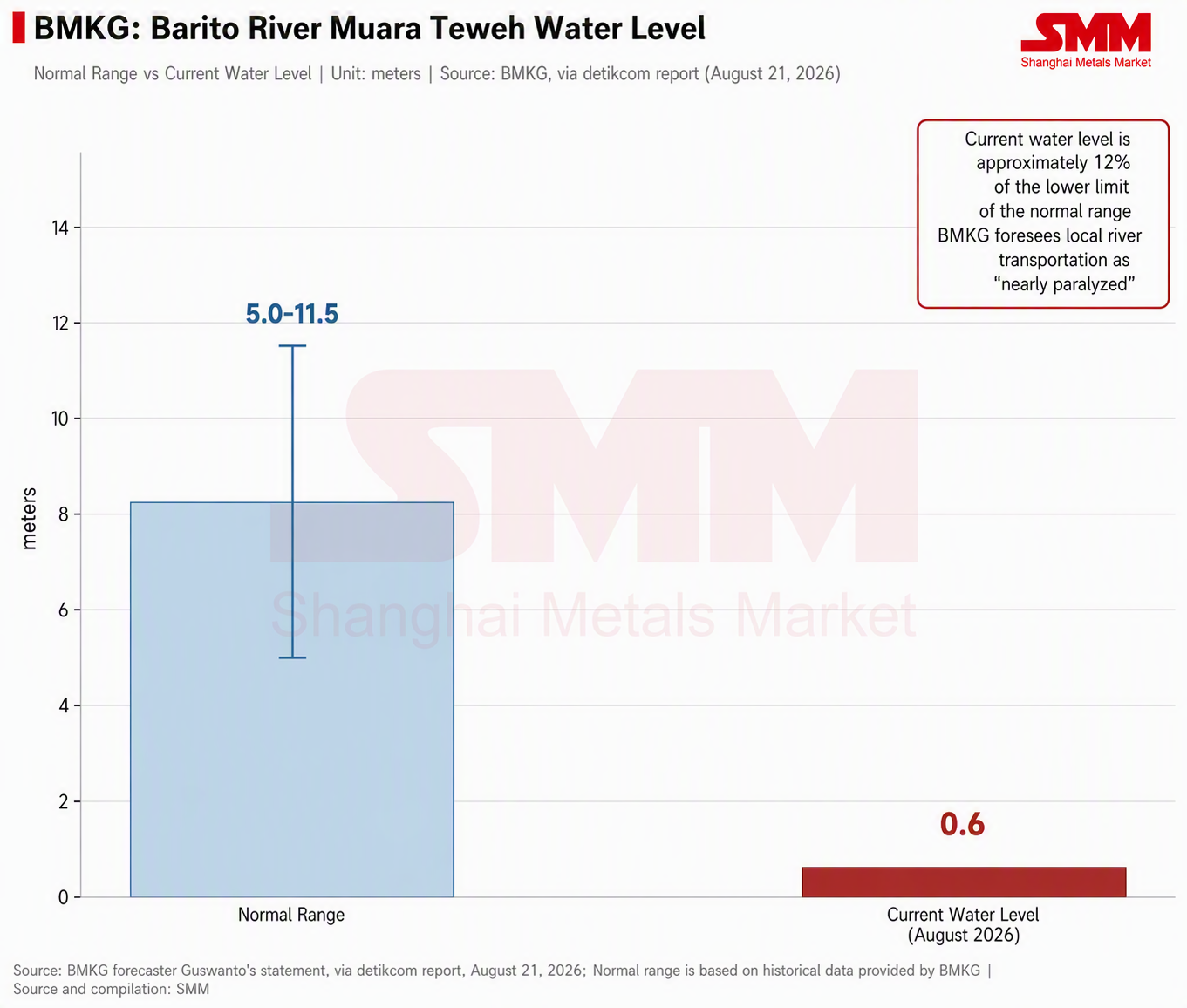
All of this is occurring against the backdrop of an El Niño event rated "strong" by BMKG, with the potential to become "very strong"; the agency expects the event to persist until around May 2027. Indonesia's rainy season, which typically alleviates seasonal pressure on river water levels, is expected to begin around mid-October. Until then, the physical constraints on the Barito River form the backdrop for all of the analysis that follows.
II. Distribution of Impacts: Barito River, Mahakam River, and Provincial Conditions
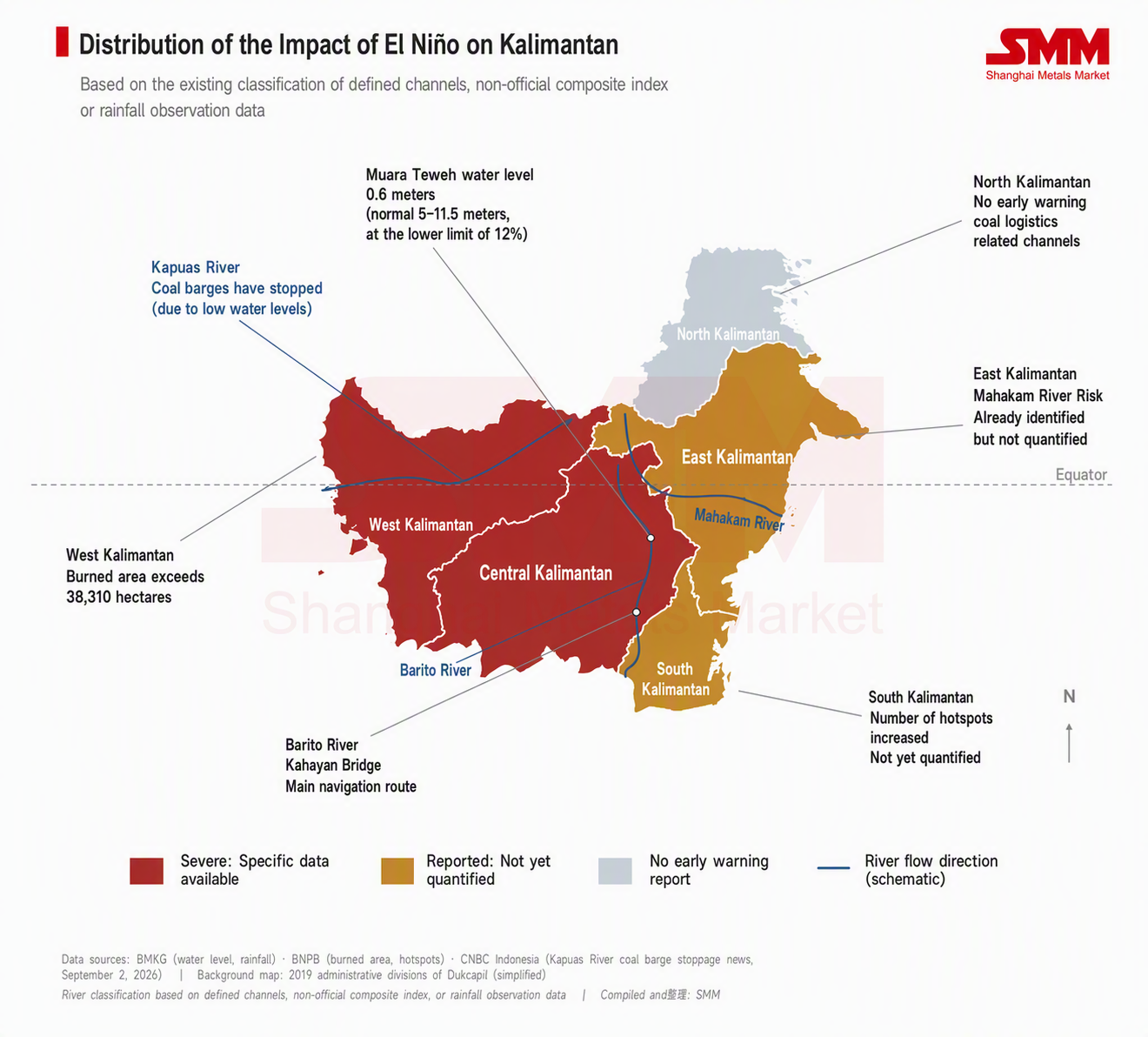
The drought signals are most severe and best documented in Central Kalimantan and West Kalimantan. At the Muara Teweh observation point in Central Kalimantan, water levels are only about 12% of the lower bound of the normal range, while in West Kalimantan, the burned area as of August 19 was approximately 38,310 hectares, the largest reported among all Kalimantan provinces. Conditions along the Barito River are not uniform: the Kalahien area in the lower reaches is relatively less affected, with the main channel still holding water and remaining navigable.
The Mahakam River in East Kalimantan, another major coal barge river in the province, has documented El Niño-related vulnerability even without 2026 water level data comparable to the Barito. It is understood that Mahakam water levels fell sharply during the 2015 El Niño, forcing barge loadings to be cut by up to 50%; in August 2019, 14 sandbars emerged, severe enough to halt large barge traffic for three days. Neither BMKG nor BWS Kalimantan III has released 2026 water level figures for the Mahakam comparable to those for the Barito. South Kalimantan presents a similar picture: hotspot counts are rising, but no specific water level or capacity figures are available. North Kalimantan has the lowest inflation rate nationally, and no province-specific disruptions have been reported.
The Kapuas River in West Kalimantan, Indonesia's longest river and the province's main waterway, has seen confirmed impacts on coal logistics. Coal barges on the Kapuas are understood to have halted operations entirely due to low water levels, with one barge reportedly stranded near Sekadau Regency for nearly three months. When asked whether the halt was related to RKAB production quota restrictions, Yuliot Tanjung, Deputy Minister of Energy and Mineral Resources, stated that the cause was purely water shortage and unrelated to quota measures. Tirto.id, citing BMKG data, also reported rain-free periods of 21 to 60 days in surrounding areas.
III. Barge Loadings Have Fallen to About Half of Rated Capacity
According to SMM, on the affected Barito River sections, barges with a rated capacity of approximately 7,500 mt are currently loading only about half that amount, or roughly 3,500 mt per barge.
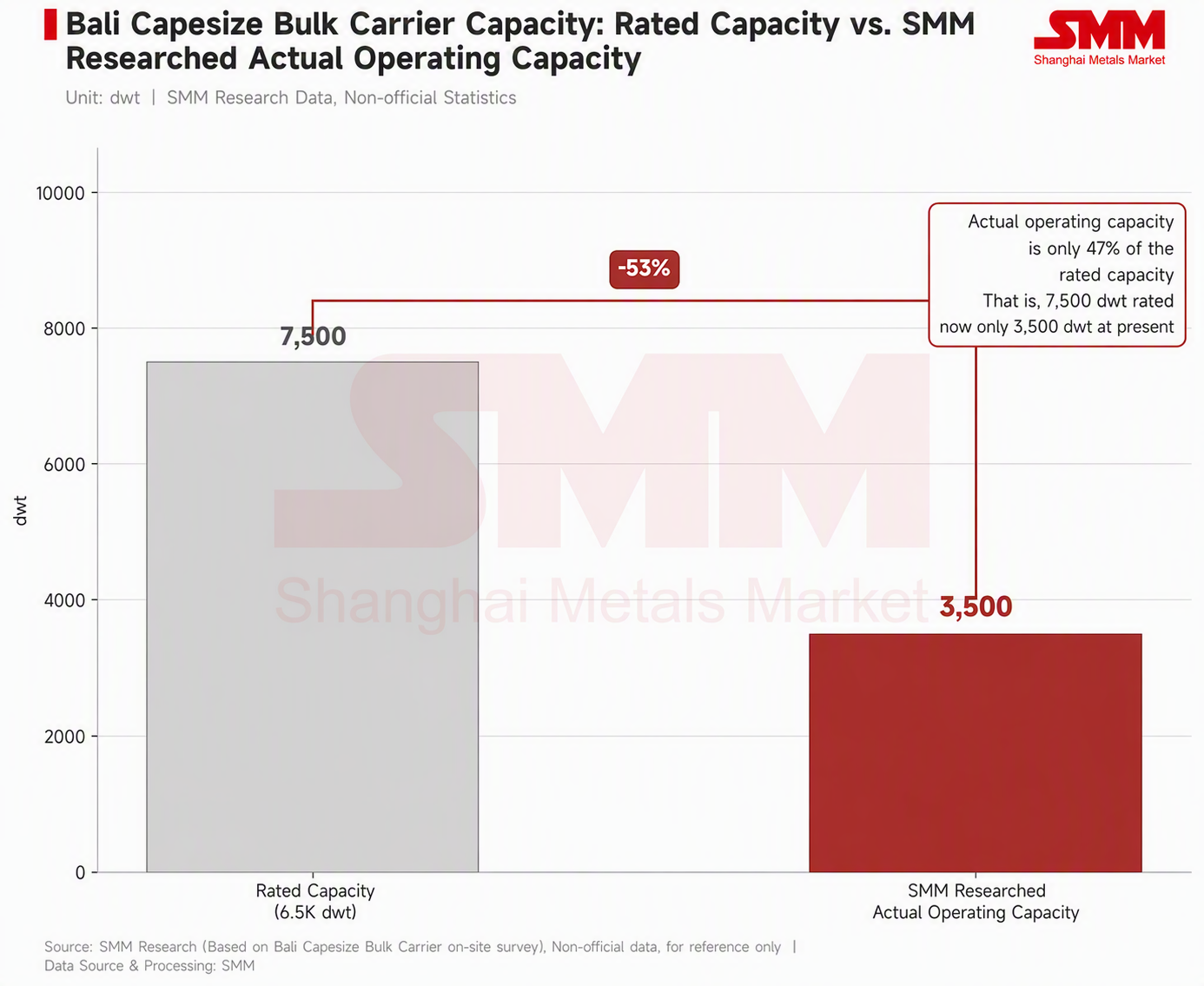
The practical impact is direct: even if coal has been fully cleared for export and delivered to the riverbank, the number of barge trips or the time required to move it to export terminals under current water conditions is roughly double that under normal draft conditions.
IV. RKAB Status: Quotas Being Issued Progressively, but Partially "Offset" by DMO
Indonesian coal enterprises are progressively receiving approvals for revised 2026 RKAB production quotas. In isolation, higher approved production is theoretically favorable for coal supply, as it means miners are permitted to produce at a larger scale. However, increases in approved RKAB volumes do not translate one-for-one into additional exportable supply.
Under Indonesia's Domestic Market Obligation (DMO) policy, coal producers must prioritize at least 25% of actual production for the domestic market; at the same time, to safeguard coal demand from PLN and other domestic users, the government may allocate additional domestic supply assignments to relevant miners. As a result, in practice, the share of coal production absorbed by the domestic market may exceed the statutory 25% minimum.
According to SMM market intelligence, as some newly approved RKAB production quotas have been issued recently, a considerable portion of the incremental production released is still expected to be directed toward fulfilling existing DMO and PLN coal supply commitments, meaning that the incremental supply ultimately reaching the export market and spot market will be relatively limited.
V. ICI Price Trends: Performance Over the Past Two Months and a Mismatch Worth Highlighting
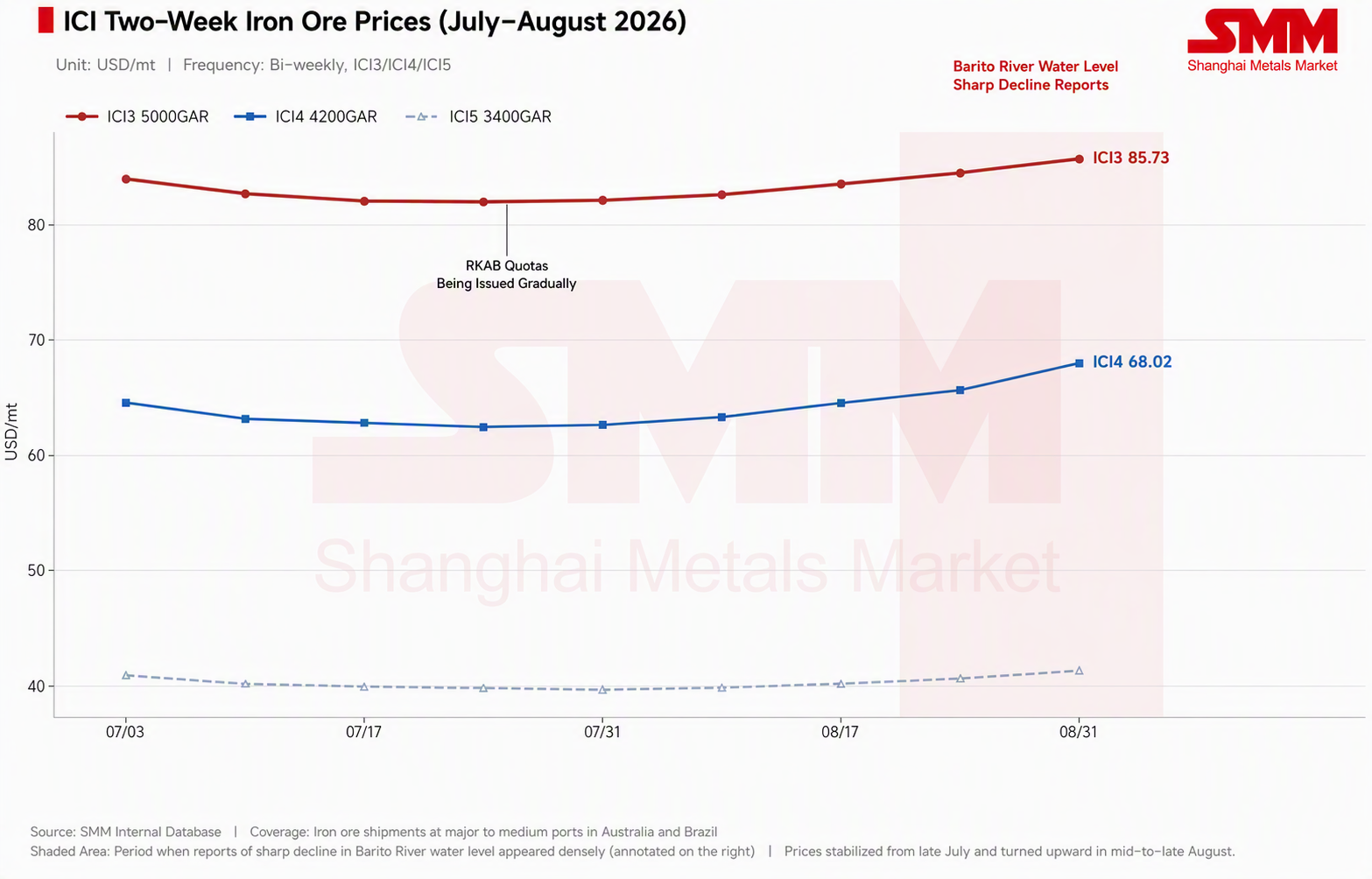
[Chart-4: Weekly assessments of ICI3/ICI4/ICI5, July-August 2026. Chart file attached separately.]
Both ICI3 and ICI4 declined steadily from mid-July to early August (ICI3 fell from around $84/mt to a low of about $82/mt, and ICI4 from around $65/mt to a low of about $62.5/mt), before both rebounded. As of August 31, ICI3 had recovered to $85.73/mt and ICI4 to $68.02/mt, up approximately 4.5% and 8.9% respectively from their early-August lows, with the steepest gains occurring in the second half of August, coinciding precisely with the period when reports of Barito River water levels became frequent.
This temporal overlap is the mismatch worth highlighting directly. By conventional logic, the broad rollout of RKAB quota approvals across the industry should point to looser supply, and prices, all else equal, should have softened or at least held steady, not the opposite. Yet ICI prices rose precisely during the same window when quotas were being issued in large numbers. According to SMM analysis, a significant portion of newly approved RKAB tonnage is being directed toward DMO commitments rather than the export pool, while the actual barge capacity on the Barito River has fallen to roughly half of rated capacity. These two factors do not offset each other; they compound: on one hand, the approved tonnage available for export is already reduced, and on the other, the portion that can be exported is reaching terminals more slowly and at higher logistics cost.
VI. Broader Context
 (图片翻译失败,请手动修改后再发布!)
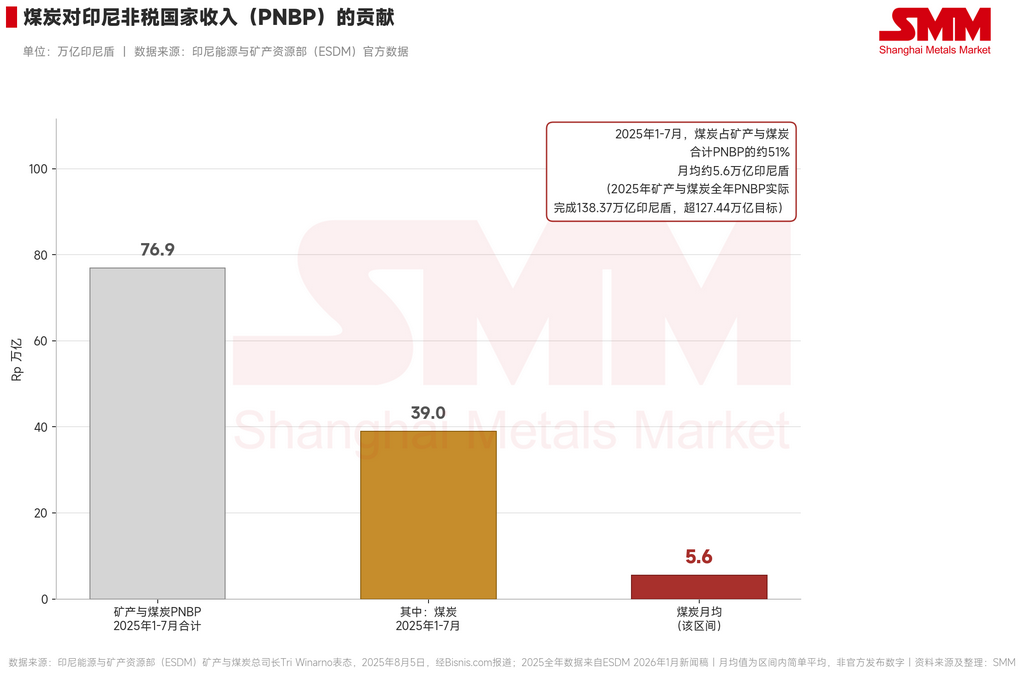
Forest and land fires (karhutla) are spreading in tandem with drought conditions. According to BNPB, as of late August, hotspot counts and burned areas in West Kalimantan, Central Kalimantan, and South Kalimantan have all risen. Central Kalimantan's August YoY inflation rate also reached the second-highest among all Indonesian provinces at 4.96% (per BPS data). Indonesia's coal sector is a key source of non-tax state revenue. According to official data from the Ministry of Energy and Mineral Resources (ESDM), in January-July 2025, total non-tax state revenue (PNBP) from minerals and coal amounted to approximately IDR 76.9 trillion, of which coal alone contributed about IDR 39 trillion, averaging about IDR 5.6 trillion per month over the period. For minerals and coal as a whole, ESDM reported full-year 2025 actual receipts of IDR 138.37 trillion, exceeding the government's target of IDR 127.44 trillion. On this basis, if the logistical disruptions described above persist for a month, they would pressure a substantial portion of monthly state revenue, though ESDM has not issued an official estimate of the specific shortfall that Barito River disruptions may cause.
VII. Outlook
SMM expects ICI prices to stay high and holds a relatively high degree of confidence that prices will move further upward from current levels. The two supply-side constraints are structural rather than temporary: actual throughput on Barito River barge transport is significantly below rated capacity, and most of the RKAB tonnage issued so far carries DMO offsets, meaning only part of headline approved production truly enters the export pool. Neither constraint will ease on its own in the near term.
Demand-side timing signals are more complex than those on the supply side, and SMM treats them as a secondary consideration rather than the primary basis for this assessment. China is the largest buyer of Indonesian seaborne thermal coal, and the Northern Hemisphere winter heating season typically boosts demand in Q4. In contrast, a separate industry analysis of H1 2026 trade data found that China's seaborne thermal coal imports were actually lower YoY, with ample domestic supply offsetting part of import demand, and that large Indonesian producers maintained production even as apparent RKAB quotas were reduced, with the burden of production cuts falling mostly on small and mid-sized miners. That analysis concluded that the likelihood of a severe supply deficit in China is low. SMM's own assessment is that this does not alter the more direct mechanism driving the current price view: regardless of China's specific import demand level, Indonesia's own effective export supply has already tightened due to Barito River disruptions and DMO quota arrangements. Taken together, SMM believes the likelihood of further upside in ICI prices from current levels is relatively high.