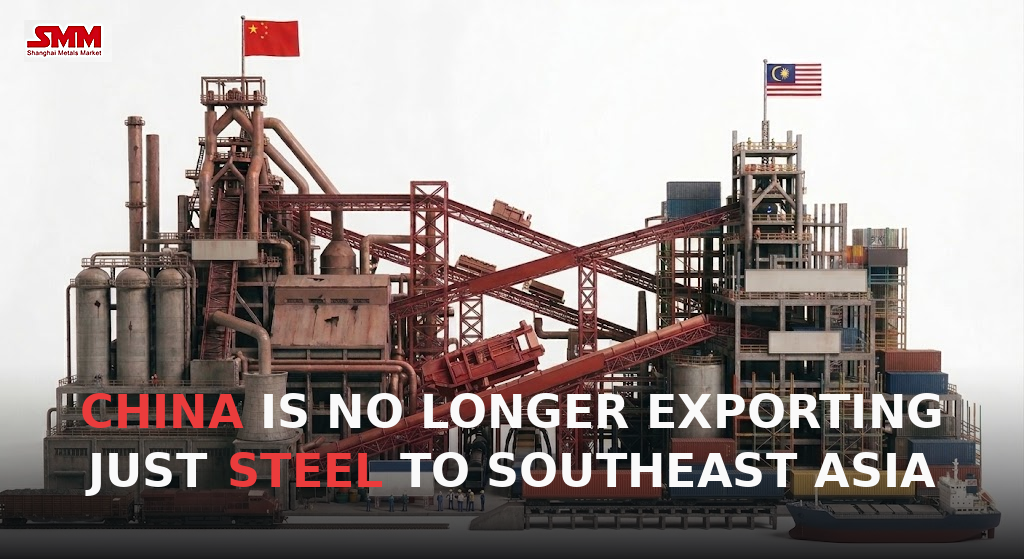
For decades, the image of Chinese steel “going global” was straightforward: coils, billets, rebar and wire rod were loaded at Chinese ports, shipped across the sea and delivered to traders, processors and end users in Southeast Asia.
Today, the steel is no longer travelling alone. Chinese investment capital, production equipment, technical expertise and management systems have followed it overseas. In Malaysia, this transition can be seen in integrated steelmaking projects such as Alliance Steel and Eastern Steel.
The destination of an exported steel cargo is an overseas customer. The destination of exported production capacity is a local mill capable of supplying that customer repeatedly. China’s steel relationship with Southeast Asia is consequently moving from “selling steel there” towards “making steel there.”
That shift raises a harder quantitative question: is Chinese-backed capacity moving closer to Southeast Asian demand, or is it creating another market in which capacity may grow faster than consumption?
The numbers behind the story
131 million tonnes: China’s steel exports reached a record in 2025 under the OECD’s reporting scope, more than two and a half times the 2020 level.
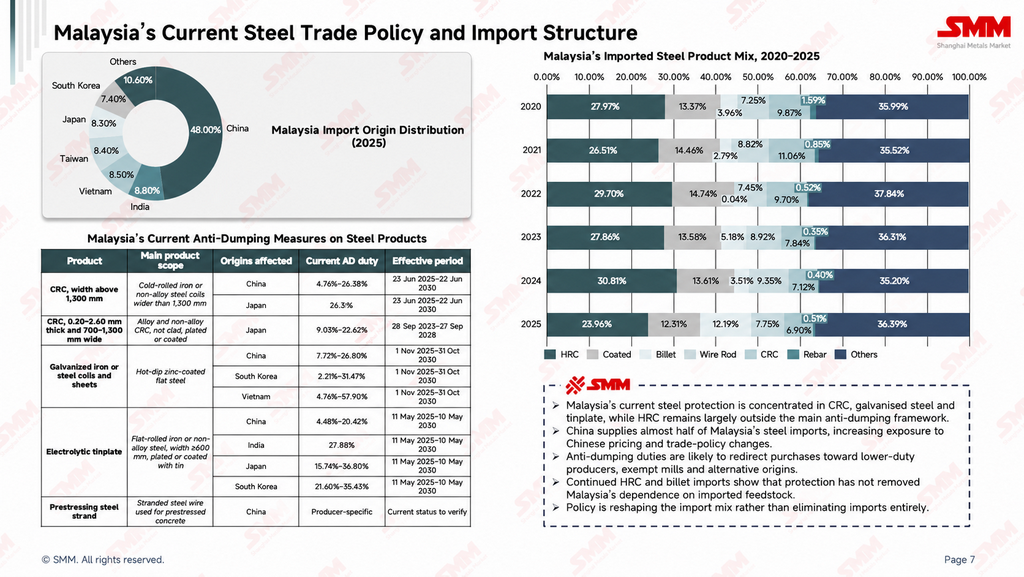
48.0%: China supplied almost half of Malaysia’s steel imports by volume in 2025, far exceeding every other individual origin.
8.2 million tonnes: Malaysia’s apparent steel consumption in 2025, alongside real consumption of 8.3 million tonnes. Both increased only moderately despite the country’s expanding production base.
Together, these figures reveal an increasingly asymmetrical relationship. Malaysia remains heavily dependent on Chinese steel, but its domestic market absorbs only around 8 million tonnes annually and utilisation remains uneven across the production chain. As Chinese-backed capacity expands inside Malaysia, the challenge is shifting from accessing the market to finding enough demand for both imported and locally produced steel.
China’s export boom explains why steelmakers are looking overseas
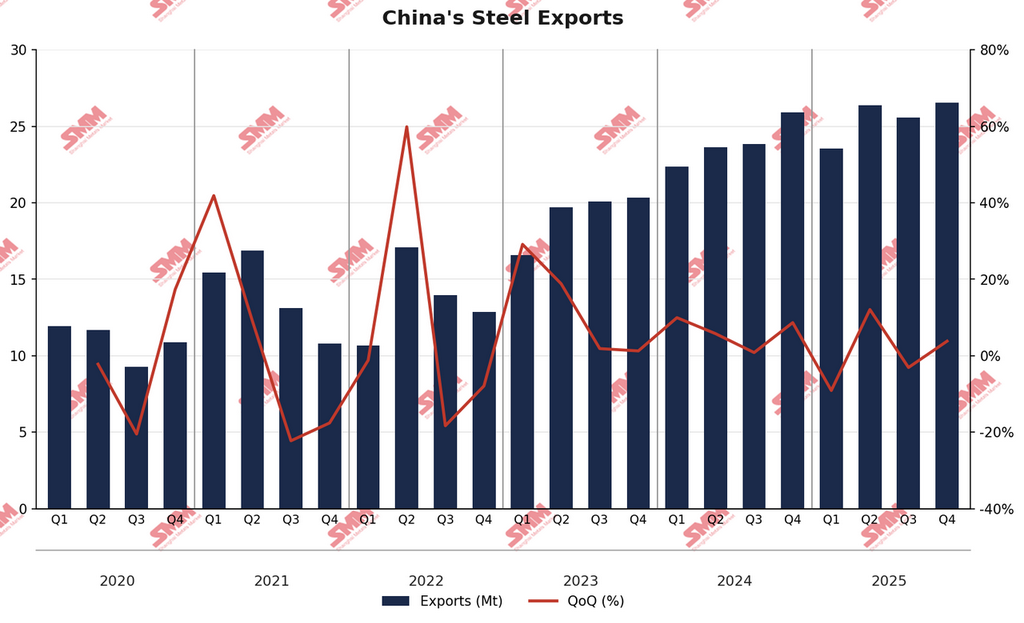
China remains the world’s largest steel producer and exporter. According to the OECD’s Steel Outlook 2026, Chinese steel exports reached a record 131 million tonnes in 2025, representing an increase of 153% from 2020.
That rise provided an outlet for Chinese production as domestic steel demand weakened, but it also accelerated the use of anti-dumping measures, safeguards and other trade restrictions across global markets. The larger China’s export presence became, the more politically and commercially difficult it became to depend on exports alone.
Overseas investment offers a different route into the same end markets. Instead of producing every tonne in China and carrying the full cost and risk of cross-border finished-steel trade, a steelmaker can participate in local production, move closer to customers and become part of the destination country’s industrial supply chain.
This does not mean direct exports will disappear. It means exports and overseas production are increasingly operating side by side.
Southeast Asia is becoming a production base, not only an import market
Southeast Asia has traditionally been viewed as a growth market for exporters. Infrastructure development, urbanisation and manufacturing investment supported steel demand, while gaps in domestic product availability were filled by imports.
The region is now changing from an import destination into a major location for new steelmaking capacity. This changes the commercial question. Chinese exporters are no longer competing only against Japanese, South Korean, Vietnamese or other Chinese cargoes. They increasingly face steel produced inside Southeast Asia, including output from mills backed by Chinese capital.
The shift is particularly important because new steel plants have long operating lives. A shipment affects the market when it arrives. A new integrated mill can influence raw-material demand, domestic pricing, import requirements and export flows for decades.
Malaysia is reshaping its imports, not eliminating them
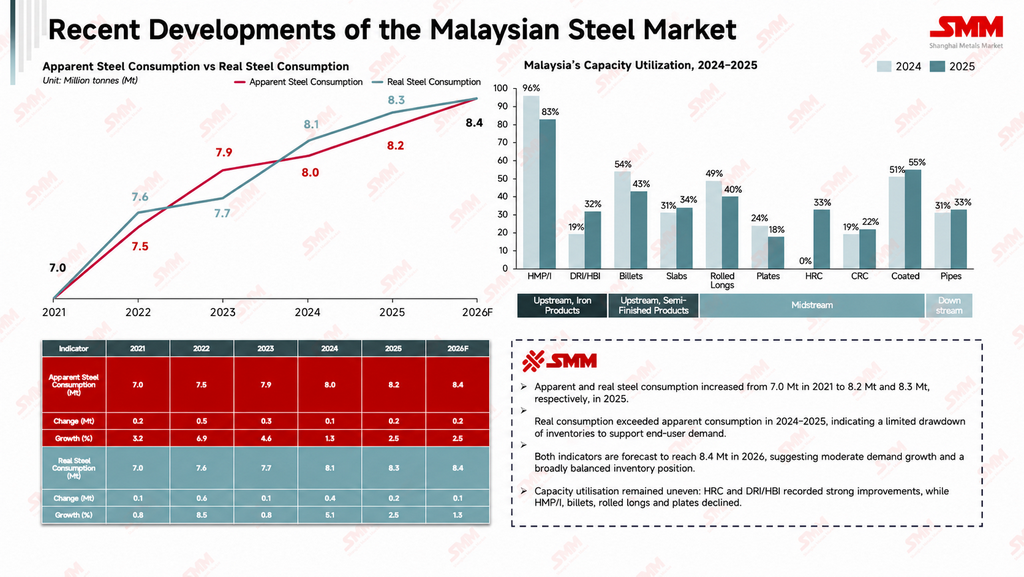
Malaysia’s steel market is expanding, but demand is growing only moderately. Apparent steel consumption rose from 7.0 million tonnes in 2021 to 8.2 million tonnes in 2025—an increase of around 17% over four years—and is forecast to reach 8.4 million tonnes in 2026. Real consumption reached 8.3 million tonnes in 2025, slightly above apparent consumption, indicating that a limited drawdown in inventories helped meet end-user demand.
The capacity data show why rising consumption has not translated into broad-based strength across Malaysian mills. Utilisation remained highly uneven in 2025. HRC utilisation rose from zero to 33%, coinciding with the commissioning of new domestic capacity, while DRI/HBI increased from 19% to 32%. In contrast, utilisation declined from 96% to 83% for hot metal and pig iron, from 54% to 43% for billets, and from 49% to 40% for rolled long products. Plates operated at only 18%, while CRC, coated products and pipes recorded utilisation rates of 22%, 55% and 33%, respectively.
This unevenness helps explain why Malaysia continues to import substantial volumes even as domestic capacity expands. China supplied 48% of Malaysia’s steel imports in 2025, far ahead of any other individual origin. Yet the composition of those imports changed materially. HRC’s share fell from 30.81% in 2024 to 23.96% in 2025, a decline of 6.85 percentage points, as new domestic HRC production entered the market. Over the same period, billet’s share jumped from 3.51% to 12.19%, an increase of 8.68 percentage points.
The shift suggests that localisation is changing what Malaysia imports rather than eliminating its import requirements. Greater domestic HRC availability can reduce reliance on imported coils, while mills and rerollers may still require imported billets, specialised flat products and grades not produced locally in sufficient quantities. Malaysia is therefore becoming a larger producer while remaining a major importer.
Trade measures reinforce this restructuring. Malaysia’s anti-dumping protection is concentrated in CRC, galvanised steel, tinplate and selected wire products, while HRC remains largely outside the main anti-dumping framework. These measures can redirect purchases towards alternative suppliers, exempt producers or different products, but they do not remove the market’s underlying need for imported feedstock and specialised material.
The Chinese-backed mills changing Malaysia’s supply structure
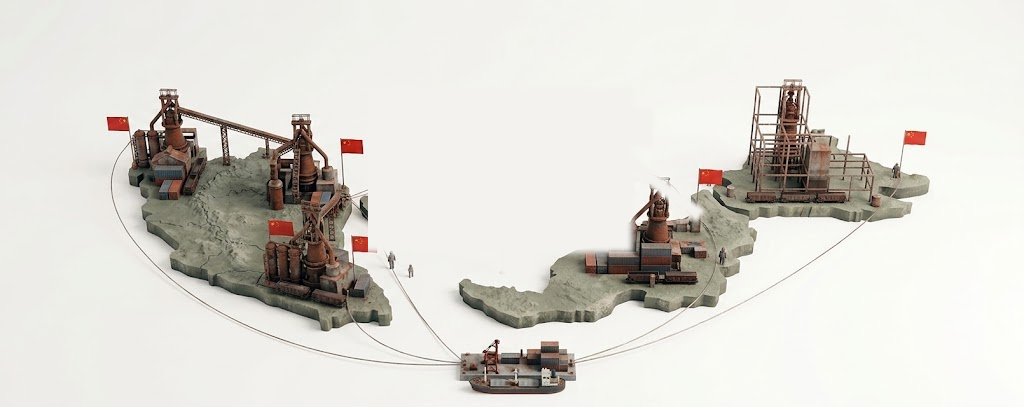
Two projects illustrate the transition from steel exports to steelmaking investment.
Alliance Steel, located in the Malaysia–China Kuantan Industrial Park, is a China-invested integrated steel producer and one of Malaysia’s largest steel facilities. Its existing annual capacity is reported at approximately 3.5 million tonnes, covering products including bars, wire rod and sections.
The company previously announced a second-phase expansion intended to raise capacity to 10 million tonnes per year and widen its product range. If completed in full, that would add 6.5 million tonnes of capacity—an increase of approximately 186% from the existing level. Because the project is an expansion plan, however, the 10-million-tonne figure must not be presented as fully operational without updated confirmation from the company.
Eastern Steel, located in Kemaman on the east coast of Peninsular Malaysia, is jointly invested by Beijing Jianlong Heavy Industry Group and Malaysia’s Hiap Teck Venture. It commissioned its hot-rolling line at the end of 2024. Eastern Steel currently discloses annual capacity of 2.58 million tonnes of HRC and 2.7 million tonnes of billet and slab, while the hot-strip mill itself has a stated design capacity of 3.5 million tonnes per year.
The steel produced by these mills is melted and rolled in Malaysia. Their capital links may be Chinese, but their output enters the market as locally produced Malaysian steel under the applicable origin rules.
Malaysia is trying to control the capacity it attracts
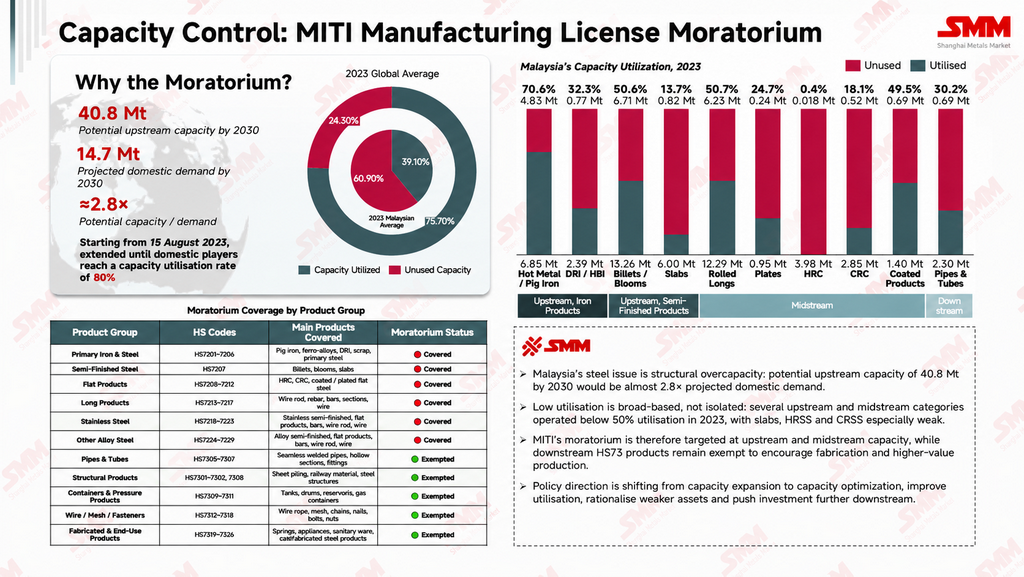
Malaysia’s capacity challenge has become large enough to shape industrial policy. The biggest question is no longer simply whether the country can attract new steel investment, but whether domestic and regional demand can absorb the capacity already operating or under development.
Figures presented with Malaysia’s steel-industry roadmap indicate that potential upstream capacity could reach 40.8 million tonnes by 2030, compared with projected domestic demand of 14.7 million tonnes. The difference is 26.1 million tonnes. Put another way, domestic demand would be equivalent to only around 36% of potential capacity, while capacity would be almost 2.8 times demand.
The pressure was visible even before the full investment pipeline materialised. In 2023, Malaysia’s average steel capacity utilisation was estimated at 39.1%, compared with a global average of 75.7%. Utilisation varied considerably by product: hot metal and pig iron reached 70.6%, while DRI/HBI operated at 32.3%, slabs at 13.7%, plates at 24.7% and CRC at 18.1%. HRC utilisation was only 0.4%, reflecting Malaysia’s minimal domestic HRC production before Eastern Steel’s new rolling capacity entered the market.
This imbalance helps explain MITI’s intervention. From 15 August 2023, the ministry imposed a two-year moratorium covering new manufacturing-licence applications, licence transfers, regularisation, expansion and diversification across much of the iron and steel industry. The policy was intended to pause indiscriminate capacity growth while the government reviewed the industry’s structure and aligned future investment with the New Industrial Master Plan 2030.
The original moratorium was subsequently extended beyond August 2025. For upstream and midstream long steel, the restrictions are to remain until existing domestic producers approach an 80% utilisation rate. Restrictions on major flat-steel capacity expansion also continue, although the policy allows greater flexibility to address product shortages and rebalance unused long-steel licences towards flat products.
The moratorium is therefore not a blanket prohibition on all steel investment. Since November 2024, 26 downstream product categories under HS73—including pipes, tubes, structures, containers, wire products and other fabricated goods—have been exempt. The distinction reveals the government’s intended direction: constrain further upstream and midstream duplication while encouraging downstream processing, higher-value products and investment that improves the industry’s product mix.
For Chinese-backed steelmakers, this changes the logic of entering Malaysia. Future projects will be judged not only by their scale, but by whether they fill a domestic supply gap, improve utilisation, add downstream value or support lower-emission production. Malaysia still wants steel investment, but it is becoming more selective about which capacity it allows.
This does not mean Malaysia will necessarily produce 40.8 million tonnes of steel. Capacity is not output, and announced projects can be postponed, downsized or cancelled. But if most of the proposed capacity is built, producers will still need to displace imports, accept low utilisation or export a larger share of their output.
Quantitative takeaway: Malaysia’s 2023 utilisation rate of 39.1% was 36.6 percentage points below the global average. The moratorium turns the projected 2030 capacity gap from a theoretical market risk into an active licensing constraint, favouring product upgrading and downstream investment over further undifferentiated capacity expansion.
HRC provides the first test of whether localisation can replace imports
Hot-rolled coil offers a product-level example of how this transition works.
Malaysia’s HRC demand was estimated at around 2 million tonnes in 2022 and was largely met by imports. Eastern Steel subsequently commissioned the country’s first major domestic HRC line. Its disclosed annual HRC capacity of 2.58 million tonnes is equivalent to approximately 129% of that historical demand estimate, while the hot-strip mill’s 3.5-million-tonne design capacity is equivalent to 175%.
Those ratios are theoretical, not production forecasts. Actual HRC output depends on upstream slab availability, utilisation, product mix, qualification by downstream customers and the mill’s decision to sell slabs, billets or coils. Malaysia’s HRC demand has also changed since 2022.
Even with those limitations, the comparison shows why Eastern Steel matters. Malaysia has moved from having almost no domestic HRC production to possessing enough nameplate rolling capacity to cover a substantial share and potentially all of its domestic requirements.
The next question is whether local HRC can compete commercially with imports.
Import replacement could eventually become export competition
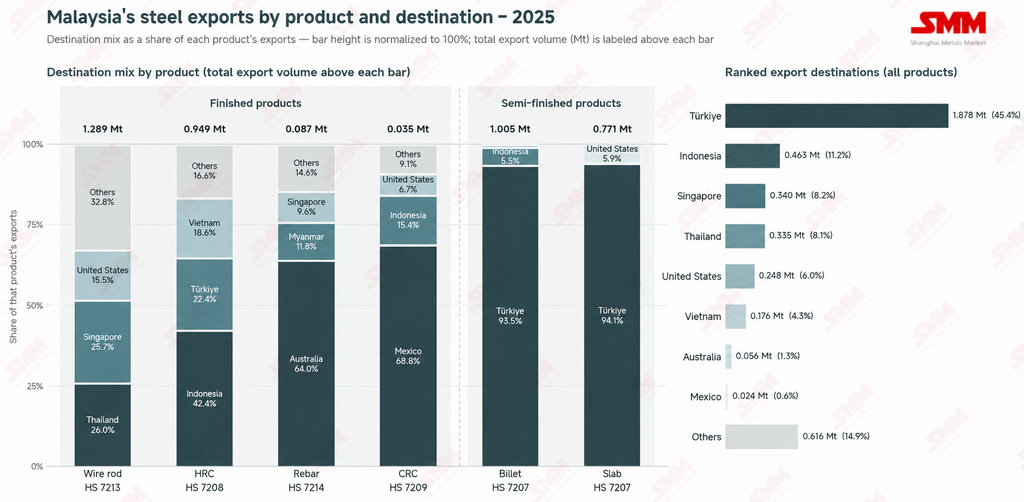
Localisation initially appears to be an import-substitution story. A Malaysian buyer who previously depended on imported HRC can now approach a domestic mill. A regional customer seeking wire rod or sections can consider Malaysian output alongside China-origin cargoes.
But the 2030 capacity-demand gap suggests that import replacement cannot be the entire strategy. If domestic capacity expands faster than Malaysian demand, producers will need to sell more steel into Singapore, Thailand, Indonesia, the Philippines and other regional or international markets.
At that point, Chinese investment in Malaysia may compete directly with exports from China—not because the companies have abandoned China, but because two production bases are pursuing the same regional order.
A Thai wire rod buyer, for example, may receive one offer from a mill in China and another from a Malaysia-based producer backed by Chinese capital. The buyer will compare delivered cost, lead time, certification, payment terms and security of supply. Shareholder nationality will not automatically determine which supplier wins.
What makes steel “Chinese”?
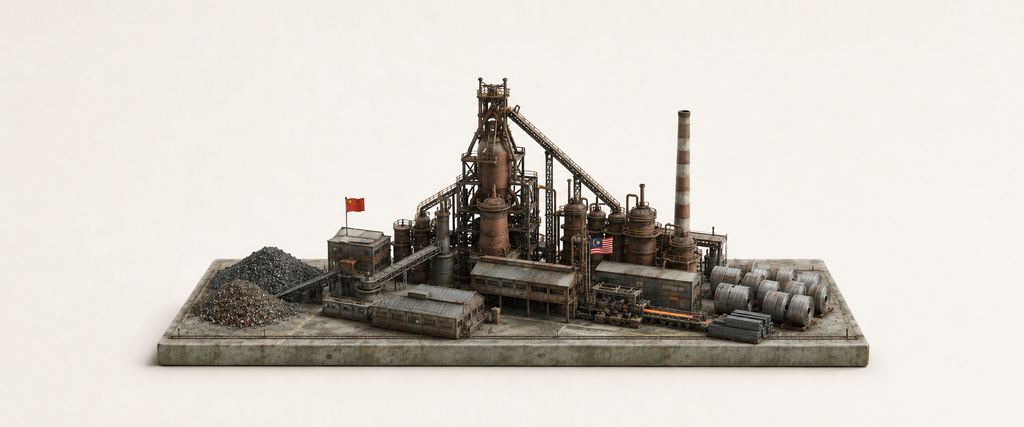
When capital comes from China, raw materials are sourced globally, production takes place in Malaysia and the finished product is sold to Thailand or Singapore, labels such as “Chinese steel” and “Malaysian steel” no longer describe the entire supply chain.
For customs purposes, origin is established under the applicable rules governing where and how a product was manufactured or processed. For corporate strategy, ownership, technology and management remain important. For the buyer, the decisive variables are usually more practical: price, quality, delivery, certification and reliability.
The central issue is therefore not whether the output should still be called “Chinese steel.” It is that Chinese steelmakers are no longer influencing Southeast Asia solely through exports. They are becoming part of Southeast Asia’s domestic supply system.
From selling steel overseas to making it overseas
Chinese steelmakers exported a record volume in 2025 while trade barriers continued to multiply. Overseas production provides another way to participate in the markets that Chinese mills have historically served through exports.
Malaysia shows both the opportunity and the contradiction in that strategy. Chinese-backed mills can move closer to customers, reduce parts of the delivery chain and supply products that Malaysia previously imported. At the same time, projected upstream capacity of 40.8 million tonnes would be almost 2.8 times the country’s expected demand in 2030.
China’s overseas mills may therefore solve one market-access problem while creating another capacity problem. Their success will depend not simply on building furnaces and rolling lines, but on finding enough competitively priced orders to keep them operating.
In the past, China sent ship after ship of steel to Southeast Asia.
Today, what remains at the destination is a mill capable of producing the next shipload.
![[Brief Comment on Domestic Iron Ore] Iron ore concentrate prices in west Liaoning may edge up slightly](https://imgqn.smm.cn/usercenter/JAnHq20251217171716.jpg)
![[Pangang Achieves New Breakthrough in Automotive Sheet Yield]](https://imgqn.smm.cn/usercenter/FFFrV20251217171719.jpg)