

China to Resume Consumption Tax on Vanadium Flow Batteries, Exempting Sodium and Solid-State Batteries
Data Source Statement: Except for publicly available information, all other data are processed by SMM based on publicly available information, market communication, and relying on SMM's internal database model. They are for reference only and do not constitute decision-making recommendations.
For any inquiries or for more information, please contact: lemonzhao@smm.cn
For more information on how to access our research reports, please contact:service.en@smm.cn
Related News
26 mins ago
Zichang Guoyuan Achieves 6N+ Ultra-High-Purity Rubidium and Cesium Breakthrough, Leading Industry Advancements
Read More
Zichang Guoyuan Achieves 6N+ Ultra-High-Purity Rubidium and Cesium Breakthrough, Leading Industry Advancements
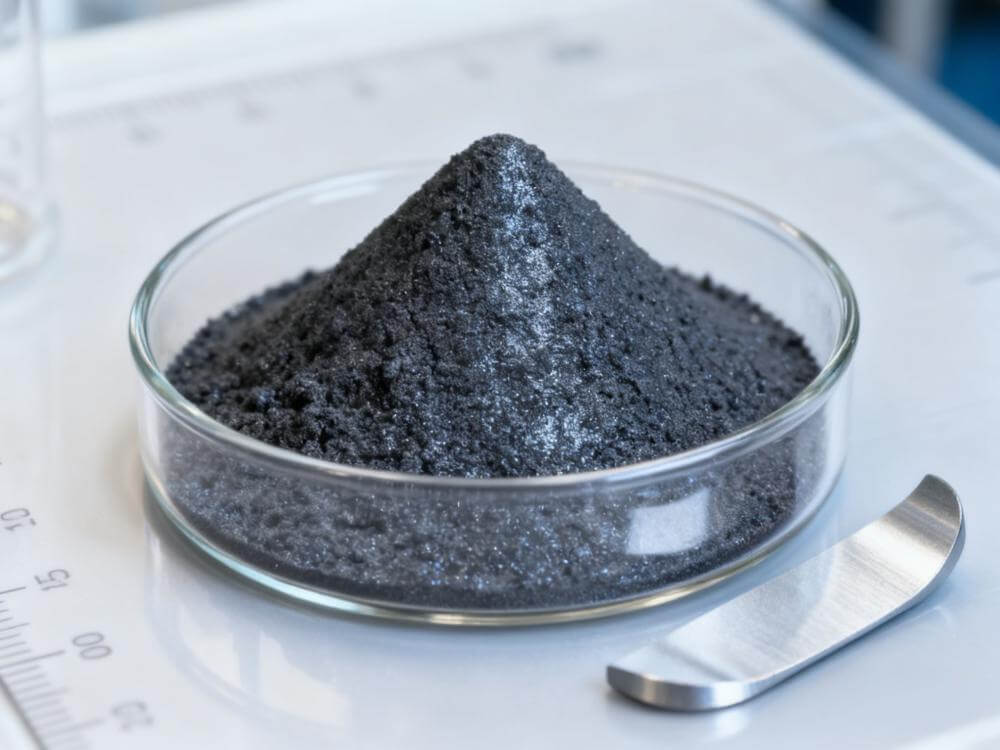
【SMM Cesium & Rubidium Express】Zichang Guoyuan, the only enterprise in China capable of stable mass production of 4N5+ high-purity rubidium and cesium products, has recently achieved a breakthrough in 6N+ ultra-high-purity product technology, further consolidating its leading position in the industry. Relying on the "open competition mechanism for selecting the best to undertake key tasks" project, the company is building an industrial circular economy system for rubidium and cesium raw materials, and has completed the domestically unique production line for comprehensive recovery and reuse of cesium formate waste liquid. As a core raw material for high-end solid-free completion fluids for high-temperature and high-pressure oil and gas wells, cesium formate enables this project to guarantee the independent supply of key strategic raw materials, while opening up intensive export channels to support the 10,000-tonne-level market demand. In the photovoltaic track, the company uses recrystallization purification process to prepare high-purity precursors of rubidium iodide and cesium iodide, which can be used to formulate perovskite coating solutions and prepare rotary sputtering targets, optimize grain boundary defects of perovskite thin films, suppress phase separation, improve thermal stability, and solve the raw material bottleneck for large-scale mass production of perovskite. Industry estimates show that every 1GW of perovskite production capacity consumes about 20 tonnes of rubidium and cesium salts, the 20GW installed capacity in 2027 corresponds to a demand of 400 tonnes of materials, and the 80GW production capacity in 2030 will bring a market space of 1600 tonnes.
26 mins ago
![[SMM Chromium Flash] Mantashe Orders Halt to Tailings Deposits at Samancor's Dikwena Chrome After Dam Collapse](https://imgqn.smm.cn/usercenter/OGmeJ20251217171722.jpeg)
15 hours ago
[SMM Chromium Flash] Mantashe Orders Halt to Tailings Deposits at Samancor's Dikwena Chrome After Dam Collapse
Read More
[SMM Chromium Flash] Mantashe Orders Halt to Tailings Deposits at Samancor's Dikwena Chrome After Dam Collapse
South Africa's Department of Mineral and Petroleum Resources has instructed Samancor to stop depositing tailings at any of its dams at the Dikwena Chrome facility in Brits, North West, while an investigation continues into the August 13 collapse of a sidewall at the mine's Dam 1B tailings storage facility. The failure released the bulk of the dam's stored waste, damaging mine infrastructure, a railway line and Eskom power infrastructure, and sending sludge into a nearby wetland and toward the neighboring Eland Mine's Maroelabult shaft area. No injuries or fatalities were reported.
Minister Gwede Mantashe, accompanied by Deputy Minister Phumzile Mgcina, Water and Sanitation Deputy Minister David Mahlobo and chief inspector of mines David Msiza, conducted a joint on-site and aerial oversight visit to the facility on August 17. Mantashe said the incident underscored that tailings dam management is a mining issue tied directly to operational and structural accountability rather than a water-management matter alone, and raised concern that Samancor had not decisively addressed seepage reportedly identified at the facility roughly three months before the collapse.
Samancor has taken responsibility for the investigation, clean-up and rehabilitation, with CEO Desmond McManus confirming the company is repairing damaged electrical infrastructure and access roads and will appoint an independent professional to assess the facility. The Department of Water and Sanitation has deployed teams to conduct water quality sampling and environmental risk assessments, while Mahlobo said an aerial inspection indicated the spillage had been contained, though the facility's exact groundwater impact remains under review. The tailings facility is operated by contractor One Chrome, which also runs the site's Inyoni Platinum PGM recovery plant, and investigations into the technical and operational causes of the failure remain ongoing.
15 hours ago
![[SMM Chromium Flash] FAPA Warns SA Ferroalloys Sector Still Faces Rapid Decline Despite Ferrochrome Tariff Relief](https://imgqn.smm.cn/usercenter/gKDYO20251217171723.jpeg)
18 hours ago
[SMM Chromium Flash] FAPA Warns SA Ferroalloys Sector Still Faces Rapid Decline Despite Ferrochrome Tariff Relief
Read More
[SMM Chromium Flash] FAPA Warns SA Ferroalloys Sector Still Faces Rapid Decline Despite Ferrochrome Tariff Relief
South Africa's ferroalloys sector remains in a state of rapid decline despite recent electricity pricing relief for the ferrochrome industry, according to Ferro-Alloy Producers Association (FAPA) chairperson Nellis Bester. He said the tariff relief, credited with enabling the restart of Glencore Merafe's Boshoek and Wonderkop smelters earlier this year, has served mainly to prevent further deterioration rather than restore conditions for renewed growth, and should be treated as a short-term measure rather than a lasting fix.
Bester attributed the sector's ongoing weakness to a combination of structural pressures: escalating electricity costs, rail and port logistics constraints, unprotected imports of finished alloy products, growing competition from lower-cost producing countries, and prolonged uncertainty over industrial policy. He said South Africa's silicon and manganese alloy operations are in a more precarious position than ferrochrome, with several smelters already suspended and others at risk of permanent closure, and warned that without decisive government and Eskom intervention within weeks, the decline would deepen and add to unemployment.
Among the fixes Bester called for are a genuinely competitive electricity tariff, import duties on finished alloy goods, and improved rail and port infrastructure to reduce reliance on costlier road transport for exports. He stressed that South Africa retains world-class mineral resources, technical expertise and installed smelting capacity, but that these advantages are being eroded by structural cost disadvantages the industry says can still be corrected through coordinated action, adding that producers are not seeking permanent protection, only a fair, competitive operating environment to preserve the sector's remaining skilled jobs.
18 hours ago
Related News
Zichang Guoyuan Achieves 6N+ Ultra-High-Purity Rubidium and Cesium Breakthrough, Leading Industry Advancements
Sep 01, 2026 13:38
[SMM Chromium Flash] Mantashe Orders Halt to Tailings Deposits at Samancor's Dikwena Chrome After Dam Collapse
Aug 31, 2026 22:21
[SMM Chromium Flash] FAPA Warns SA Ferroalloys Sector Still Faces Rapid Decline Despite Ferrochrome Tariff Relief
Aug 31, 2026 19:51

[SMM Analysis] ost–Sentiment Tug-of-War: MnSi Output First Falls Then Recovers—Can September Deliver a Trend Reversal?
Aug 31, 2026 19:37