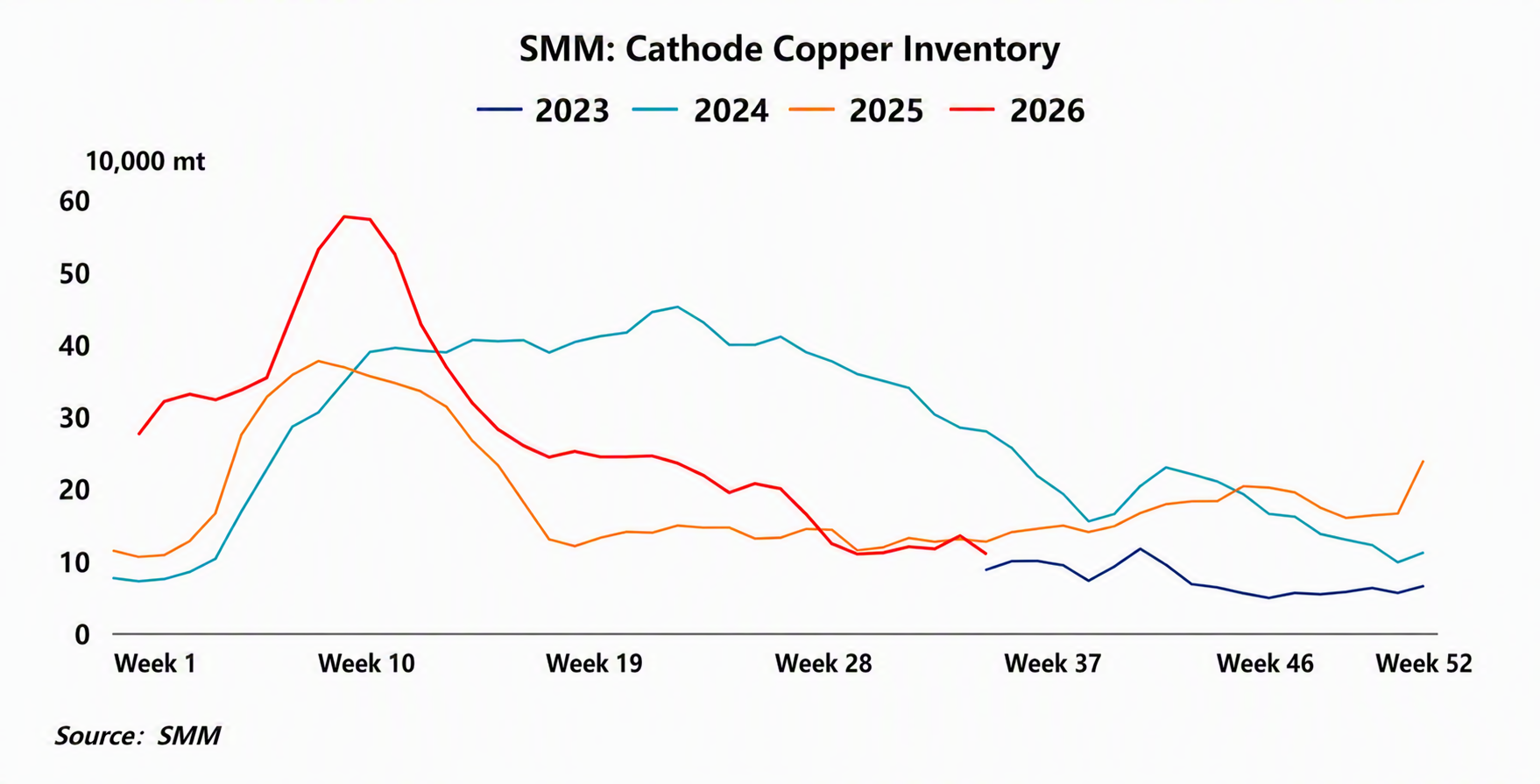
As of Thursday, August 27, copper inventories in major regions across China fell to 109,500 mt, down 24,900 mt WoW from the previous Thursday and down 17,600 mt YoY, with absolute inventories at a low level. Inventories continued destocking during the week, driven mainly by the combined effect of supply contraction and month-end restocking.
1. Regional Divergence: Arrival Pace Dominated, Not Broad-Based Demand Recovery
By region, Shanghai saw an increase in domestic arrivals and a slight inventory build, with new arrivals not fully digested by downstream users and limited demand absorption; Jiangsu saw a narrowing in domestic arrivals and tighter supply, and with visible consumption resilience, its inventories continued to destock, mainly because arrivals contracted rather than demand surged; in Guangdong, consumption had been persistently weak earlier, and as copper prices pulled back, procurement costs declined, wait-and-see sentiment eased, demand gradually recovered, warehouse withdrawals improved, and inventories continued to decline.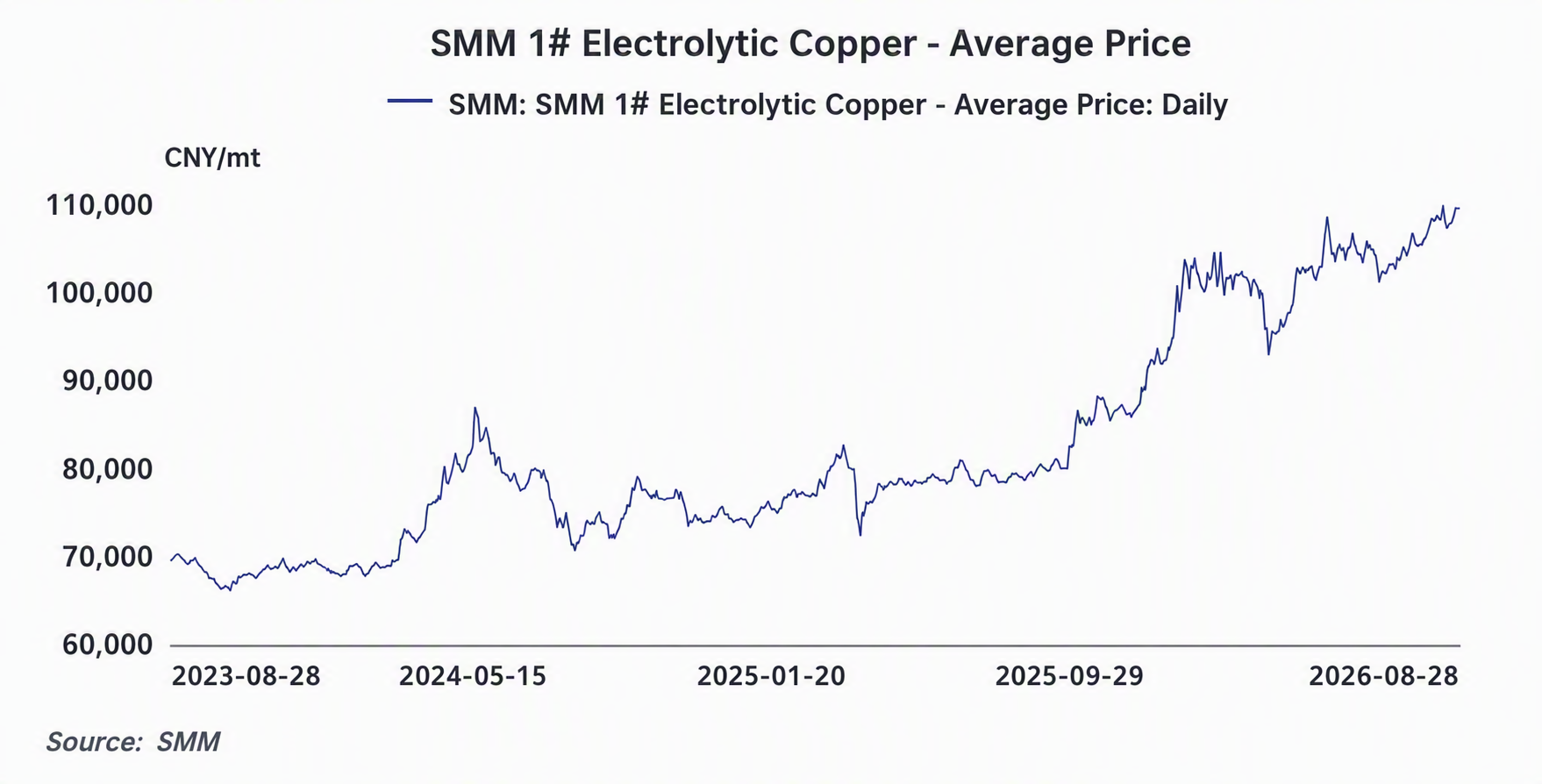
2. Demand Observation: "Better-Than-Expected" Operating Rate Has Limited Substance
As the largest downstream demand segment, major domestic copper cathode rod enterprises saw their latest weekly operating rate come in at 62.44%, up 1.24 percentage points WoW and rising for two consecutive weeks. However, the recovery in the operating rate was not a natural demand-driven release. This week, copper prices drifted higher, new orders slowed significantly, and enterprise production relied mainly on orders on hand taken when copper prices pulled back last week. Coupled with production halts at enterprises outside the survey sample and the shift of orders to enterprises within the sample, the weekly operating rate was pushed up passively. By industry, wire and cable, enamelled wire, and other end-user segments were constrained by high copper prices, with overall demand remaining weak. The inventory side also confirmed this: near month-end, combined with scarce market supply, enterprises actively restocked, and raw material inventory rose 2.68 percentage points WoW; downstream cargo pick-up pace was moderate, with no concentrated restocking, and finished product inventories edged up 0.16 percentage points WoW, while actual procurement remained cautious.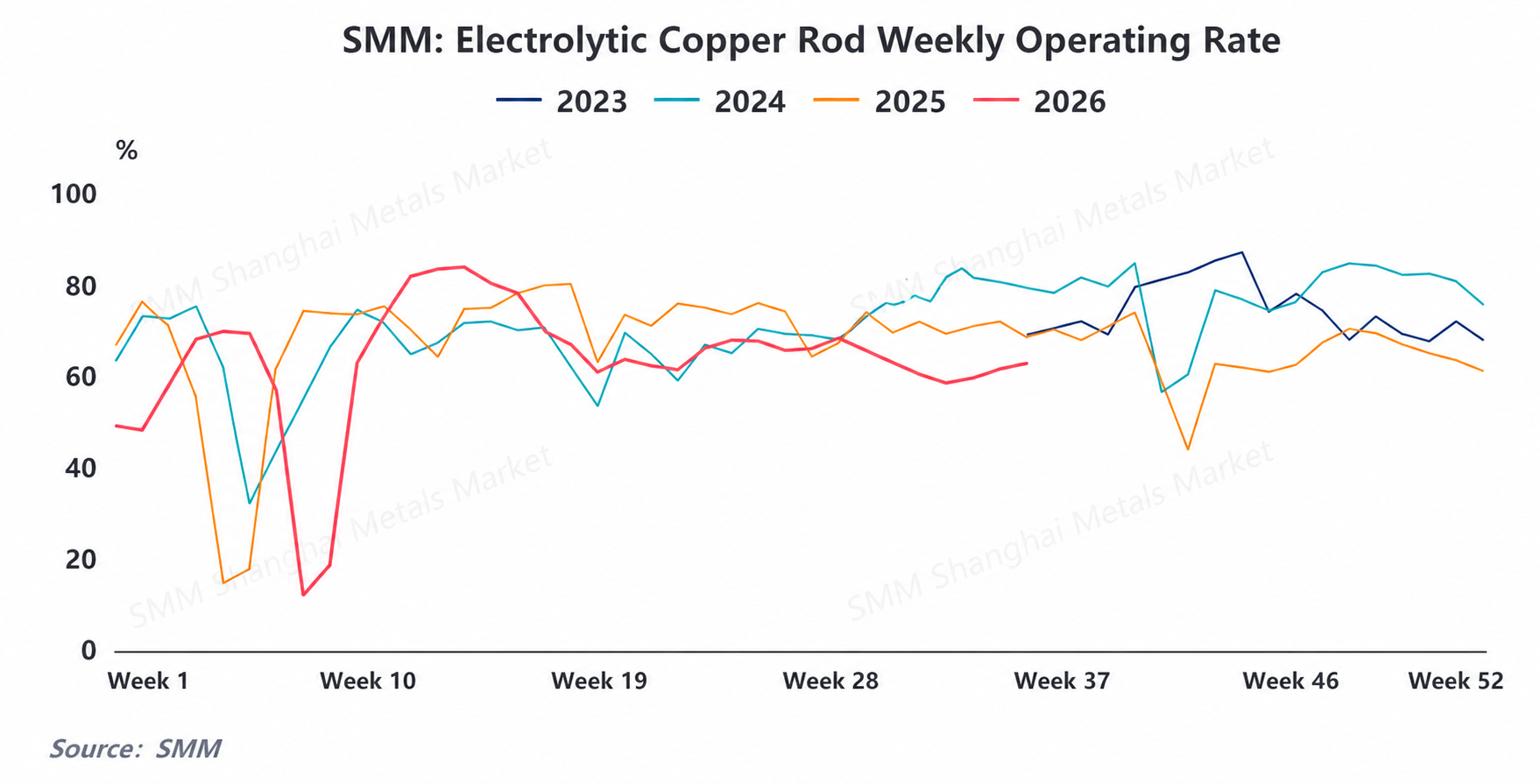
3. Outlook: Supply and Demand Tighten at the Margin; Destocking Continues but at a Slower Pace
Supply side, in the short term, domestic copper cathode arrivals will shrink, import supply will remain stable, and overall supply will be marginally tight. Demand side, earlier backlog orders were released in a concentrated manner at month-end, and restocking willingness rebounded, but this was mainly rigid-demand restocking; available spot cargo remained broadly stable, and market trading sentiment warmed. Overall, SMM expects nationwide copper social inventory to continue destocking mildly next week. However, the current demand-side recovery still depends more on month-end period effects and rigid-demand restocking; the pattern of insufficient end-user purchasing intensity under high copper prices has not fundamentally changed, and the sustainability of destocking depends on whether copper price pullbacks can drive the release of actual orders. Next week, copper cathode rod enterprises in the sample that were under maintenance and production cuts will resume normal production, and SMM expects the copper cathode rod operating rate to increase 0.95 percentage points WoW. Although the rebound in operating rates provides some support to copper cathode consumption, the downstream cargo pick-up pace is moderate and end-use demand is limited, so the actual boost effect remains to be seen. If copper rod finished product inventories accumulate as a result, they will in turn restrain the subsequent procurement pace.