The overseas primary aluminum spot market remained subdued this week, with weak seasonal demand continuing to limit purchasing activity across major markets.
In Japan and the United States, trading activity was relatively quiet, with both MJP spot premiums and the US Midwest DDP premium showing limited movement. Market attention in Japan has increasingly shifted toward Q4 MJP negotiations, while weak downstream demand during the traditional off-season continued to restrict spot purchasing.
Elsewhere in Asia, South Korea remained under pressure from weak season, prompting sellers to continue lowering offers. Thailand also recorded thin downstream orders and weak demand for primary aluminum ingots.
I. Review of Spot Premiums by Region
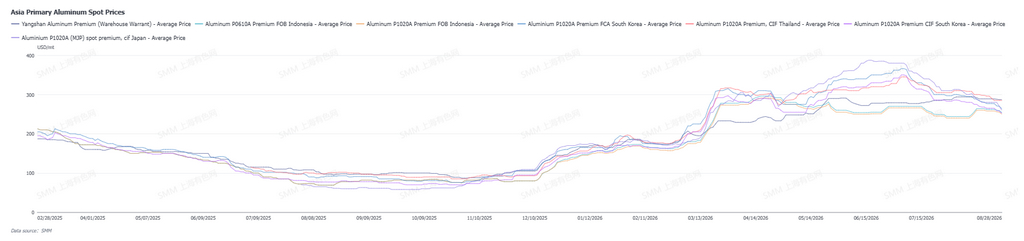
According to SMM data, overseas primary aluminum spot premiums remained generally weak this week. Seasonal softness in downstream consumption continued to weigh on procurement, while buyers maintained cautious purchasing strategies amid sufficient supply in several Asian markets.
Southeast Asia
Trading activity in Thailand remained weak this week as downstream orders continued to be thin during the traditional consumption off-season.
Demand for primary aluminum ingots was limited, with most downstream consumers purchasing only according to immediate production requirements. With little incentive for buyers to build inventories, market inquiries and transactions remained subdued.
Under the current weak-demand environment, spot premiums in Thailand continue to face downward pressure.
South Korea
The South Korean primary aluminum market remained in its seasonal off-season this week.
Supply of aluminum materials in the market remained relatively ample, while downstream purchasing demand showed little improvement. Against this backdrop, sellers continued to lower their offering prices in an effort to secure transactions.
Buyers remained cautious and generally showed limited urgency to procure additional cargoes, leaving overall trading activity weak and keeping spot premiums under pressure.
Japan
CIF Japan MJP Primary Aluminum Spot
Japan’s spot MJP market was relatively quiet this week, with limited transactions reported amid continued weakness in seasonal downstream demand.
Market participants have increasingly turned their attention toward the ongoing Q4 MJP negotiations, which may also have reduced spot-market activity as buyers and sellers wait for clearer quarterly benchmark indications.
Earlier market discussions suggested that the Q4 MJP could fall by around USD 80/mt from the Q3 benchmark of approximately USD 395/mt, implying a level near USD 315/mt.
According to SMM market sources, however, Rio Tinto has recently issued its first Q4 MJP offer at USD 310/mt, with the offer valid until September 11.
The first offer therefore represents a decline of approximately USD 85/mt from the Q3 MJP level, highlighting the continued weakness in the Japanese physical market and broader soft demand conditions in Asia.
Market participants are now closely watching whether other suppliers follow at similar levels and how buyers respond during the next stage of Q4 negotiations.
United States
US Midwest DDP Primary Aluminum Premium
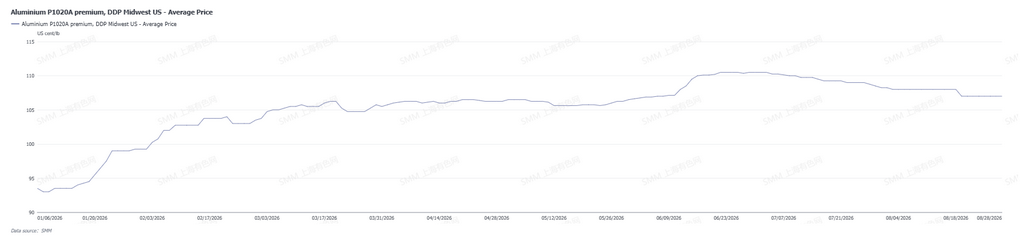
The US Midwest DDP premium remained relatively quiet this week, with no major change in market conditions compared with the previous week.
Trading activity was limited, while both buyers and sellers largely maintained cautious positions. Without a significant shift in downstream demand or aluminum availability, the premium remained broadly stable during the week.
Market Outlook
Overseas primary aluminum spot markets are expected to remain relatively weak in the near term as seasonal softness continues to restrict downstream purchasing.
In South Korea, ample supply and limited buying interest may continue to pressure sellers’ offers, while Thailand is also likely to remain subdued unless downstream orders recover.
For Japan, market attention will increasingly focus on Q4 MJP negotiations. The initial offer of USD 310/mt represents a substantial decline from the Q3 benchmark and reflects the weaker regional demand environment.
Whether the final Q4 MJP settles near this level will depend on buyer acceptance, subsequent supplier offers, and developments in regional spot availability. Until negotiations become clearer, Japan’s spot MJP market may remain relatively quiet.