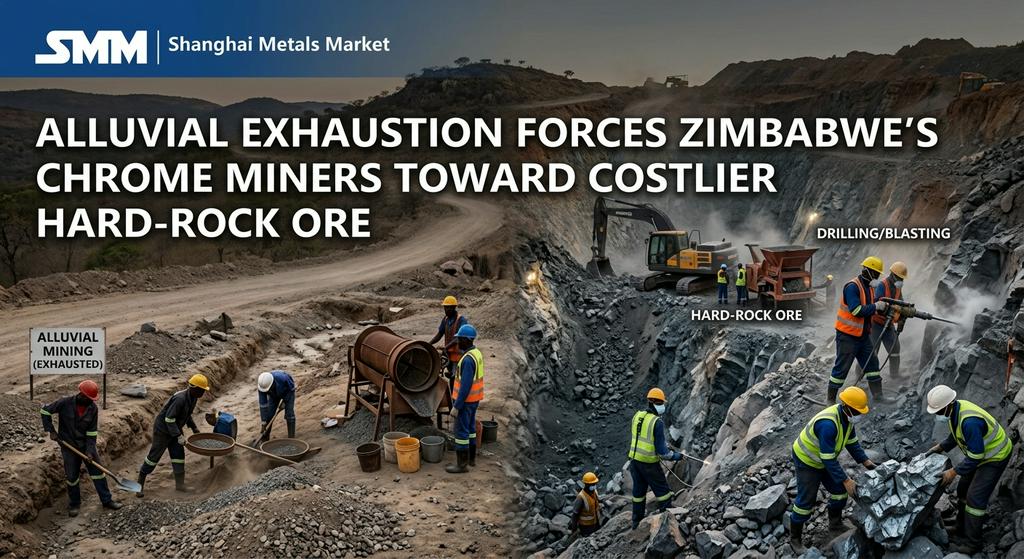
As Zimbabwe's easily mined alluvial chrome deposits approach exhaustion, small-scale miners are being pushed toward hard-rock lumpy chrome, a shift that Chrome Miners Association of Zimbabwe chairperson Shelton Lucas says is straining the sector's economics. Unlike alluvial chrome, which could be extracted with limited capital and equipment, hard-rock ore requires drilling, blasting, crushing and heavier mechanization, pushing production costs beyond the reach of many operators.
Lucas said this cost pressure is compounded by Zimbabwe's ban on raw chrome ore exports, introduced to encourage local beneficiation and smelter investment. With a limited number of domestic smelters absorbing ore, miners have fewer buyers to sell into and correspondingly weaker pricing power, leaving them, in Lucas's words, exposed to predatory pricing from Chinese-owned smelter operators even as extraction costs climb.
To rebalance the market, Lucas proposed government-backed toll smelting, an arrangement under which miners would pay a processing fee while retaining ownership of their chrome, allowing them to sell the processed product rather than raw ore at prices set unilaterally by smelter operators. Zimbabwe's Ministry of Mines has pointed to investment in mining infrastructure, energy supply and operational efficiency as necessary to sustain output, though no toll-smelting facility has yet been confirmed. Whether such a mechanism materializes will be a key test of how much pricing leverage Zimbabwe's ore miners can claw back as the sector's hard-rock transition deepens.