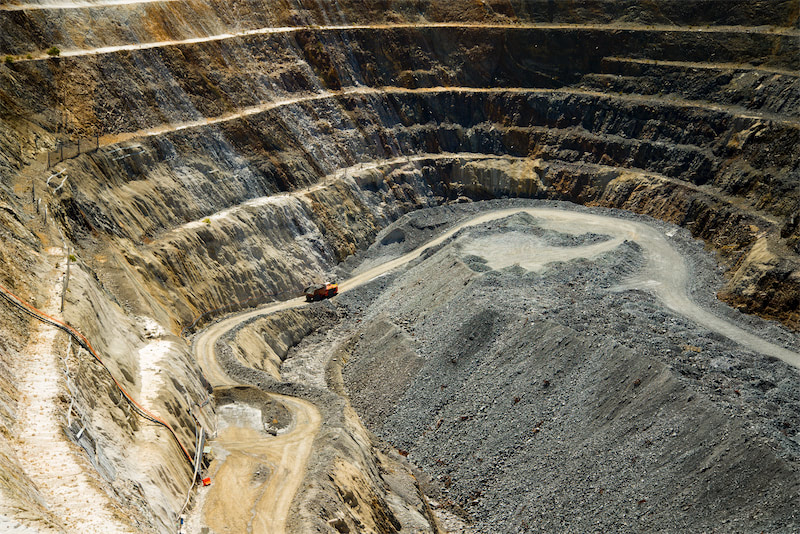
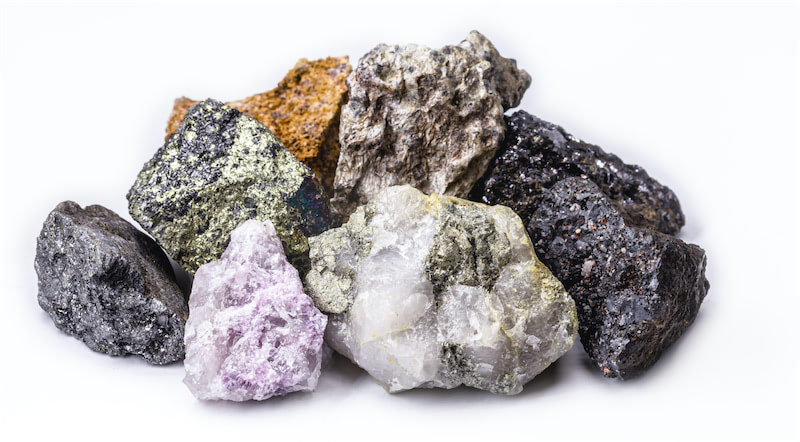
Vedanta Launches India's First 1,000m Hydrostatic Portable Rig for Critical Mineral Exploration

Vedanta is expanding its critical-minerals exploration programme in India, with work underway across five of its 10 critical-mineral blocks.


Vedanta Limited, a diversified Indian natural resources company, has commissioned the country’s first high-speed hydrostatic portable drilling rig as it expands its exploration programme for critical minerals.

The rig has been deployed at two exploration projects in Chhattisgarh, where the company is targeting gold as well as nickel, chromium and platinum-group elements (PGEs).

According to the company, the rig is designed to operate in difficult and inaccessible terrain. It can drill to depths of up to 1,000 metres against the 300–400-metre depth of the conventional exploration range. Its portable design also allows the rig to be moved between exploration sites more efficiently, reducing the time and footprint associated with drilling operations.

“Built for inaccessible and tough terrains, it is the first high-speed hydrostatic portable rig in India that can carry out high-speed drilling up to 1,000 metres,” Vedanta said in its press release.

The deployment comes as Vedanta expands its portfolio of critical-mineral assets in India. Vedanta’s FY2025-26 annual report confirmed that the group had secured 10 critical-mineral blocks covering gold, manganese, copper, nickel-chromium-PGE, tungsten, graphite, vanadium, rare earth elements and potash.

Exploration is currently underway at five blocks, while Vedanta has also been declared the successful bidder for the Punnam manganese block in Andhra Pradesh.

The company said the new drilling capability could help accelerate domestic mineral exploration and support India's efforts to reduce its reliance on imported critical minerals.

Citing government estimates, Vedanta said that around 80% of India's mineral resources remain unexplored, underscoring the scope for deeper exploration to identify new domestic deposits.

The company is using the technology as part of its broader push into critical minerals, which are increasingly important for sectors including renewable energy, electric mobility, defence and advanced manufacturing.

Data Source Statement: Except for publicly available information, all other data are processed by SMM based on publicly available information, market communication, and relying on SMM's internal database model. They are for reference only and do not constitute decision-making recommendations.

For any inquiries or for more information, please contact: lemonzhao@smm.cn
For more information on how to access our research reports, please contact:service.en@smm.cn
Related News
Data: SHFE, DCE market movement (Sep 16)
16 hours ago
Data: SHFE, DCE market movement (Sep 16)
Read More
Data: SHFE, DCE market movement (Sep 16)
The following table shows the ferrous and nonferrous metals movement on the SHFE and DCE on 16 Sep , 2026
16 hours ago
South Korea Advances Cooperation on Lithium Resources in Kazakhstan and Nickel and Cobalt Resources in Uzbekistan
17 hours ago
South Korea Advances Cooperation on Lithium Resources in Kazakhstan and Nickel and Cobalt Resources in Uzbekistan
Read More
South Korea Advances Cooperation on Lithium Resources in Kazakhstan and Nickel and Cobalt Resources in Uzbekistan
South Korea plans to strengthen cooperation with Kazakhstan and Uzbekistan in the critical minerals sector, advancing joint exploration and technology development for lithium, nickel and cobalt resources. In Kazakhstan, the Korea Institute of Geoscience and Mineral Resources (KIGAM) has signed an agreement with local companies to conduct joint drilling at the Bakennoye lithium deposit and its tailings in 2027. The potential lithium resources are preliminarily estimated at approximately 25,000 tonnes. In Uzbekistan, the two sides will focus on the exploration and development of nickel and cobalt resources in the Sultanbobo area, including R&D on processing and refining technologies and feasibility studies. The cooperation aims to facilitate the participation of Korean companies in subsequent development projects and strengthen the security of South Korea’s critical mineral supply chains.
17 hours ago
【SMM Flash News】 Indonesia's HPM Nickel Further Decreased in Second Half of September
18 hours ago
【SMM Flash News】 Indonesia's HPM Nickel Further Decreased in Second Half of September
Read More
【SMM Flash News】 Indonesia's HPM Nickel Further Decreased in Second Half of September
Indonesia's Ministry of Energy and Mineral Resources (ESDM) has officially released the Nickel Mineral Reference Price (HMA) for the second half of September 2026. The nickel HMA for the second half of September was set at USD 16,698.00/mt, down USD 35.33/mt, or 0.21%, from USD 16,733.33/mt in the first half of September. The cobalt HMA was USD 52,704.33/mt, while the iron ore HMA was USD 1.47/mt and the chrome ore HMA was USD 6.37/mt. Following the revised nickel ore HPM formula under Kepmen ESDM No.363.K/MB.01/MEM.B/2026, which took effect on September 15, 2026, the nickel ore HPMs are as follows: · Ni 1.2%: $24.89/wmt, down $20.77/wmt, based on the new HPM formula for Ni 1.2% grade and below. · Ni 1.3%: $49.20/wmt, down $0.69/wmt. · Ni 1.4%: $53.83/wmt, down $0.24/wmt. · Ni 1.5%: $58.50/wmt, down $0.25/wmt. · Ni 1.6%: $63.38/wmt, down $0.26/wmt.
18 hours ago